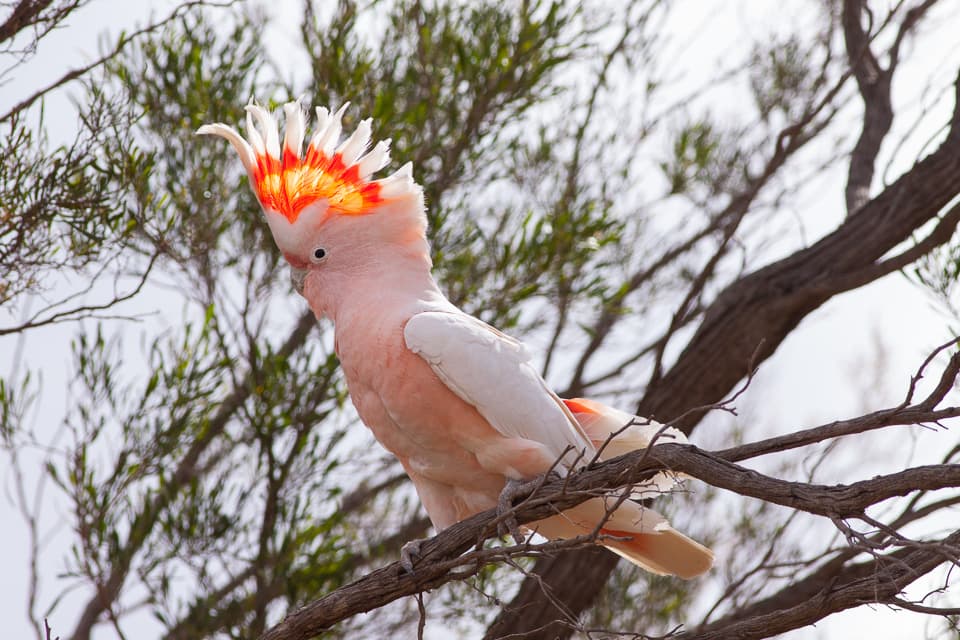
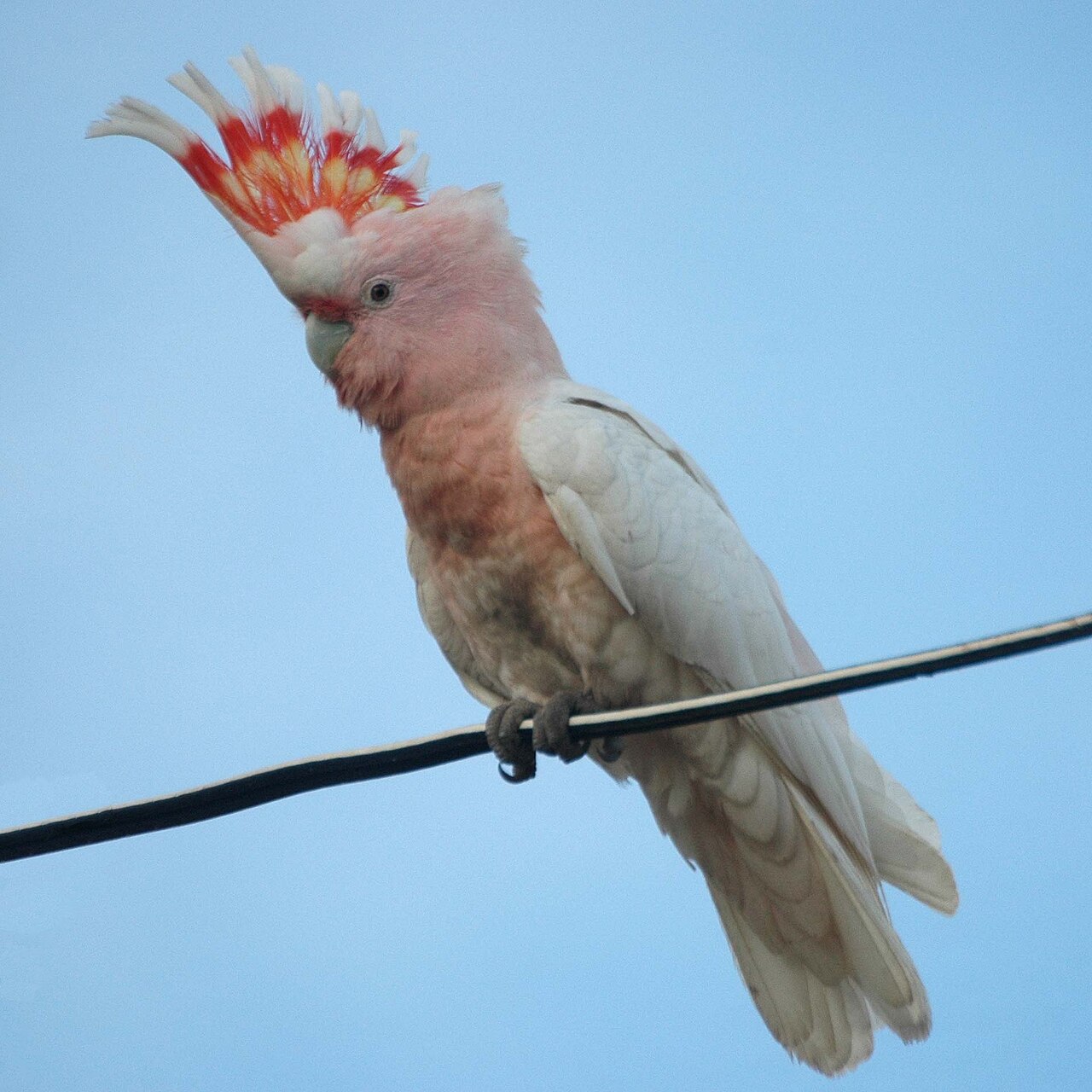
Folded down, this cockatoo's crest can look mostly white. Lifted into a fan, it reveals a brilliant band of red and yellow. A quiet-looking pink bird suddenly becomes a much more dramatic sight.
Major Mitchell's cockatoo is also widely known as the pink cockatoo, Lophochroa leadbeateri. Some references place it in the genus Cacatua. Both names lead to the same remarkable Australian bird.
Color that opens like a fan
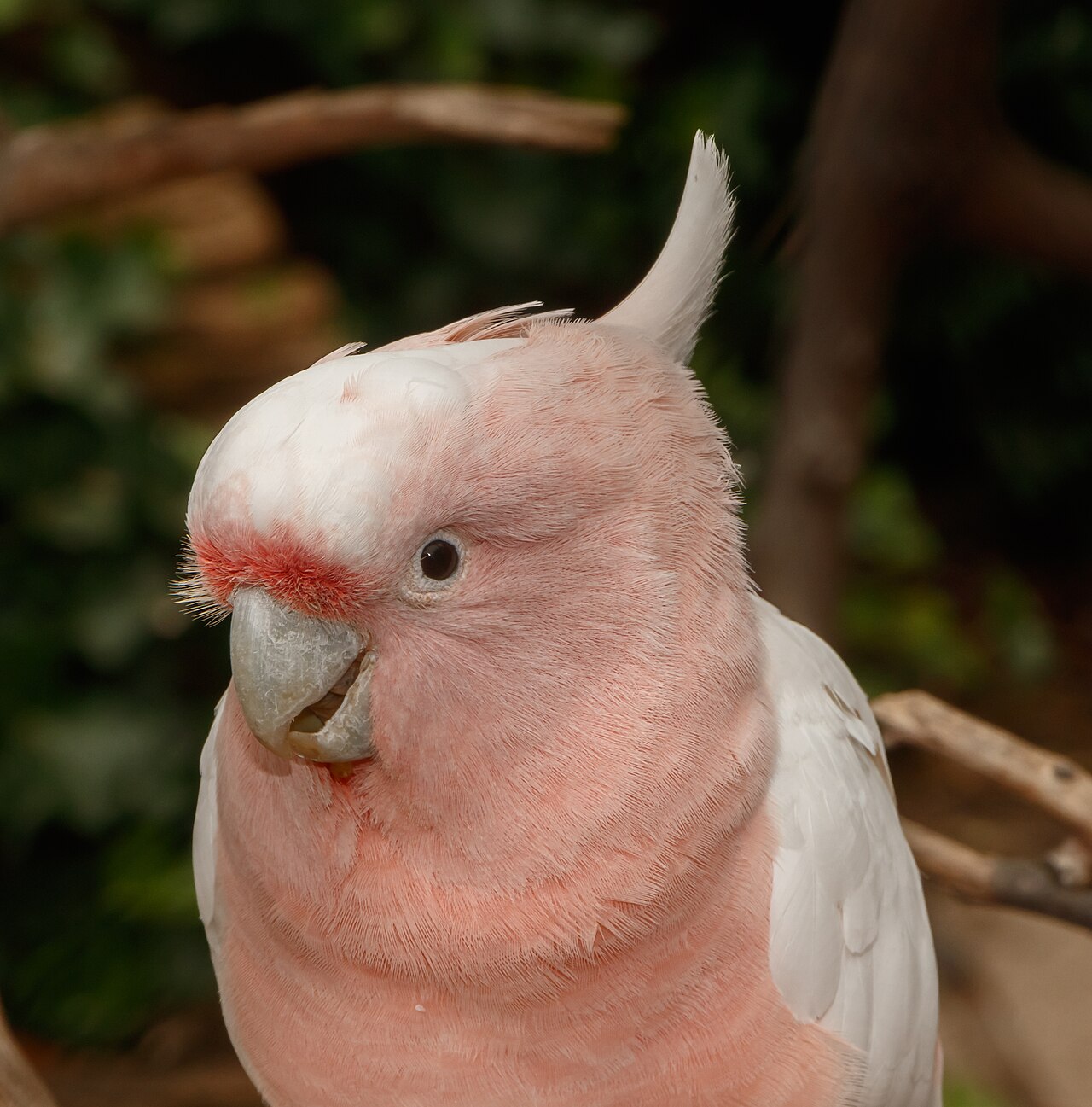
Soft pink covers parts of the face, neck, and underbody, while much of the wings and back is white. The colorful crest gives the strongest contrast when raised.
BirdLife Australia describes that change from a folded white crest to a spread red-and-yellow display. Watching the crest is a reminder that feathers can be moving signals, rather than a fixed costume.
Living with an unpredictable landscape
Pink cockatoos inhabit inland Australia's arid and semi-arid woodlands. Water, food, and suitable trees shape where they can live.
Their menu includes seeds, fruit, roots, and other plant foods. The Australian Reptile Park account describes feeding both on the ground and in trees, with visits to waterholes around dawn and dusk.
A dry landscape can appear empty from a passing car. For these birds, it holds a detailed map of feeding places, drinking water, and shelter.
A hollow worth keeping
Breeding pairs need large tree hollows. Both parents help incubate the eggs and care for the young, so a nest becomes the center of a shared effort.
BirdLife Australia links declining populations and a shrinking range with land clearing and the loss of nesting hollows. Keeping mature trees matters because a newly planted sapling cannot immediately replace an old cavity.
Protecting feeding habitat alongside old nest trees gives the birds space for the different parts of their day.
The raised crest may last only a moment. The old tree behind it can support generations of life.
Photo credits
Featured image: Major Mitchell's Cockatoo (Lophochroa leadbeateri) (8079596800).jpg — Ron Knight from Seaford, East Sussex, United Kingdom, CC BY 2.0.

Body image 1: Lophochroa leadbeateri - Karlsruhe Zoo 01.jpg — H. Zell, CC BY-SA 3.0.

Body image 2: Cacatua leadbeateri -SW Queensland-8.jpg — derivative work: Snowmanradio (talk) Pink_Cockatoo_Bowra_Mar08.jpg: Aviceda, CC BY-SA 3.0.

Photographs resized to up to 1,280 pixels wide for web display.