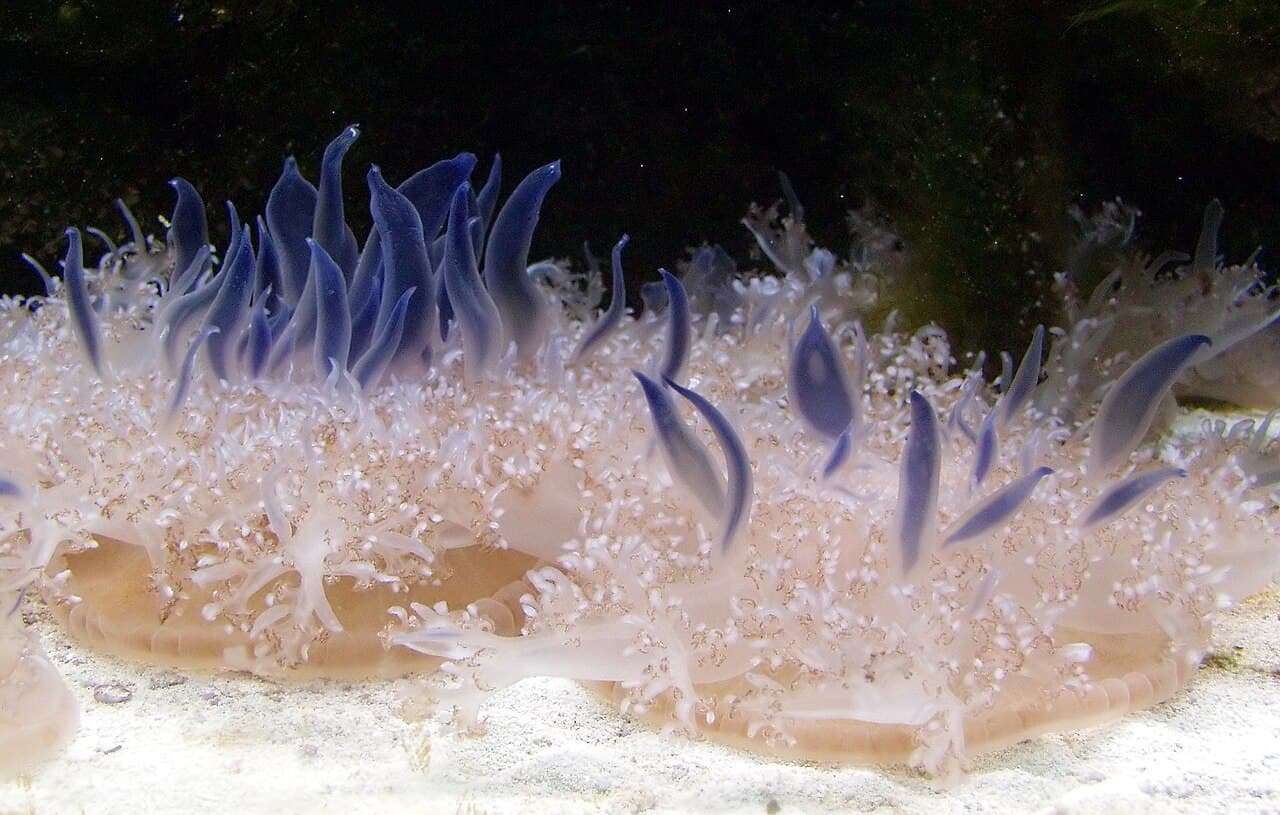
An upside-down jellyfish rests with its bell against the bottom and its branching oral arms facing upward. That position helps expose tiny partners in its tissues to sunlight.
These animals belong to the genus Cassiopea. More than one species shares the upside-down lifestyle.
A partnership that needs light
The Monterey Bay Aquarium upside-down-jelly account describes algae living within the jelly's tissues.
The algae use sunlight to make food and share some of the resulting nutrients with their host. Facing the sun helps support that relationship.
The jelly is still an animal. It also captures small prey, so the partnership does not make feeding unnecessary.
A different view of a jellyfish
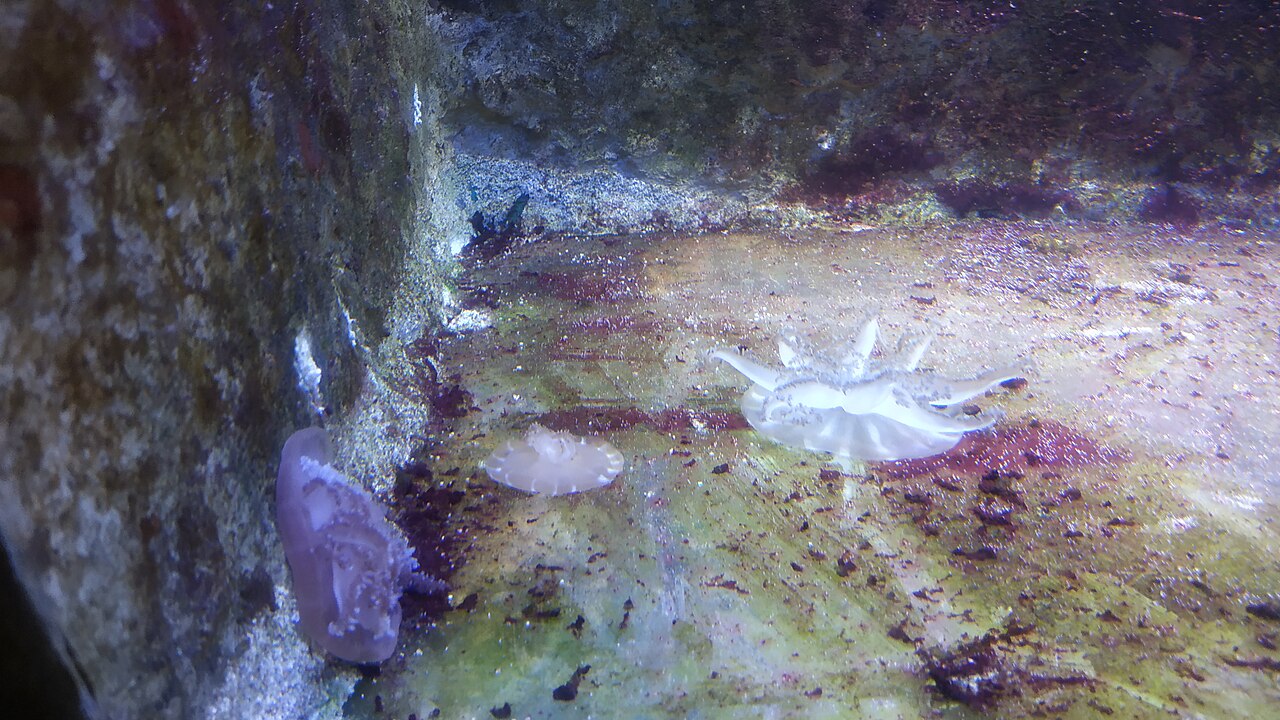
Many familiar jellyfish images show a bell above trailing tentacles. Cassiopea reverses that familiar picture while resting.
The broad bell meets the seabed. The structures above it are the oral arms, with folds and branches that give the animal a flower-like appearance.
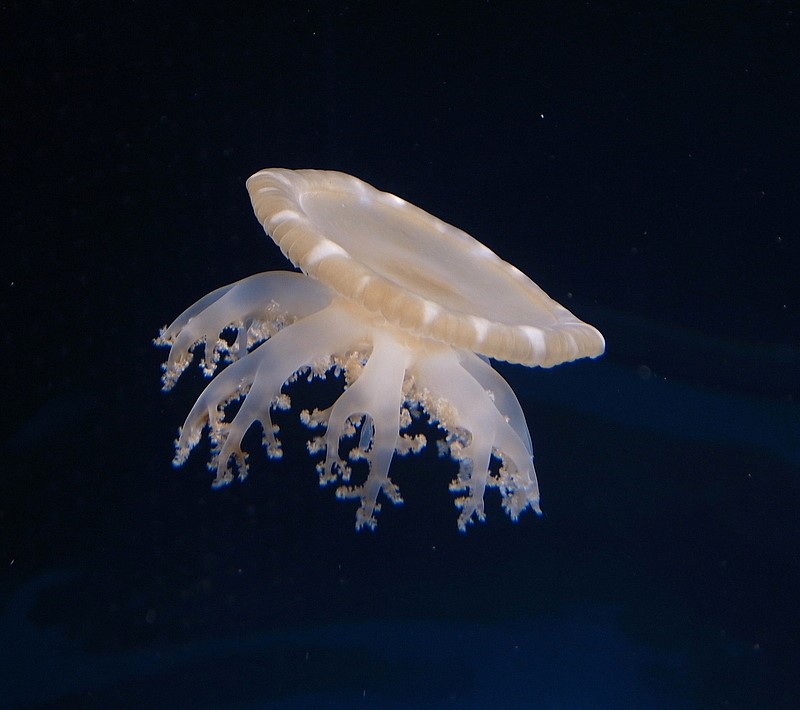
The aquarium photographs here show several views and species within the genus. One photographed swimmer does not mean the resting habit has disappeared.
A shallow-water connection
Upside-down jellies occur in warm, shallow coastal habitats, including lagoons and mangrove areas. Those settings can provide the light their partners need.
Looking after coastal habitats means recognizing life beyond the most obvious fishes and corals. Even an animal resting on a muddy or sandy bottom can have an intricate relationship with its surroundings.
A useful change of perspective
What seems upside down to us works well for this jellyfish. Its position brings animal tissue, microscopic algae, and sunlight together.
The ocean offers many ways to make a living. Sometimes understanding one begins by turning our usual picture over.
Photo credits
Featured image: Cassiopea andromeda - Mangrovenqualle.jpg — Raimond Spekking; CC BY-SA 4.0.

Body image 1: Cassiopea.jpg — DanielloFlorenco; CC BY-SA 4.0.

Body image 2: Cassiopea ornata.jpg — opencage; CC BY-SA 2.5.

Images supplied at web display size where available.