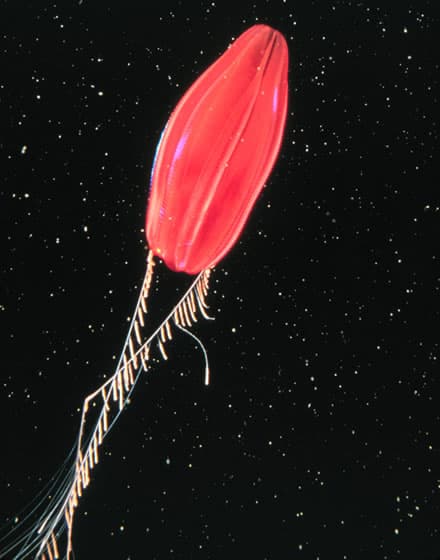
The rainbow running along a comb jelly does not have to be light the animal made. It can be outside light scattered by moving rows of tiny structures on its body.
Comb jellies belong to the phylum Ctenophora. Despite the name, they are a different animal group from jellyfish.
Tiny combs do the swimming
The Smithsonian Ocean guide to jellyfish and comb jellies explains the rows of fused cilia that give comb jellies their name.
Cilia are minute hair-like structures. Coordinated movement along the comb rows helps drive the animal through water.
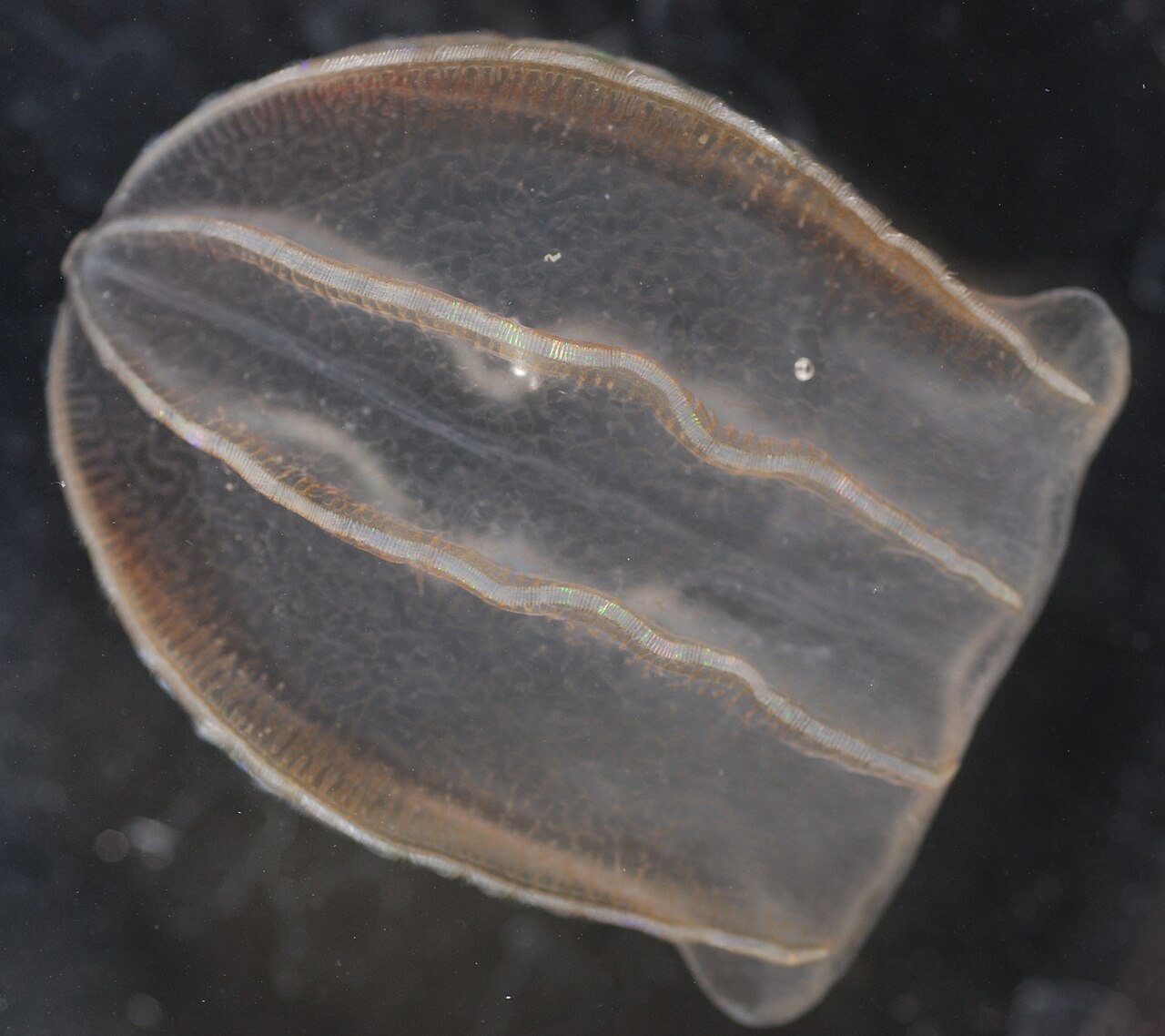
Light interacting with those rows can separate into shimmering colors. The effect changes with lighting and the viewing angle.
A rainbow is not the same as a blue glow
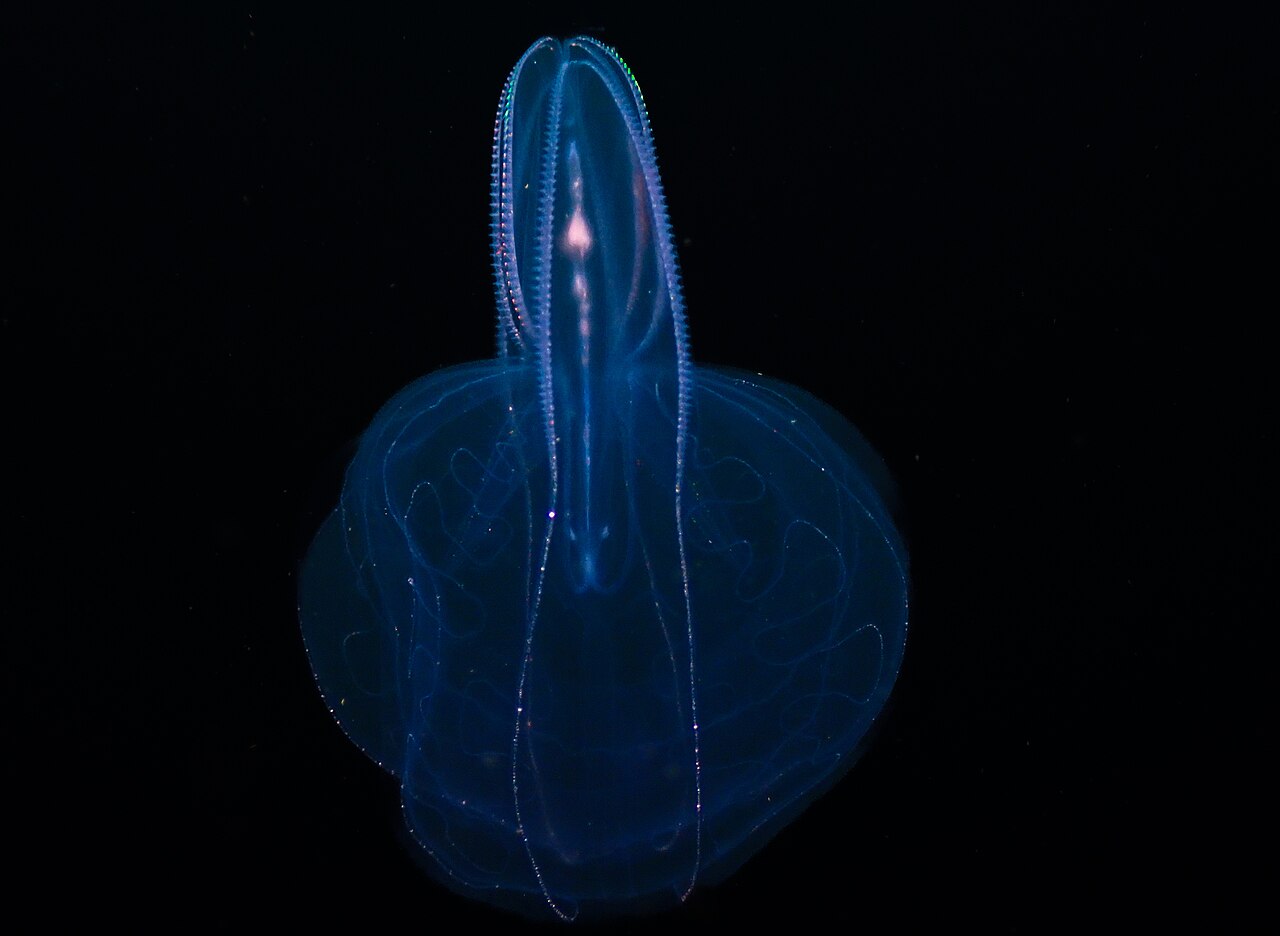
Many comb jellies also produce light through bioluminescence. That is a chemical process inside the animal.
The familiar traveling rainbow and self-produced light are different phenomena. A photograph of one should not automatically be described as showing the other.
This distinction makes the animal more interesting: similar-looking brightness can have very different causes.
One name covers many forms
Some comb jellies have long feeding tentacles. Others, including Beroe, have a different shape and lack those long tentacles.
The photographs here show members of the wider group rather than three views of a single species.
Transparent does not mean empty. These soft bodies contain the systems needed to move, feed, and respond to their surroundings.
A reason to keep looking
A comb jelly rewards attention to small details. Its movement, outline, and changing reflections all tell part of the story.
An apparent rainbow becomes an introduction to an animal whose simplest visible feature leads straight into physics and biology.
Photo credits
Featured image: Ctenophore.jpg — Photo credit: R. Griswold/ NOAA Capture date: August 1984 Location: Boreal Atlantic Ocean; Public domain.

Body image 1: Beroe ovata (I0855) (15311747649).jpg — Smithsonian Environmental Research Center; CC BY 2.0.

Body image 2: Bolinopsis infundibulum 384962014.jpg — Vsevolod Rudyi; CC BY 4.0.

Images supplied at web display size where available.