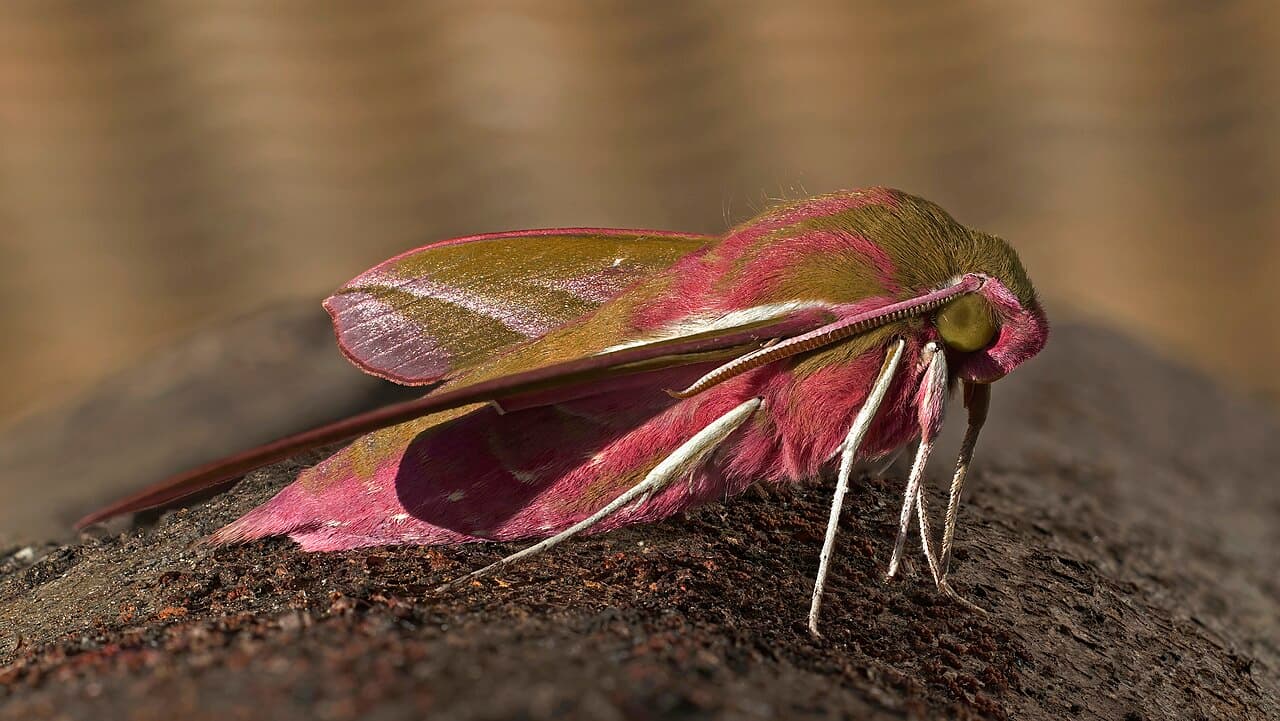
A pink-and-olive moth begins life as a chunky caterpillar that can make its front end look suddenly larger. The elephant hawk-moth offers two surprising appearances in one life.
Its scientific name is Deilephila elpenor. The “elephant” comes from the caterpillar's trunk-like shape, rather than the adult's size.
A bright visitor after sunset
The adult has pink markings across olive-colored wings and a pink stripe along its body. It is active around dusk and at night.
The Wildlife Trusts species guide records it in gardens, woodland edges, grassland, and other habitats in Britain. Adults visit flowers for nectar.
A garden can therefore be a feeding stop after its human visitors have gone indoors.
The eyes that are not eyes
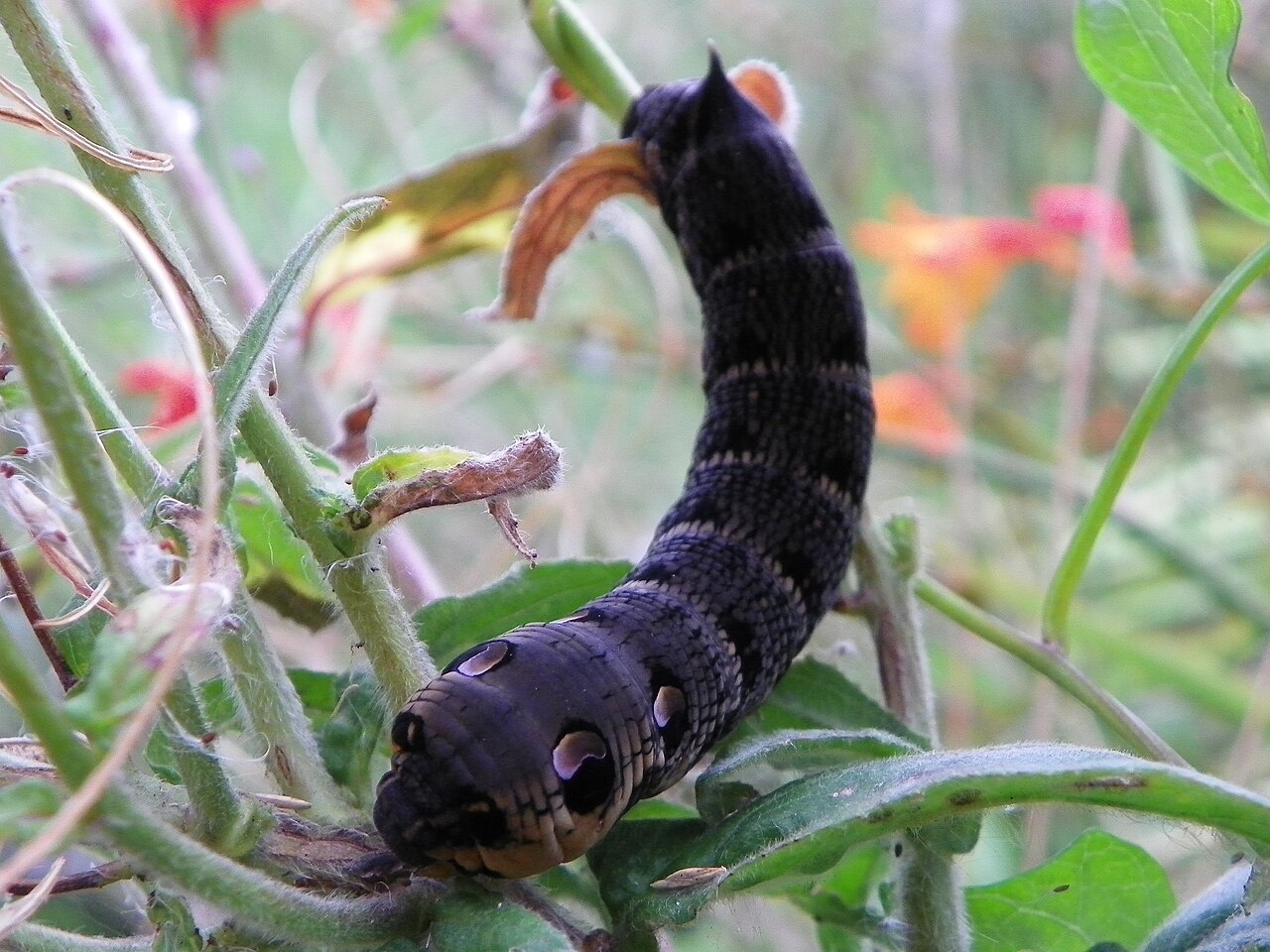
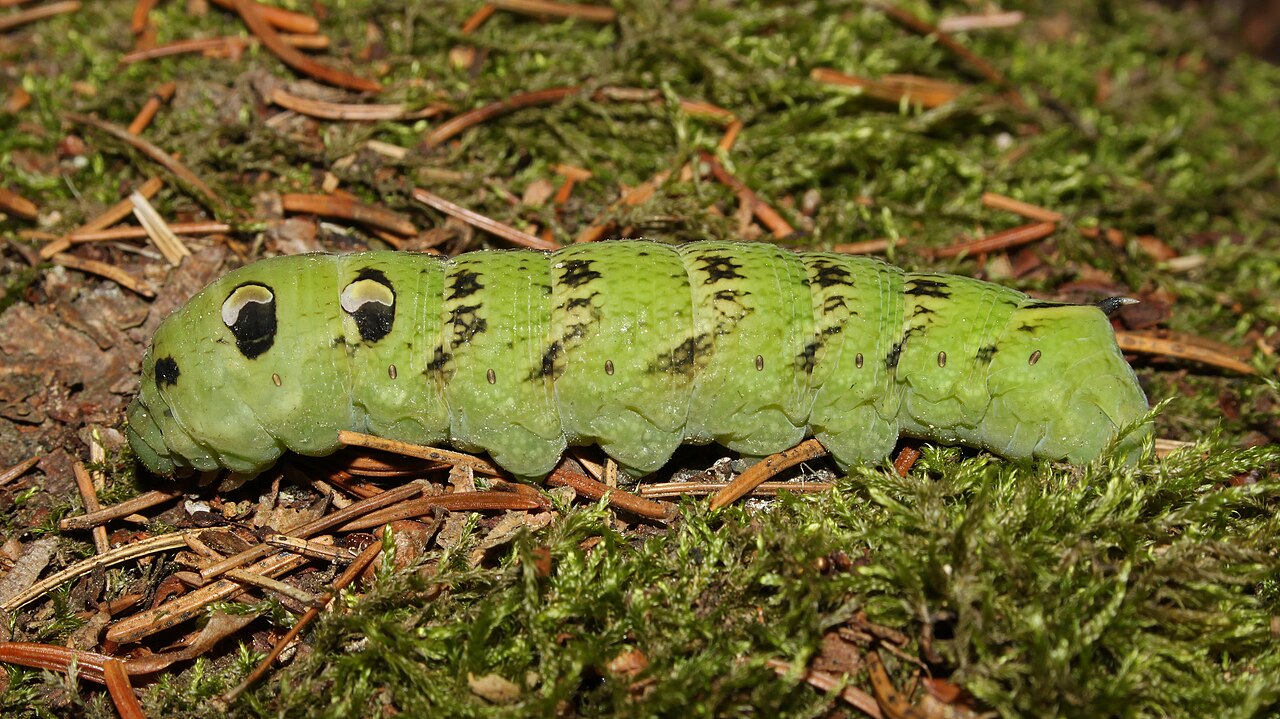
The caterpillar is usually brown or greyish, although green individuals occur too. Large spots near the front resemble eyes.
When disturbed, it can draw its small head back and emphasize those markings. A predator meets a different-looking outline from the quiet leaf-eater it first approached.
The Royal Horticultural Society's account describes caterpillars on garden fuchsias. Willowherbs and bedstraws are also food plants.
Two stages need different meals
The caterpillar eats leaves; the adult drinks nectar. Protecting a flowering plant alone does not meet the needs of the whole life cycle.
Leaving suitable food plants and some undisturbed shelter gives moths more than a brief meal. It makes room for growth and transformation.
The elephant hawk-moth turns an ordinary evening garden into a place of discovery. Look for the pink adult, but remember that its remarkable story begins with a very different creature among the leaves.
Photo credits
Featured image: Elephant hawkmoth (Deilephila elpenor) male.jpg — Charles J. Sharp; CC BY-SA 4.0.

Body image 1: Elephant Hawkmoth (Deilephila elpenor) caterpillar.jpg — AnemoneProjectors ( talk ); CC BY-SA 2.0.

Body image 2: Mittlerer-Weinschwärmer-Deilephila-elpenor.jpg — Holger Krisp; CC BY 3.0.

Photographs resized for web display where available.