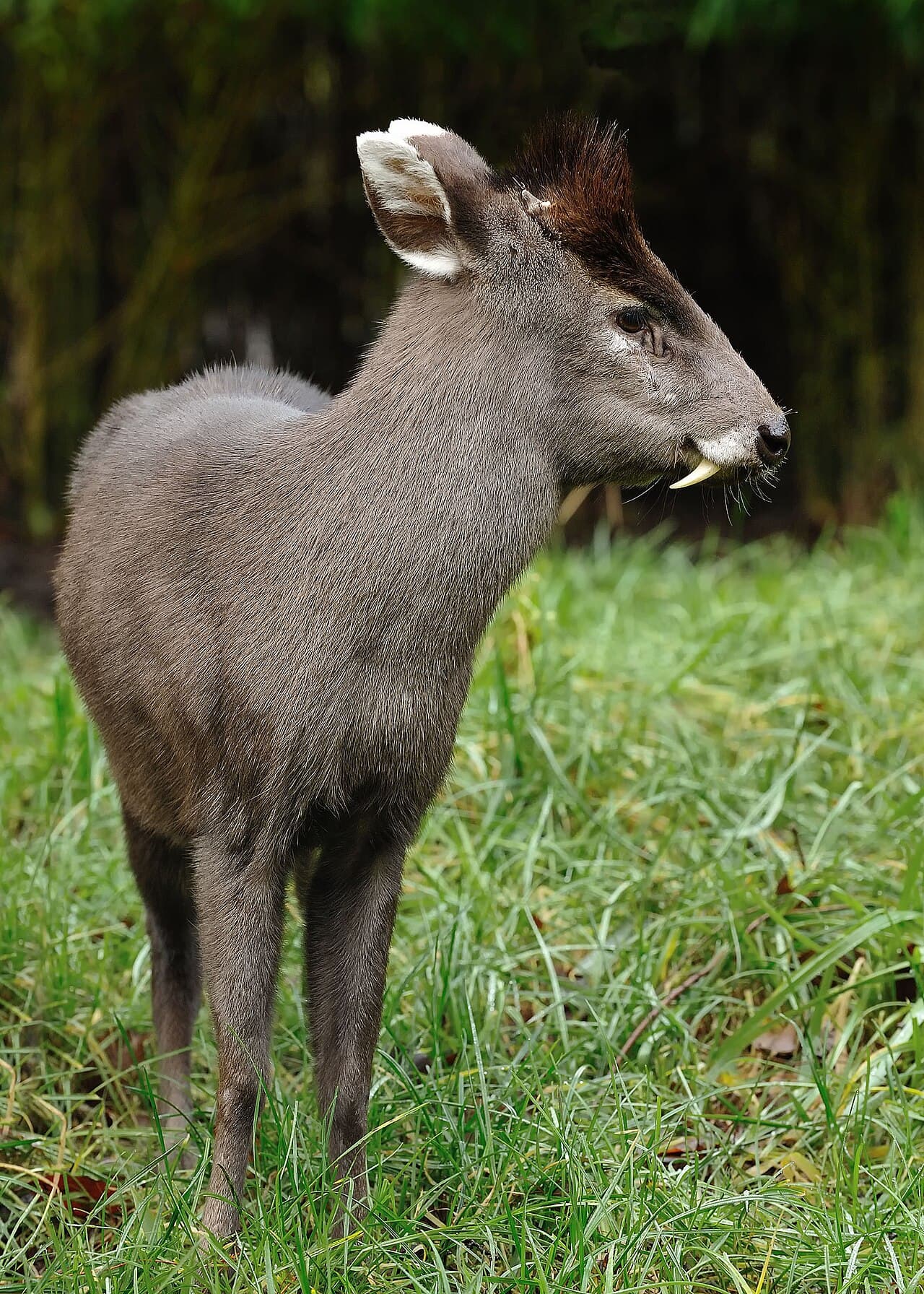
A male tufted deer can show long teeth projecting below its upper lip. The sight seems unexpected in an animal we associate with antlers and leaves.
Those “fangs” are enlarged canine teeth. They belong to a deer, not a miniature carnivore.
A tuft above the eyes
The tufted deer, Elaphodus cephalophus, lives in forested parts of Asia. A dark tuft on the forehead helps give the species its common name.
Males also have small antlers that can be partly concealed by that hair. The antlers and enlarged teeth are different structures, even when a photograph makes one easier to see.
Animal Diversity Web describes the species' appearance and natural history.
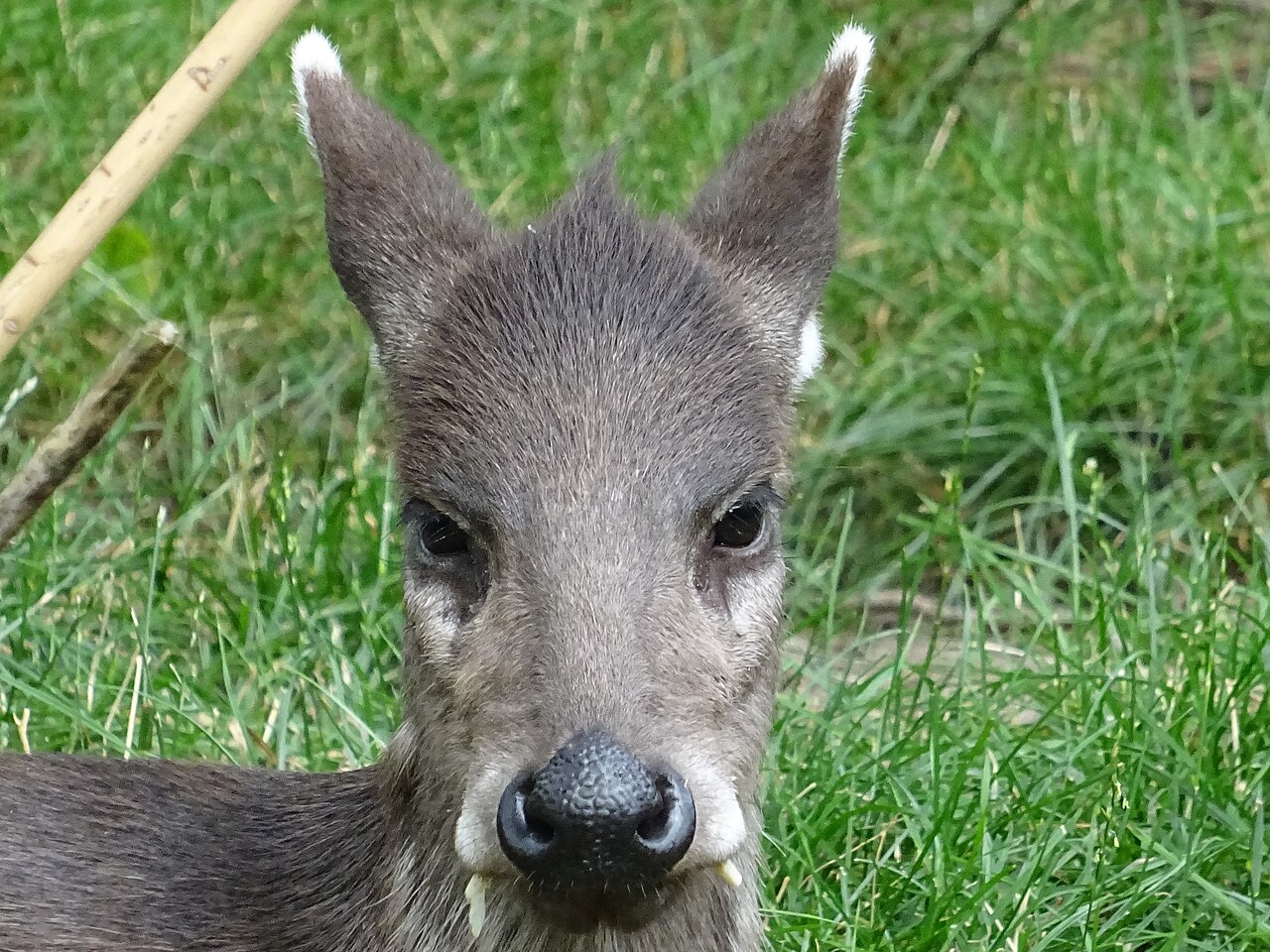
Teeth do more than process food
Enlarged upper canines can be involved in competition between males. Their presence does not mean that the animal must hunt other mammals.
The European Association of Zoos and Aquaria's tufted deer guidelines discuss the species' biology and care.
Deer anatomy is more varied than the familiar image of a large antlered stag. Different species emphasize different structures in their social and defensive lives.
A quiet forest routine
Tufted deer feed on plant material and use cover in a forest environment. Their compact bodies and cautious behavior can make them difficult to observe.
A close portrait highlights the face, but a whole animal needs a suitable feeding area and places to retreat. The forest is part of the explanation for its way of life.
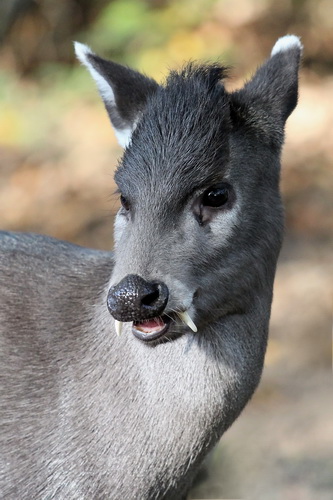
Look beyond the dramatic feature
Habitat change and hunting can put pressure on forest deer. Their smaller size and less familiar appearance do not reduce the value of protecting them.
The tufted deer is a reminder that a single body part can mislead us. A mouth full of surprising teeth still belongs to a plant-eating animal whose life depends on the forest around it.
Photo credits
Featured image: Heush; Source; CC BY-SA 3.0. Resized for web display.

Body image 1: AgainErick; Source; CC BY-SA 4.0. Resized for web display.

Body image 2: Николай Усик / http://paradoxusik.livejournal.com/; Source; CC BY-SA 3.0. Resized for web display.
