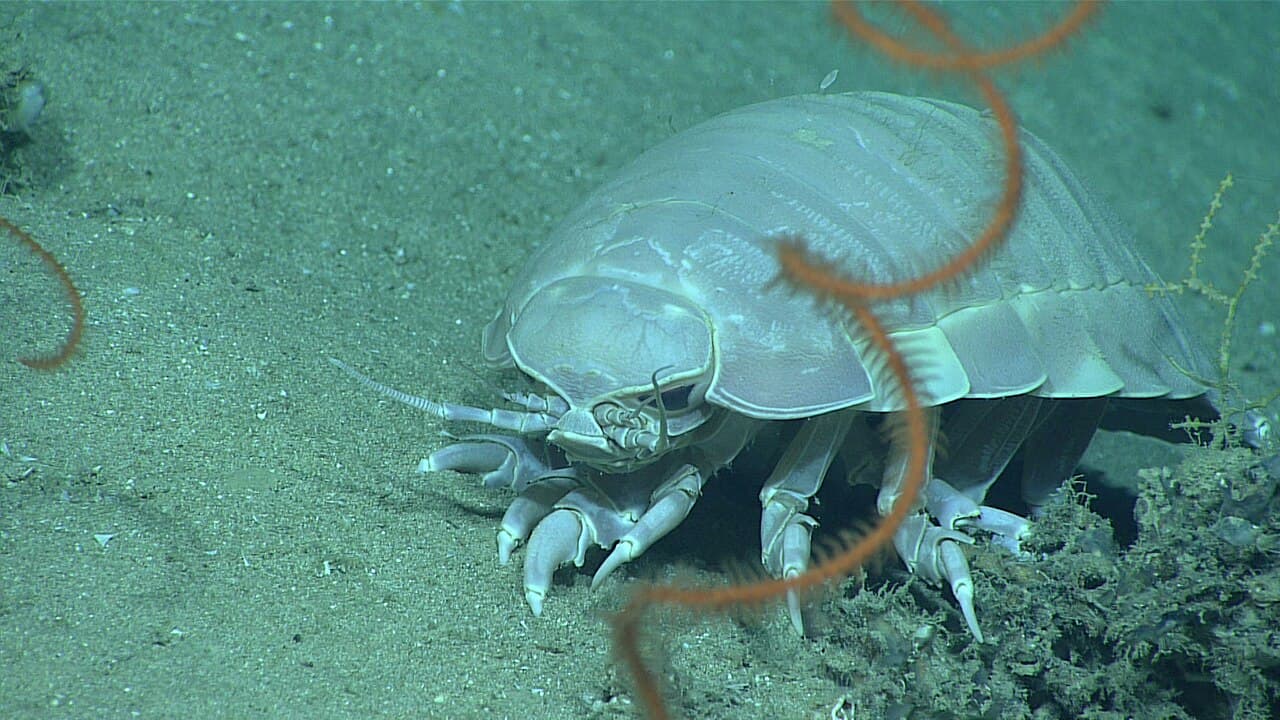
A giant isopod looks surprisingly like the woodlouse beneath a garden log—scaled up for life on the seafloor. The resemblance reflects a real relationship.
These deep-sea animals are crustaceans, carrying a segmented body plan that works in a very different world from a damp backyard.
Not an underwater insect
Giant isopods belong to the genus Bathynomus. The group contains multiple species, including the well-known Bathynomus giganteus shown here.
Smithsonian Ocean describes the group and its deep-water habitats.
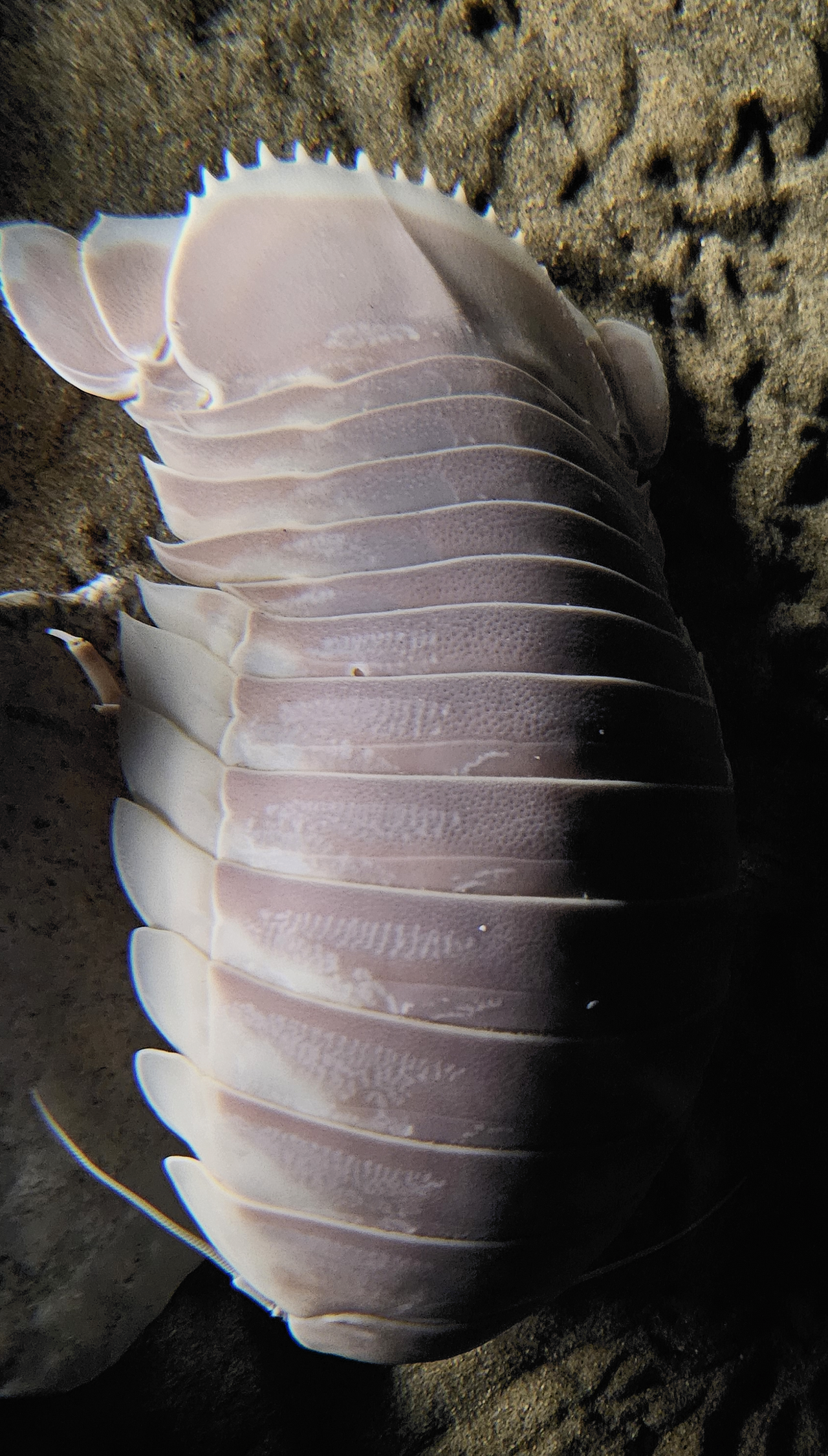
Their hard outer covering is an exoskeleton. Jointed legs, antennae, and overlapping body segments help them move and investigate the bottom.
Waiting for food in the dark
Food can be patchy on the deep seafloor. Giant isopods scavenge animal remains and can also take other food when opportunities arise.
The Natural History Museum explains their role in making use of material that reaches the bottom.
A dead fish may provide a valuable meal. But the animals should not be described as passive rubbish collectors that never hunt or move in search of food.
Size is a question, not a complete answer
Their large bodies make giant isopods striking examples of the size extremes found in deep-water animals.
Exactly why some related animals become so large involves several possible influences. Pressure alone is not a sufficient explanation to present as settled fact.
The Aquarium of the Pacific provides further natural-history details about B. giganteus.
A hidden part of the ocean food web
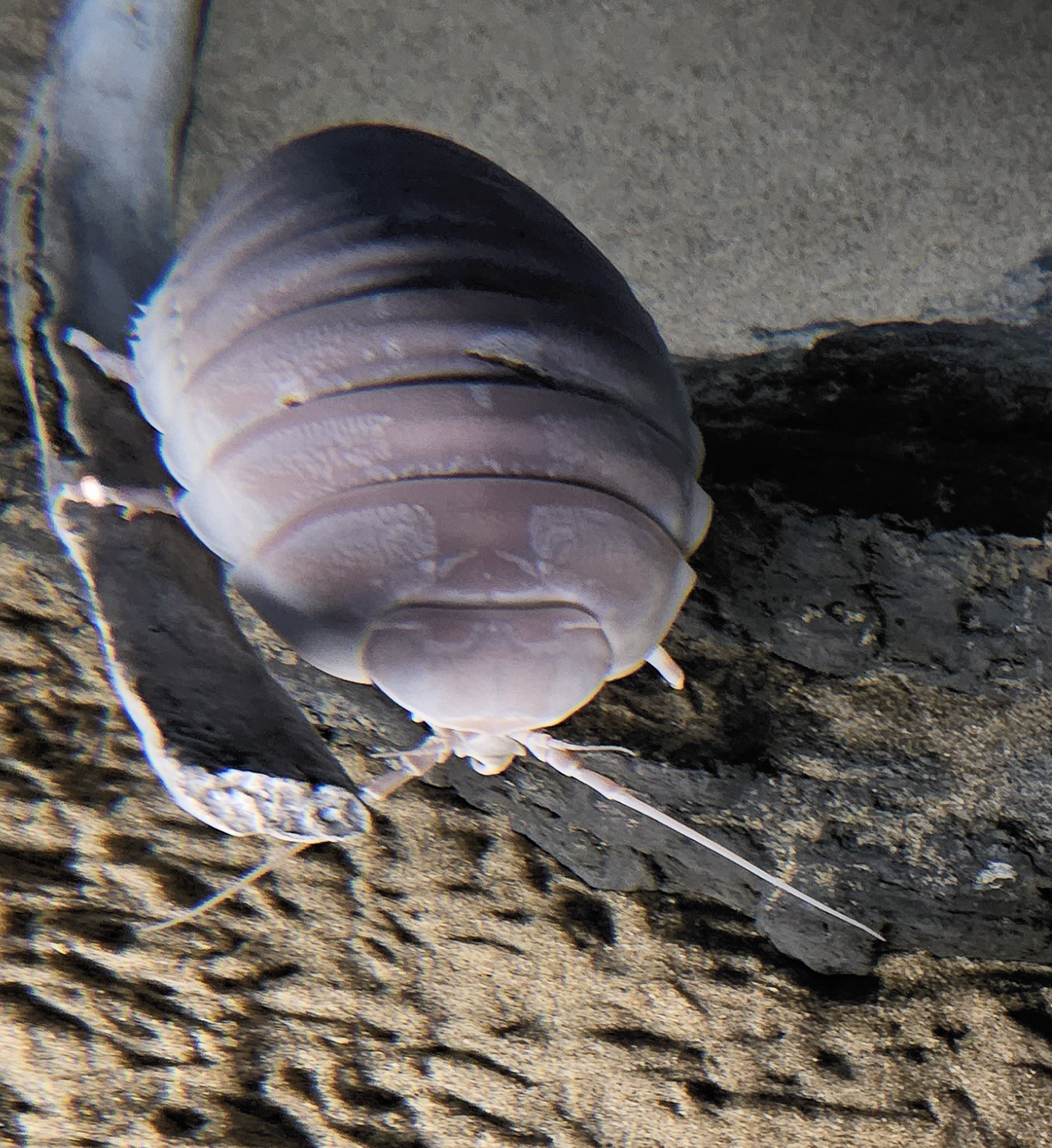
A seafloor animal can be important even when few people ever see it alive. Scavengers return nutrients to the wider system and connect sinking food to life at depth.
The giant isopod's appeal begins with its unexpected size. Its greater wonder is how a familiar-looking body can belong so completely to an unfamiliar habitat.
Photo credits
Featured image: NOAA; Source; Public domain. Resized for web display.

Body image 1: Eric Polk; Source; CC BY-SA 4.0. Resized for web display.

Body image 2: Eric Polk; Source; CC BY-SA 4.0. Resized for web display.
