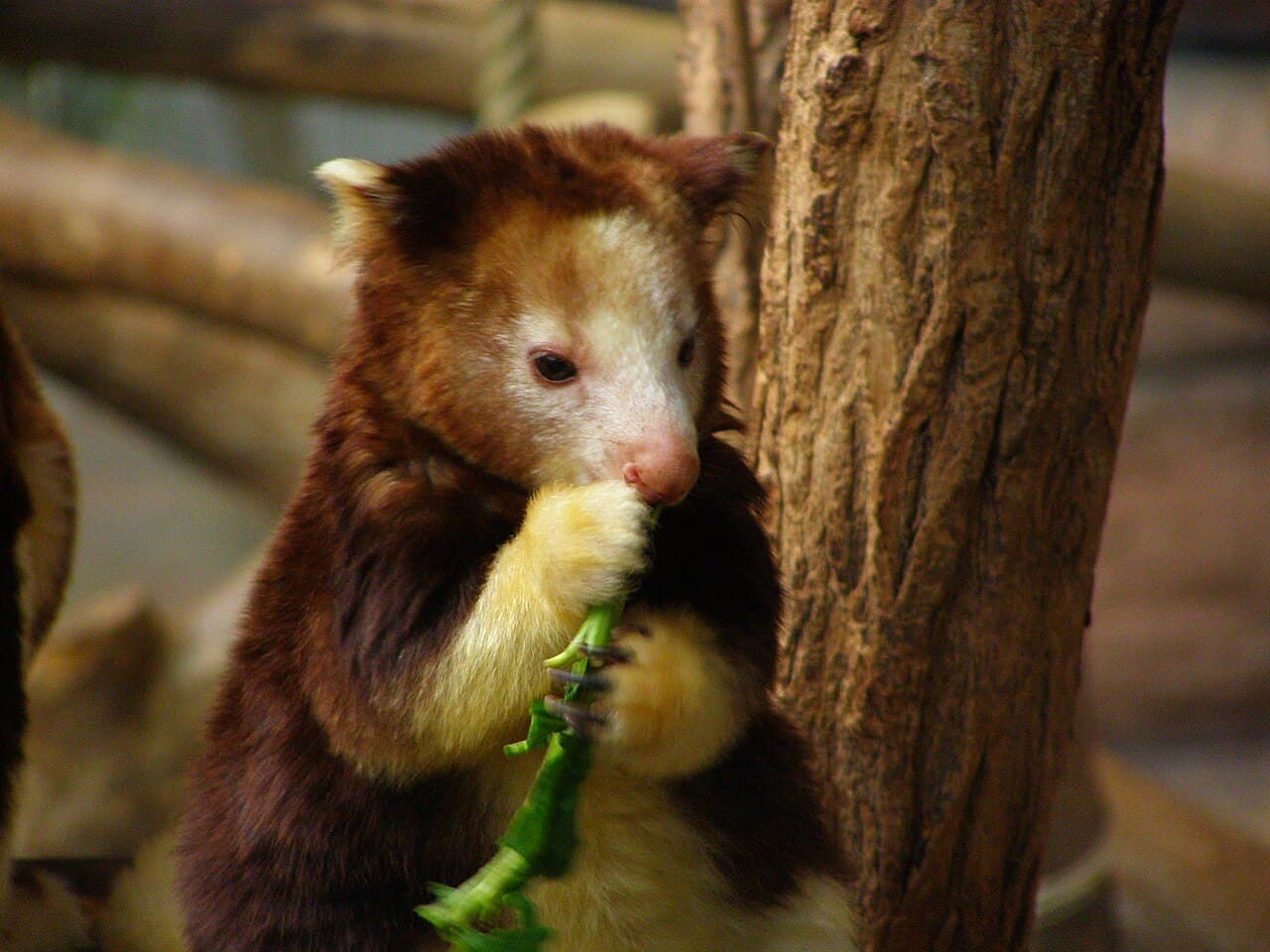
A kangaroo relative living high in a tree sounds like a surprising twist in nature's design. Matschie's tree kangaroo makes it look entirely practical, using strong limbs and gripping claws to move through the canopy.
Tree kangaroos are a group of marsupials in the genus Dendrolagus. This article focuses on Matschie's tree kangaroo, Dendrolagus matschiei, from the Huon Peninsula of Papua New Guinea.
A different kind of kangaroo body
Ground kangaroos are famous for long hind legs and powerful hopping. A tree kangaroo has a stockier shape and strong forelimbs useful for climbing.
Long claws and rough gripping surfaces help it hold branches. Its long tail helps with balance; it is not a grasping extra limb.
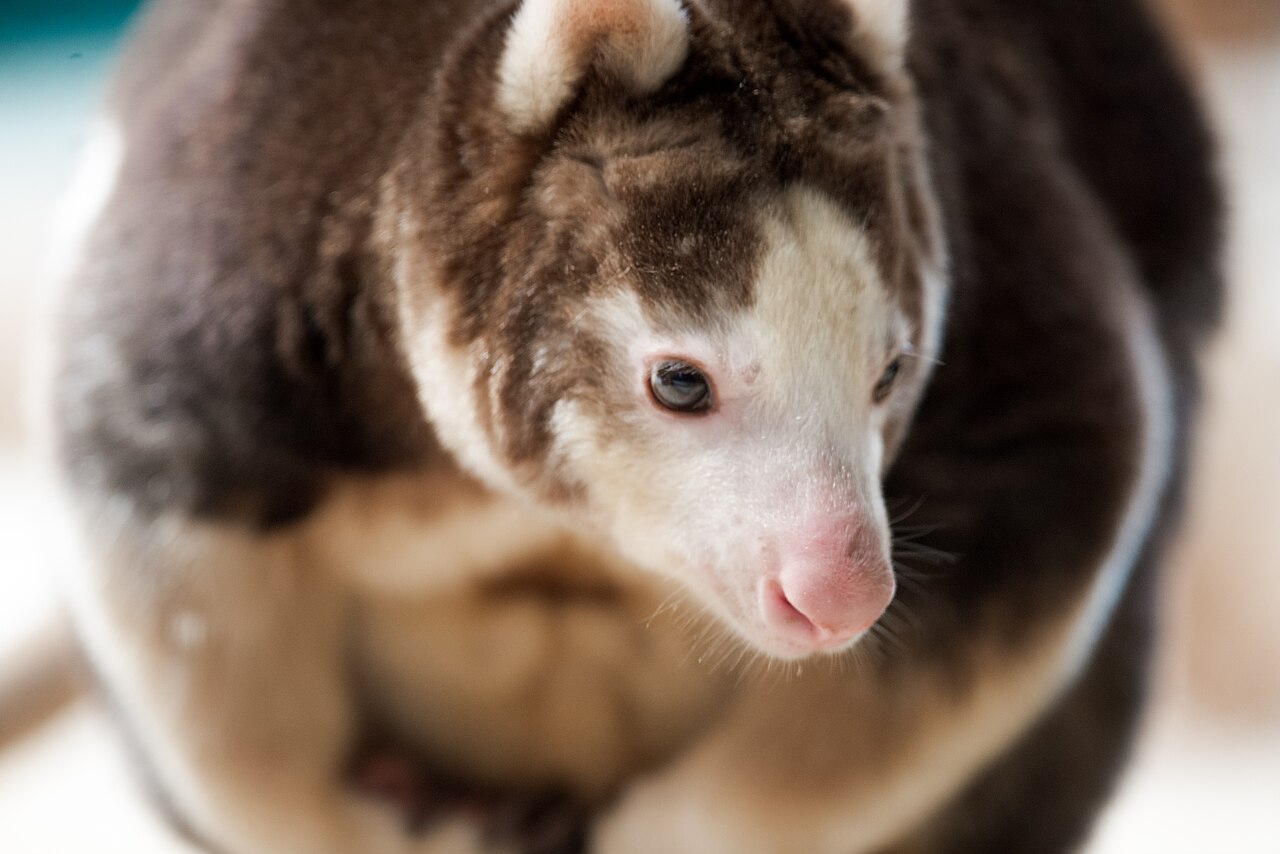
The San Diego Zoo Wildlife Alliance describes a reddish-brown coat with pale or yellowish areas on the face and limbs. Thick fur suits the damp forest environment.
A leafy home in the mountains
Matschie's tree kangaroos live in mountain forest. Much of their diet consists of leaves, with other plant material also eaten.
A branch is both a route and a feeding place. Keeping enough forest protects the space needed to move as well as the plants needed for food.
They can also come to the ground. Being a tree kangaroo does not mean an animal spends every minute above it.
A joey's first forest is a pouch
Like other marsupials, females give birth to a very undeveloped youngster. The joey continues growing in its mother's pouch.
For months, that pouch is a secure place while the mother feeds and moves. The youngster's life eventually expands from a sheltered pouch to a network of trunks and branches.
Conservation starts with the people of the forest
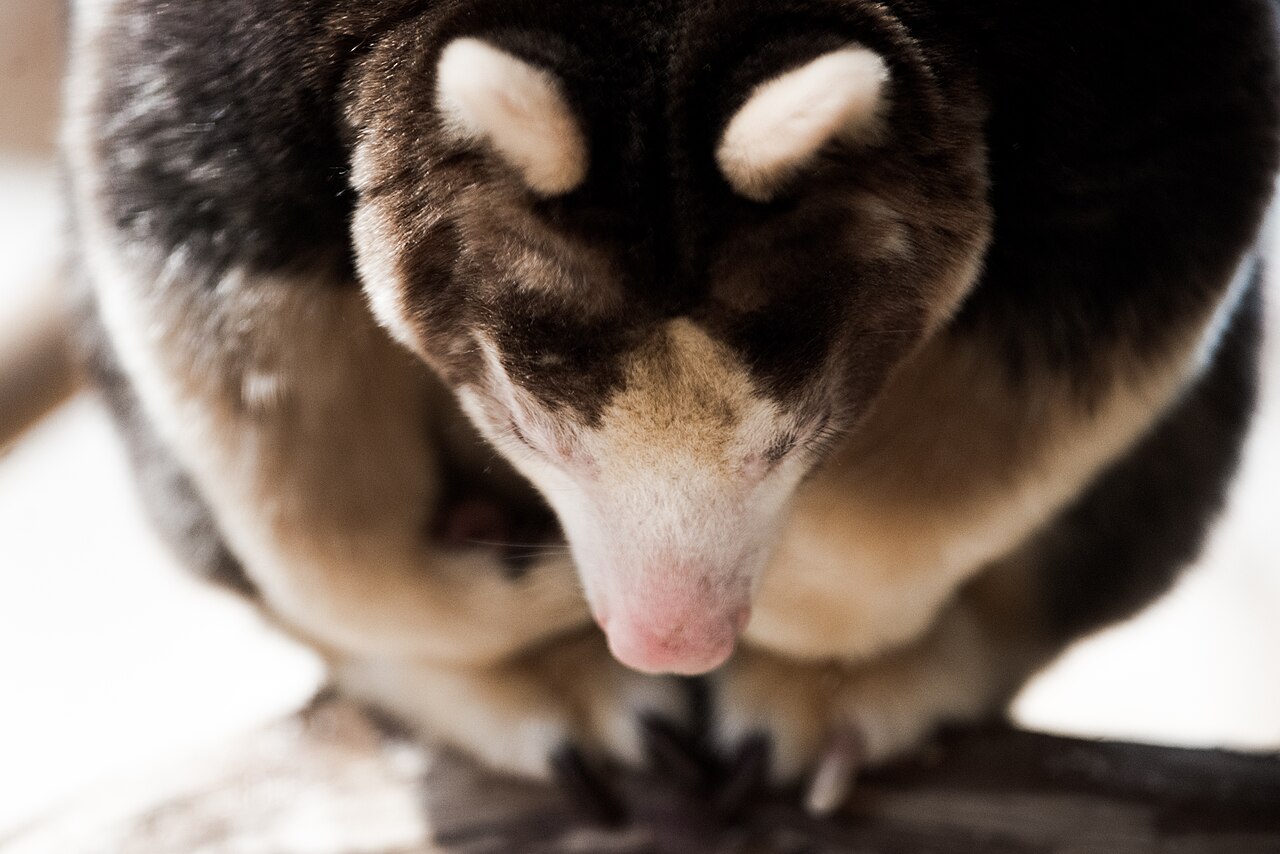
Matschie's tree kangaroos are Endangered. Hunting and habitat loss threaten populations.
The Tree Kangaroo Conservation Program works with communities in Papua New Guinea and helped establish the YUS Conservation Area. Its approach connects wildlife protection with local livelihoods, health, and education.
A tree kangaroo's story is therefore about more than a surprising climbing animal. It is also about people keeping a shared forest alive. Among the mossy branches, evolution has created a wonderful variation on the kangaroo family.
Photo credits
Featured image: Dendrolagus matschiei eating.jpg — Flickr user belgianchocolate, CC BY 2.0.

Body image 1: Tree Kangaroo Closeup (22409556675).jpg — Eric Kilby from Somerville, MA, USA, CC BY-SA 2.0.

Body image 2: Tree Kangaroo Meditative (22409550845).jpg — Eric Kilby from Somerville, MA, USA, CC BY-SA 2.0.

Photographs resized to up to 1,280 pixels wide for web display.