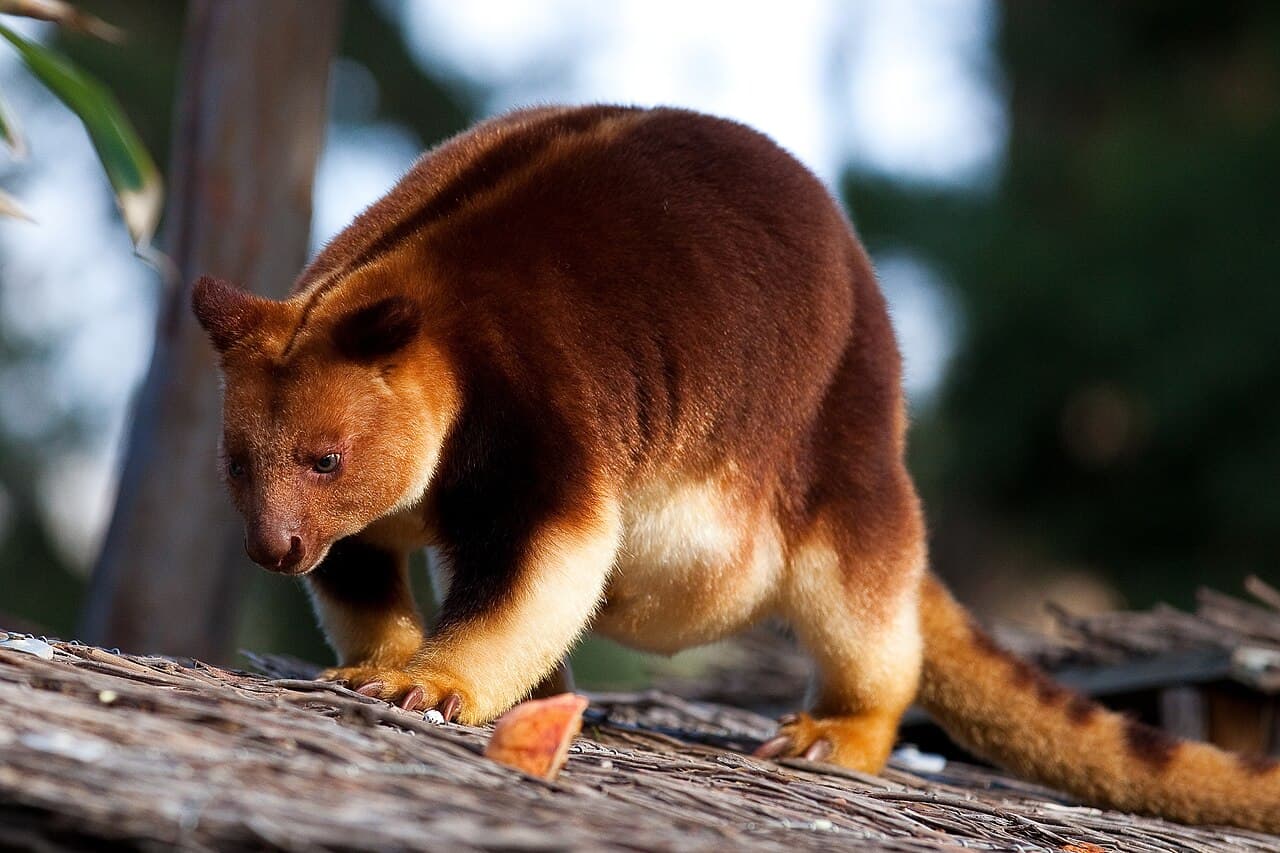
Two golden stripes run along the back of Goodfellow's tree kangaroo, contrasting with its warm brown coat. A long, patterned tail follows behind. It is one of the most striking ways the kangaroo family has adapted to forest life.
Goodfellow's tree kangaroo, Dendrolagus goodfellowi, comes from New Guinea. It is a different species from Matschie's tree kangaroo, with its own appearance and conservation story.
A forest climber's equipment
Strong arms, comparatively short hind limbs, and broad feet help this animal move among branches. Curved claws improve its grip.
The long tail provides balance rather than wrapping around branches. The National Zoo and Aquarium's species account describes padded soles and the characteristic pair of golden lines down the back.
The tail's yellowish markings can vary between individuals. A beautiful pattern is therefore also a reminder that animals of one species need not look identical.
Why the canopy matters
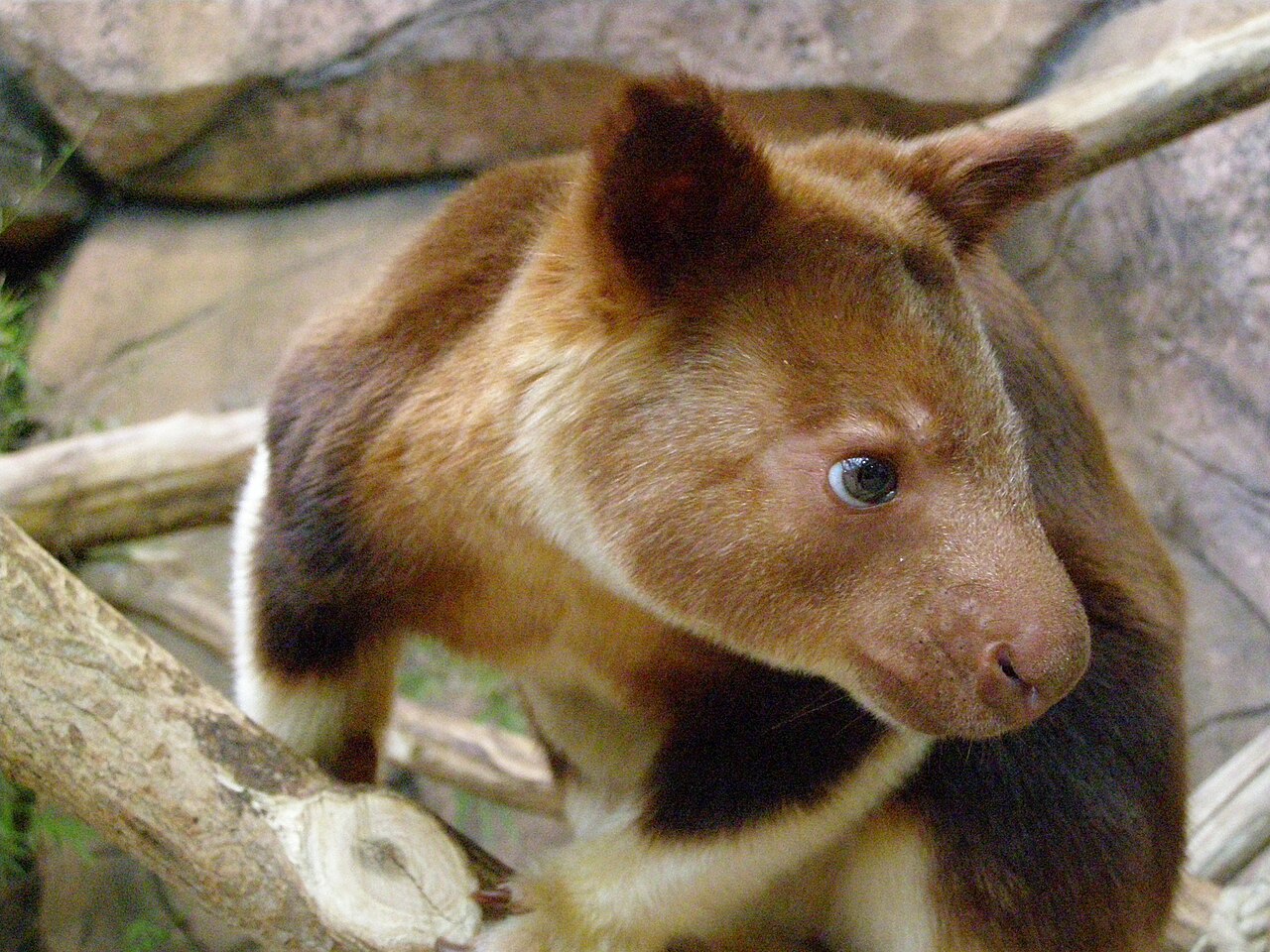
This is a forest-dwelling marsupial. Trees provide routes, cover, and feeding opportunities, making the arrangement of the habitat as important as the presence of any single tree.
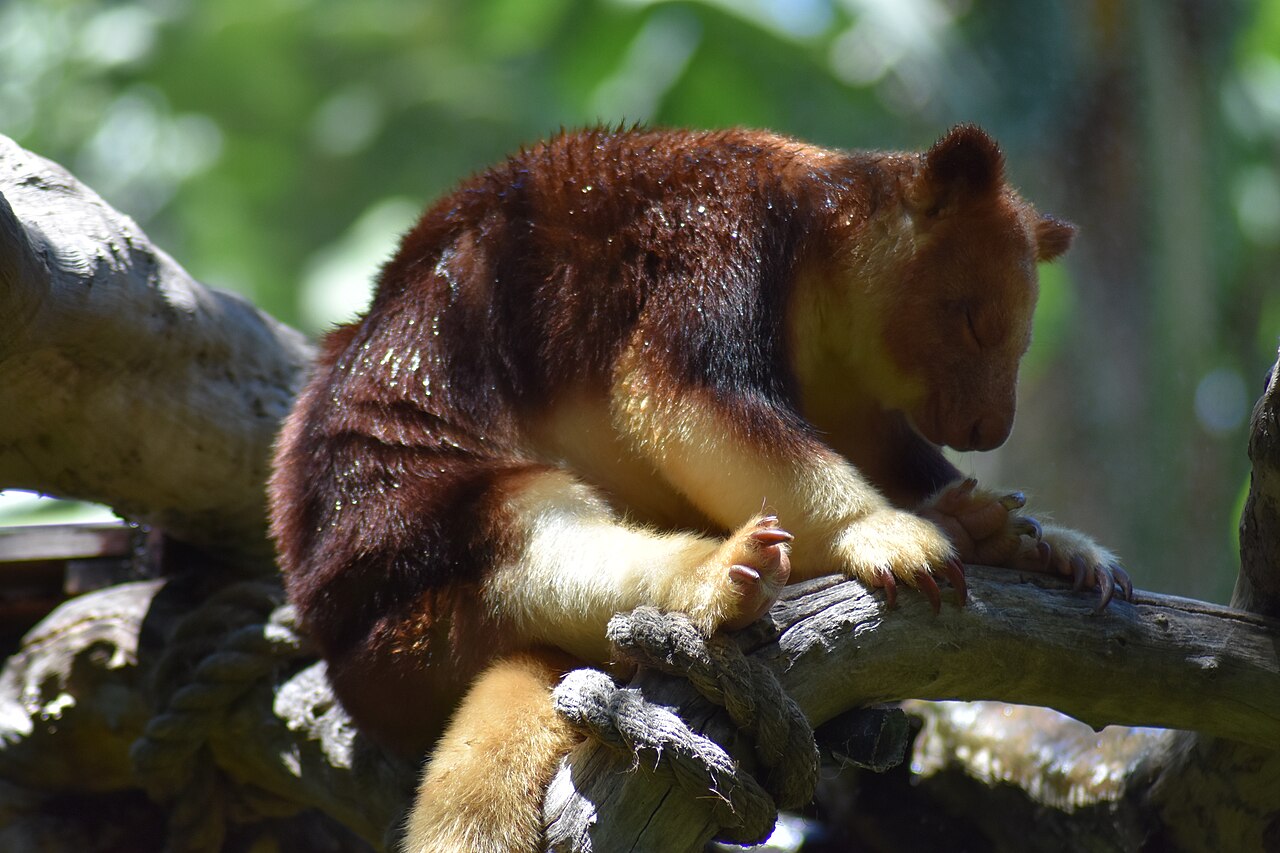
A forest canopy is not one flat roof. Branches vary in strength, angle, and distance. A climbing mammal must keep adjusting its grip and balance as it moves.
The photographs here show animals in human care. They allow a close look at features that can be difficult to observe in a wild forest.
A youngster grows in the pouch
Goodfellow's tree kangaroos usually have a single joey. As in other marsupials, much early development happens in the mother's pouch.
Taronga Zoo's account of a Goodfellow's joey explains how keepers may first notice a young animal when it begins peeking out. Birth and a first clear sighting are therefore different events.
A rare forest resident needs room
Goodfellow's tree kangaroo is Endangered. Forest loss and hunting have reduced and fragmented wild populations.
Breeding programs can contribute to conservation, but maintaining animals in zoos cannot replace protecting their natural habitat.
Its golden stripes make this tree kangaroo easy to admire. Its real wonder lies in the whole living animal: strong claws, careful balance, a growing joey, and a forest canopy that needs to remain connected.
Photo credits
Featured image: Dendrolagus goodfellowi -Melbourne Zoo, Australia-8a.jpg — Richard Ashurst, CC BY 2.0.

Body image 1: Dendrolagus goodfellowi looking.jpg — Flickr user belgianchocolate, CC BY 2.0.

Body image 2: Tree Kangaroo On Log.jpg — TheRagingRhino, CC BY-SA 4.0.

Photographs resized to up to 1,280 pixels wide for web display.