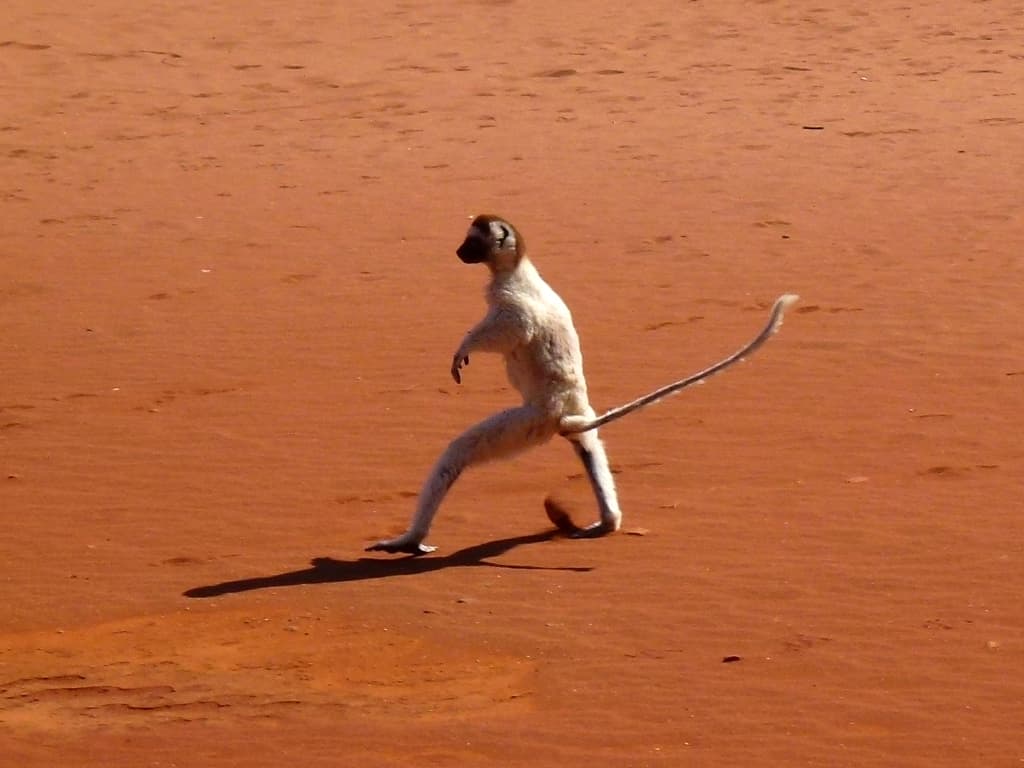
A sifaka crossing open ground can look as if it is dancing. It rises onto its hind legs and bounds sideways, arms lifted for balance. What looks playful to us is an unusual way of moving between places.
“Sifaka” refers to several lemur species in the genus Propithecus. Here, the focus is Verreaux's sifaka, Propithecus verreauxi, a pale-furred primate from western and southern Madagascar.
Legs made for leaping
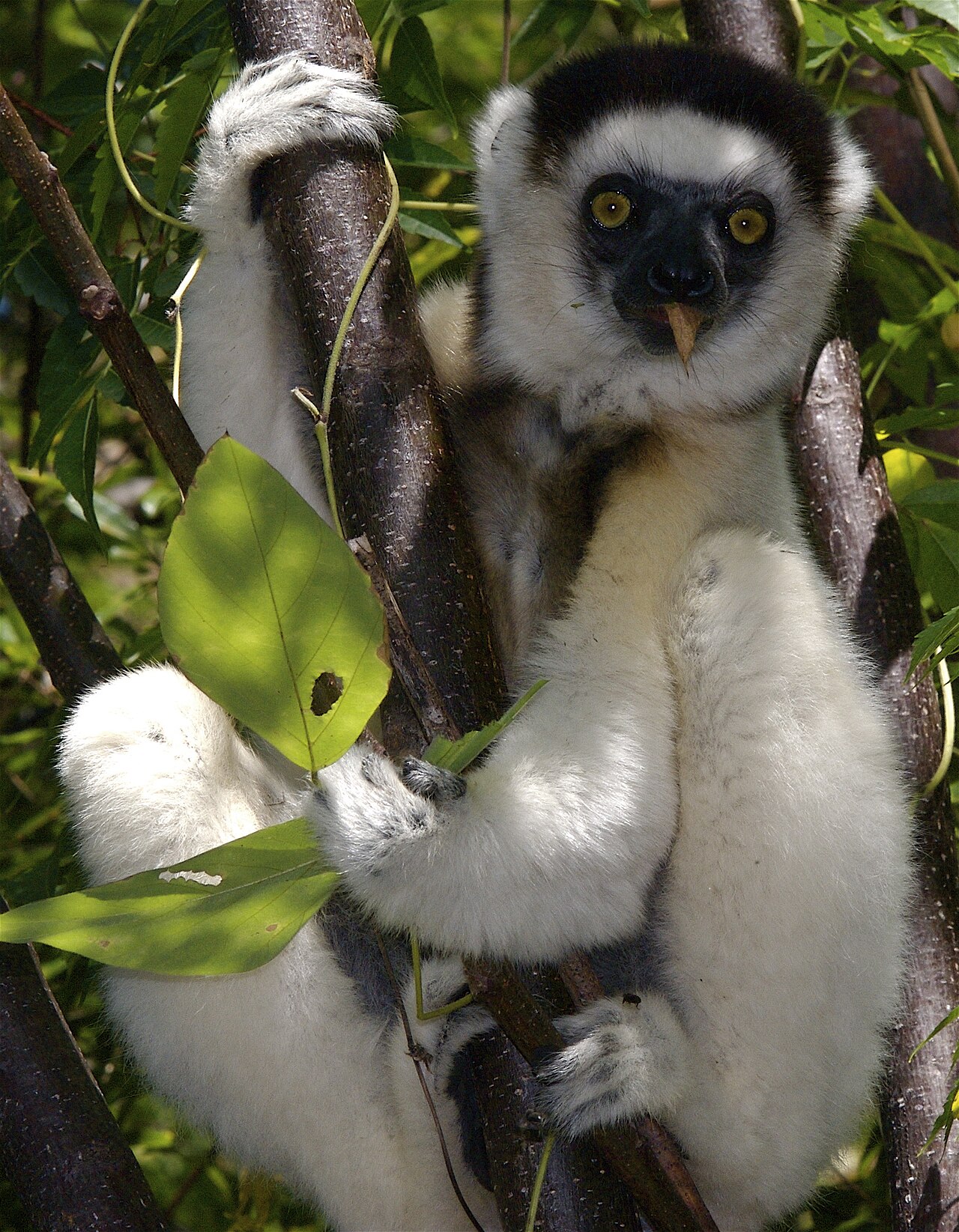
Verreaux's sifakas are specialized for clinging to upright supports and leaping between them. Long, powerful hind limbs help launch the body through the trees.
On the ground, those proportions make an ordinary four-legged walk less suitable. Sideways hopping allows the animal to move across gaps in its wooded world.
Animal Diversity Web describes the species' movement, habitat, and social life. The famous “dance” is locomotion, rather than a performance for people.
A pale coat in a dry forest
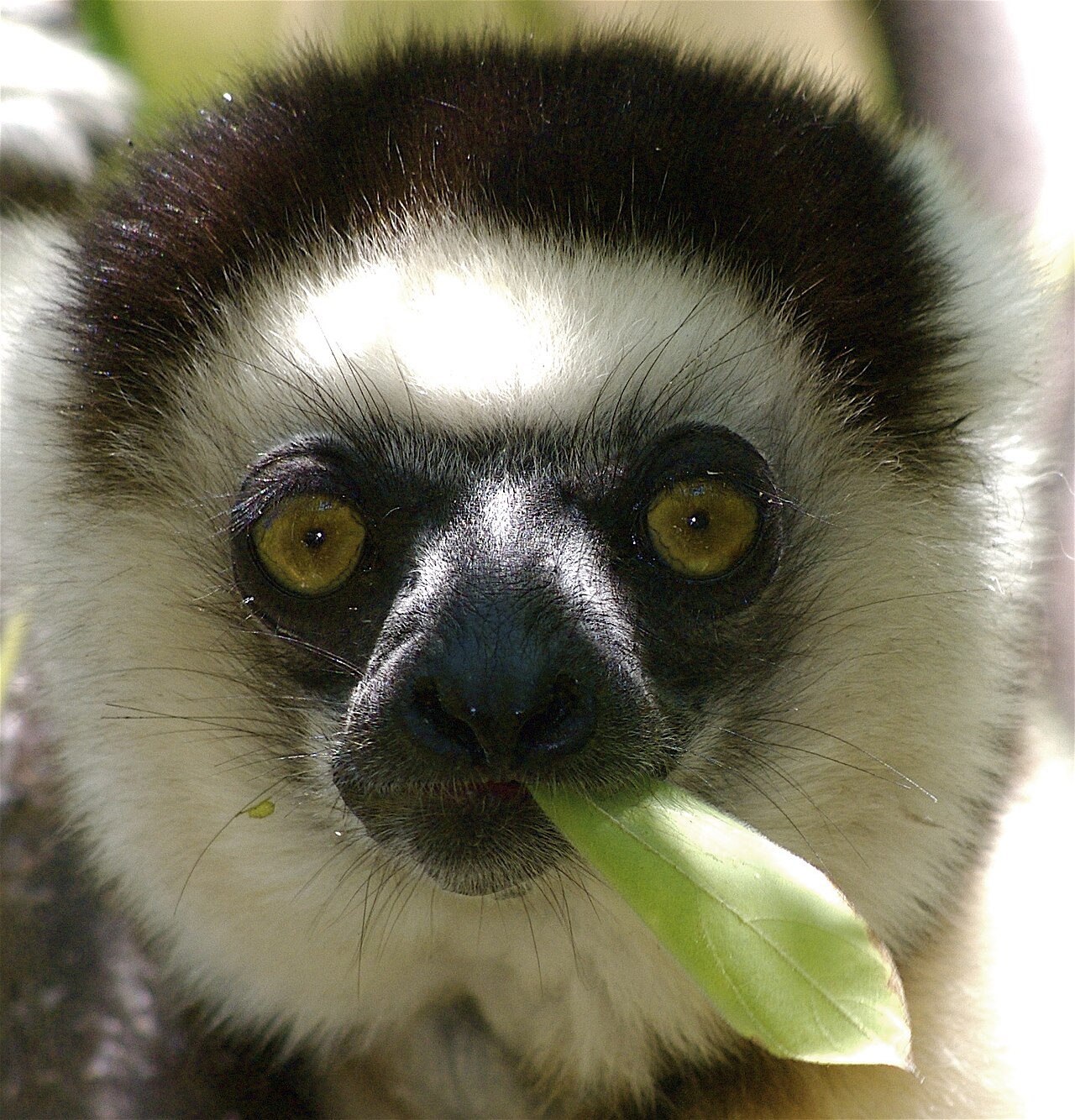
Verreaux's sifakas have mostly pale fur, a dark face, and a darker patch around the crown. Their long tails help create a striking shape as they move.
They live in forests that may be much drier and more seasonal than the rainforest many people associate with Madagascar. Dry forest and spiny vegetation are important parts of the island's biodiversity.
Leaves, families, and changing seasons
Their diet includes leaves and other plant foods. Which foods are available changes with the season, so a living forest must provide more than one useful tree.
Sifakas also live in groups. Calls and scent signals carry information about neighbors and territory. Youngsters begin life clinging to their mothers before becoming independent leapers.
Why a dancing lemur needs serious protection
The IUCN's Save Our Species program identifies Verreaux's sifaka as Critically Endangered. Its work in southern Madagascar emphasizes protecting lemurs and the forests they depend on.
Habitat loss and hunting are major concerns for Madagascar's lemurs. Conservation must also work with the needs of people who live near those forests.
A sideways hop may make us smile, but it carries a deeper story. The sifaka's body is beautifully suited to its own world. Keeping that world intact allows the movement to continue for generations.
Photo credits
Featured image: Jumping Verreaux's Sifaka Berenty Madagascar - panoramio.jpg — Hiroki Ogawa, CC BY 3.0.

Body image 1: Propithecus verreauxi 001.jpg — Jeff Gibbs, CC BY-SA 3.0.

Body image 2: Propithecus verreauxi 002.jpg — Jeff Gibbs, CC BY-SA 3.0.

Photographs resized to up to 1,280 pixels wide for web display.