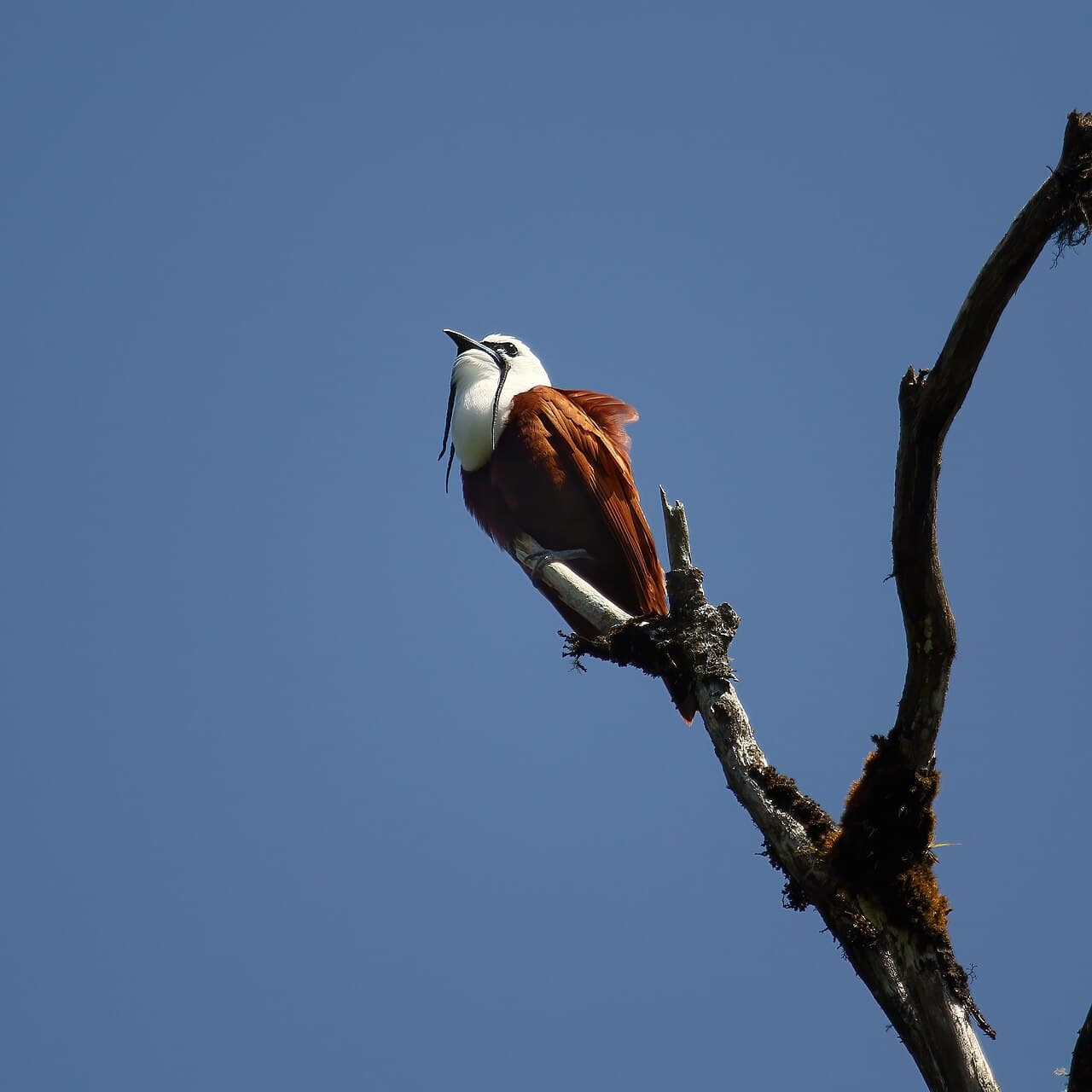
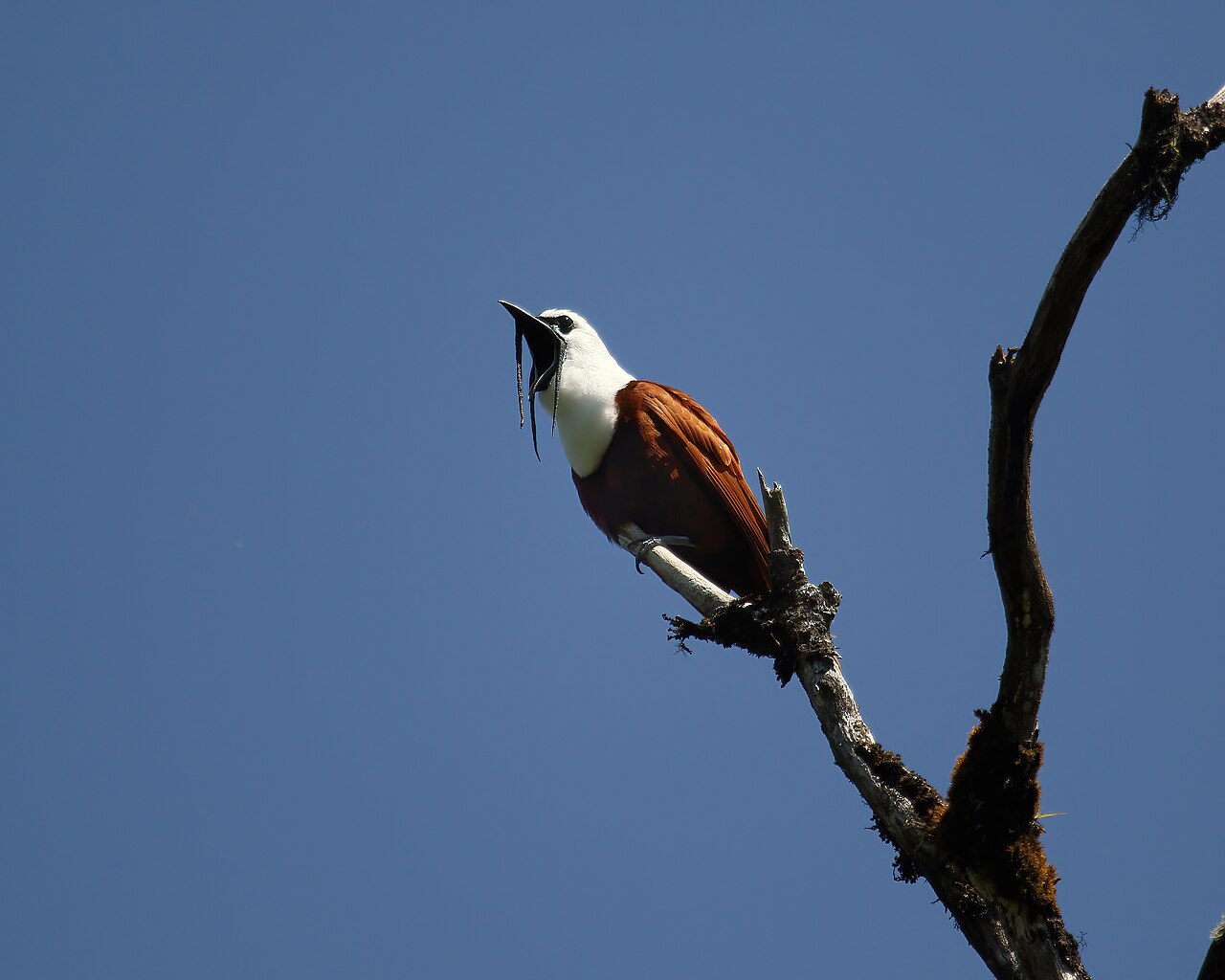
Three soft ornaments hang from the face of a male three-wattled bellbird. Then the bird opens its bill, adding a startling metallic sound to an already extraordinary appearance.
Procnias tricarunculatus is a Central American cotinga. The male's white head and brown body contrast with the three dark wattles.
Ornaments that move with the bird
American Bird Conservancy describes the unusual male and its powerful vocal performance.
The wattles are fleshy structures rather than extra feathers. Their changing position can make two photographs of the same bird look surprisingly different.
Females are less dramatic in color and lack the male's long facial ornaments.
A fruit-eater with places to go
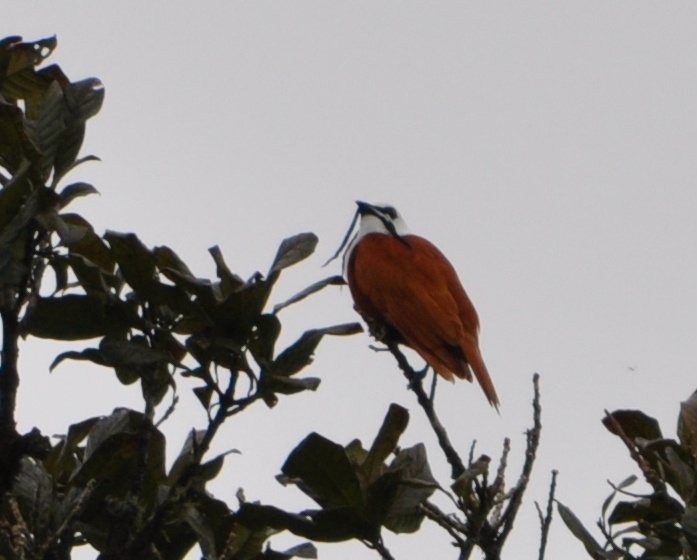
The species feeds on fruit and moves between different forest areas through the year.
That movement makes habitat connections important. A safe nesting area does not replace the feeding habitat needed at another time.
A bird's range is a set of useful places, not simply a colored shape on a map.
Keep the performance in its setting
Habitat loss is a major concern. Forest protection must consider both where the bellbird breeds and where it travels afterward.
The ringing voice and hanging wattles may be the first details we notice. The more lasting wonder is the connection between a strange-looking singer, fruiting trees, and a changing forest route.
Photo credits
Featured image: Procnias tricarunculatus Monteverde 01.jpg — Cephas; CC BY-SA 4.0.

Body image 1: Procnias tricarunculatus -Costa Rica -male-6a.jpg — Erik Terdal from Tulsa, United States; CC BY-SA 2.0.

Body image 2: Procnias tricarunculatus Monteverde 02.jpg — Cephas; CC BY-SA 4.0.

Photographs resized for web display where available.