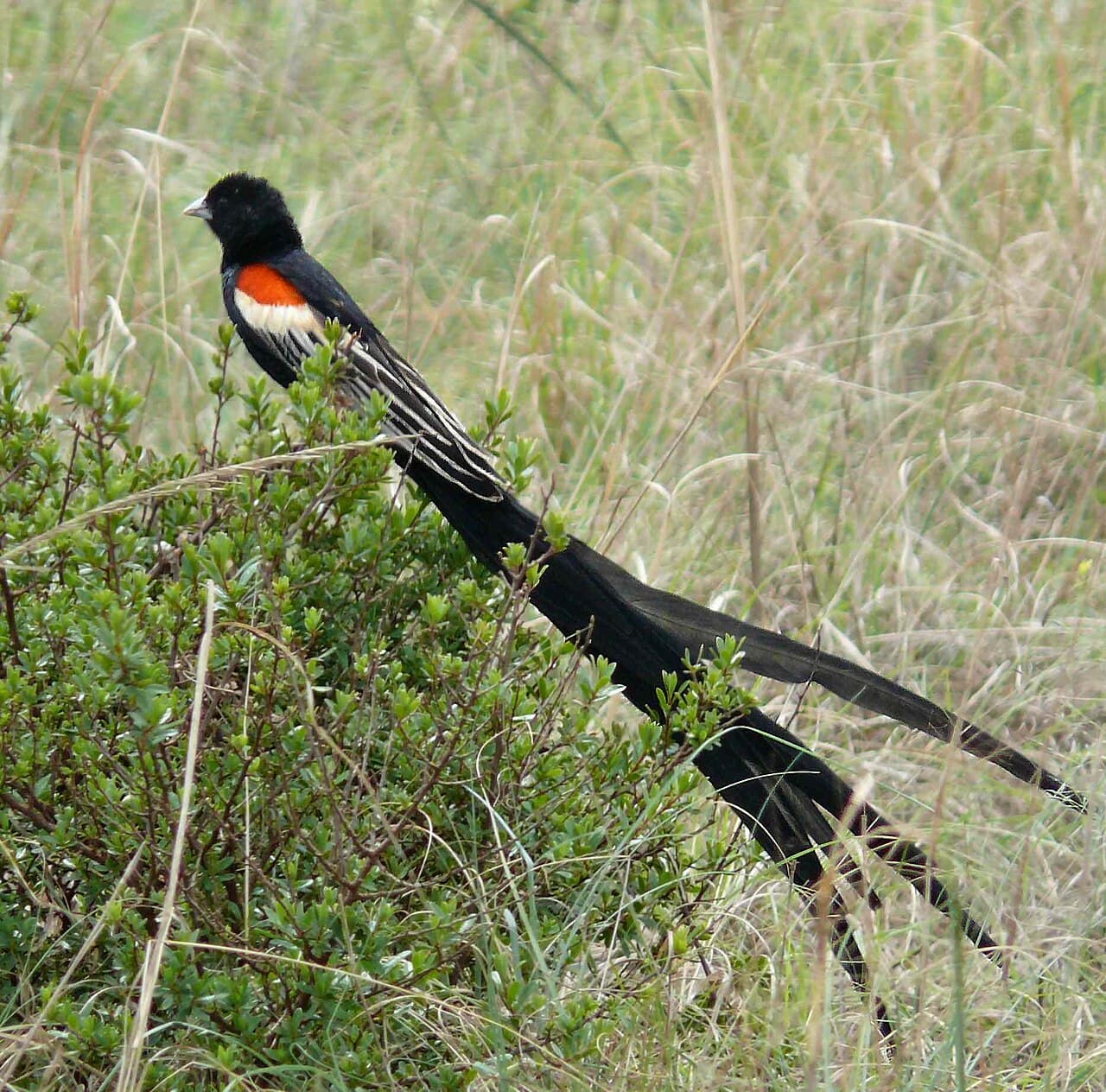
A breeding male long-tailed widowbird carries a tail so long that it trails far behind his compact body. That dramatic feature became the subject of a famous experiment.
Euplectes progne is an African grassland bird. The male's dark breeding plumage and long tail create a silhouette quite unlike the quieter-looking female.
A beautiful feature becomes a testable question
In a 1982 Nature study, Malte Andersson changed male tail lengths experimentally.
Males with lengthened tails achieved greater mating success than birds with normal or shortened tails. The result supported a role for female preference in maintaining the extraordinary ornament.
It is an important distinction: researchers tested an explanation instead of assuming that a striking shape spoke for itself.
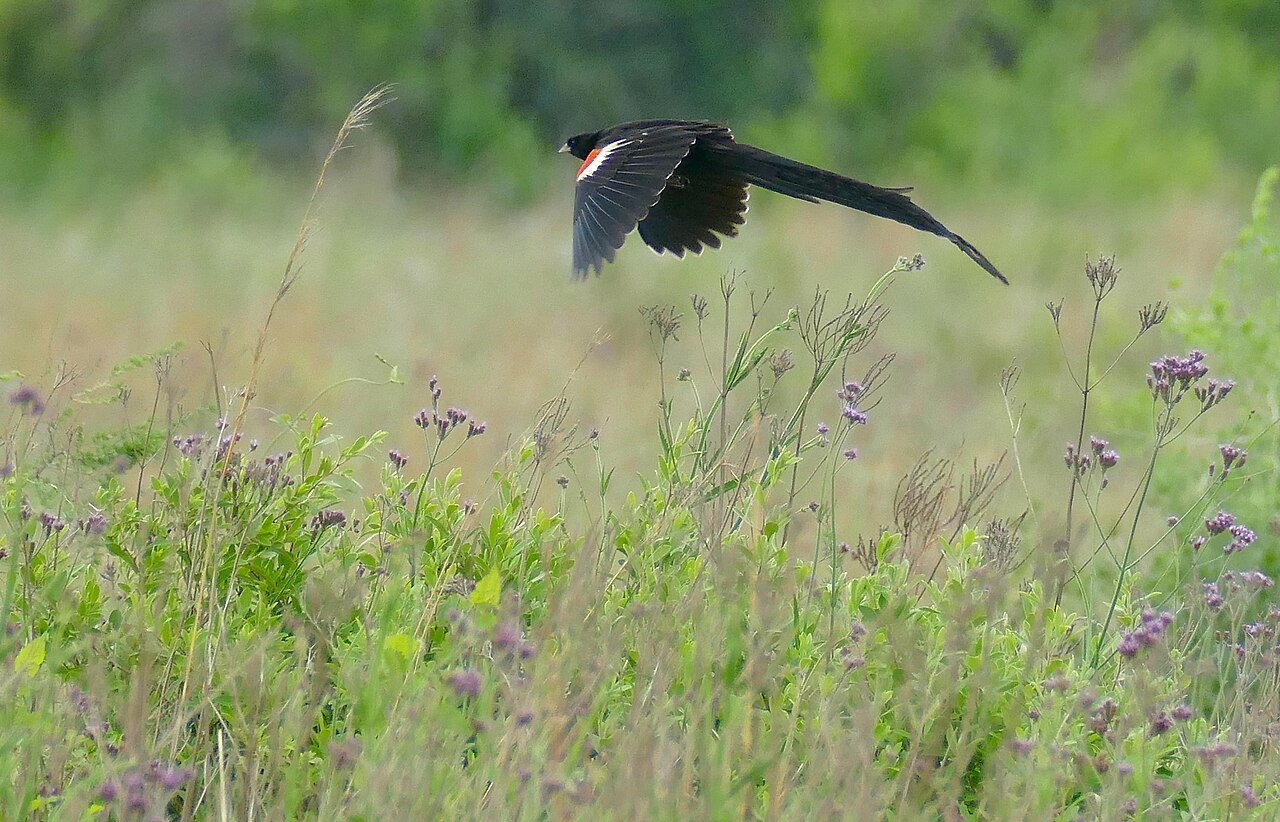
A season changes the portrait
The spectacular tail belongs to the breeding male's appearance. It is not the outline of every individual all year.
Comparing birds by sex and season helps explain why photographs of one species can look so different.
A moving tail also creates an effect that a perched portrait cannot capture.
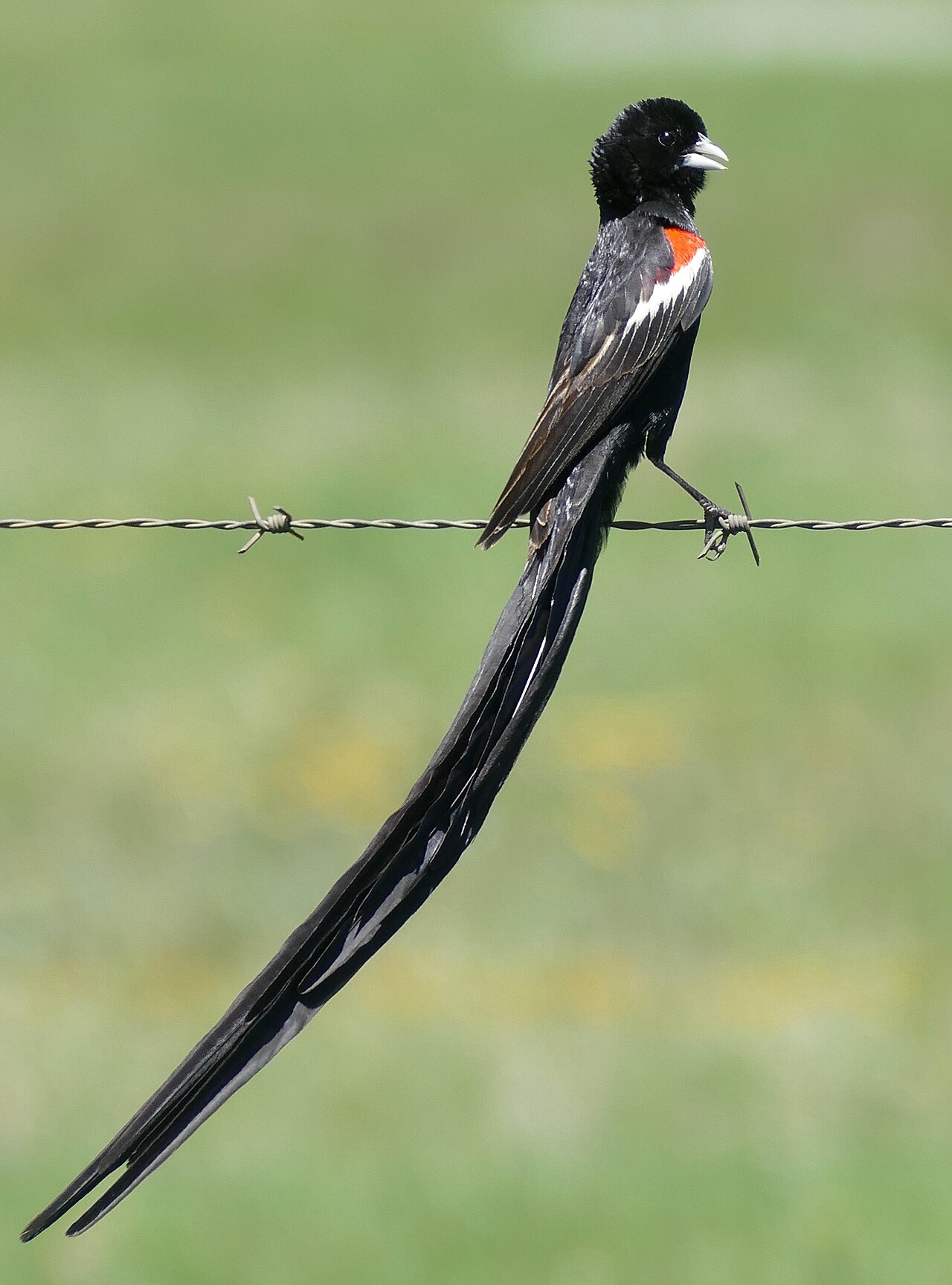
Keep grasslands in the story
Courtship happens within a landscape that must also supply food, shelter, and nesting cover.
Natural grassland deserves attention even when it lacks the obvious height of a forest.
The long-tailed widowbird joins beauty with scientific curiosity. A ribbon of feathers across the grass can lead to a clear question about how animals choose their mates.
Photo credits
Featured image: Euplectes progne male South Africa cropped.jpg — Mohanr53 at English Wikipedia; Public domain.

Body image 1: Day 72 Long-tailed Widowbird (Euplectes progne) male ... (53366434668).jpg — Bernard DUPONT from FRANCE; CC BY-SA 2.0.

Body image 2: Long-tailed Widowbird (Euplectes progne) male .... (46718360972).jpg — Bernard DUPONT from FRANCE; CC BY-SA 2.0.

Photographs resized for web display where available.