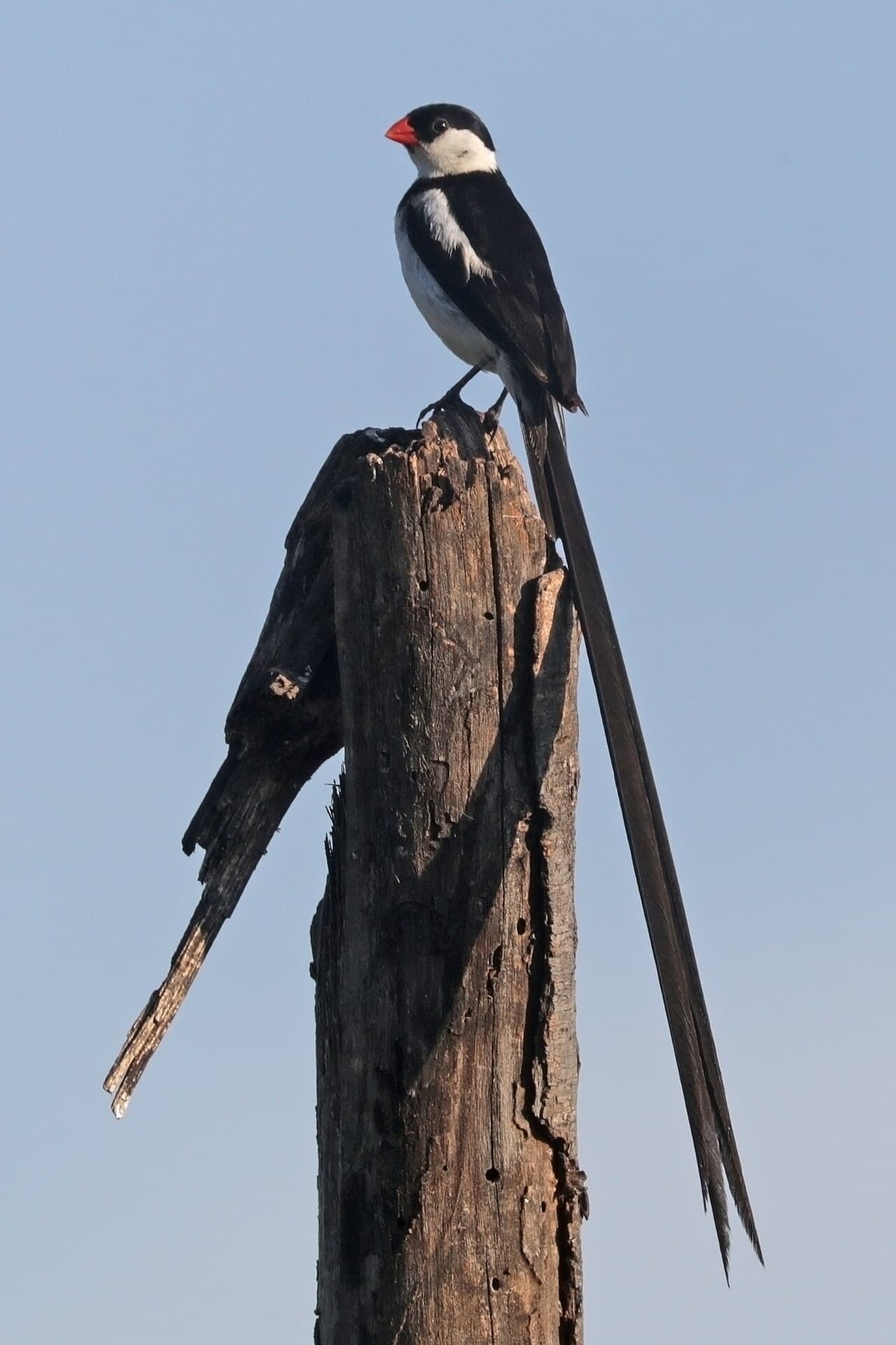
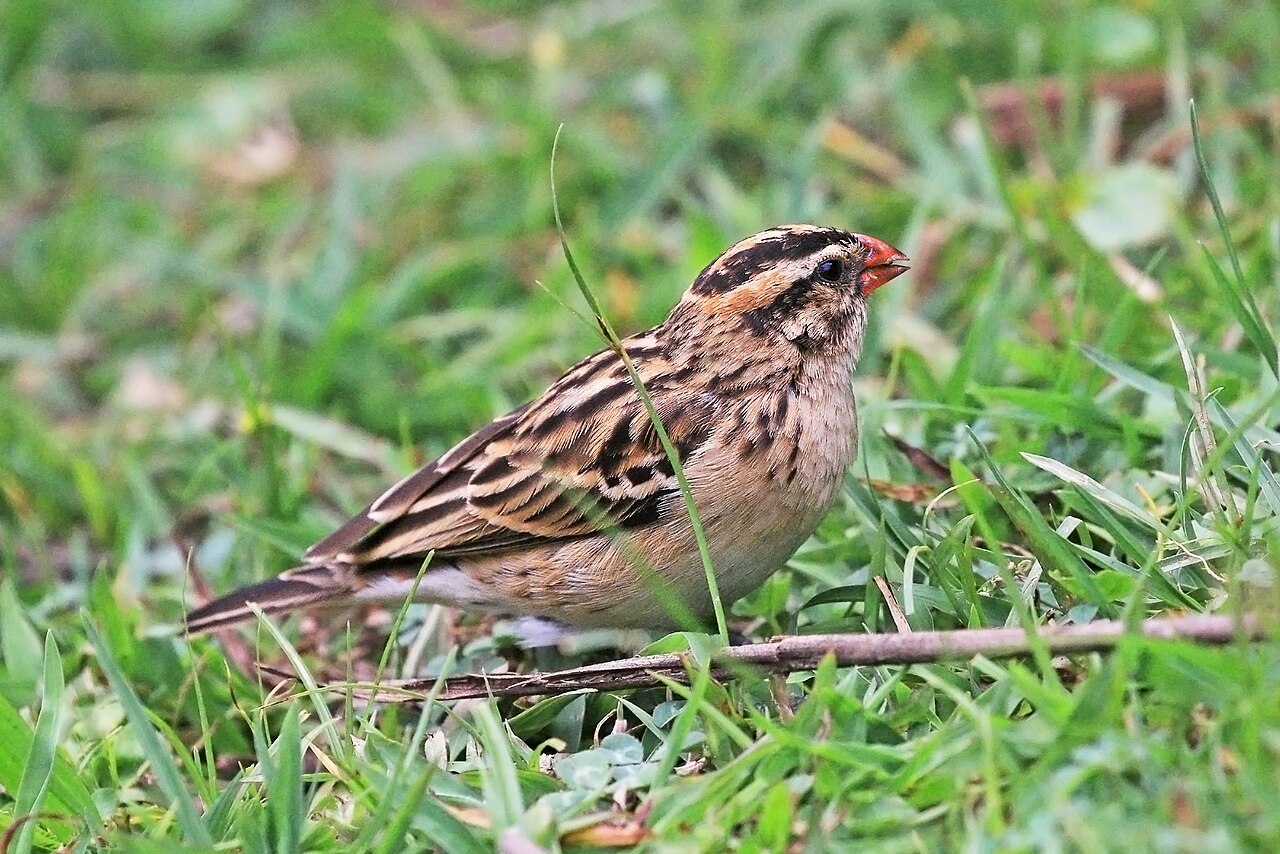
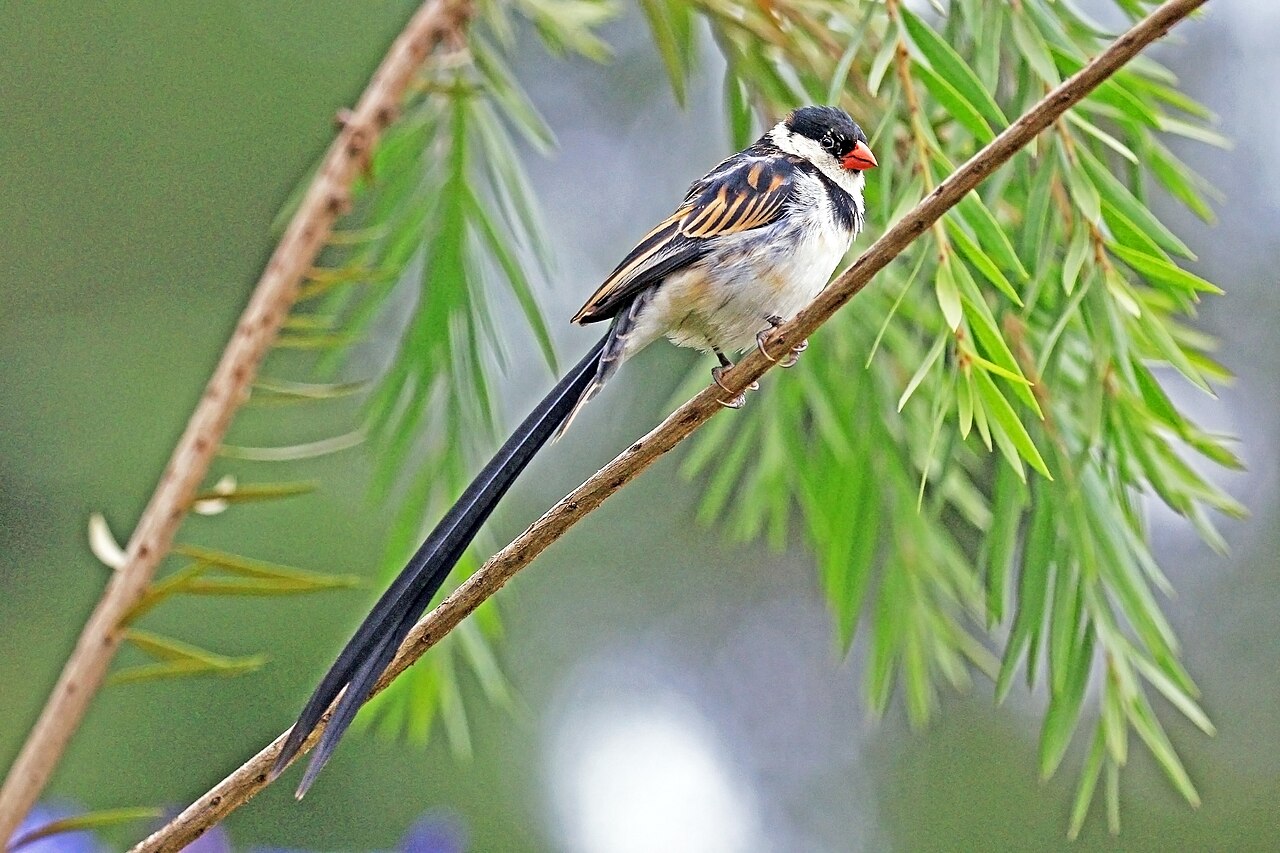
A breeding male pin-tailed whydah seems to carry a set of long black ribbons behind him. Outside that season, the same bird can be much harder to distinguish from a brown, streaked female.
Vidua macroura is a small African songbird. Its seasonal transformation is only one unusual part of its life.
A tail for the breeding season
The Biodiversity Explorer species account documents breeding and nonbreeding appearances.
The male's contrasting black-and-white plumage and long tail make a display memorable. Females retain a shorter-tailed, less conspicuous outline.
The difference is a reminder that one spectacular photograph is not a complete identification guide.
Another bird raises the chicks
Pin-tailed whydahs are brood parasites. Females lay eggs in the nests of other birds, including waxbills.
The host parents then provide the care. Reproduction therefore depends on another species as well as suitable food and habitat for the adult whydahs.
This relationship may seem surprising, but it is a natural breeding strategy rather than a matter of good or bad intentions.
A familiar patch can hold an unfamiliar story
Whydahs use grasslands, open woodland, and some cultivated places across much of sub-Saharan Africa.
A small bird near a grassy edge may connect courtship, seasonal plumage, and another species' nest.
Look beyond the tail and the whole life becomes more remarkable: a brief display above the grass, followed by a generation growing up under someone else's care.
Photo credits
Featured image: Pin-tailed whydah (Vidua macroura) breeding male.jpg — Charles J. Sharp; CC BY-SA 4.0.

Body image 1: Pin-tailed whydah (Vidua macroura) female.jpg — Charles J. Sharp; CC BY-SA 4.0.

Body image 2: Pin-tailed whydah (Vidua macroura) male non-breeding.jpg — Charles J. Sharp; CC BY-SA 4.0.

Photographs resized for web display where available.