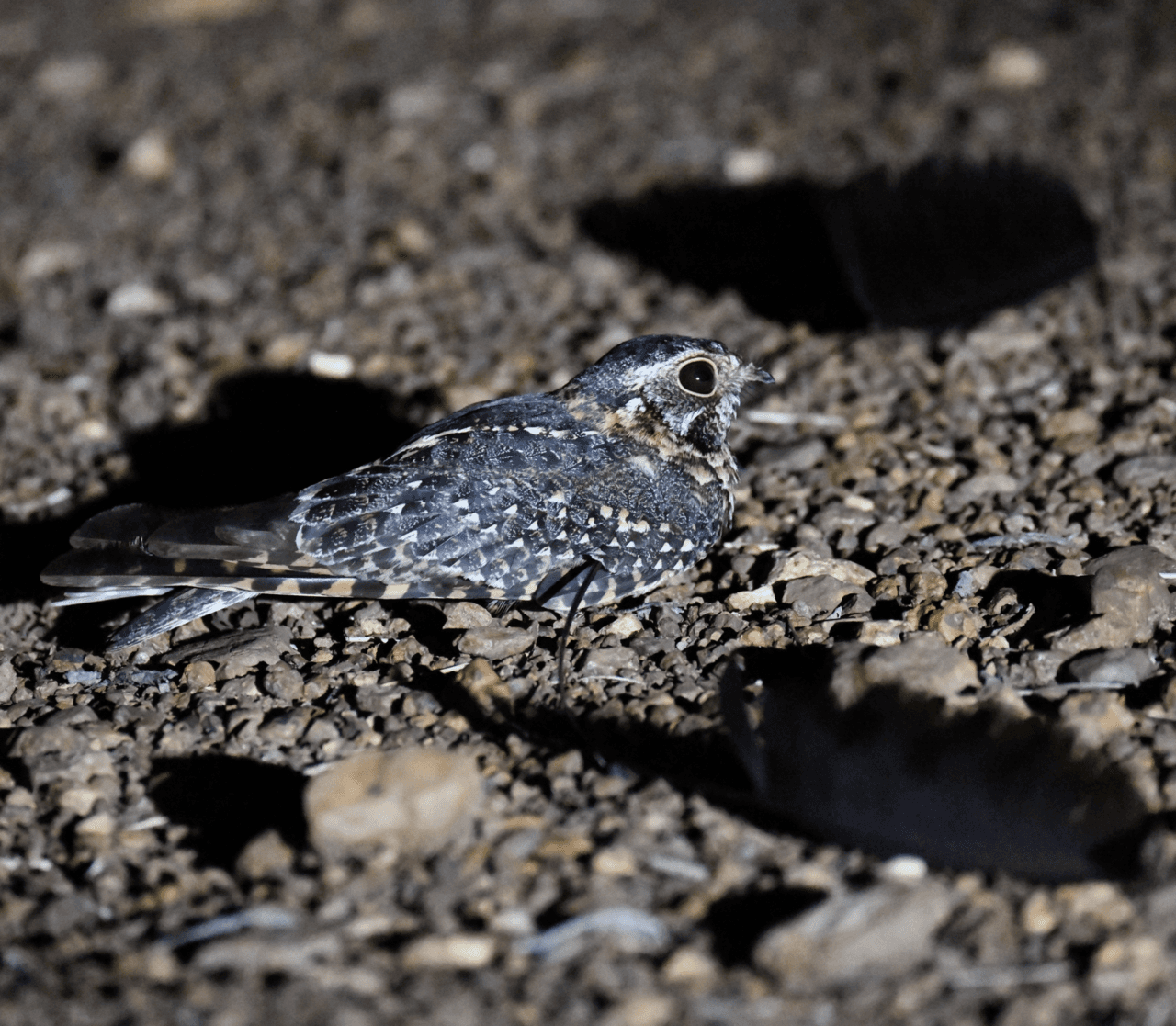
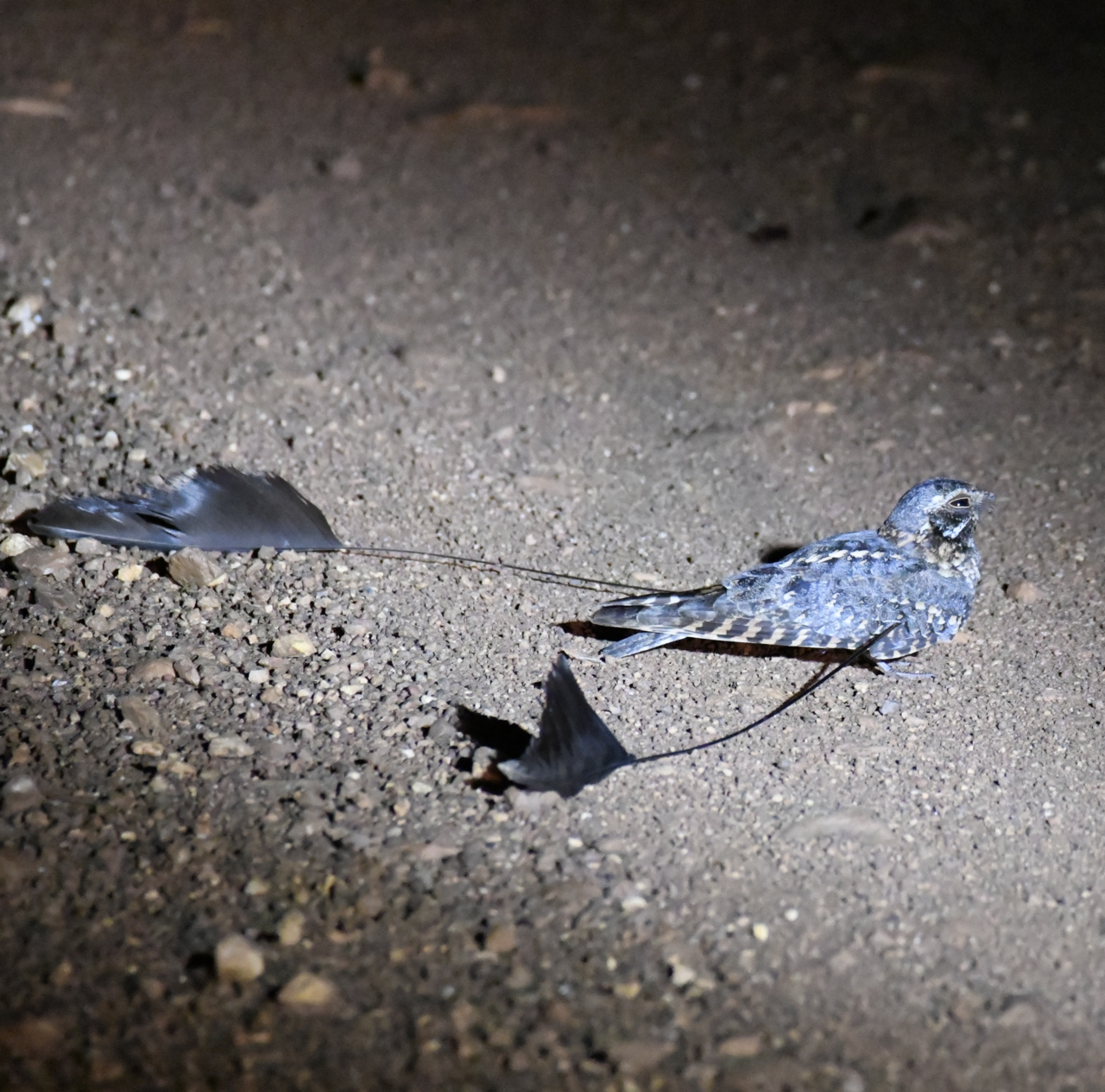
A breeding male standard-winged nightjar flies with two long ornaments extending from its wings. Much of each shaft is bare, ending in a broad feathered flag.
Caprimulgus longipennis, also placed in Macrodipteryx in older sources, is an African nightjar. The “standards” are wing feathers, not tail streamers.
A seasonal change in outline
A BirdLife Zimbabwe journal account distinguishes the flag-tipped ornaments from those of the pennant-winged nightjar.
The breeding male's shape can seem almost improbable. Females and males outside that condition are much less elaborate.
A resting photograph may hide the full effect of a feature that becomes most striking in flight.
Insects shape the nightly routine
Field research in West African savanna examined the species alongside another nightjar.
The birds became active after sunset, and breeding activity matched seasonal insect availability.
The ornaments attract attention, but food still sets limits. A courtship display depends on enough energy to perform it.
A dark landscape is full of activity
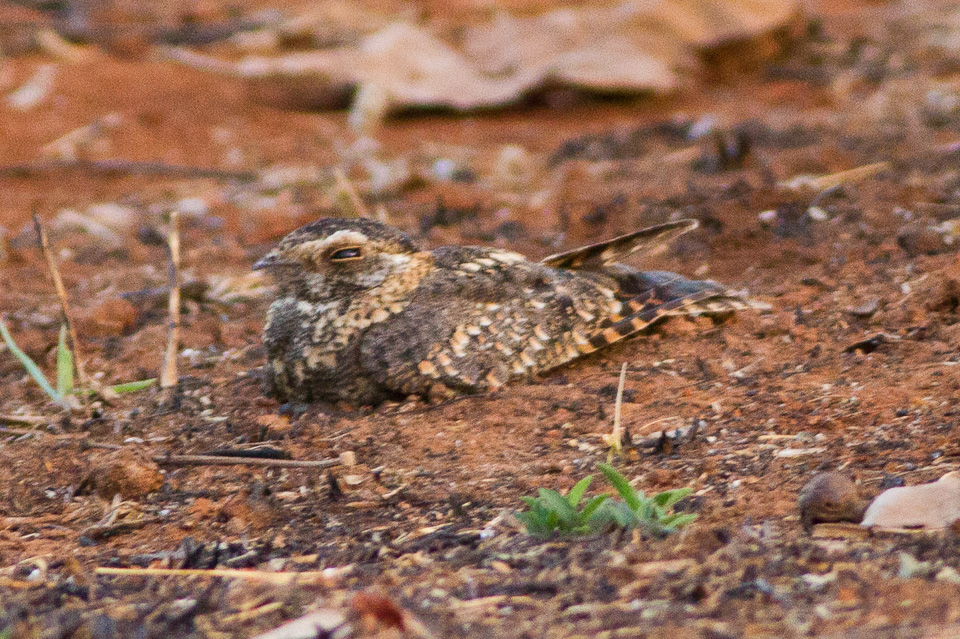
Nightjars are easily overlooked while resting against the ground. After dark, their world changes from concealment to movement.
Preserving habitat includes the insects and resting places that support this routine.
The standard-winged nightjar makes a simple point beautifully: a bird's familiar daytime outline may reveal very little about what happens when evening arrives.
Photo credits
Featured image: Caprimulgus longipennis 355591411.png — Ben Keen; CC0.

Body image 1: Caprimulgus longipennis 355591408.png — Ben Keen; CC0.

Body image 2: Standard-winged Nightjar (Caprimulgus longipennis) (8080030194).jpg — Ron Knight from Seaford, East Sussex, United Kingdom; CC BY 2.0.

Photographs resized for web display where available.