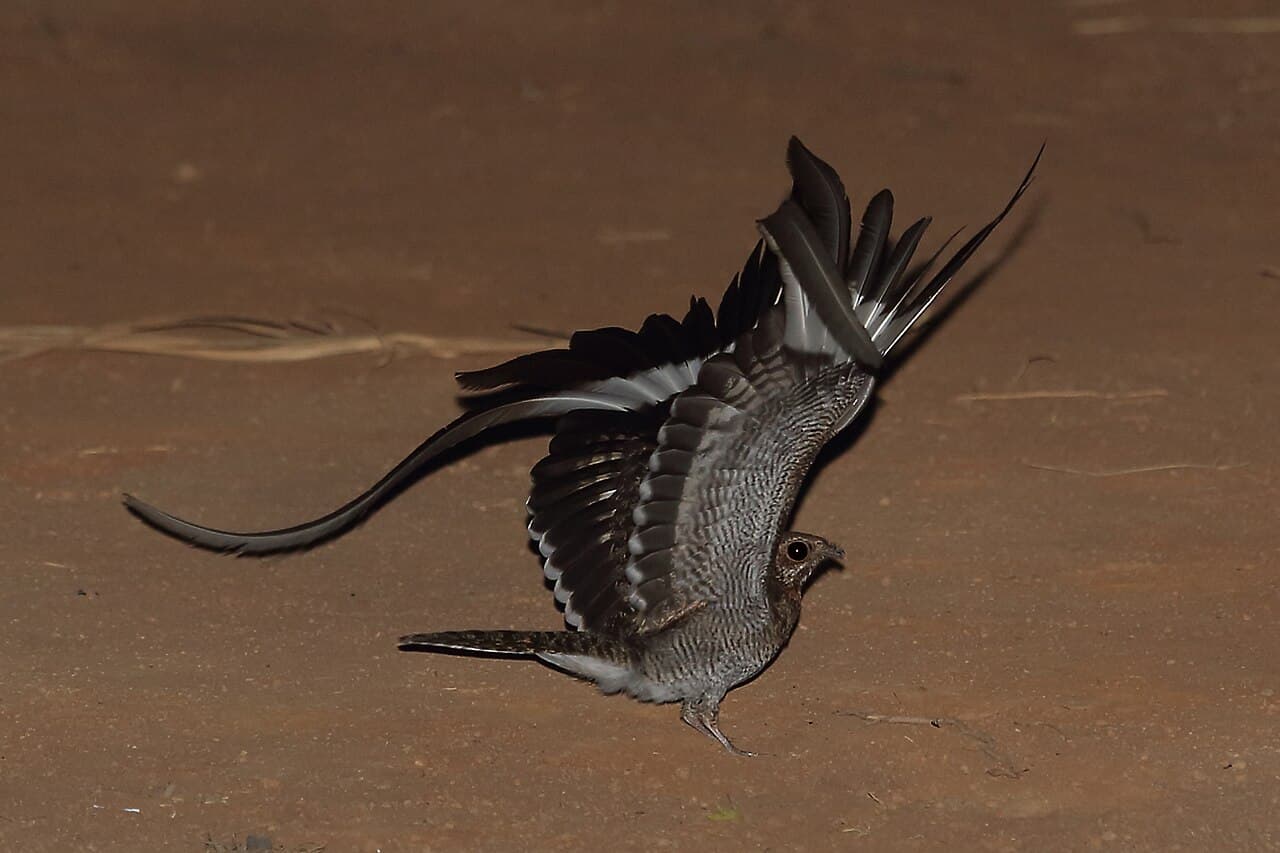
A breeding male pennant-winged nightjar carries long feathers from its wings that transform its shape in flight. The extension is not a long tail, even when a photograph makes it look that way.
Caprimulgus vexillarius is also listed in older sources as Macrodipteryx vexillarius. It is an African nightjar associated with woodland.
Wings with a seasonal flourish
The Biodiversity Explorer profile records differences between the sexes and the bird's seasonal movements.
The male's extraordinary feathers belong to the breeding appearance. Females have a more ordinary nightjar outline.
A comparison with the standard-winged nightjar is useful: the latter has a broad flag at the end of a largely bare shaft.
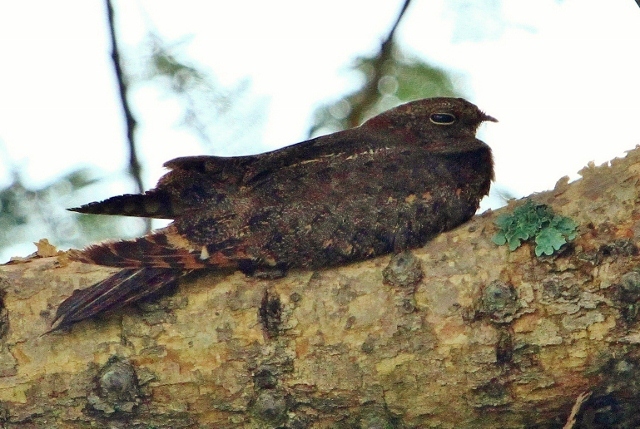
A woodland night shift
The species feeds on insects and rests in surroundings where mottled plumage helps it blend in.
Leaf litter, open spaces within woodland, and suitable feeding areas form parts of its habitat.
A bird can be conspicuous during display yet difficult to notice while still. Those are different tasks within the same life.
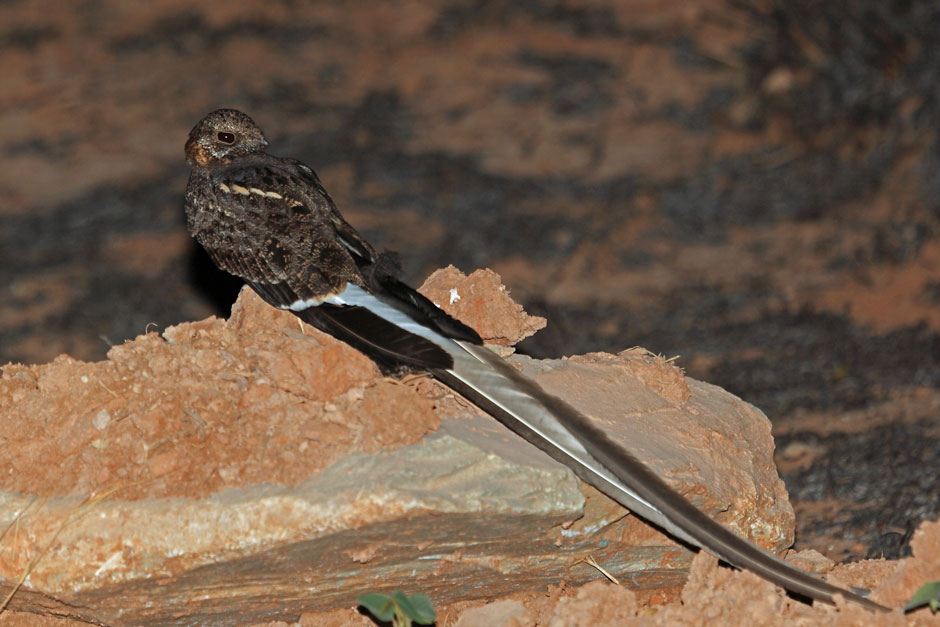
Preserve the place behind the plume
The BirdLife Zimbabwe account of ornamental nightjar wings helps explain why exact feather placement matters.
Understanding the feature makes the bird more remarkable without adding a mythical explanation.
The pennant-winged nightjar turns a woodland evening into an unexpected display. Look beyond the trailing feather and notice the small insect-hunting bird carrying it.
Photo credits
Featured image: Pennant-winged Nightjar, Sakania, DRC (8009726899) (2).jpg — Nigel Voaden from UK; CC BY-SA 2.0.

Body image 1: Caprimulgus vexillarius 256939827.jpg — i_c_riddell; CC BY 4.0.

Body image 2: Pennant-winged Nightjar, Luita, DRC (6109951936).jpg — Nigel Voaden from UK; CC BY-SA 2.0.

Photographs resized for web display where available.