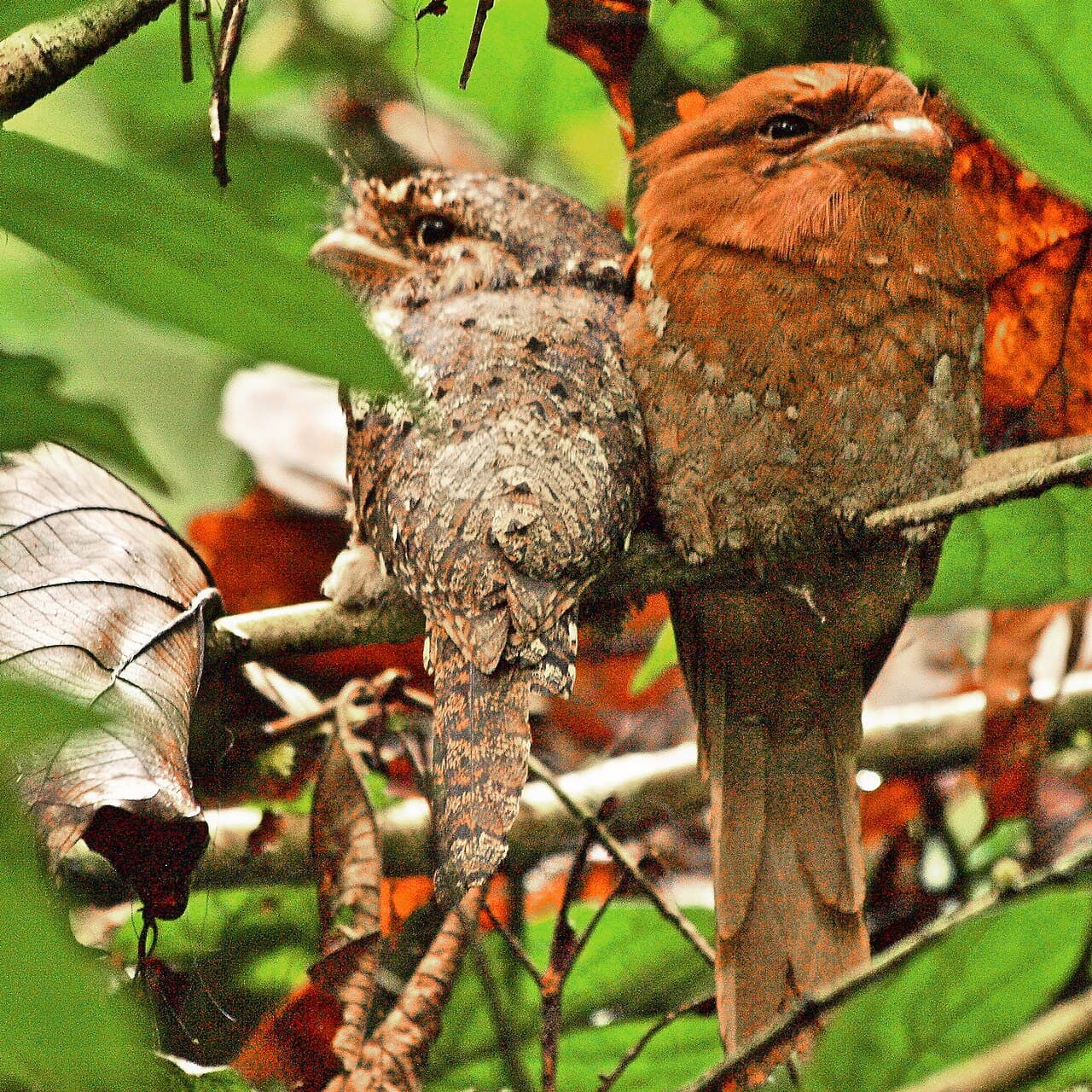
A Sri Lanka frogmouth may be sitting close by while appearing to be part of the branch itself. Mottled feathers and stillness make the small night bird remarkably easy to overlook.
Batrachostomus moniliger belongs to the frogmouth family. Its name does not mean that it lives only in Sri Lanka.
A range shared across water
Published research on its distribution records the species in Sri Lanka and India's Western Ghats.
It is associated with forest habitat and is mainly active at night. A daytime roost is a place to remain inconspicuous rather than perform.
Brown, rufous, and greyish tones break the outline into patches that echo the surrounding bark and leaves.
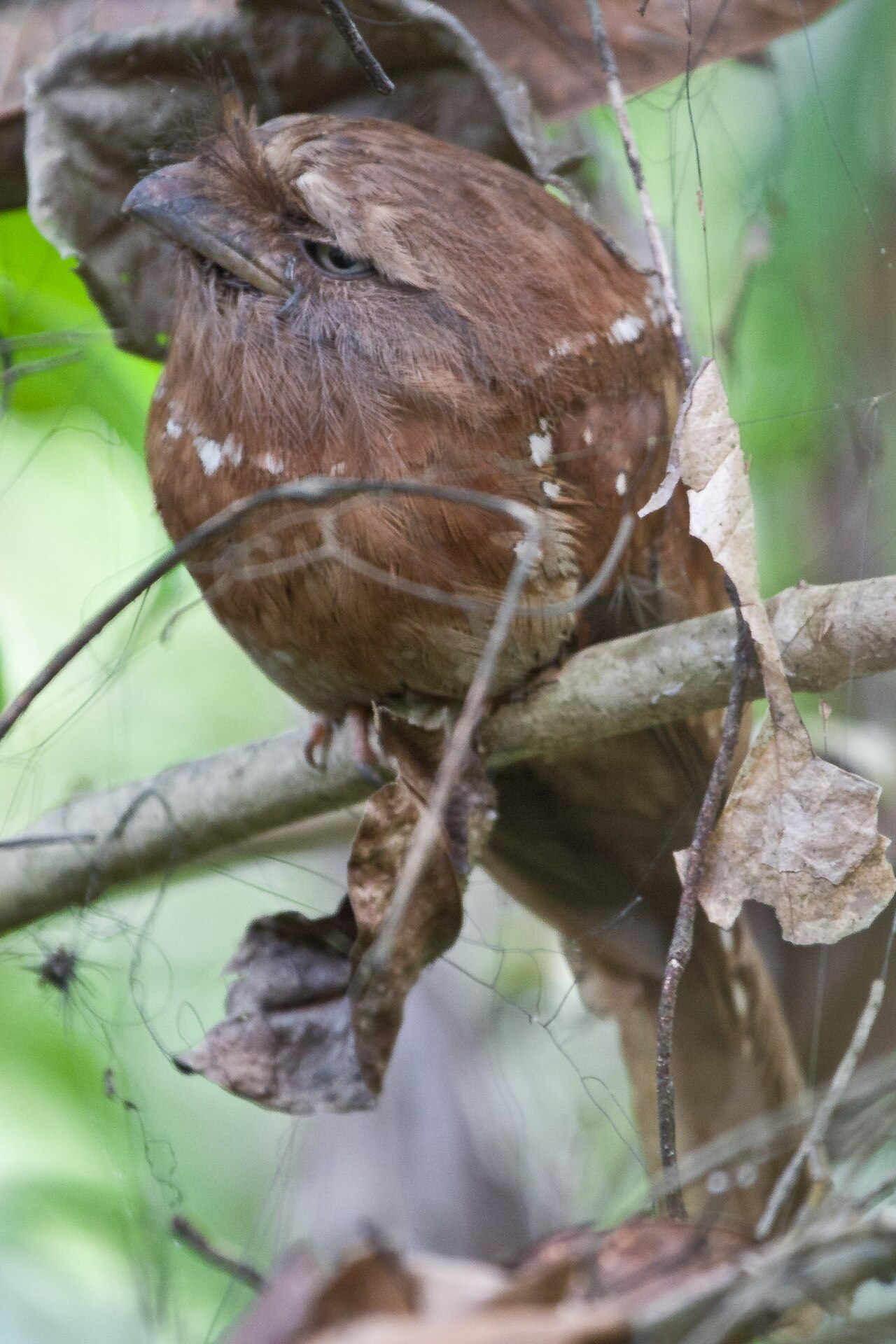
A small bill conceals a wide mouth
The frogmouth's name refers to its broad gape. The visible bill can seem modest until the mouth opens.
An insect-eating bird needs a useful way to secure food, even when it spends much of the day looking like an unremarkable lump on a branch.
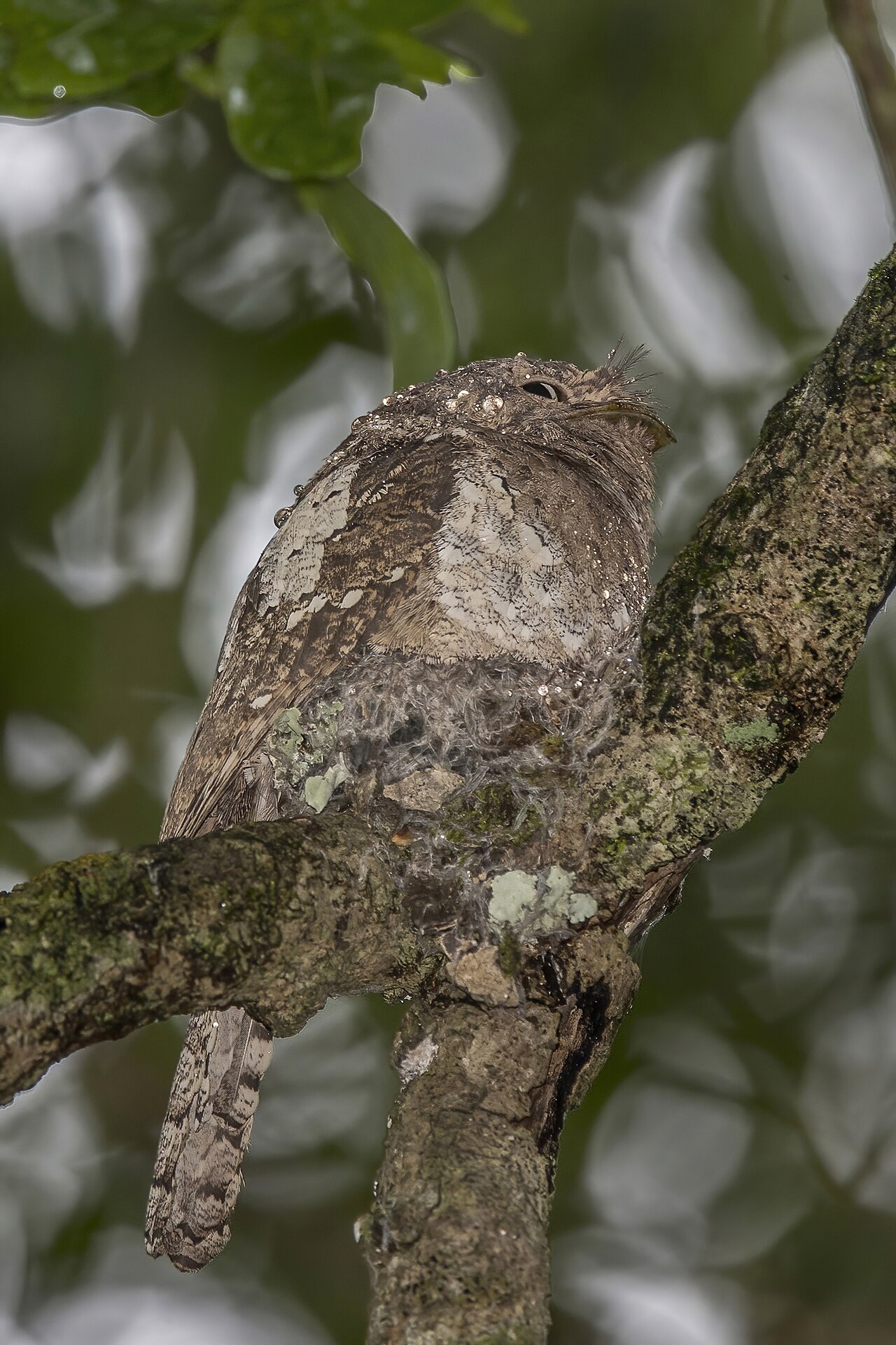
Quiet observation keeps the disguise working
A roosting bird should not be disturbed to make it open its eyes or change position.
The difficulty of finding it is part of its natural history, not a problem to solve by moving it.
Forest protection preserves both feeding opportunities and the sheltered places where the bird rests.
The Sri Lanka frogmouth invites a slower way of seeing. Once you notice the eye and bill, an ordinary branch becomes a living portrait.
Photo credits
Featured image: SriLankaFrogmouths.jpg — Shanthanu Bhardwaj; CC BY-SA 3.0.

Body image 1: Sri Lanka Frogmouth (Batrachostomus moniliger) (5799653911).jpg — Mike Prince from Bangalore, India; CC BY 2.0.

Body image 2: Sri Lanka frogmouth (Batrachostomus moniliger moniliger) female on nest.jpg — Charles J. Sharp; CC BY-SA 4.0.

Photographs resized for web display where available.