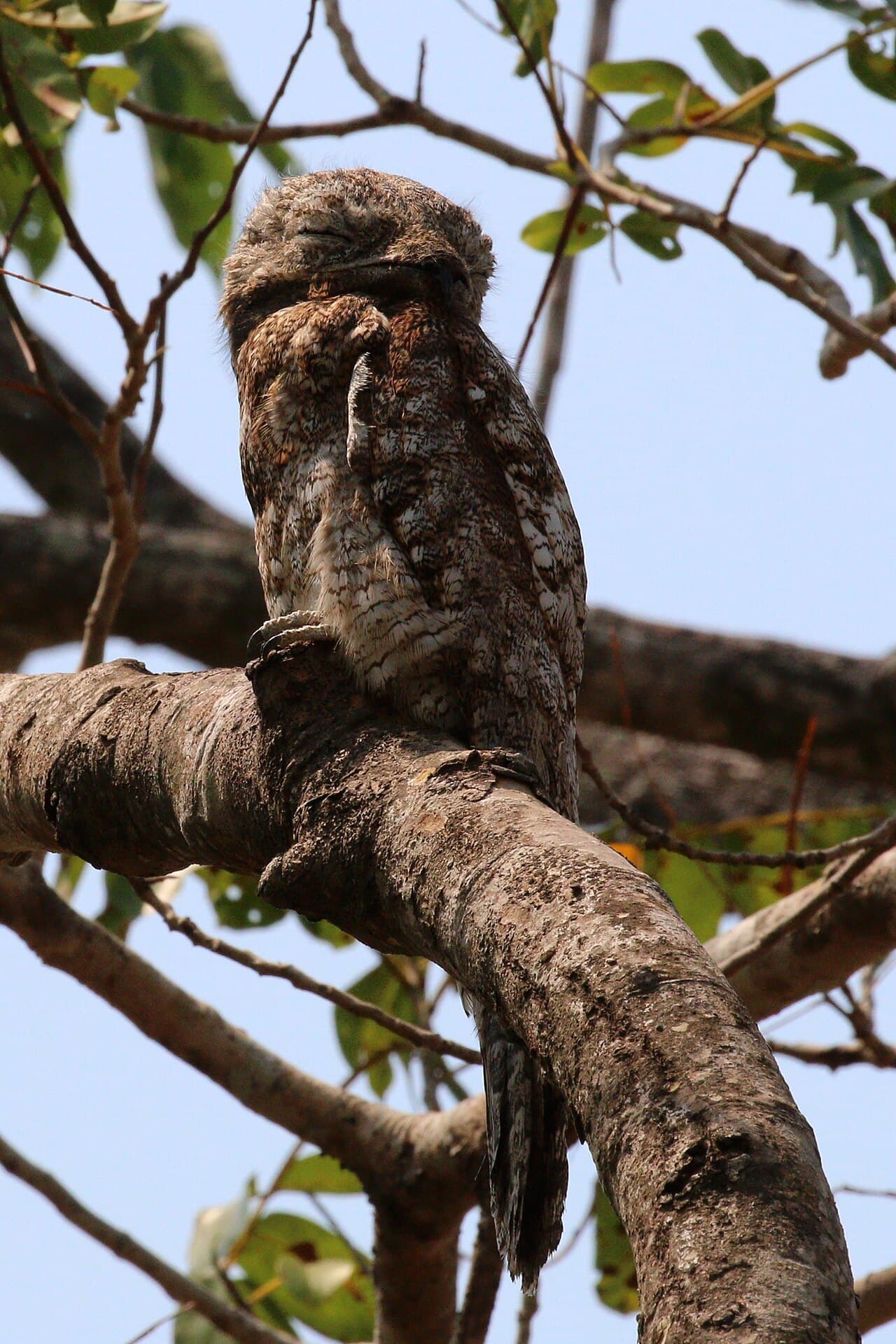
A great potoo can stretch upright against a tree and resemble a broken piece of wood. When night arrives, that motionless shape becomes an aerial hunter.
Nyctibius grandis is the largest potoo. Its mottled plumage, huge mouth, and watchful eyes belong to a bird very different from an owl.
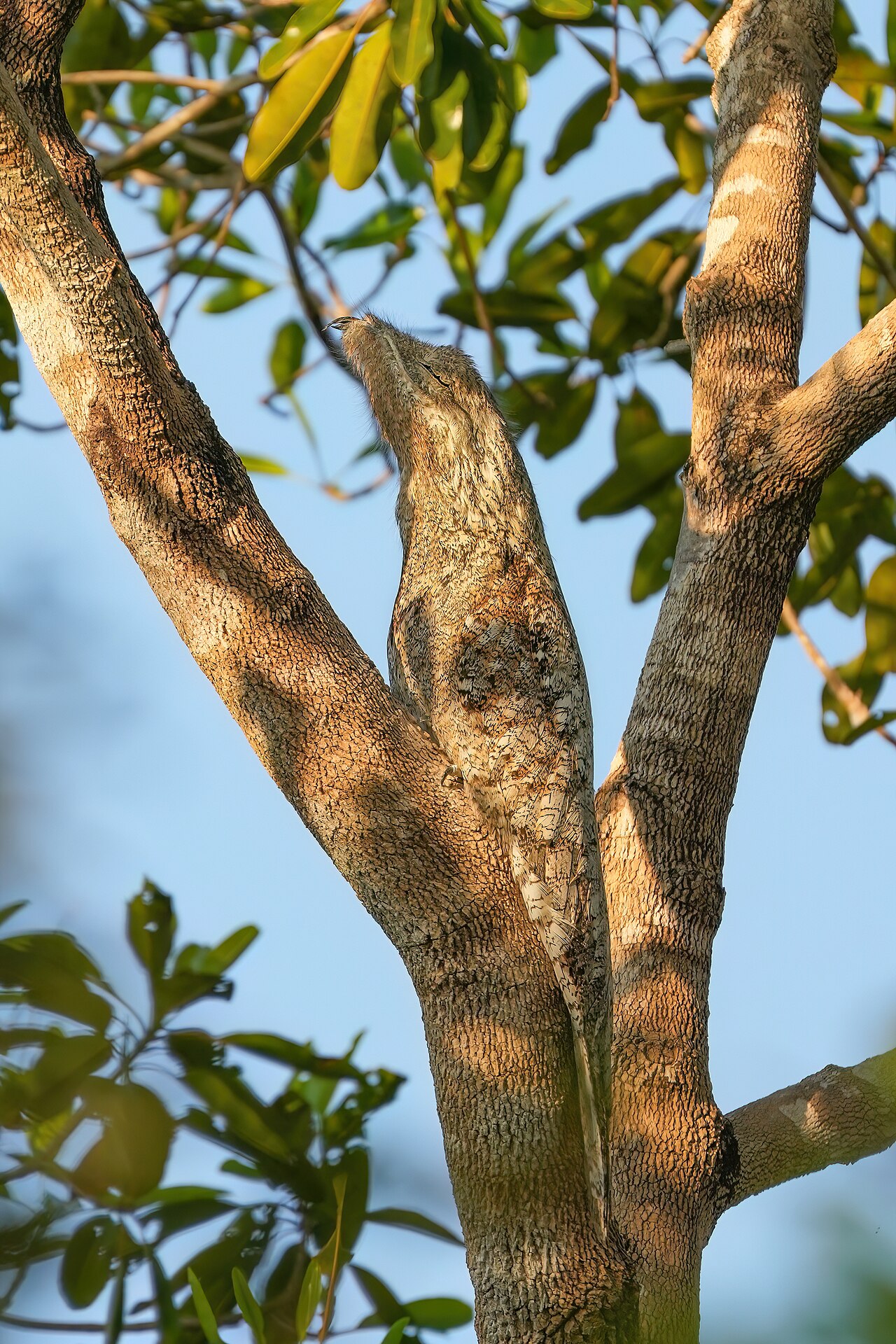
Let the tree hide the outline
The Animal Diversity Web species account describes a tropical American night bird that rests on exposed branches.
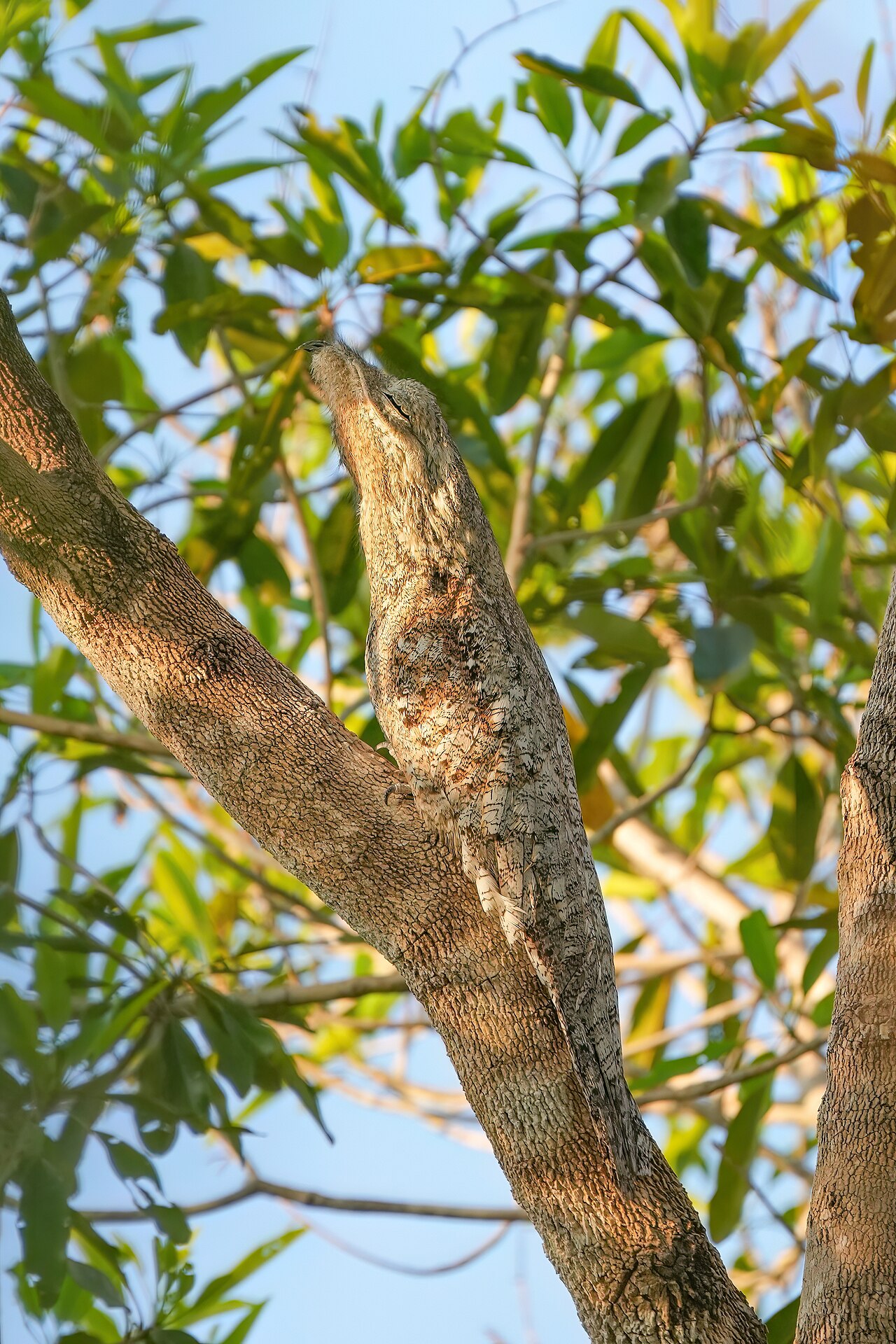
The coloring works together with posture. A rounded bird would interrupt the branch's shape; an elongated one can continue its line.
Finding it in a photograph can change how you inspect every nearby stump.
A very different bird after dark
Great potoos take flying prey with a wide gape. Insects are important food, with occasional small vertebrates also recorded.
The bird may leave a perch to intercept prey and return afterward. A quiet resting site becomes the starting point for a hunt.
A sound without a visible source
American Bird Conservancy's potoo guide describes the great potoo's deep, startling voice.
The call belongs to a real bird, even when darkness makes it seem to come from nowhere.
Keeping forest habitat intact preserves both the nighttime hunter and the daytime disguise.
The great potoo holds two surprises in one body: a bird that seems to become wood, and a hunter that leaves the wood behind when evening comes.
Photo credits
Featured image: Great potoo (Nyctibius grandis).JPG — Charles J. Sharp; CC BY-SA 4.0.

Body image 1: 040 Great Potoo in Encontro das Águas State Park Photo by Giles Laurent.jpg — Giles Laurent; CC BY-SA 4.0.

Body image 2: 187 Great Potoo in Encontro das Águas State Park Photo by Giles Laurent.jpg — Giles Laurent; CC BY-SA 4.0.

Photographs resized for web display where available.