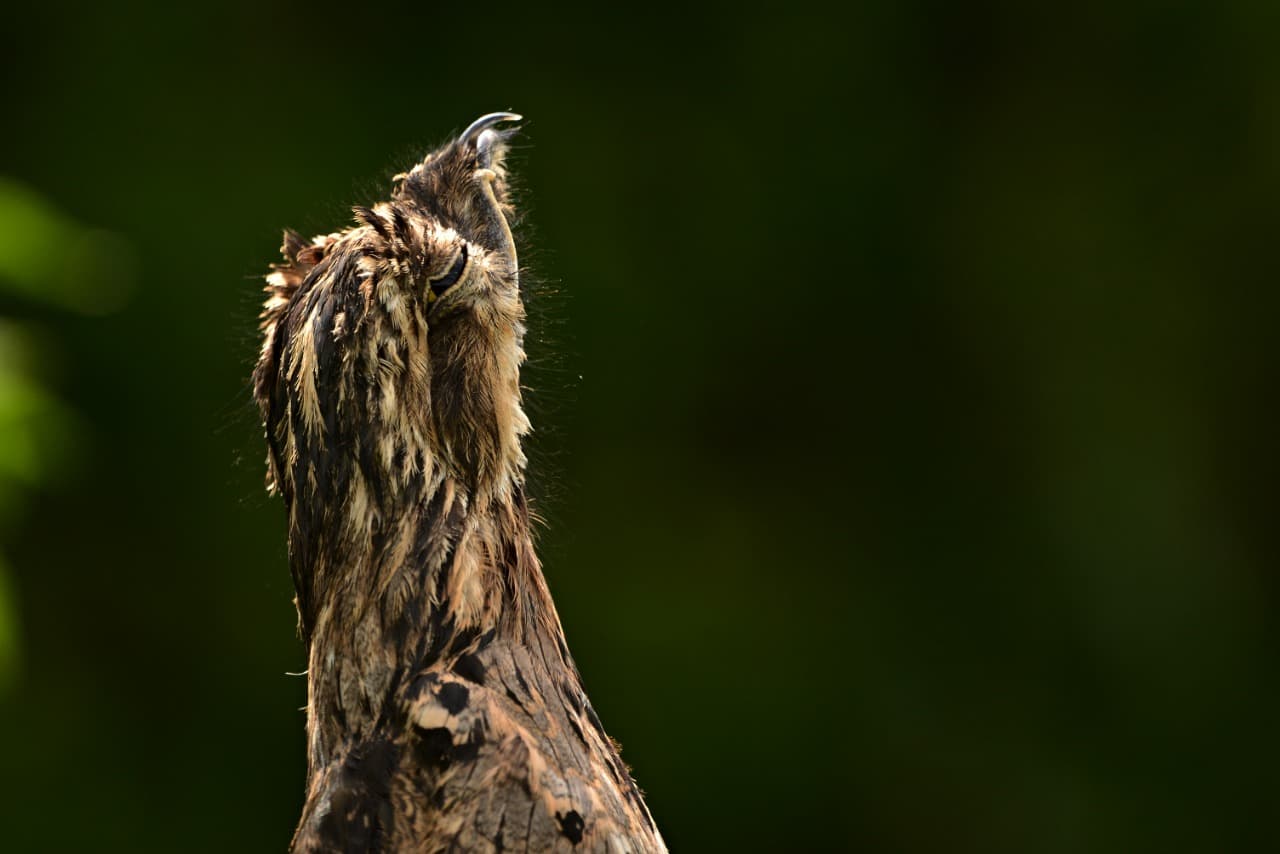
With its eyes open, a common potoo can look astonishingly alert. With them nearly closed and its body stretched upward, it can seem to be the end of a branch.
Nyctibius griseus is a nocturnal bird of tropical America. It is a potoo, not an owl or a frogmouth.
A disguise made from posture and pattern
American Bird Conservancy's potoo account explains the group's remarkable daytime concealment.
Mottled feathers match irregular bark. Stillness and an upright pose help remove the familiar shape of a bird.
The disguise does not require perfect invisibility. Making a predator overlook or misinterpret an outline can be valuable enough.
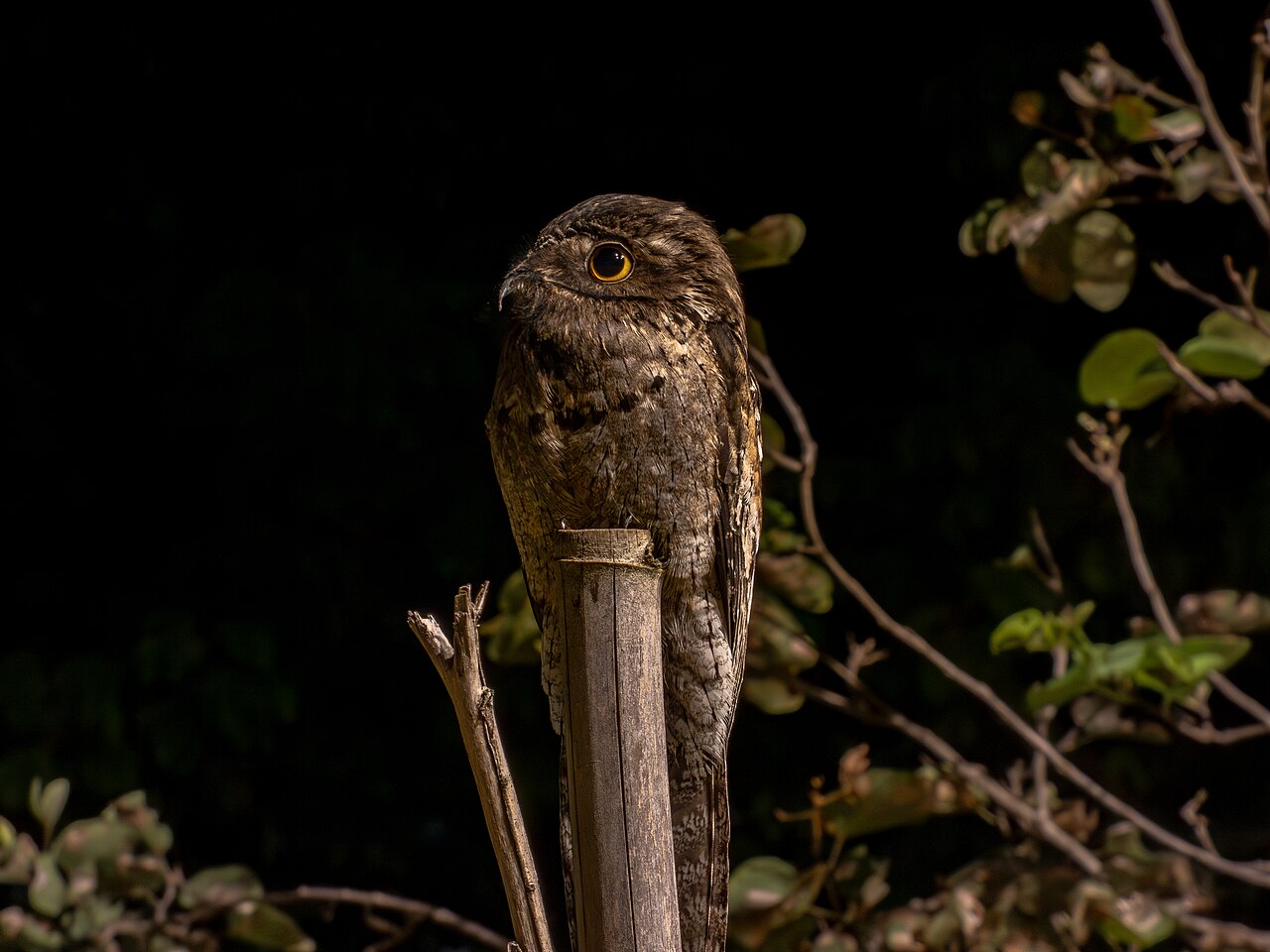
Eyes for the night, a mouth for prey
Large eyes and a broad gape suit a life taking flying insects after dark.
A potoo resting by day gives only part of the story. The same animal later leaves its perch to feed in a very different visual world.
Its descending song is another distinctive feature, often easier to notice than the bird itself.
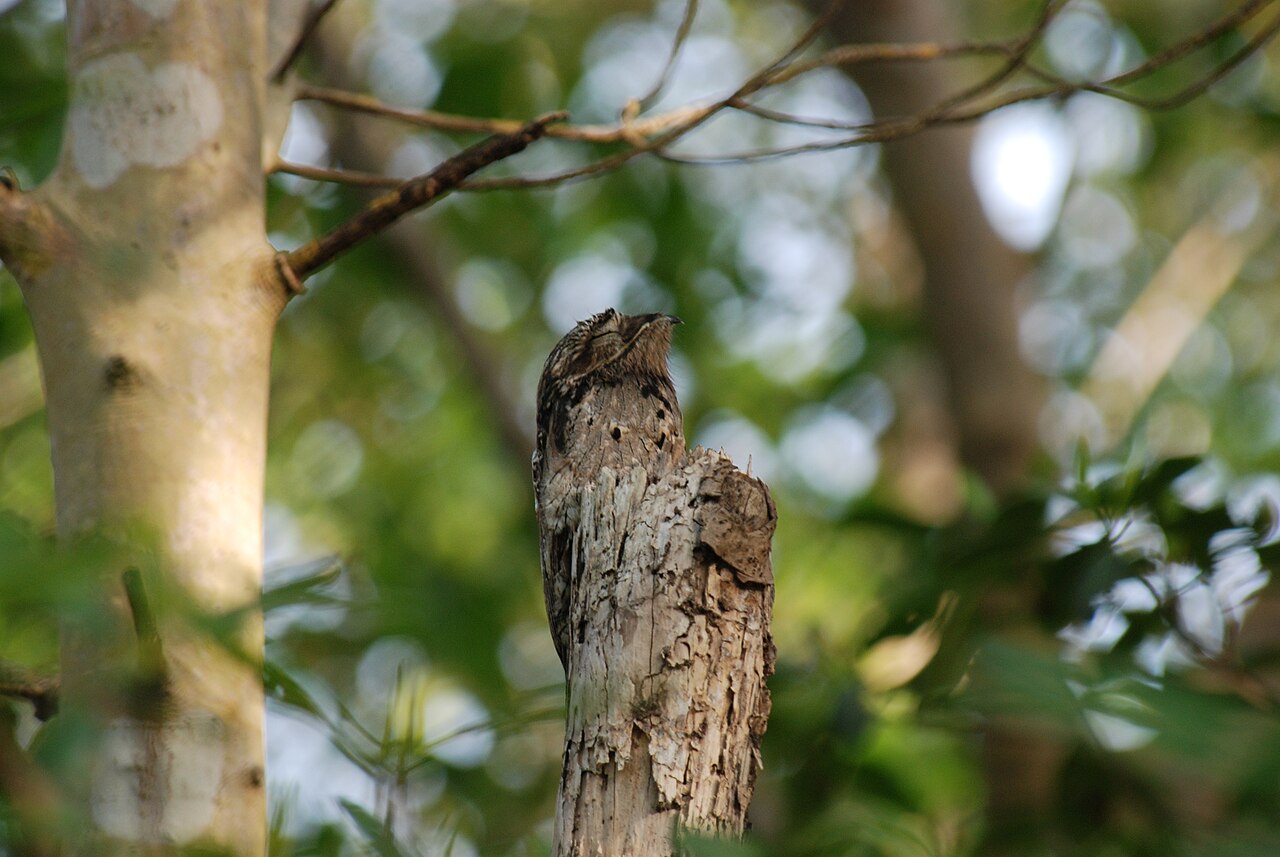
The right photograph leaves the bird resting
A good encounter allows the potoo to keep its chosen position. There is no need to provoke a wide-eyed expression.
Protecting trees and surrounding habitat keeps both shelter and feeding space available.
The common potoo turns familiar details into a puzzle. Once you discover a bird inside the branch-like outline, the forest can feel full of possibilities you had not noticed before.
Photo credits
Featured image: Nyctibius griseus head.jpg — Alejandro Bayer Tamayo; Public domain.

Body image 1: Nyctibius griseus-APA de Campinas-Vitorguimaraesc(001).jpg — Vitorguimaraesc; CC BY-SA 4.0.

Body image 2: Nyctibius griseus 471885191 27f931630d o.jpg — The Lilac Breasted Roller from Sullivan's Island, United States; CC BY 2.0.

Photographs resized for web display where available.