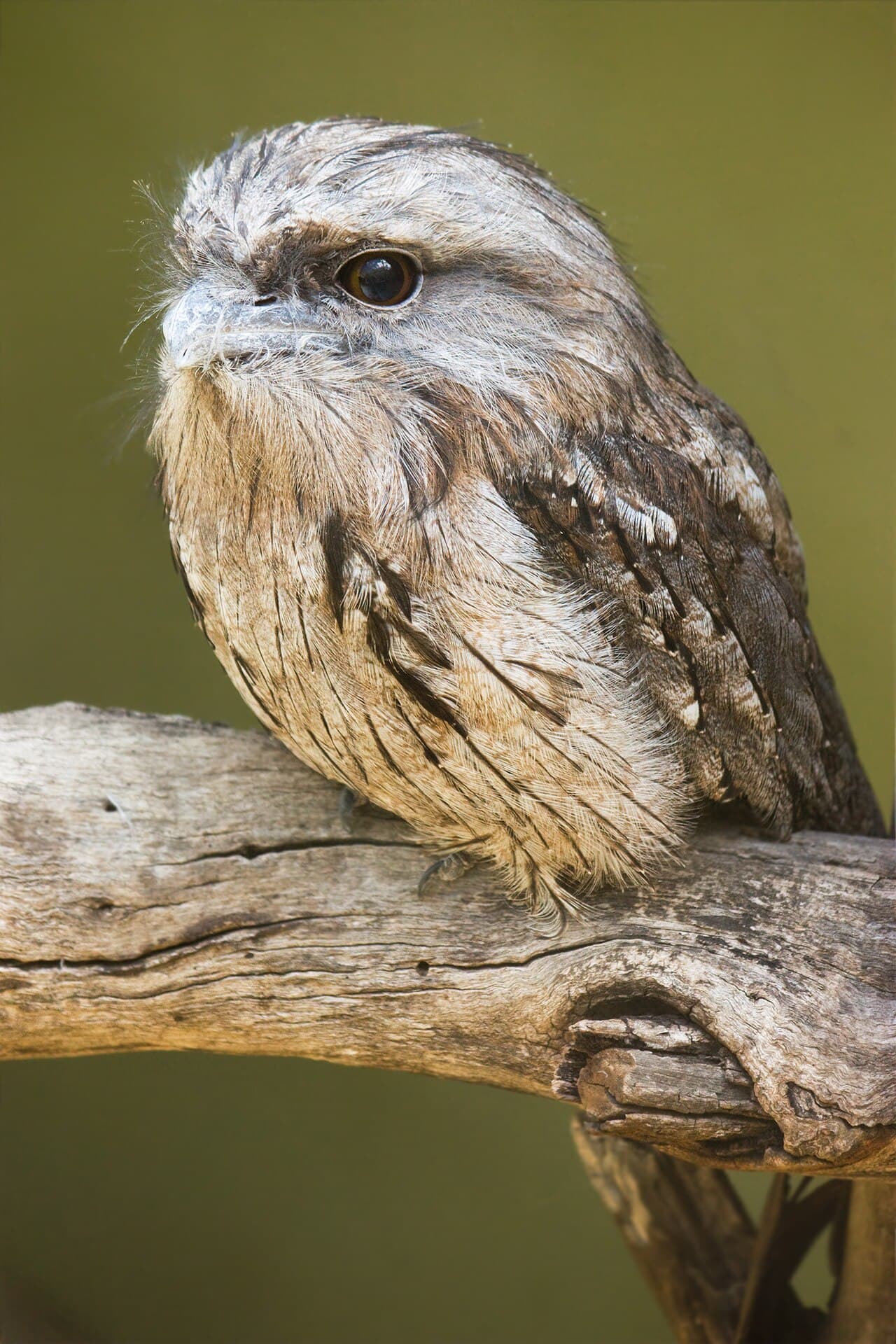
A tawny frogmouth can make a tree branch seem to have grown a face. Its grey-brown mottling and rigid daytime pose conceal an Australian bird with a surprisingly broad mouth.
Podargus strigoides is a frogmouth. It is not an owl, even though its large head and nighttime habits often cause confusion.
A branch by day
The Australian Museum species guide describes plumage streaked and mottled with darker tones.
A resting bird can align itself with the branch beneath it. The effect comes from behavior as much as color.
Spotting one is a useful reminder to inspect shape and texture rather than search only for movement.
A hunter with a different tool kit
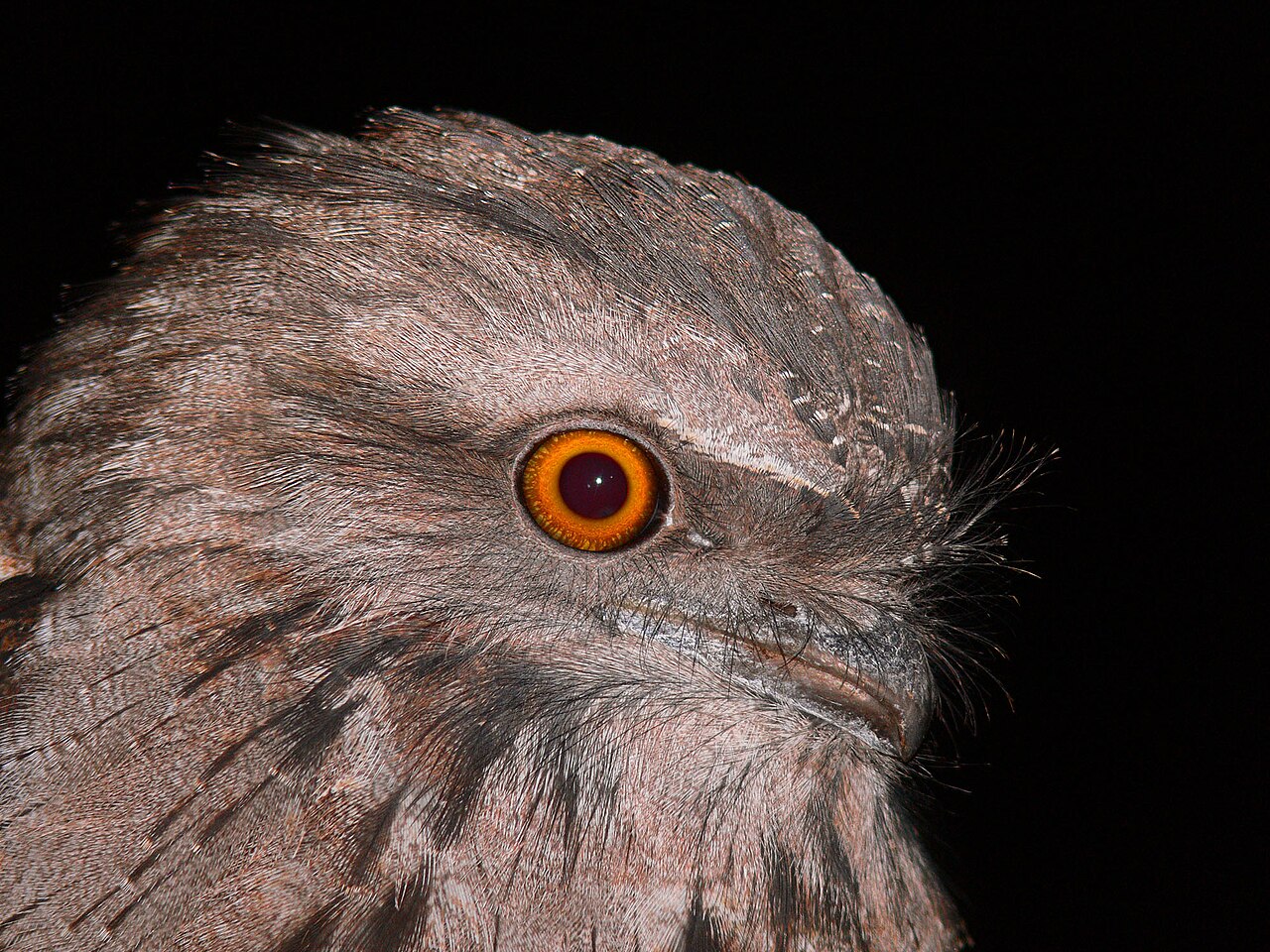
Frogmouths lack the powerful gripping feet associated with owls. Their wide mouth is an important part of taking prey, including insects.
Some moths are caught in flight. The museum notes that pursuing insects near vehicle headlights can put birds at risk on roads.
Family life on a simple platform
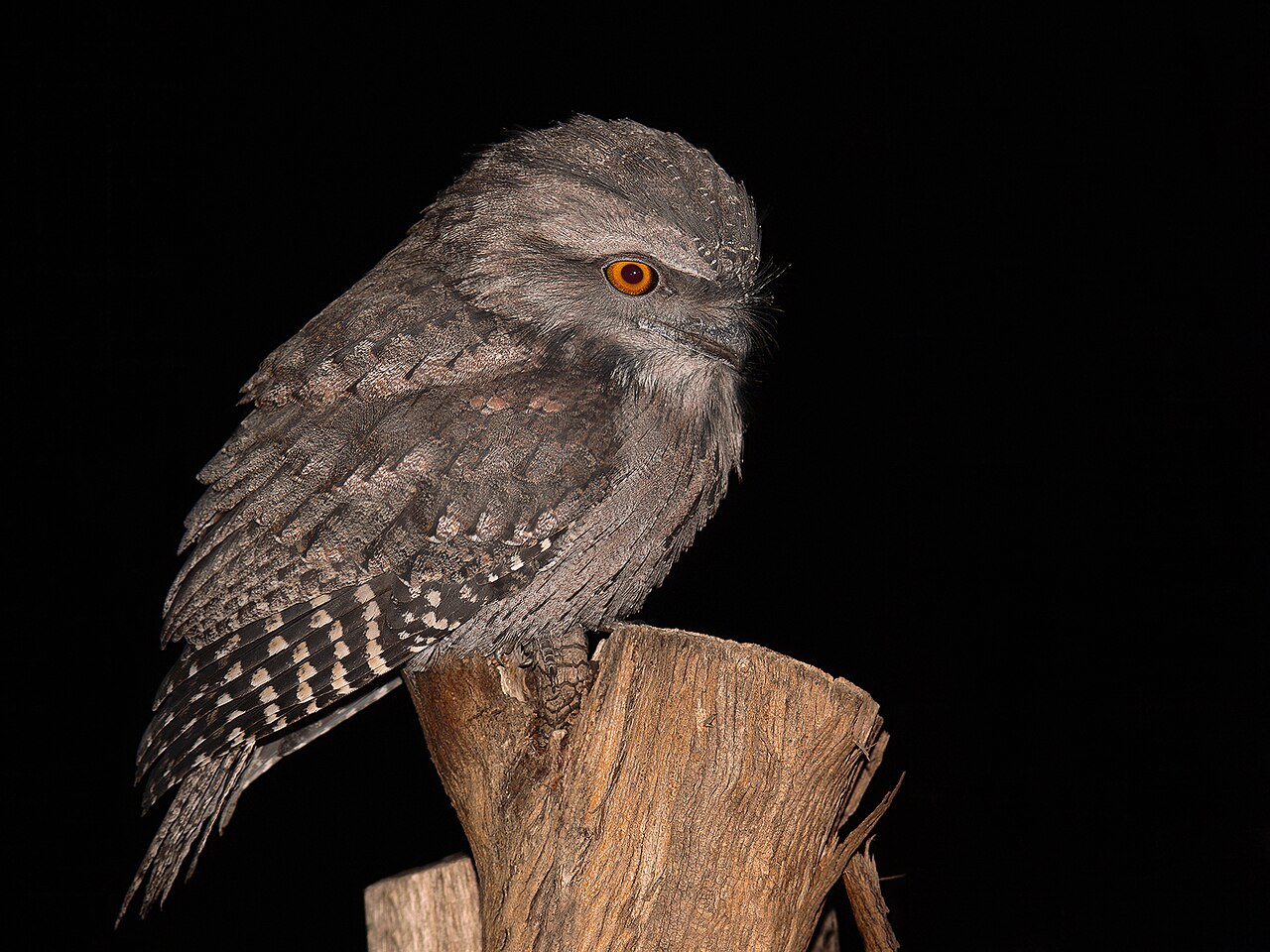
The nest is a loose arrangement of sticks. Both parents incubate, with the male taking the daytime shift.
A low, repeated “oom” call adds sound to a bird often noticed first for its silence and stillness.
The tawny frogmouth's appeal reaches beyond an unusual face. It connects camouflage, nighttime feeding, shared care, and the ordinary Australian trees in which these things happen.
Photo credits
Featured image: Podargus strigoides Bonorong.jpg — JJ Harrison ( https://www.jjharrison.com.au/ ); CC BY-SA 3.0.

Body image 1: Tawny Frogmouth 1.jpg — User:benjamint444; CC BY-SA 3.0.

Body image 2: Tawny frogmouth wholebody444.jpg — Benjamint444; CC BY-SA 3.0.

Photographs resized for web display where available.