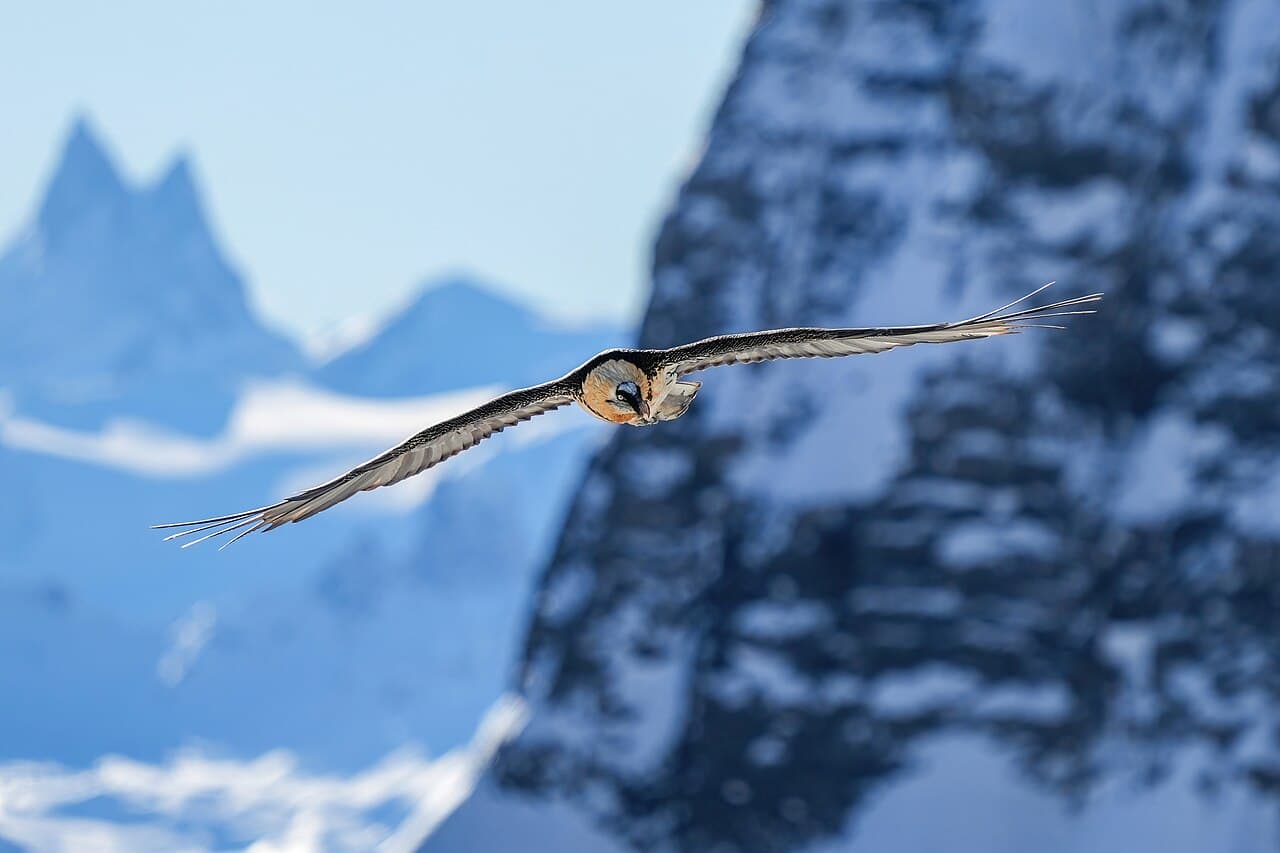
A bearded vulture can swallow bones that other scavengers leave behind. Larger pieces may be carried into the air and dropped onto rocks until they break.
Gypaetus barbatus turns the remains of another animal's meal into its own specialized food supply.
The final course at a carcass
The Vulture Conservation Foundation's species profile describes a diet dominated by bones.
Strongly acidic digestion helps the bird process this unusual food. Bone-breaking at rocky sites provides access to pieces too large to swallow.
Its feeding role is quite different from the idea that every vulture simply eats the same scraps.
An orange breast with an outside source
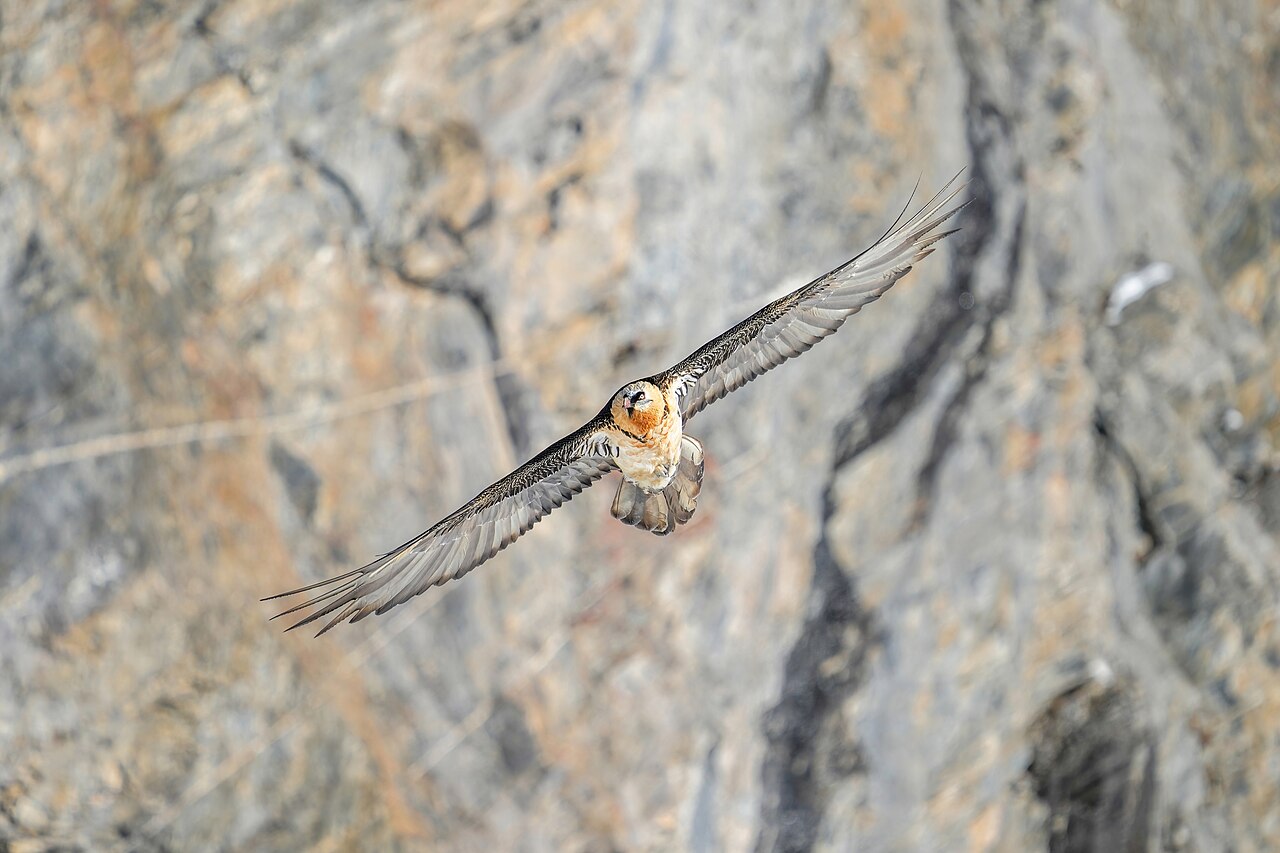
The bird's pale feathers can become orange through contact with iron-rich material during bathing.
The color is therefore not merely a fixed pigment produced inside each feather. Behavior changes the portrait.
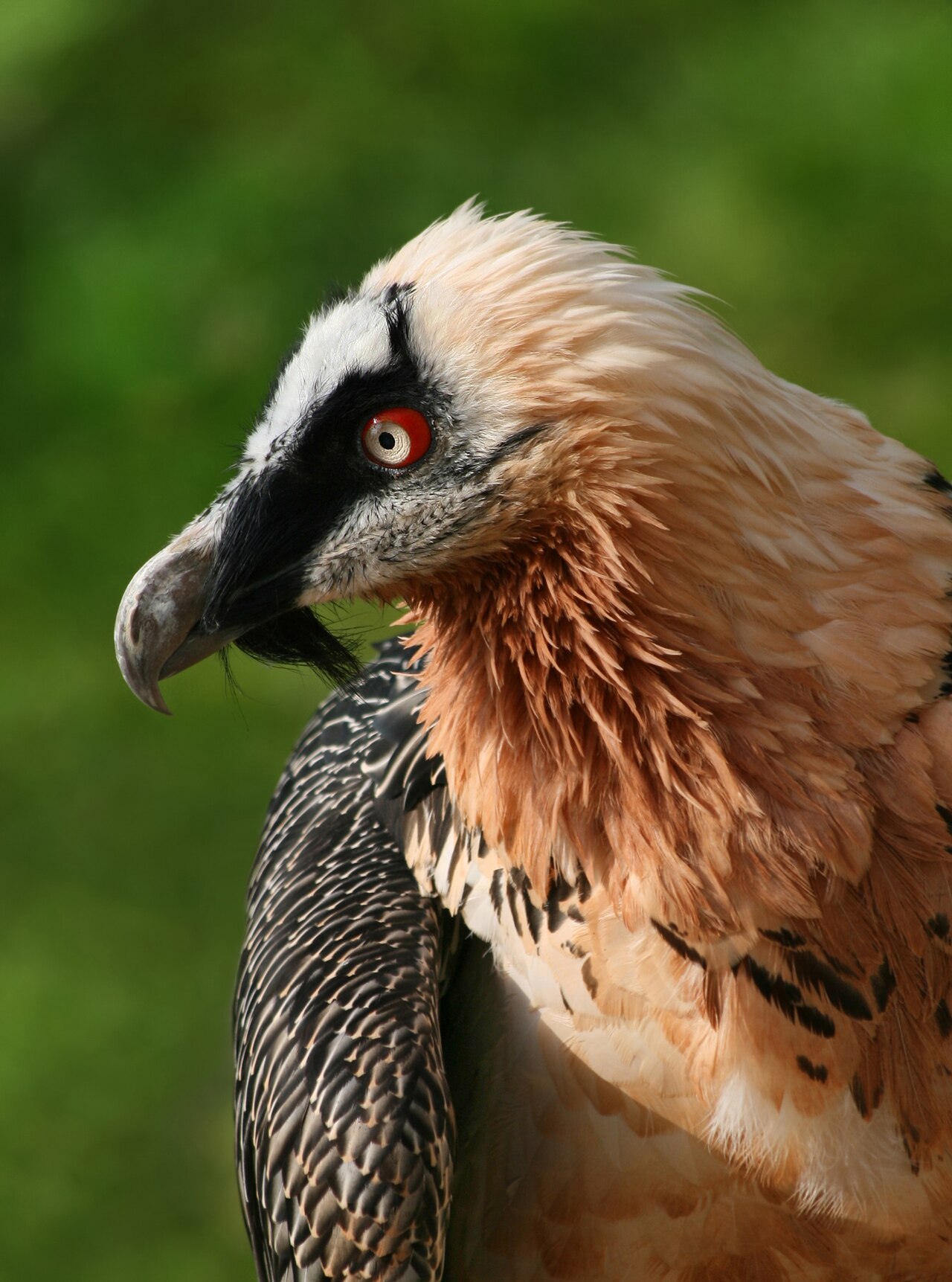
Dark facial bristles give the bearded vulture its name.
Recovery requires time
Breeding is slow, and young birds need years to mature. The foundation describes reintroduction and protection work that helped restore the species in the Alps.
A recovery story depends on continuing safe conditions, not a single release.
The bearded vulture makes a mountain landscape richer in unexpected ways. Look at a soaring silhouette and imagine the ecological work beneath it: using a food source that most other animals cannot.
Photo credits
Featured image: 010d Wild Bearded Vulture in flight at Pfyn-Finges (Switzerland) Photo by Giles Laurent.jpg — Giles Laurent; CC BY-SA 4.0.

Body image 1: 023 Wild Bearded Vulture Switzerland Pfyn-Finges Photo by Giles Laurent.jpg — Giles Laurent; CC BY-SA 4.0.

Body image 2: Bartgeier Gypaetus barbatus closeup1 Richard Bartz.jpg — Richard Bartz , Munich aka Makro Freak; CC BY-SA 2.5.

Photographs resized for web display where available.