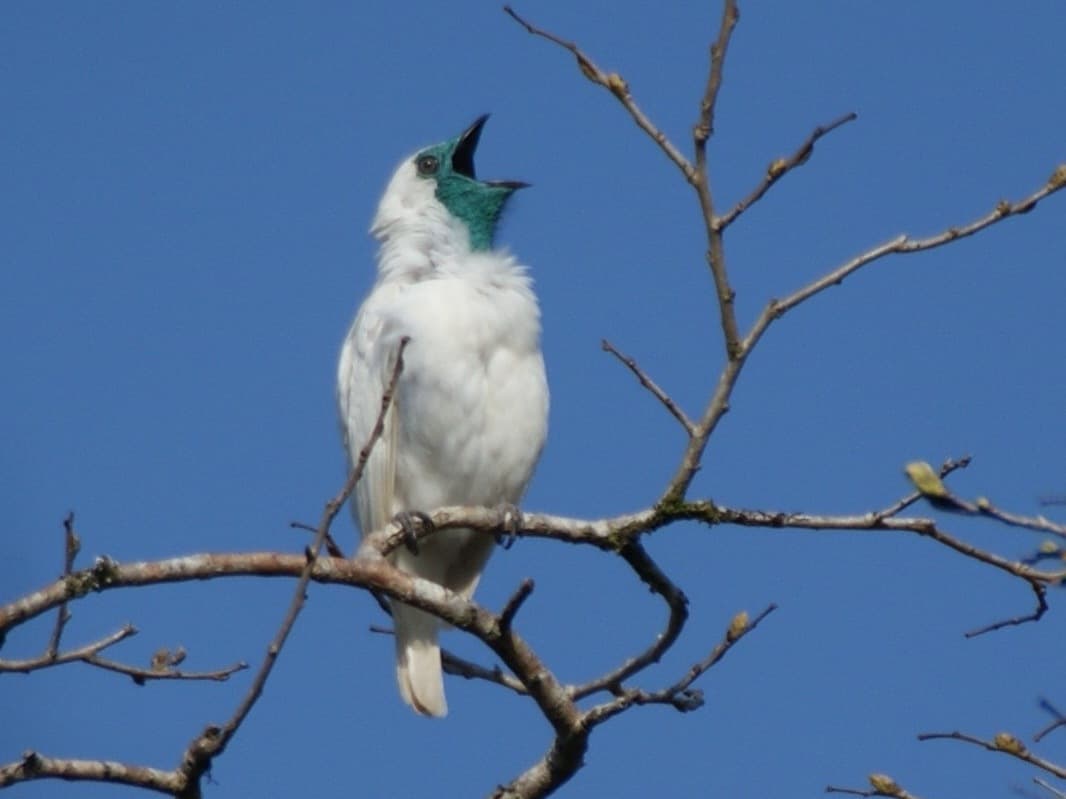
A bare-throated bellbird can be heard before its white body is found among the leaves. The male's sharp, metallic call is one of the most striking sounds of South America's Atlantic Forest.
Procnias nudicollis is a cotinga. Adult males have white plumage and exposed greenish skin around the face and throat.
A voice built into a forest scene
American Bird Conservancy's Atlantic Forest guide highlights the male's extraordinary volume.
The call matters in courtship. It should not be confused with a claim that this is the loudest bird under every possible measurement.
Hearing an animal through dense foliage is different from seeing it. A sound can advertise a presence that leaves and branches conceal.
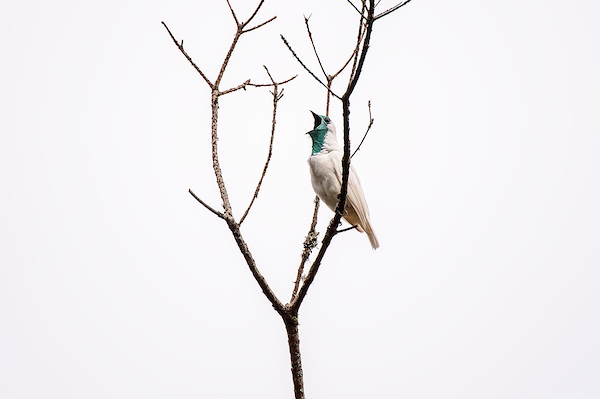
The white bird is not every bird
Females are greenish and much less conspicuous. The bright adult male therefore represents one stage and sex, rather than a universal appearance.
The bare skin behind the species' name makes an unusual contrast with its otherwise feathered body.
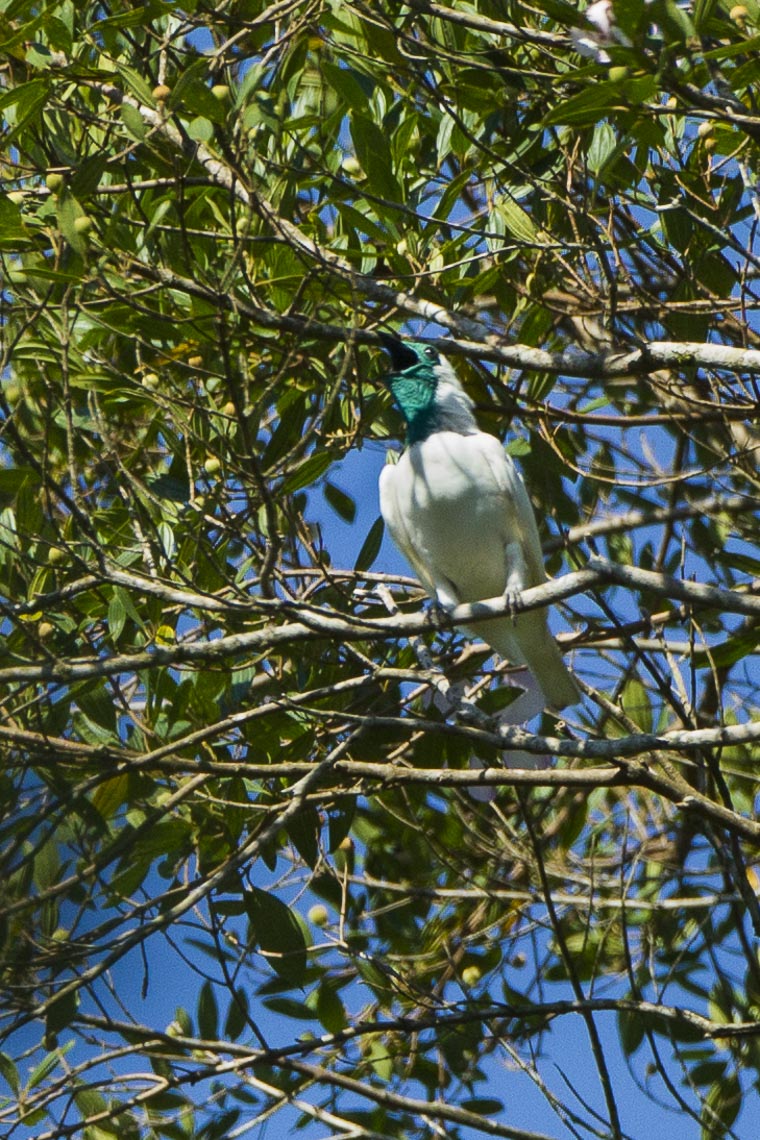
A remarkable sound needs a forest to carry it
Habitat loss and capture for the bird trade have created conservation concerns.
Protecting Atlantic Forest habitat means preserving feeding places and the setting in which birds communicate and reproduce.
A photograph holds the white plumage still. Imagine the same branch filled with a ringing call, and the portrait becomes a much richer introduction to the bellbird's world.
Photo credits
Featured image: Procnias nudicollis.jpg — Ben Tavener; CC BY 2.0.

Body image 1: Araponga (Procnias nudicollis) - Bare-throated Bellbird.jpg — Instituto Últimos Refúgios; CC BY-SA 4.0.

Body image 2: Bare-throated Bellbird - Intervales - Brazil S4E0455 (16215560893).jpg — Francesco Veronesi from Italy; CC BY-SA 2.0.

Photographs resized for web display where available.