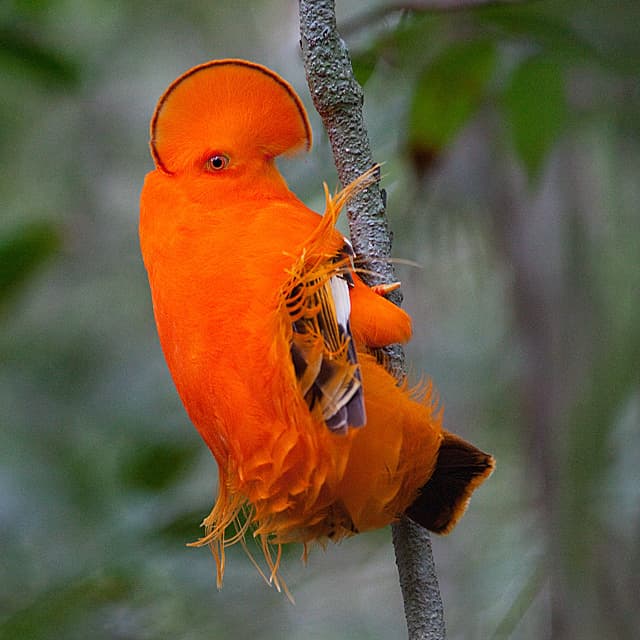
A male Guianan cock-of-the-rock wears brilliant orange plumage and a crest shaped like a rounded fan. His female counterpart is much less conspicuous.
Rupicola rupicola belongs to the cotinga family. It is a different species from the Andean cock-of-the-rock, despite their similar names.
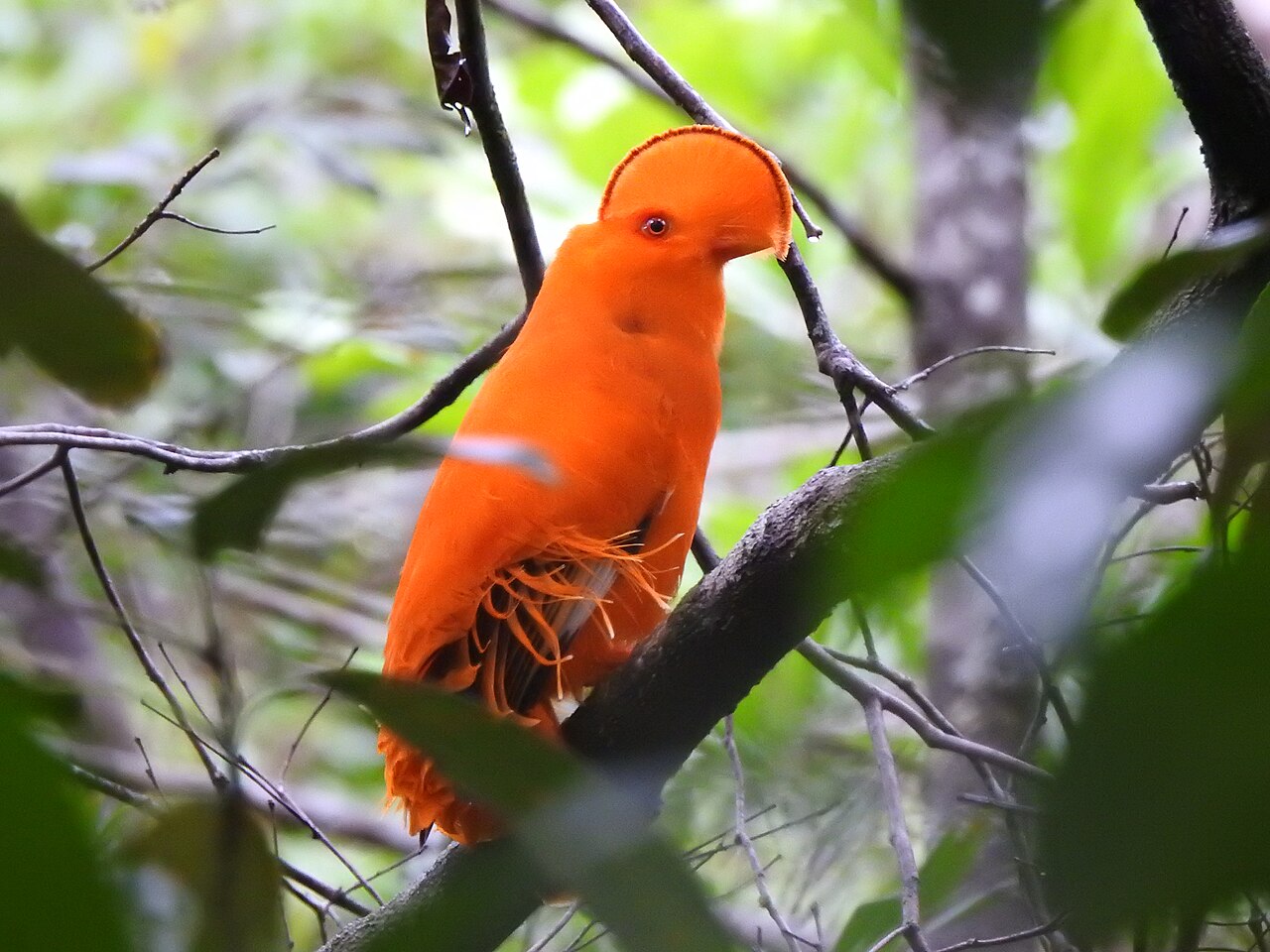
A small court on the forest floor
The Animal Diversity Web account describes males defending individual display spaces within a lek.
Calls and deliberate poses help draw female attention. A group of males may occupy the same general area while each competes within his own small court.
The effect is part gathering, part contest. It is a scene that a single bright head cannot fully explain.
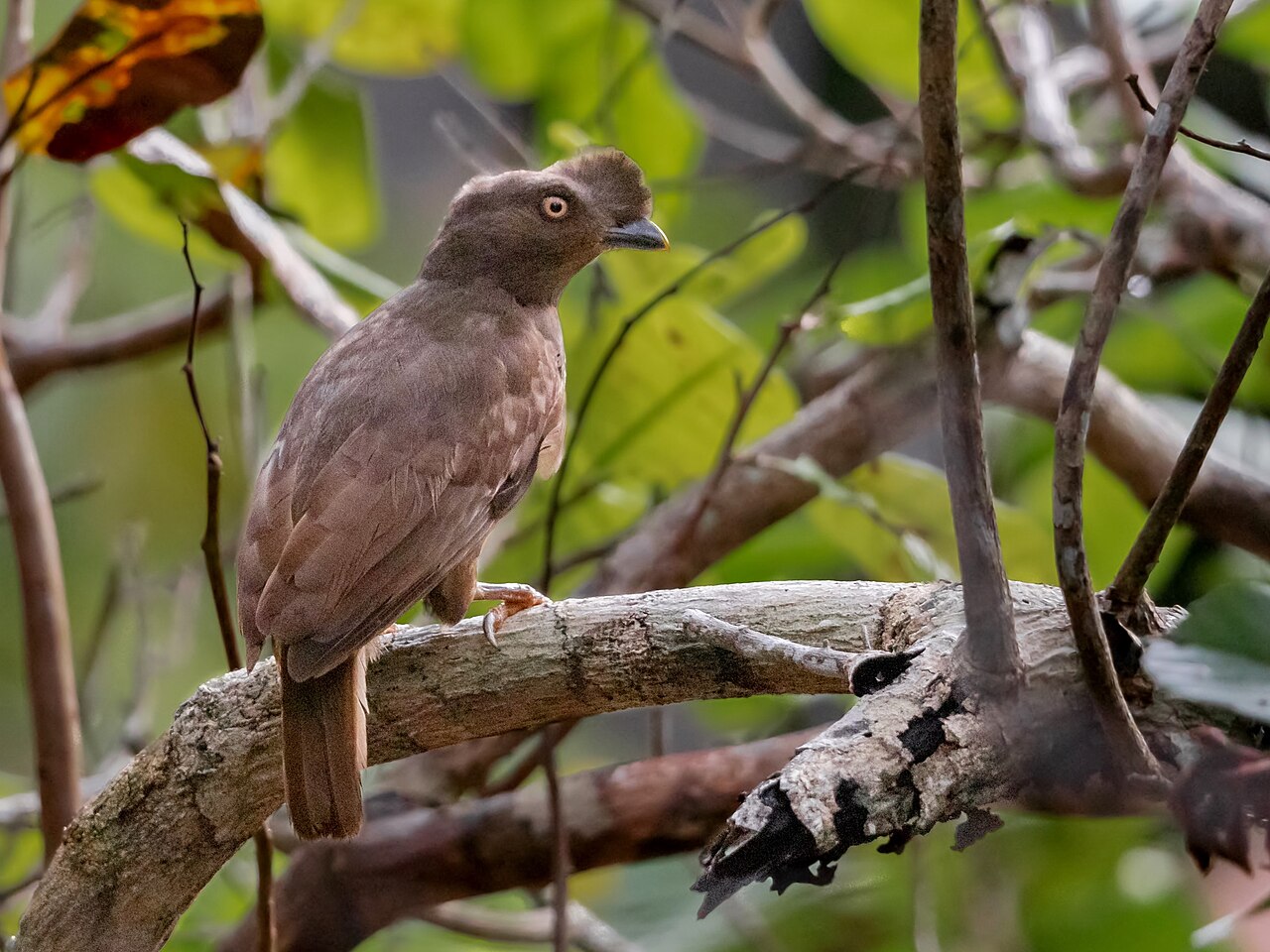
A female tells a different story
Brownish female plumage contrasts sharply with the male's orange. Females select nesting sites separately from the display area.
The difference makes careful captions useful: two birds of the same species need not look like matching portraits.
Fruit feeding also links these birds with forest plants and seed movement.
A colorful animal needs a complete habitat
The species occurs in northern South America, including the Guianas and parts of neighboring countries.
Food, shelter, and relatively undisturbed display sites matter together. An attractive viewing spot is only one part of the bird's world.
The Guianan cock-of-the-rock rewards attention to both the obvious and the quiet: the orange male displaying below, and the brown female deciding what happens next.
Photo credits
Featured image: Guianan Cock-of-the-rock (Rupicola rupicola).jpg — Almir Cândido de Almeida; CC BY 2.0.

Body image 1: Guianan Cock-of-the-rock, Presidente Figueiredo--Aldeia Marí Marí, Amazonas Brazil.jpg — Michael Hurben; CC BY-SA 4.0.

Body image 2: Rupicola rupicola Guianan Cock-of-the-Rocks (female), Presidente Figueiredo, Amazonas, Brazil.jpg — Hector Bottai; CC BY-SA 4.0.

Photographs resized for web display where available.