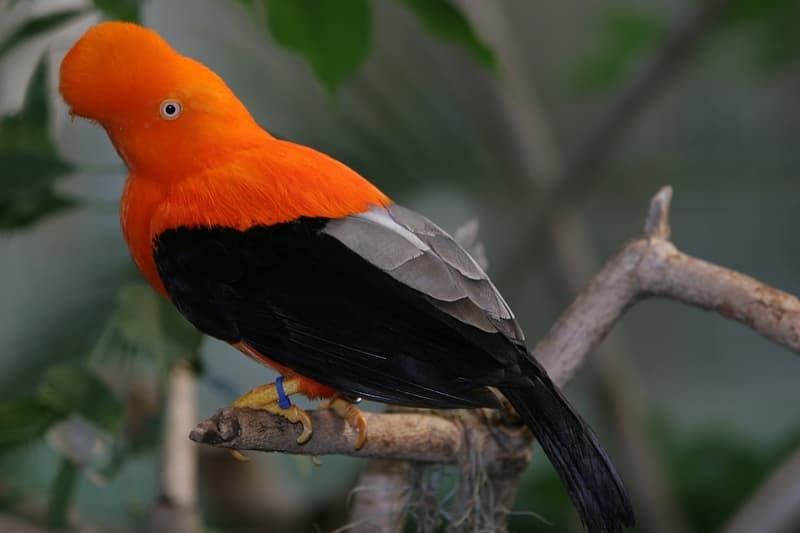
A male Andean cock-of-the-rock can look as though a bright feathered disc has grown over its bill. The rounded crest is only the beginning of a remarkable courtship display.
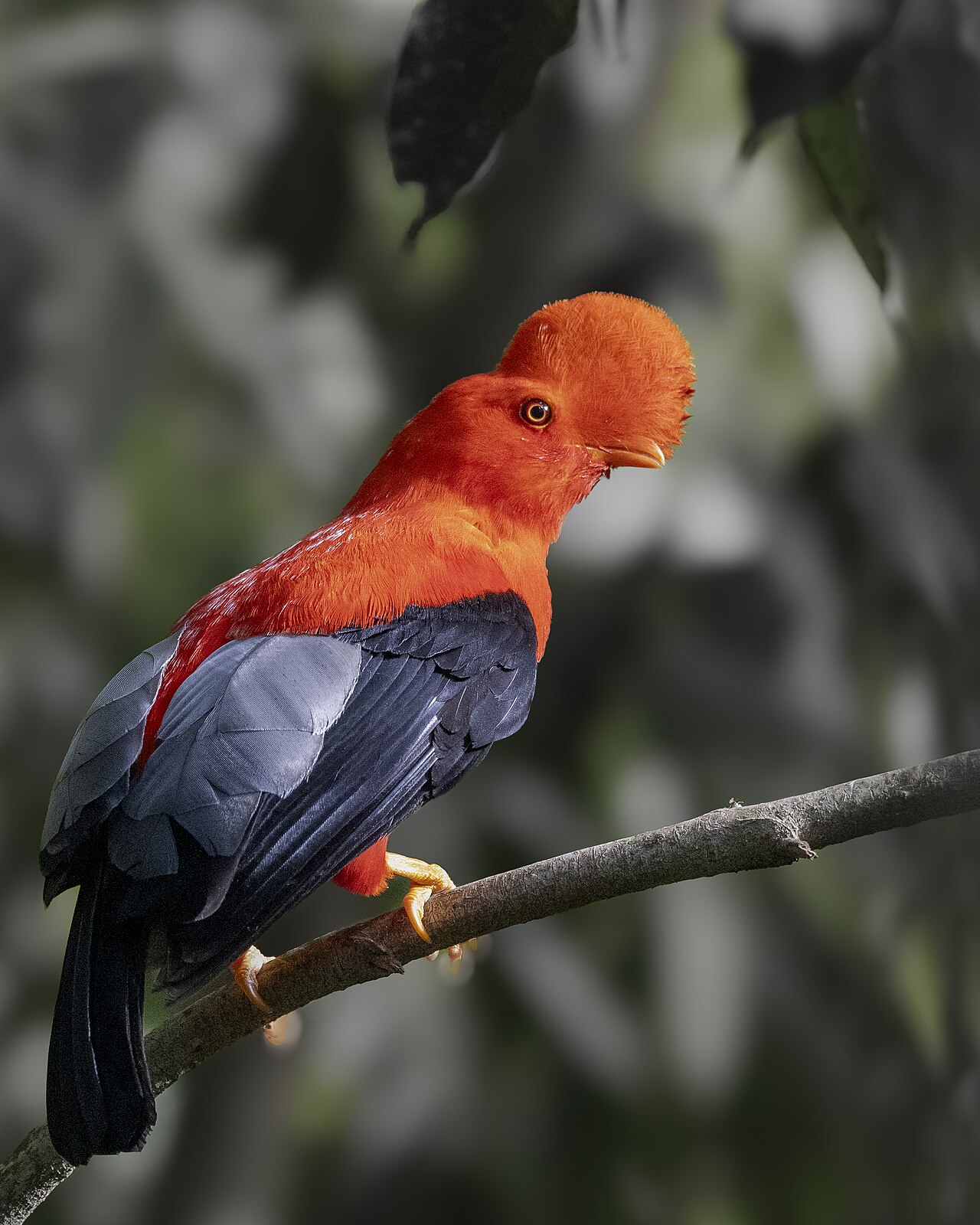
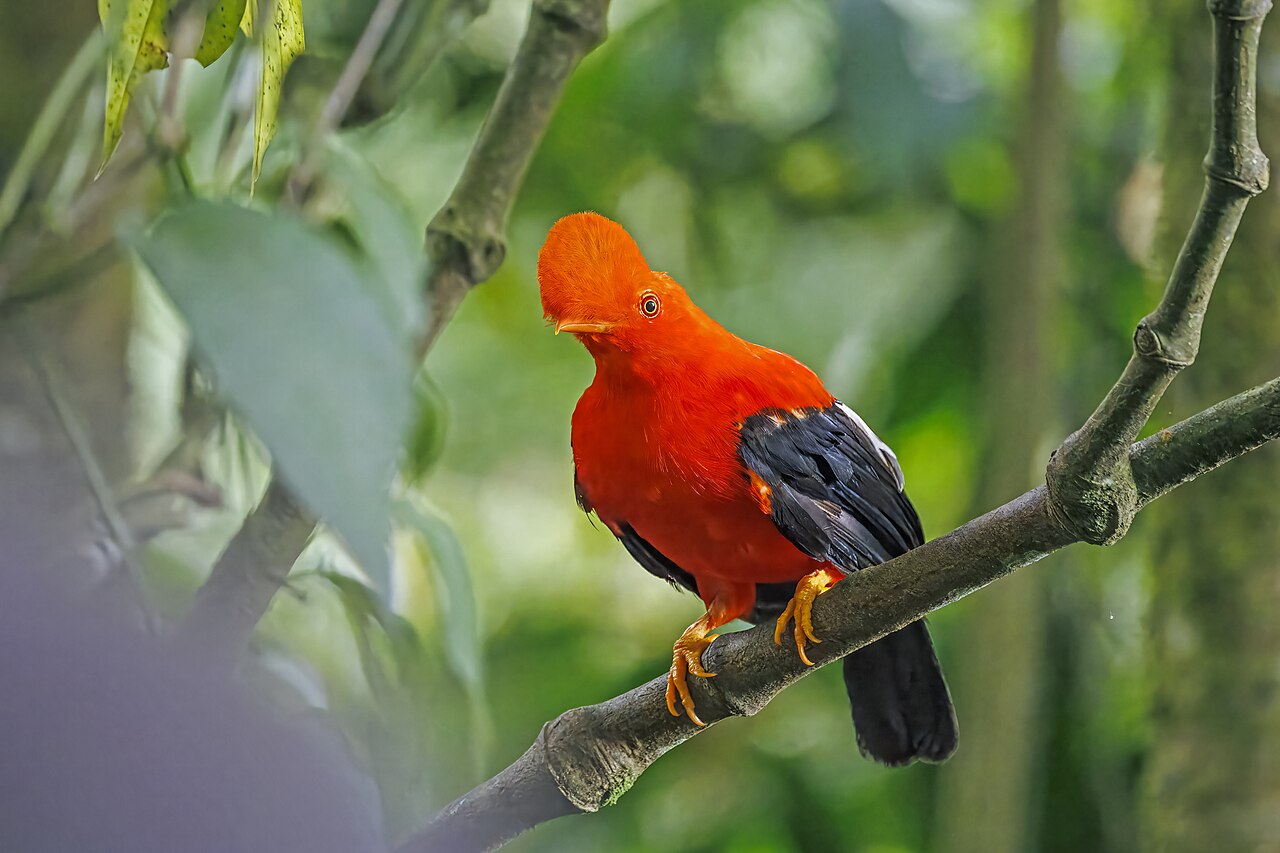
Rupicola peruvianus lives in Andean forests. Males can appear orange or deep red, depending on the population; females have a much quieter brownish appearance.
A forest courtship arena
American Bird Conservancy's species profile describes males gathering at display sites called leks.
There, calls, movement, and close competition become part of attracting females. The bright bird in a portrait is one participant in a busy social scene.
The crest may dominate the photograph, but the bird's posture and movements complete the performance.
Fruit connects the bird to the forest
Fruit forms an important part of the diet. A feeding bird therefore depends on more than a convenient display branch.
The same landscape must offer food and suitable nesting places. Females build nests associated with sheltered rocky sites, giving “cock-of-the-rock” a connection beyond appearance.
Admire the display without interrupting it
A lek is a place where birds carry out an essential part of their lives. Quiet observation and distance preserve the activity that makes it worth seeing.
Protecting forest means keeping feeding, nesting, and display areas connected.
The Andean cock-of-the-rock turns color into movement. Its most memorable portrait is an introduction to a much larger story unfolding among mountain trees.
Photo credits
Featured image: Rupicola peruviana (male) -San Diego Zoo-8a.jpg — Jerry Thompson; CC BY 2.0.

Body image 1: Andean Cock-of-the-rock.jpg — Das.upamanyu; CC BY 4.0.

Body image 2: Andean cock-of-the-rock (Rupicola peruvianus) Antioquia 4.jpg — Charles J. Sharp; CC BY-SA 4.0.

Photographs resized for web display where available.