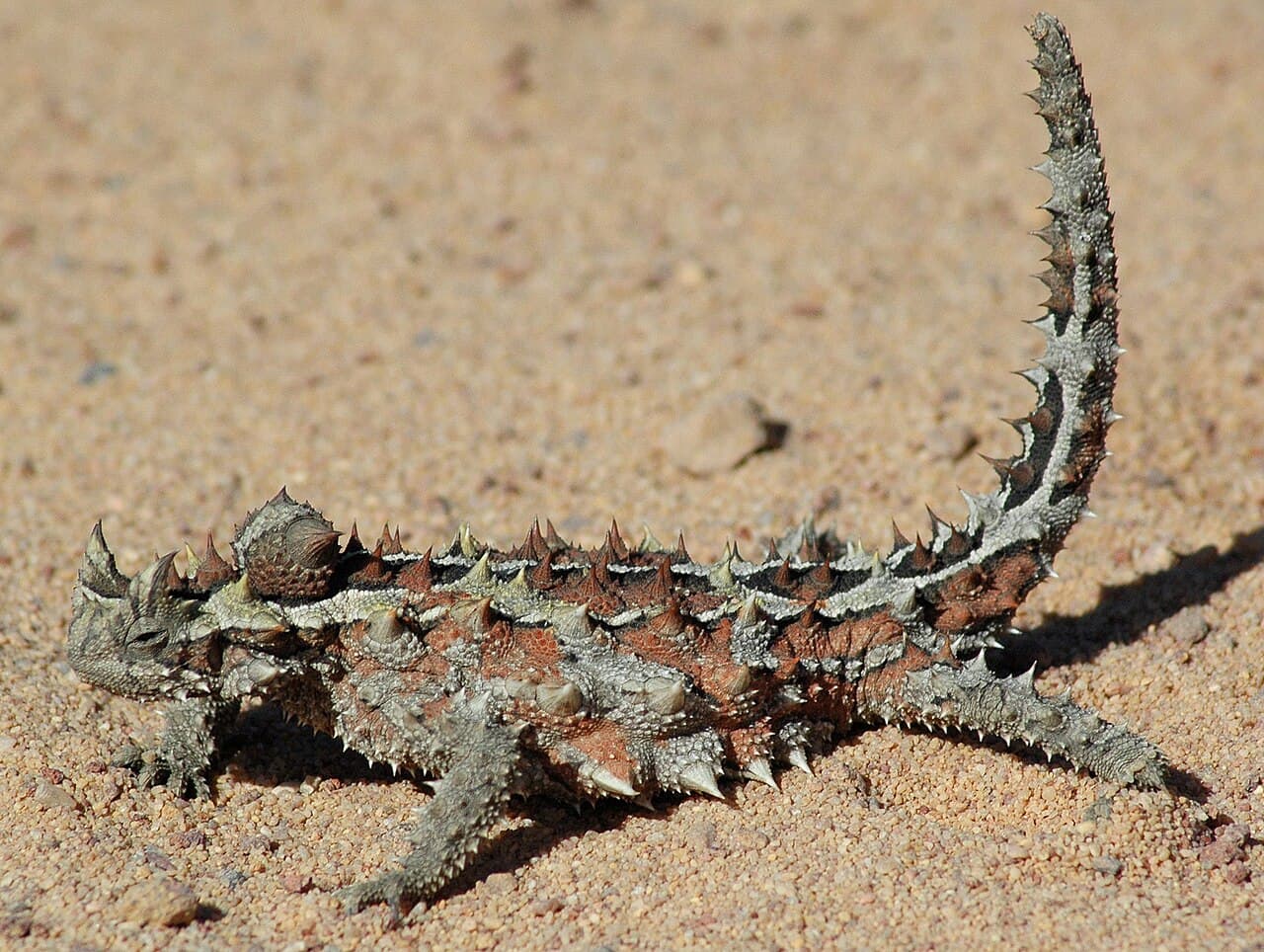
A thorny devil can collect water across its body and move it toward its mouth through tiny channels between its scales.
The spiky Australian lizard does not simply look extraordinary. Its surface helps solve one of the desert’s most important problems: getting a drink.
A body covered in tiny pathways
The thorny devil, Moloch horridus, lives in arid Australian landscapes. Its overlapping scales create a network of narrow channels.
The University of Western Australia explains that water can move through this network by capillary action and reach the mouth.
The distinction matters. Water is not simply soaking through the skin into the bloodstream. It is being transported along the outside of the body toward a place where the animal can swallow it.
Researchers tested the drinking story
In work reported in 2016, scientists investigated which water sources could supply enough moisture.
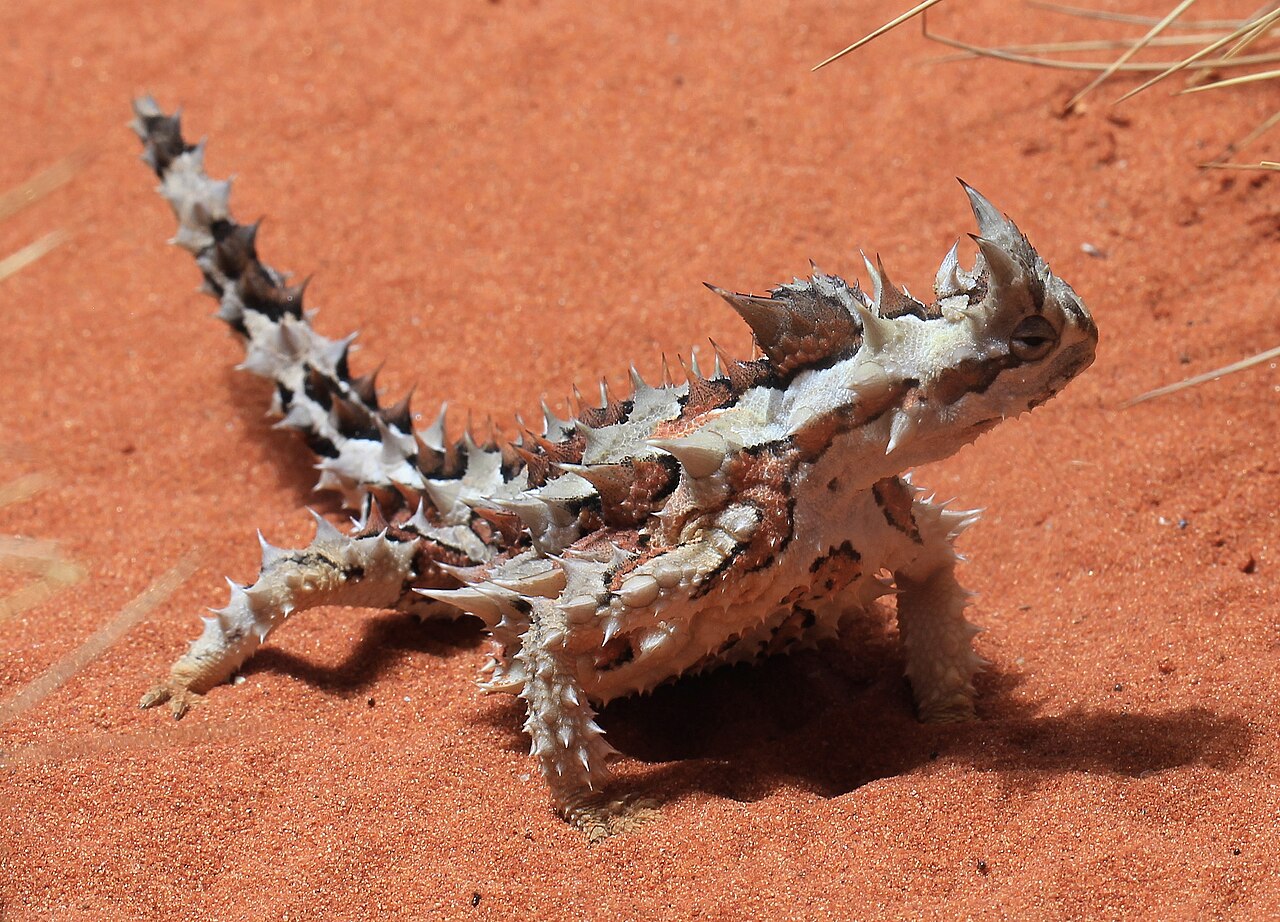
The original paper in the Journal of Experimental Biology found that standing in water allowed drinking. Standing on wet sand alone did not fill the channels enough. Tests with skin replicas suggested that shoveling moist sand onto the back could help fill them more effectively.
High humidity and condensation did not provide enough water for drinking in the tested conditions. That result helps separate an appealing idea from an experimentally supported one.
The study suggests rain and moist sand are important sources, rather than proof that a thorny devil can live indefinitely by collecting water from dry air.
A desert specialist, not a miniature monster
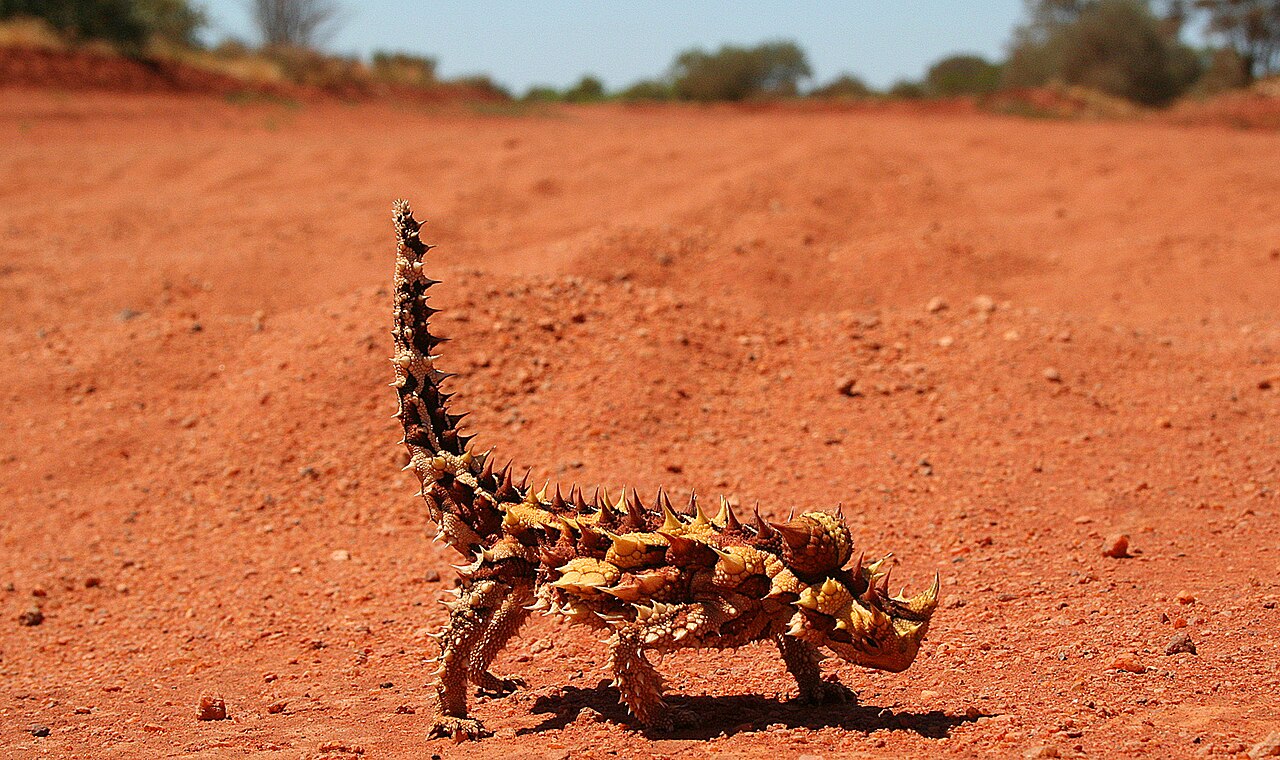
Western Australia’s Department of Biodiversity, Conservation and Attractions factsheet describes the species’ distribution across arid sandy regions.
Its thorny outline is only one part of that desert life. The animal also has to find food, suitable ground, and opportunities to collect moisture.
A striking body shape can hide an even more interesting surface when viewed closely.
The wonder is in the details
The water-channel system demonstrates how an animal’s outer covering can do more than protect it. Very small structures can influence how the whole body meets a daily need.
The thorny devil rewards careful looking: a lizard that first catches the eye with spikes becomes a lesson in water movement.
Understanding that difference makes the real adaptation more impressive than a vague claim about “drinking through its skin.”
Photo credits
Featured image: KeresH — CC BY-SA 4.0.

Body image 1: Stu's Images — CC BY-SA 4.0.

Body image 2: Bäras (talk · contribs) — CC BY-SA 3.0.

Photographs are illustrative. Captive animals and research specimens are identified in captions. Image adaptations retain their source licenses.