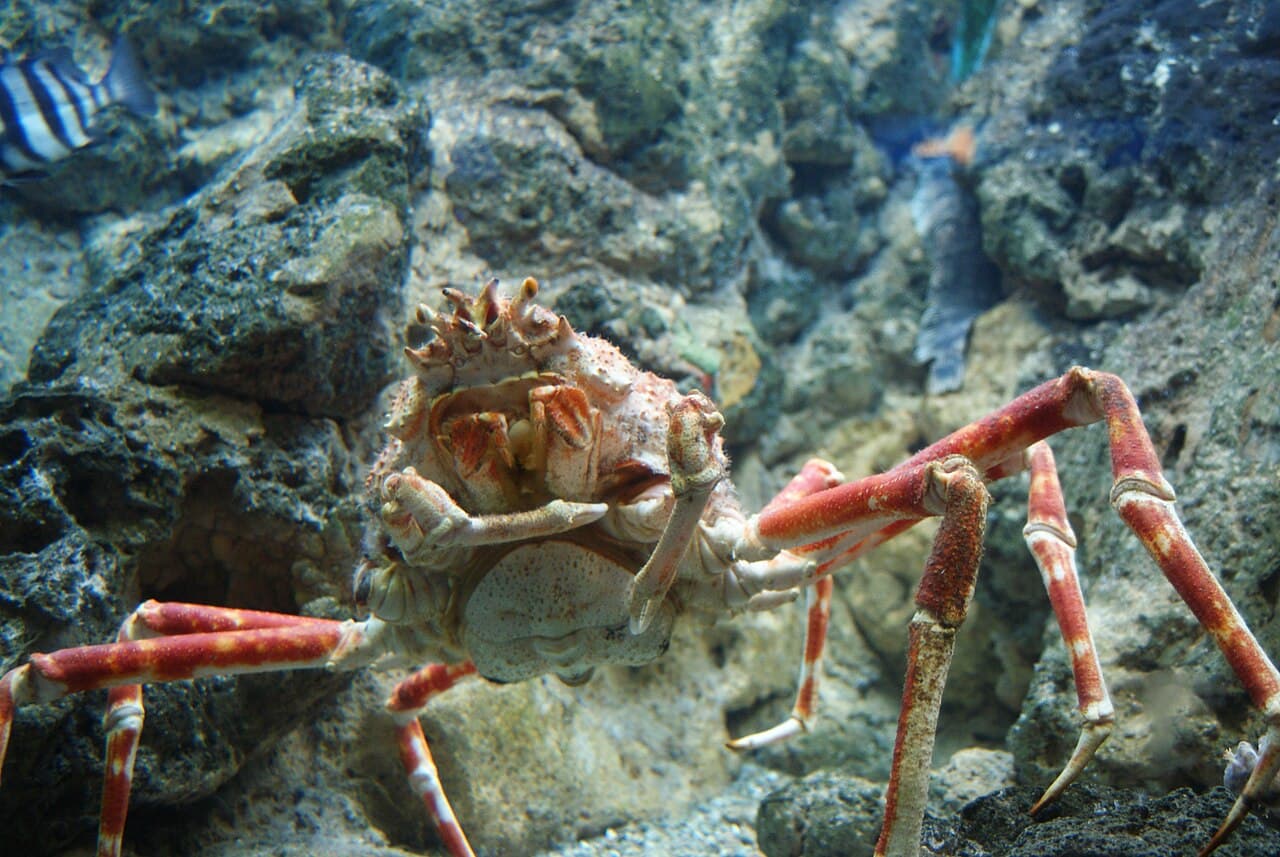
A Japanese spider crab can stretch its legs across a space wider than many people are tall. Yet much of that impressive size is leg, not body.
This distinction helps explain one of the ocean’s most unusual silhouettes: a relatively compact shell carried on an extraordinary set of limbs.
A giant measured from claw to claw
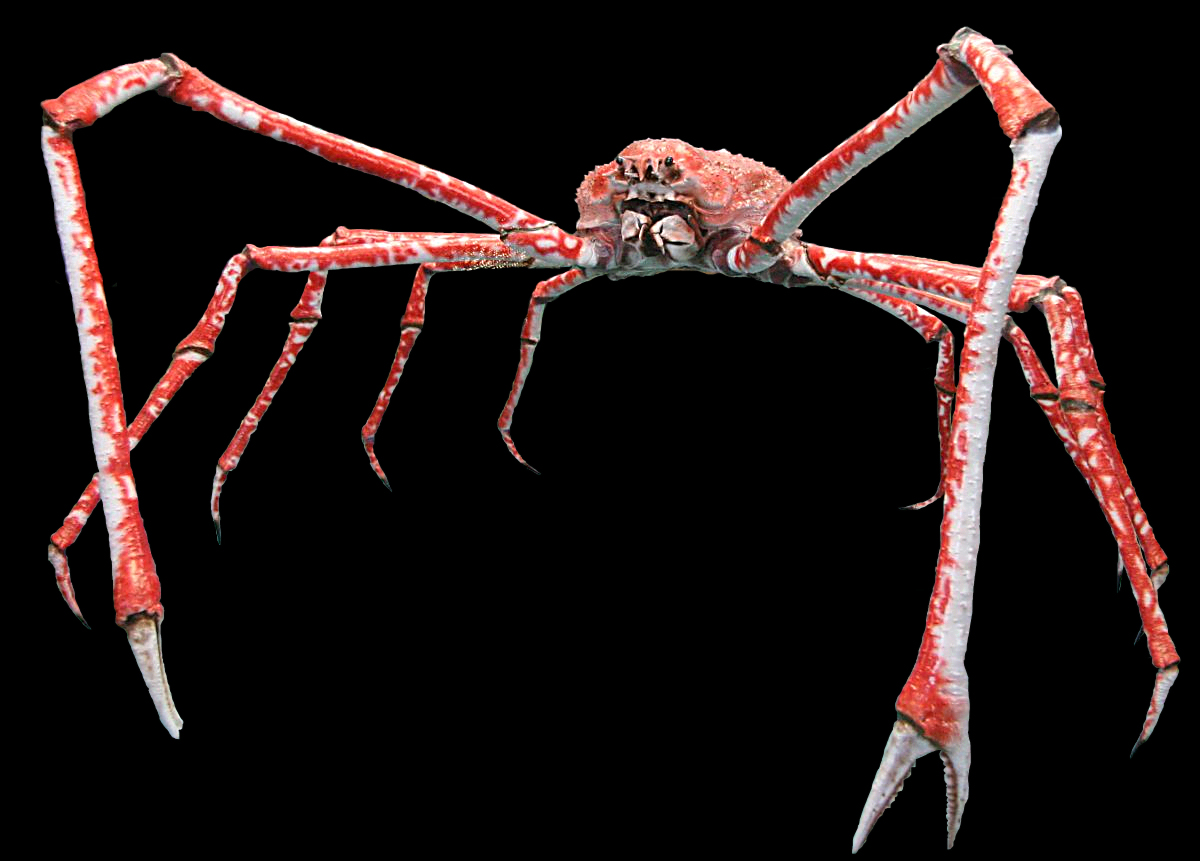
The Monterey Bay Aquarium describes legs spanning up to about 3.8 meters, or 12 feet.
The Japanese spider crab, Macrocheira kaempferi, has ten legs: eight used for walking and two carrying claws. Adult males have particularly elongated claw-bearing limbs.
A record-sized span should not be confused with the typical size of every crab in the species. The body shell is much smaller than the distance across outstretched legs.
Life along Japan’s seafloor
These crabs inhabit the seafloor off Japan’s Pacific coast, including sandy and rocky areas of the continental shelf and slope.
Their enormous appearance can make them seem threatening, but it does not tell us what they eat or how they behave. Understanding a bottom-dwelling crab means looking at its feeding and movement, not simply measuring its limbs.
Growing means leaving a shell behind
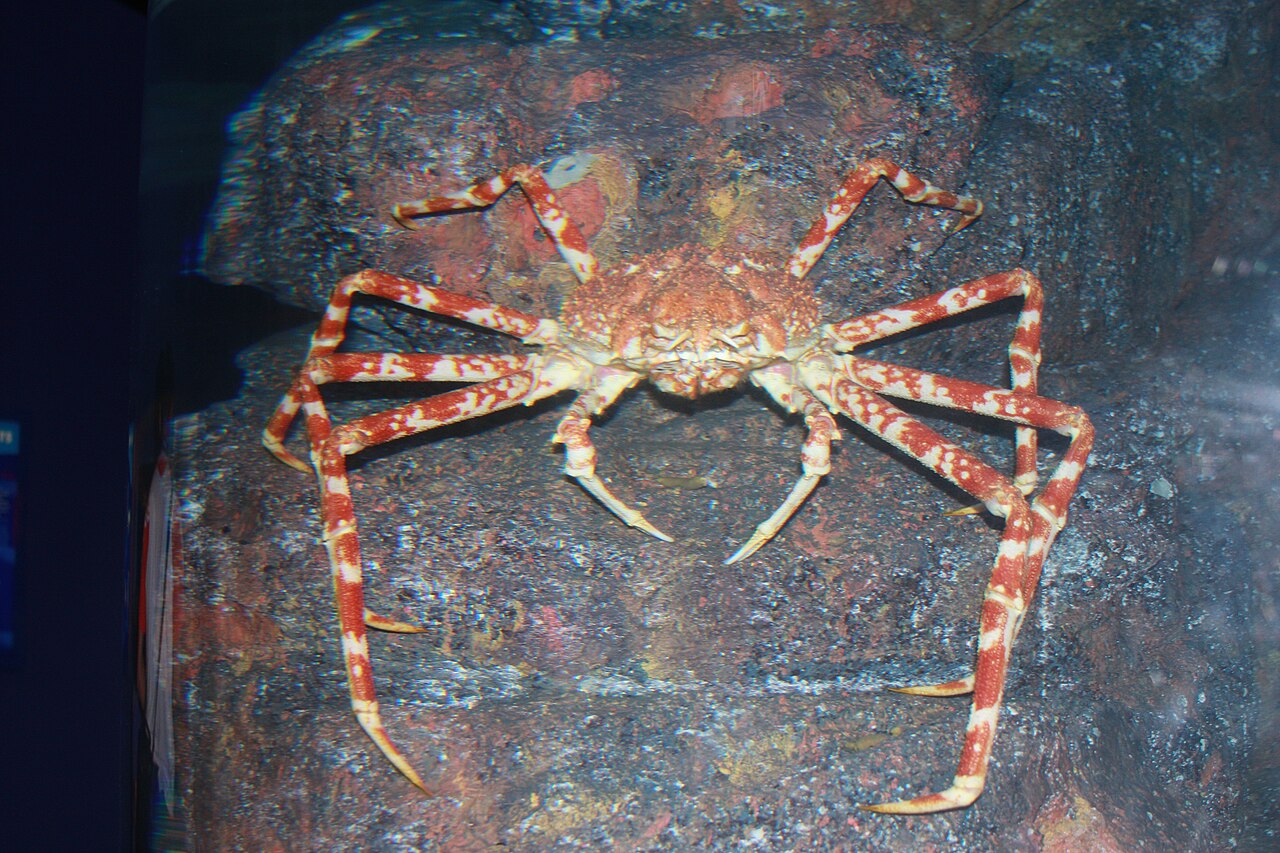
Like other crustaceans, a Japanese spider crab grows by molting. It exits its old exoskeleton before the new covering hardens.
The aquarium notes that this is a vulnerable period. A body usually protected by a firm outer shell temporarily has much less protection.
The Association of Zoos and Aquariums care manual explains why space matters during this process: the animal needs room to withdraw its long limbs safely.
Some popular numbers remain uncertain
The same manual cautions that claims of century-long lifespans are estimates, not well-validated measurements of wild individuals. An appealing number should not become a certainty through repetition.
The securely documented anatomy is impressive enough. This crab’s size also brings challenges, especially when it must leave an entire outer covering behind.
A Japanese spider crab is more than an underwater giant. It is a reminder that an animal’s most spectacular feature can also shape its most delicate moments.
Photo credits
Featured image: Dallas Krentzel — CC BY 2.0.

Body image 1: Lycaon (Hans Hillewaert) — CC BY 2.5.

Body image 2: Bjoertvedt — CC BY-SA 3.0.

Photographs are illustrative. Captive animals, regional landscapes, and research specimens are identified in their captions. Image adaptations retain their respective source licenses.