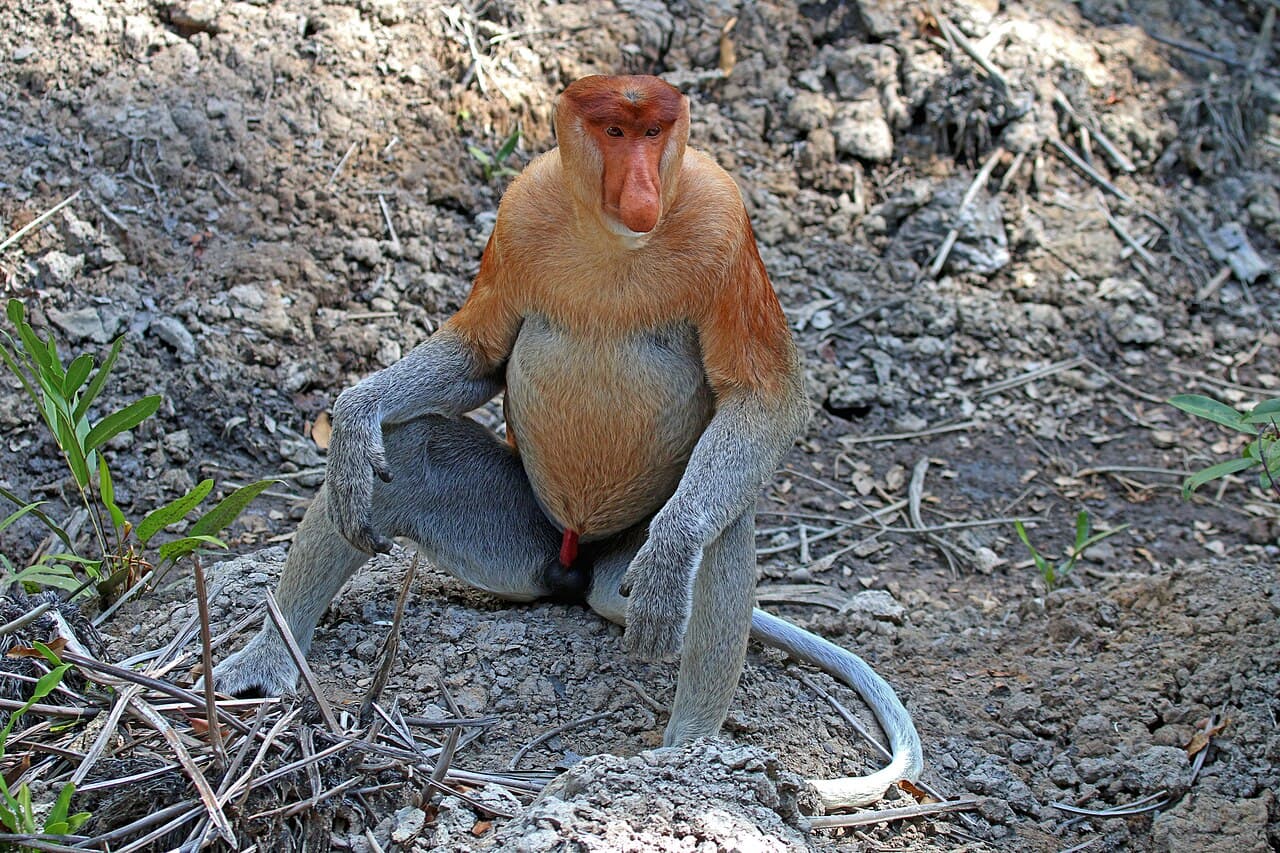
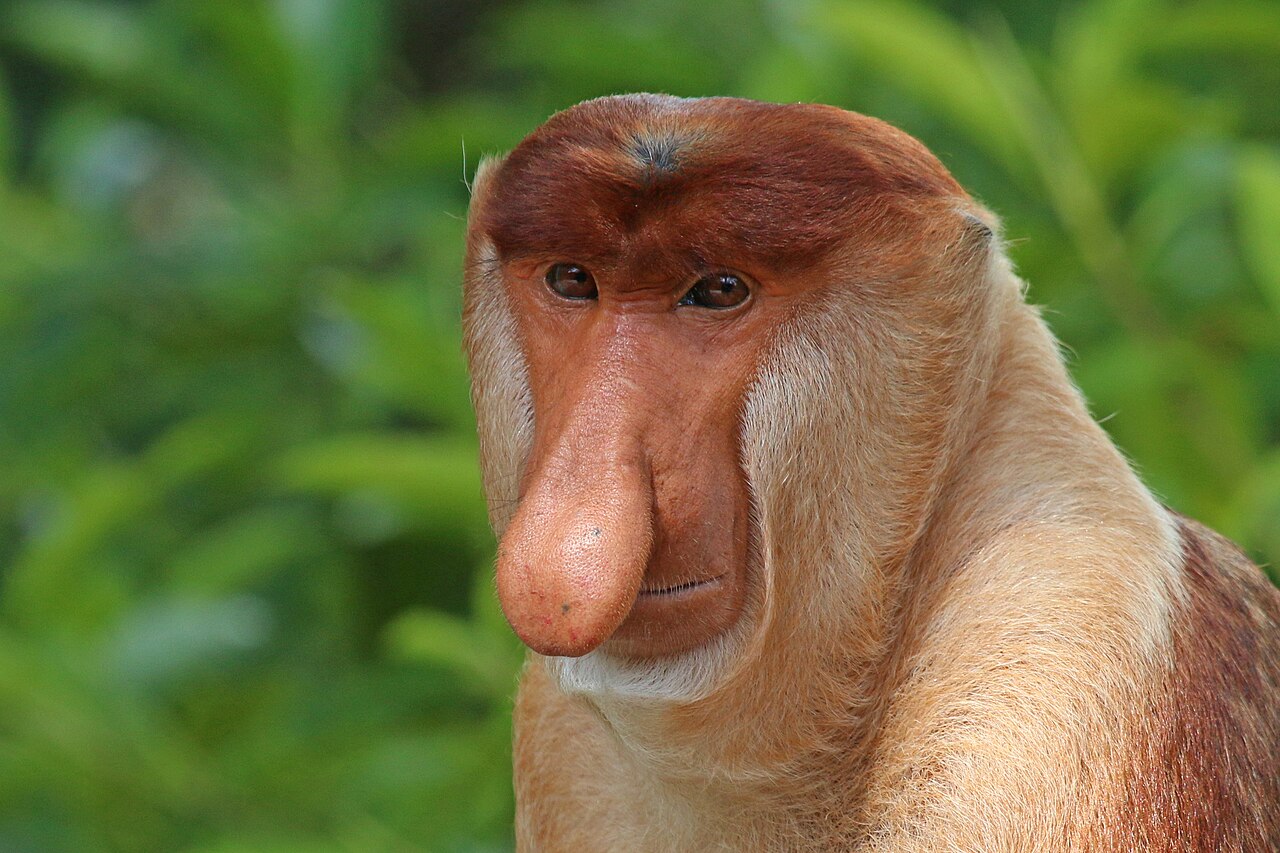
The male proboscis monkey’s enormous nose is part of a communication system. Its unusual shape contributes to signals that can be heard as well as seen.
The face may make people smile, but the biology behind it is a serious example of how bodies evolve in social animals.
A distinctive primate from Borneo
The proboscis monkey, Nasalis larvatus, is native to Borneo. Males have much larger noses than females, and the difference becomes especially obvious in adults.
The University of Wisconsin’s primate factsheet describes its ecology and behavior in riverine and coastal forest environments.
These are monkeys living within a specific island landscape, not a broadly distributed species found throughout Asia.
What researchers learned from the skull
Research summarized by the Australian National University in 2024 examined the bony structures associated with the nose.
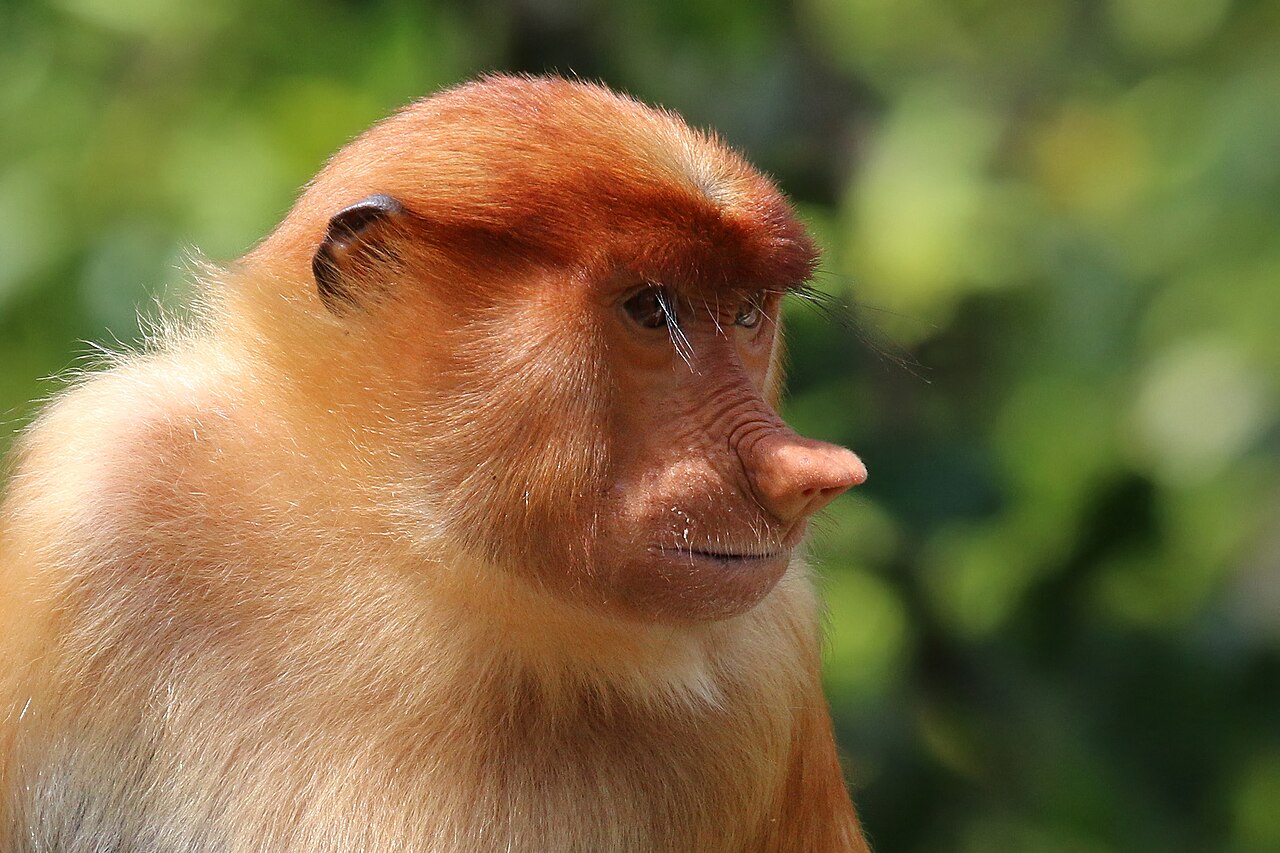
The work supported both visual and acoustic roles for the enlarged male nasal region. Differences in the nasal cavity help produce loud, low-frequency nasalized calls.
A bigger nose is therefore not just an external ornament. The shape of the space inside the head contributes to the sound that comes out.
The study does not mean every detail of mate choice or social rank can be read from a photograph. It provides evidence about anatomical functions within a larger behavioral story.
A life connected to forest and water
Animal Diversity Web describes the proboscis monkey’s forest habitat and plant-based diet, including leaves and fruit.
River edges and coastal forests supply more than a scenic background. They provide feeding areas, travel routes, and resting places.
The photographs here distinguish males and females rather than treating every animal as having the same oversized nose.
Protect the setting behind the face
The New England Primate Conservancy identifies conservation pressures facing this Bornean primate, including habitat loss.
The remarkable nose can bring attention to the animal. Keeping that attention on its forest gives the curiosity a useful direction.
The proboscis monkey reminds us that a feature which seems unusual to us can be part of an effective, evolved language of sight and sound.
Photo credits
Featured image: Charles J. Sharp — CC BY-SA 4.0.

Body image 1: Charles J. Sharp — CC BY-SA 4.0.

Body image 2: Charles J. Sharp — CC BY-SA 4.0.

Photographs are illustrative. Captive animals, regional landscapes, and research specimens are identified in their captions. Image adaptations retain their respective source licenses.