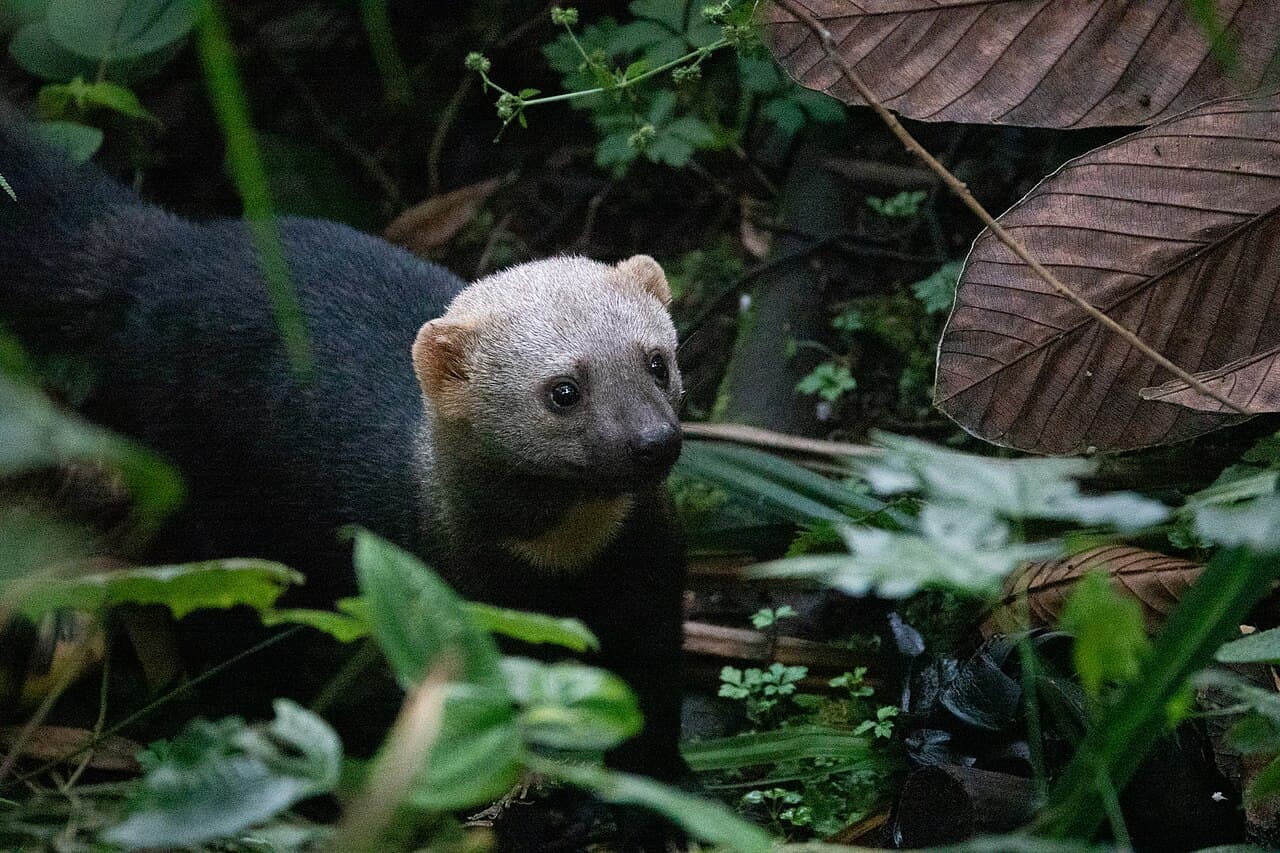
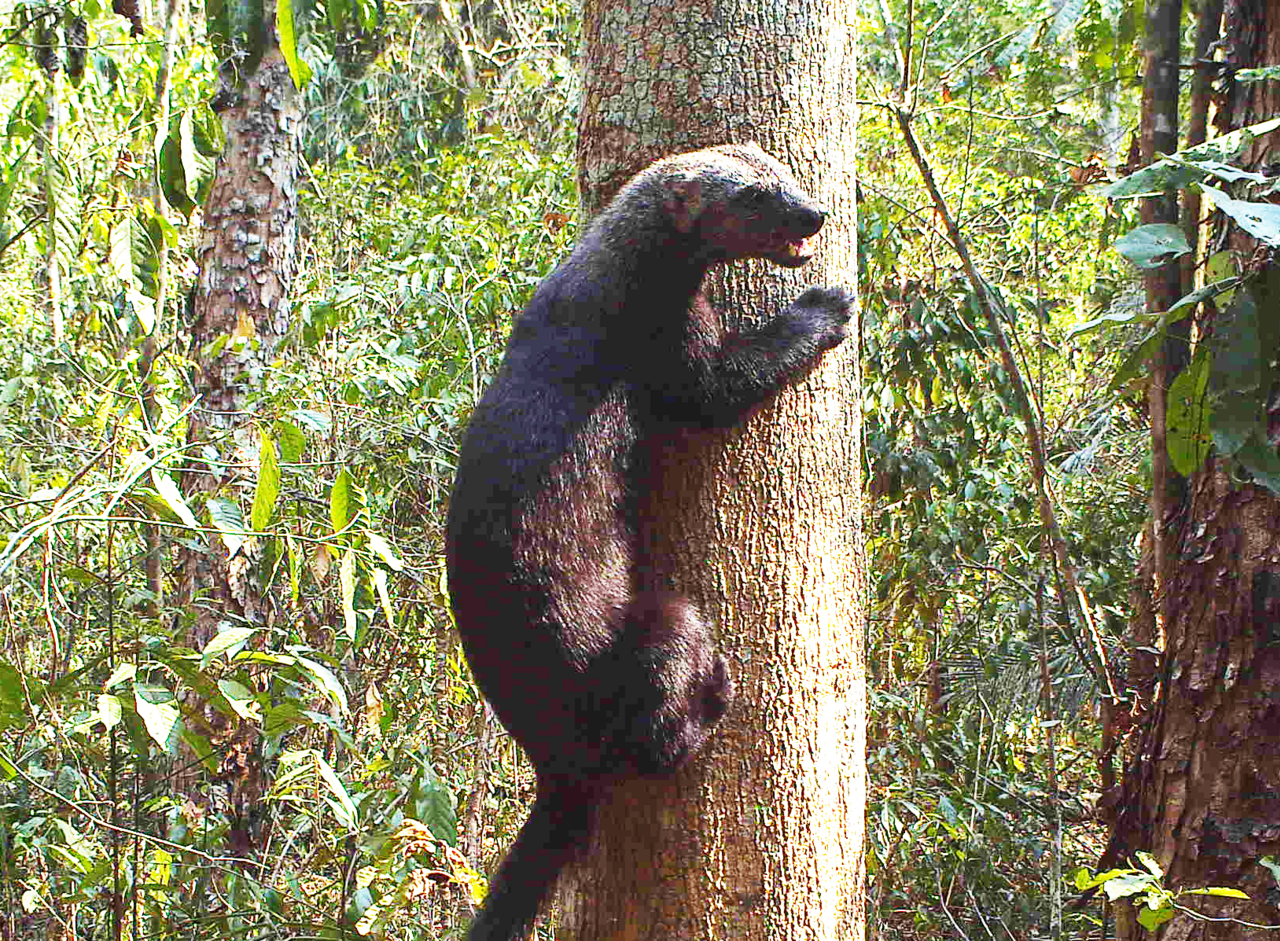
A tayra can move from the forest floor into the branches, carrying a long tail that helps with balance. Its world is not limited to one level of the forest.
Eira barbara belongs to the mustelid family. It is related to weasels, badgers, and otters rather than to the monkeys it may share trees with.
A flexible forest traveler
The Animal Diversity Web tayra account records it in tropical America, including Central and South America.
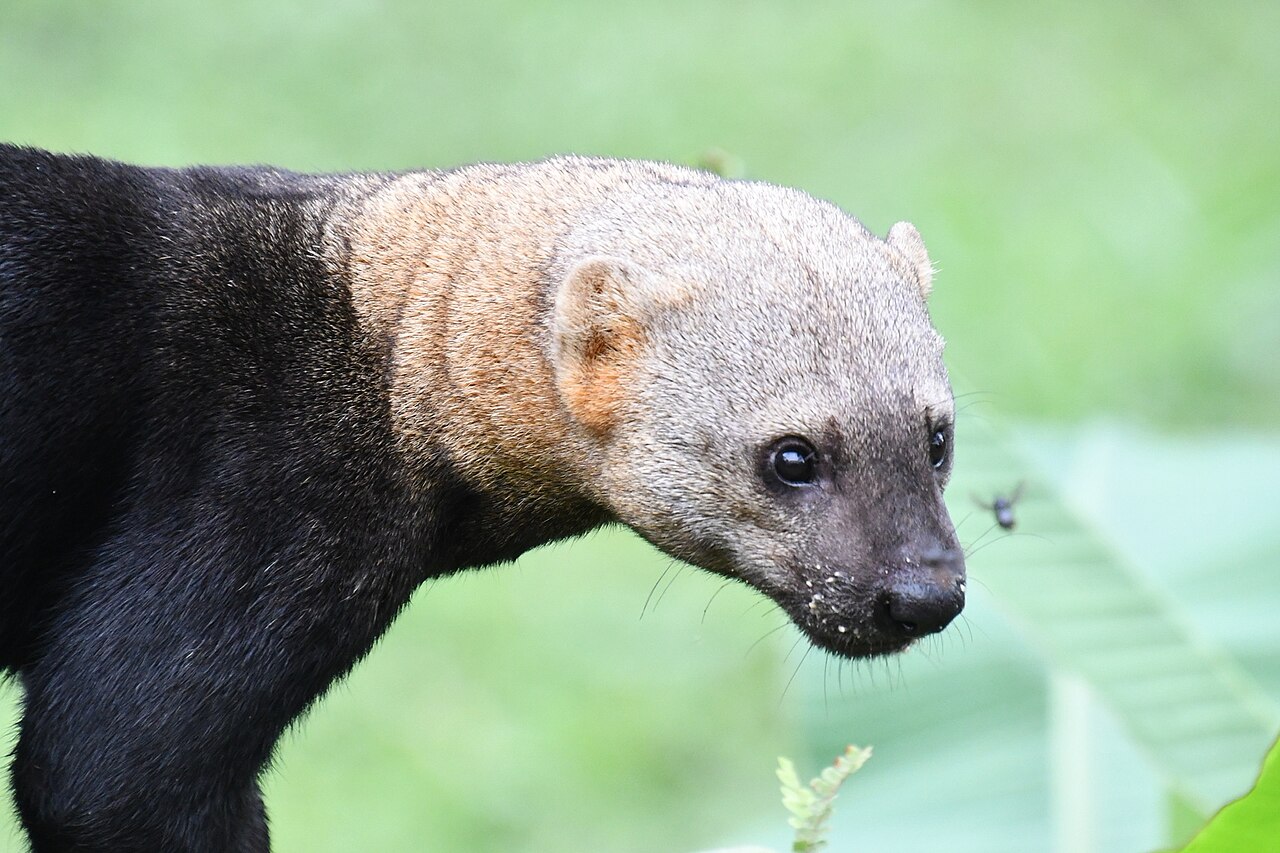
Many individuals have a dark body and paler head, though coat colors vary. A long neck and tail give the animal an elongated outline.
Tayras are often active by day. They move on the ground and climb, using both environments in their search for food.
Not every carnivore eats only meat
Small mammals, fruit, invertebrates, and other foods enter the diet.
The word Carnivora names an animal order. It does not require every member to eat an identical menu.
Fruit on a branch and prey below it can both be resources for the same forager.
A forest holds different routes
Hollow trees and other sheltered places offer resting sites. Branches, cover, and ground-level paths create a connected environment.
Preserving that structure matters even for an animal able to use some disturbed habitats.
The tayra rewards a closer look at familiar animal categories. A weasel relative can be a capable tree traveler, and a predator can find part of its meal growing on a branch.
Photo credits
Featured image: Eira barbara 254673358.jpg — Demian Hiß; CC BY 4.0.

Body image 1: Eira barbara 329052488.jpg — Leslie; CC0.

Body image 2: Tayra (Eira barbara) at the Rio Doce state park 001.png — Richard Hatakeyama; CC BY-SA 4.0.

Photographs resized for web display where available.