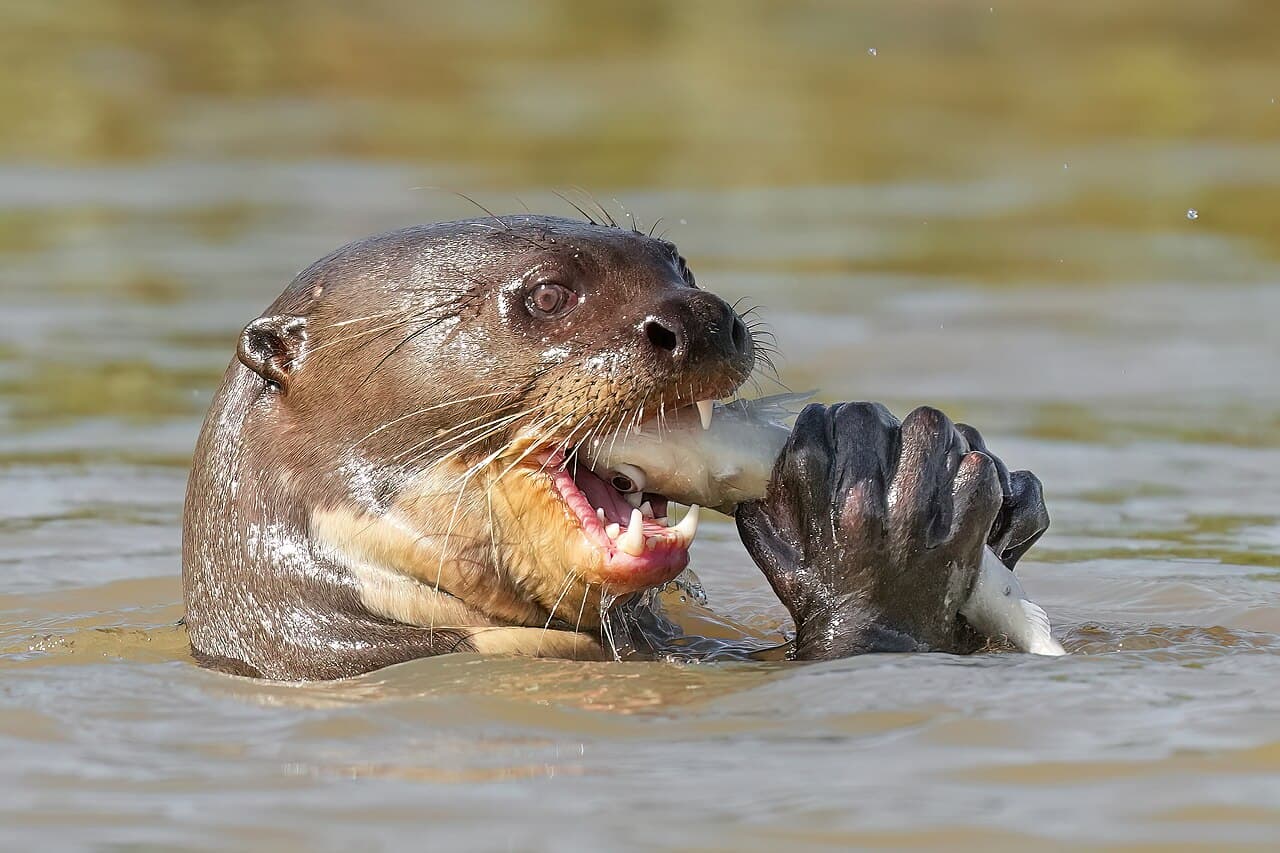
A giant otter can catch a fish in the water and hold it with its front paws while eating. Powerful swimming and dexterous feeding meet in one long, muscular body.
Pteronura brasiliensis is a South American freshwater otter. It belongs to the mustelid family, alongside weasels and badgers.
A hunter in a moving world
The Animal Diversity Web giant-otter account describes fish hunting in rivers, lakes, and creeks.
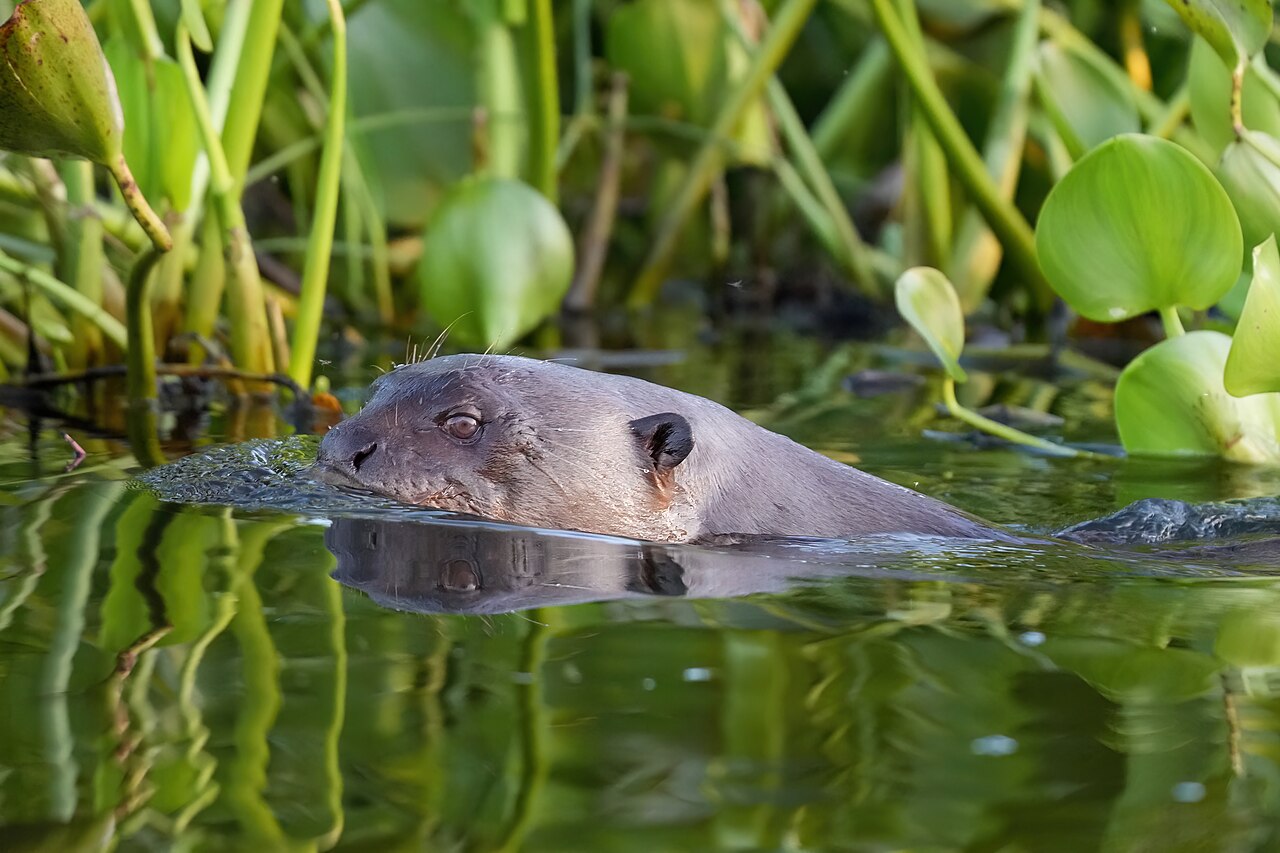
The animal's body moves efficiently through water, but it also depends on the land beside it. Banks provide resting places and sites for dens.
A river is therefore more than a route between two places. It is part of a home.
A family with many activities
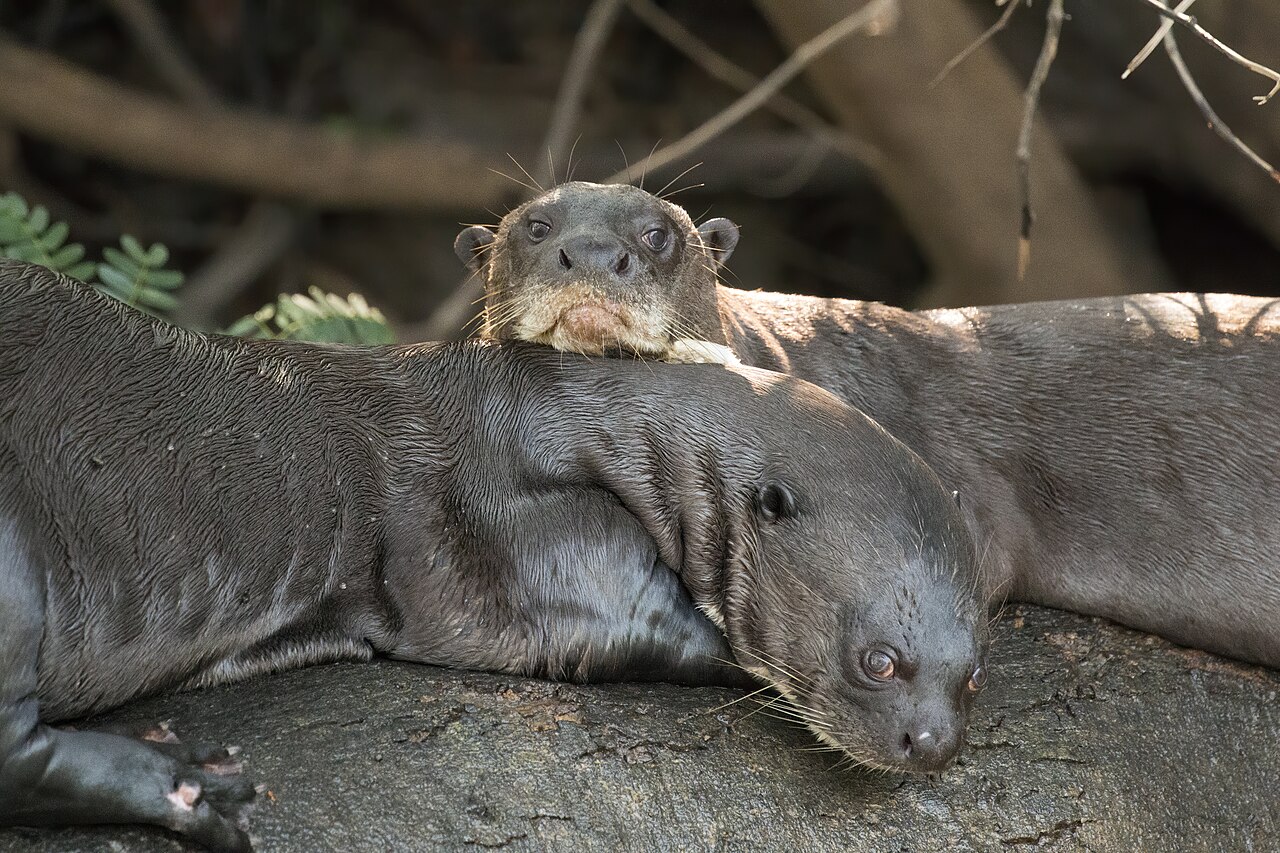
Giant otters live in family groups. Members hunt, rest, groom, and communicate.
Young animals begin life in sheltered dens before following adults outside. Learning to move and feed takes place within that family setting.
Calls and scent help maintain social contact and territory.
Keep the banks in the conservation picture
A river can look intact from the middle while losing cover along its edges.
Protecting freshwater habitat includes considering disturbance, pollution, prey, and the vegetation around the water.
The photographs reveal more than an impressive predator. Look at a swimming head, a fish held between paws, and animals resting together: the giant otter's remarkable life connects skill with family and water with land.
Photo credits
Featured image: 018 Giant otter eating a fish in Encontro das Águas State Park Photo by Giles Laurent.jpg — Giles Laurent; CC BY-SA 4.0.

Body image 1: 139 Giant otter swimming in Encontro das Águas State Park Photo by Giles Laurent.jpg — Giles Laurent; CC BY-SA 4.0.

Body image 2: Giant otters (Pteronura brasiliensis).jpg — Charles J. Sharp; CC BY-SA 4.0.

Photographs resized for web display where available.