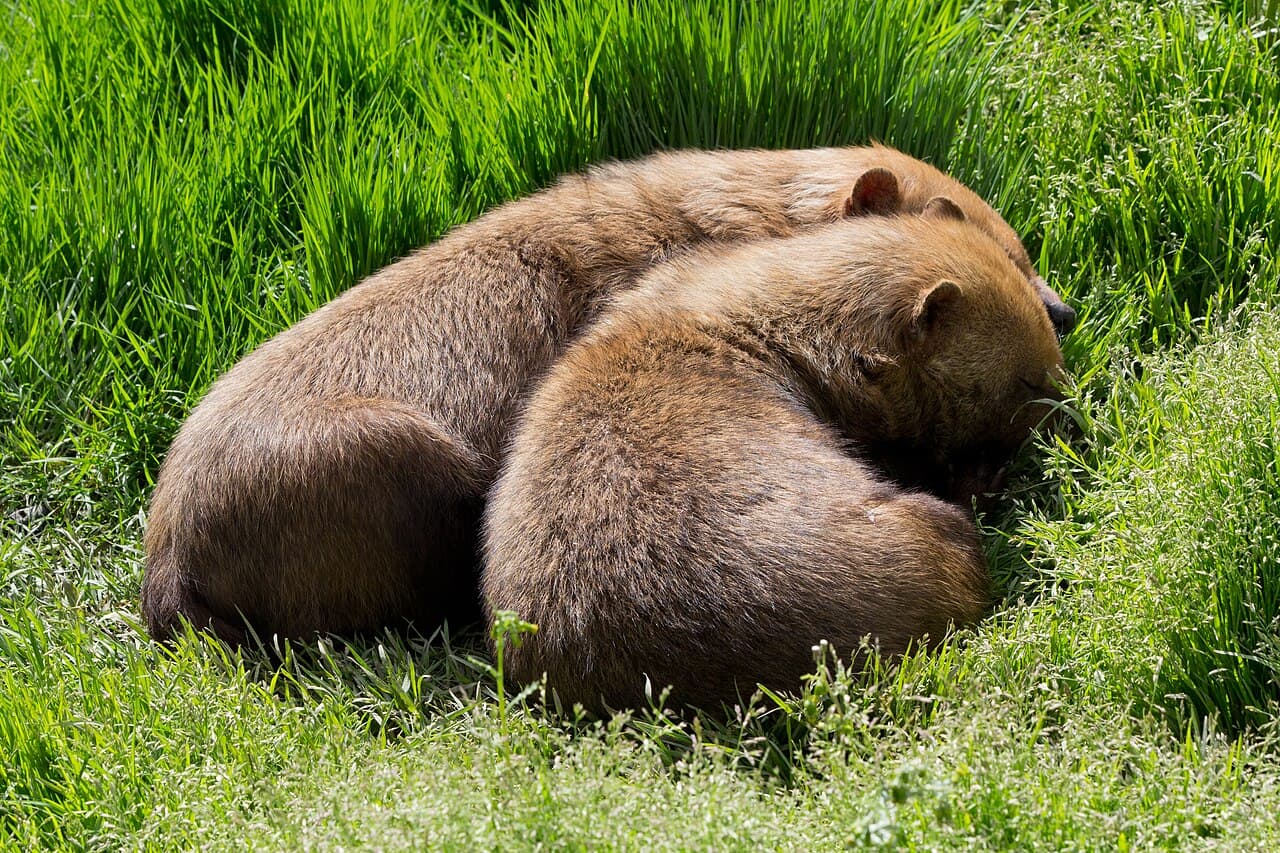
A bush dog barely resembles the long-legged outline many people associate with a wild dog. Its short legs, broad head, and compact body introduce a very different member of the canine family.
Speothos venaticus lives in tropical America. A reddish front and darker rear often add to its unusual appearance.
A dog at home near water
The Animal Diversity Web account describes forests and wet savannas across a patchy range from Central into South America.
Bush dogs have webbed feet and are capable swimmers. Moving through a wet landscape involves more than walking along its banks.
The low body is not an awkward version of a familiar dog. It is the form of this particular wild species.
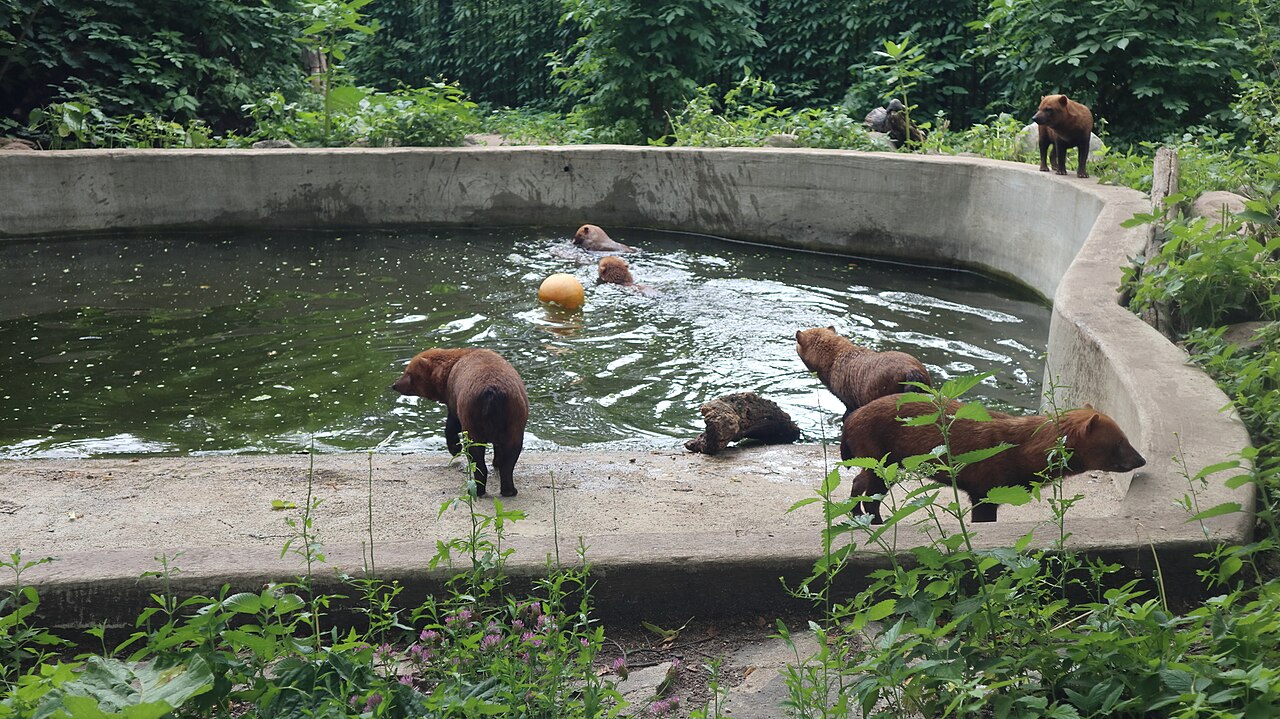
Keeping a group together
Bush dogs are social and use calls to stay in contact. In vegetation, a small sound can reveal where another animal has gone.
They eat animal prey and can hunt cooperatively. Dens provide shelter, including places for young.
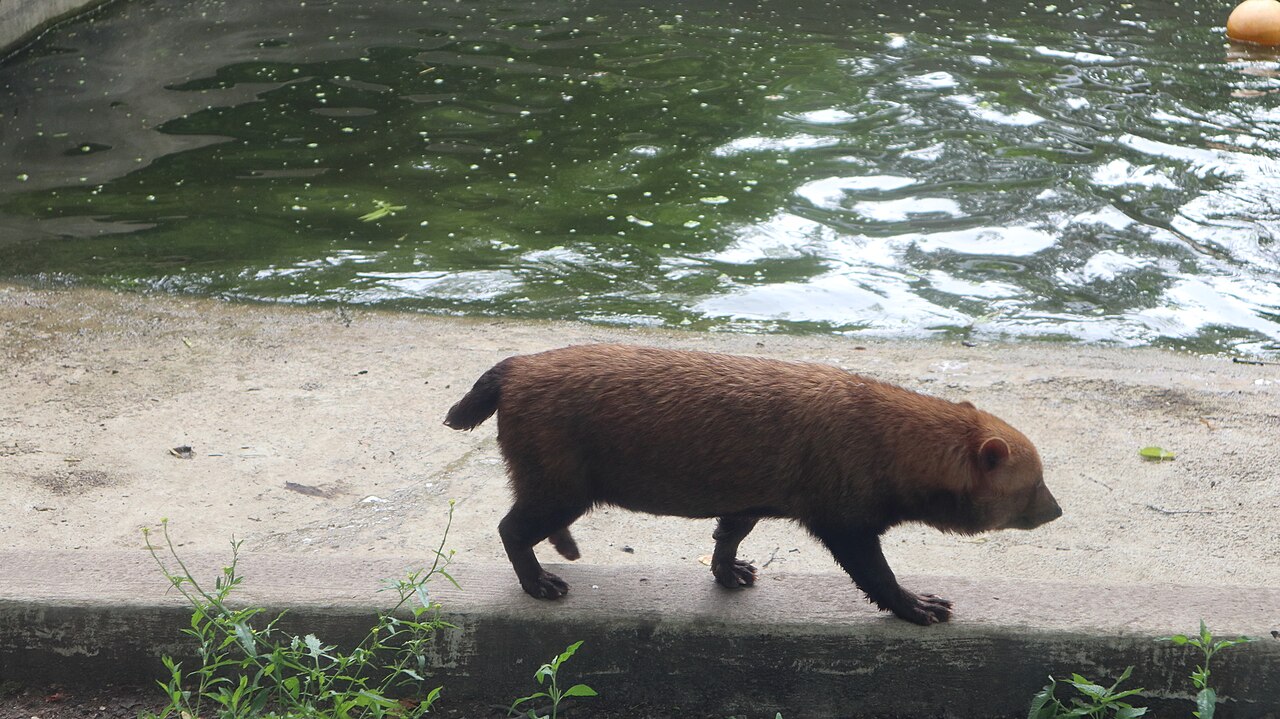
Notice the whole habitat
A photograph beside a zoo pool illustrates body shape and movement. It does not reproduce all the choices an animal makes in a natural forest.
Cover, water, prey, and safe routes belong together in its habitat.
The bush dog expands the picture of canine life. Short legs can carry an animal into a world of wet ground, dense cover, and close social connections.
Photo credits
Featured image: Speothos venaticus - 03.jpg — Carlos Delgado; CC BY-SA 3.0.

Body image 1: Animals in Kaliningrad Zoo - Speothos venaticus - 2024-06-13 - p4.jpg — Александр Сигачёв; CC0.

Body image 2: Animals in Kaliningrad Zoo - Speothos venaticus - 2024-06-13 - p5.jpg — Александр Сигачёв; CC0.

Photographs resized for web display where available.