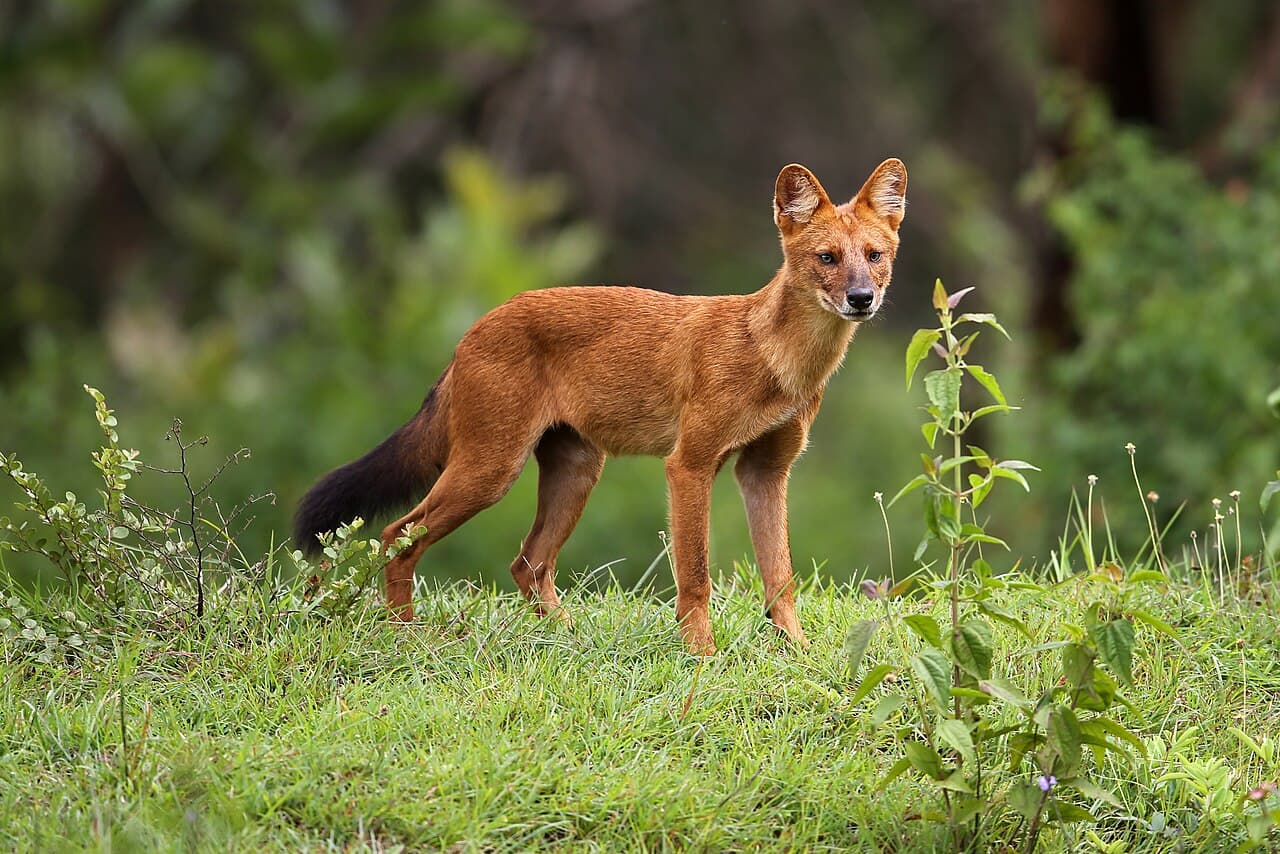
A dhole can communicate with a whistle. In dense habitat, a sound can carry information when a pack member is hidden from view.
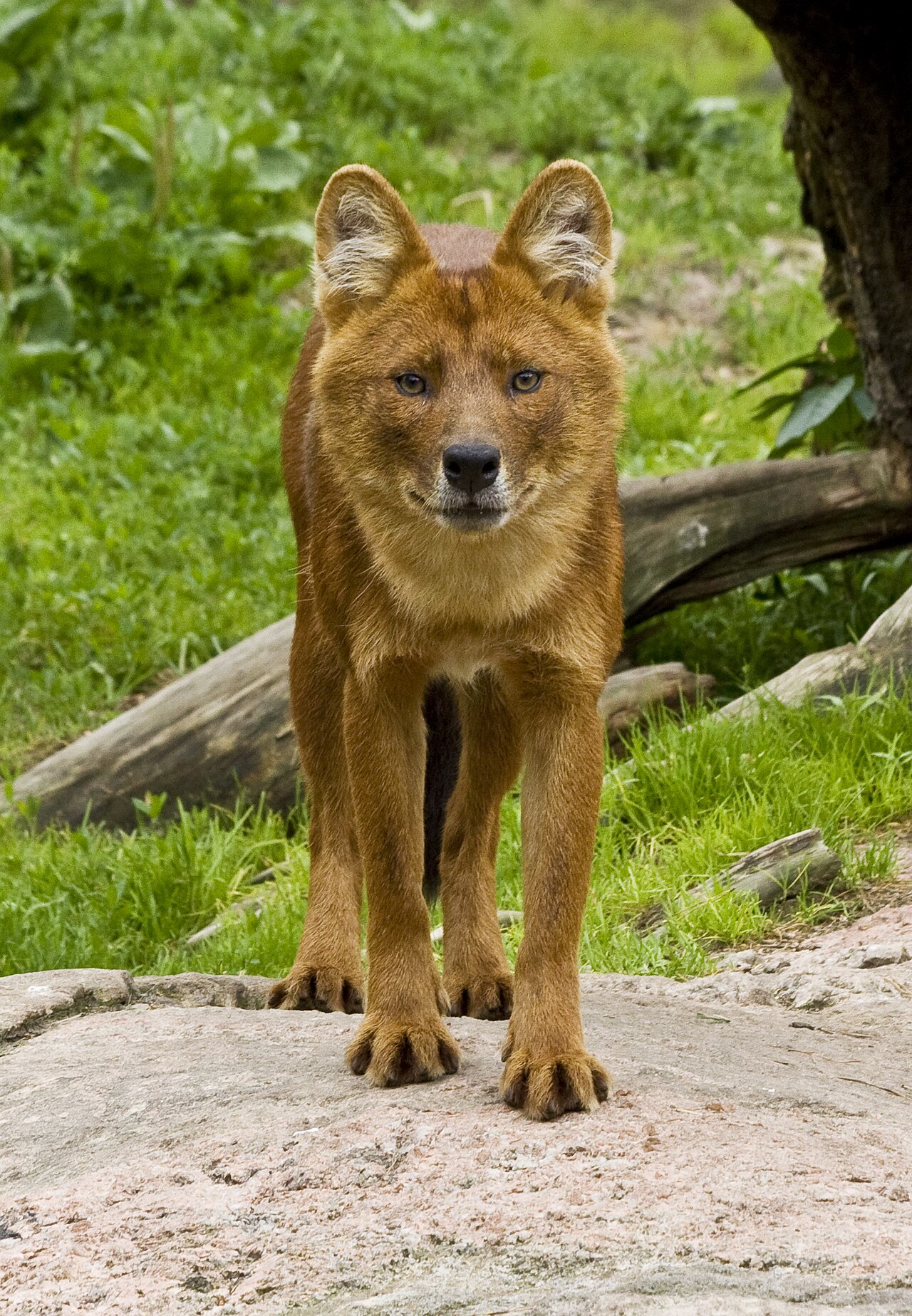
Cuon alpinus is an Asian wild dog, often reddish with a bushy tail. It belongs to the dog family, but has its own distinctive anatomy and social life.
A voice beyond a bark
The San Diego Zoo dhole profile describes whistles among a range of calls.
Communication helps pack members coordinate. A forest is full of obstacles to sight, so staying in touch involves more than watching where everyone goes.
Its rounded ears and reddish coat may recall a fox. The resemblance does not make it one.
Cooperation continues at the den
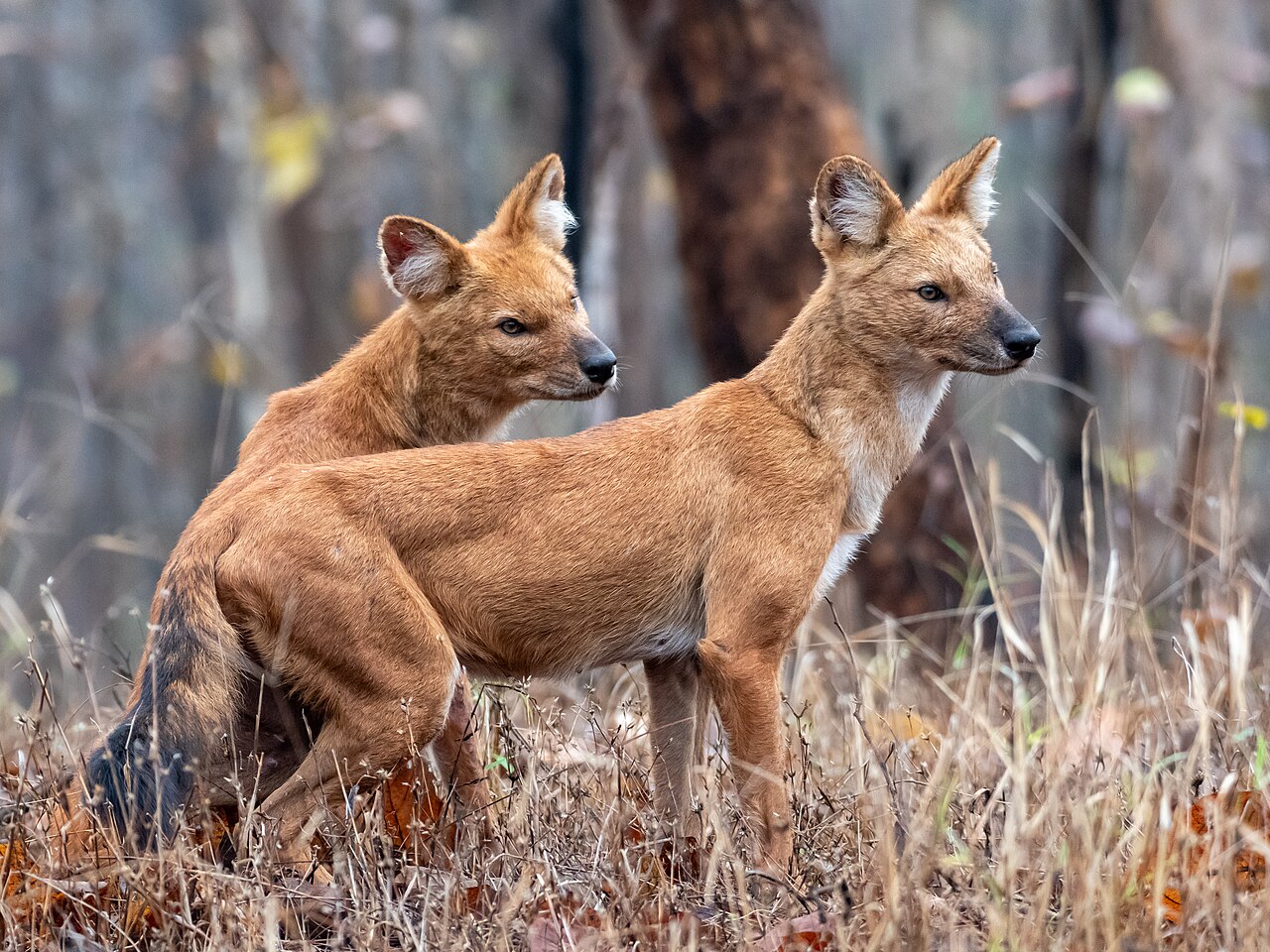
Dholes often hunt together and take prey larger than an individual dog.
Other pack members can bring food to pups and a nursing mother. The benefits of a hunt reach animals that did not take part in it.
A group is therefore a feeding and care network as well as a set of hunters.
A predator needs prey and space
The species faces habitat fragmentation, loss of prey, disease, and conflict with people. The zoo identifies it as endangered.
Protecting dholes includes preserving the animals they eat and the landscapes through which packs move.
The whistling call is a memorable introduction. The larger story is a social predator whose future depends on connections—between pack members, patches of habitat, and the people who share its range.
Photo credits
Featured image: Dhole(Asiatic wild dog).jpg — Davidvraju; CC BY-SA 4.0.

Body image 1: Cuon alpinus alpinus.jpeg — Johan Spaedtke; CC0.

Body image 2: Pair of Dholes at Pench National Park, India.jpg — Rohit Sharma; CC BY-SA 4.0.

Photographs resized for web display where available.