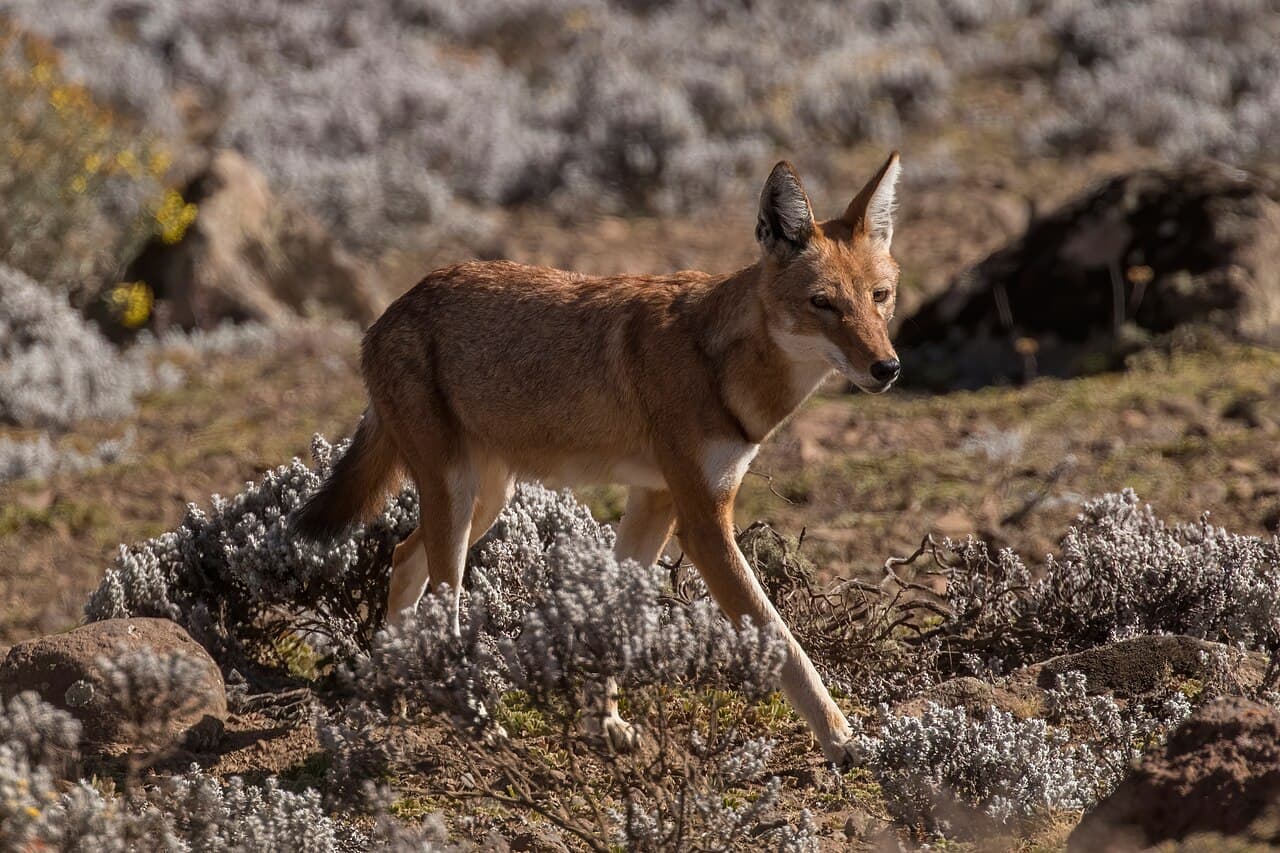
An Ethiopian wolf belongs to a close-knit pack, yet usually hunts its small prey alone. Social life and solitary feeding fit together in this unusual mountain canid.
Canis simensis is native only to Ethiopia's highlands. Its red coat, pale underside, narrow muzzle, and long legs give it a distinctive profile.
Follow the rodents
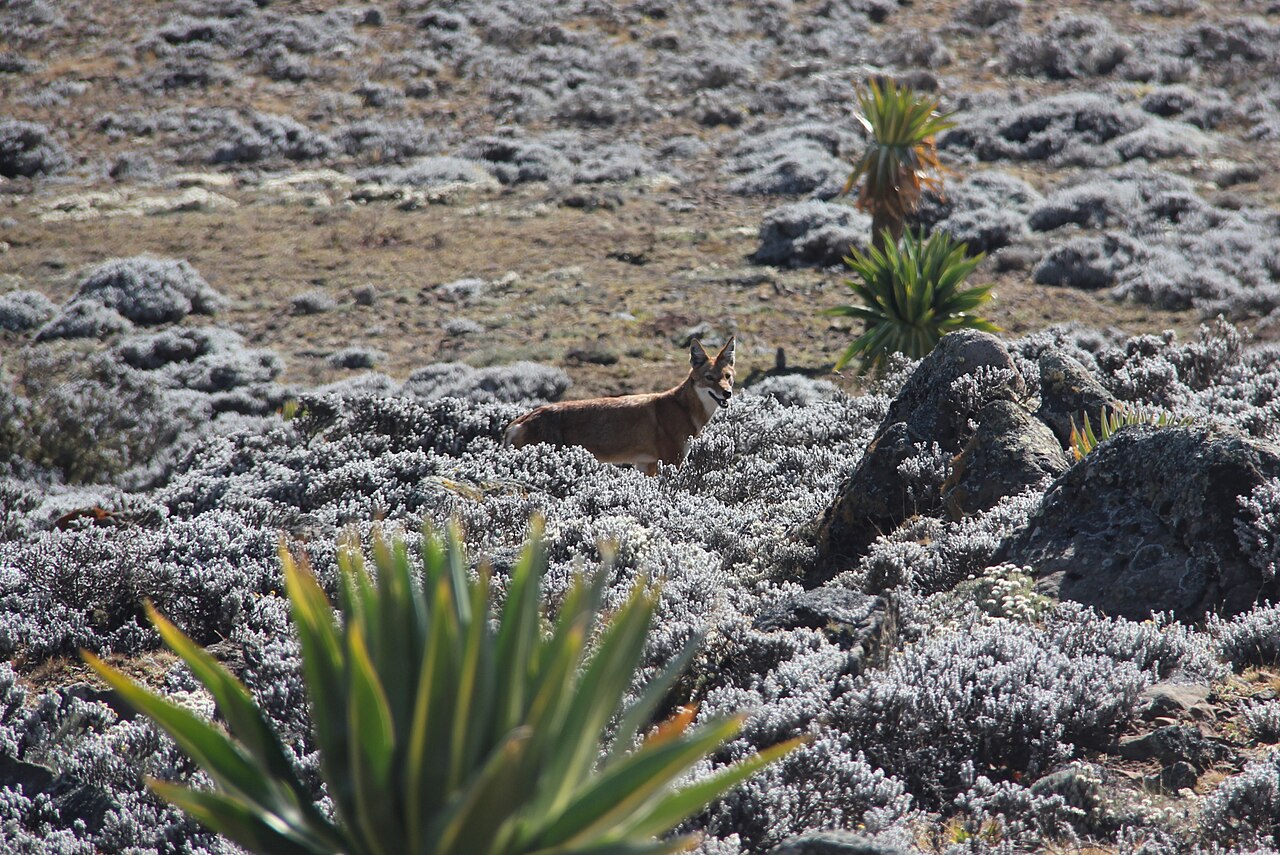
The Ethiopian Wolf Conservation Programme's ecology guide describes hunting timed around the daytime activity of rodents.
In the Bale Mountains, molerats and other small mammals provide much of the food. A patient approach to a burrow can matter more than a long group chase.
The wolf's feeding routine belongs to its particular highland world.
A pack still matters
Pack members defend territory and help care for pups. Adults may bring rodent prey back to a den.
An animal feeding alone can still depend on a social group. Different tasks call for different arrangements.
Disease crosses the boundary
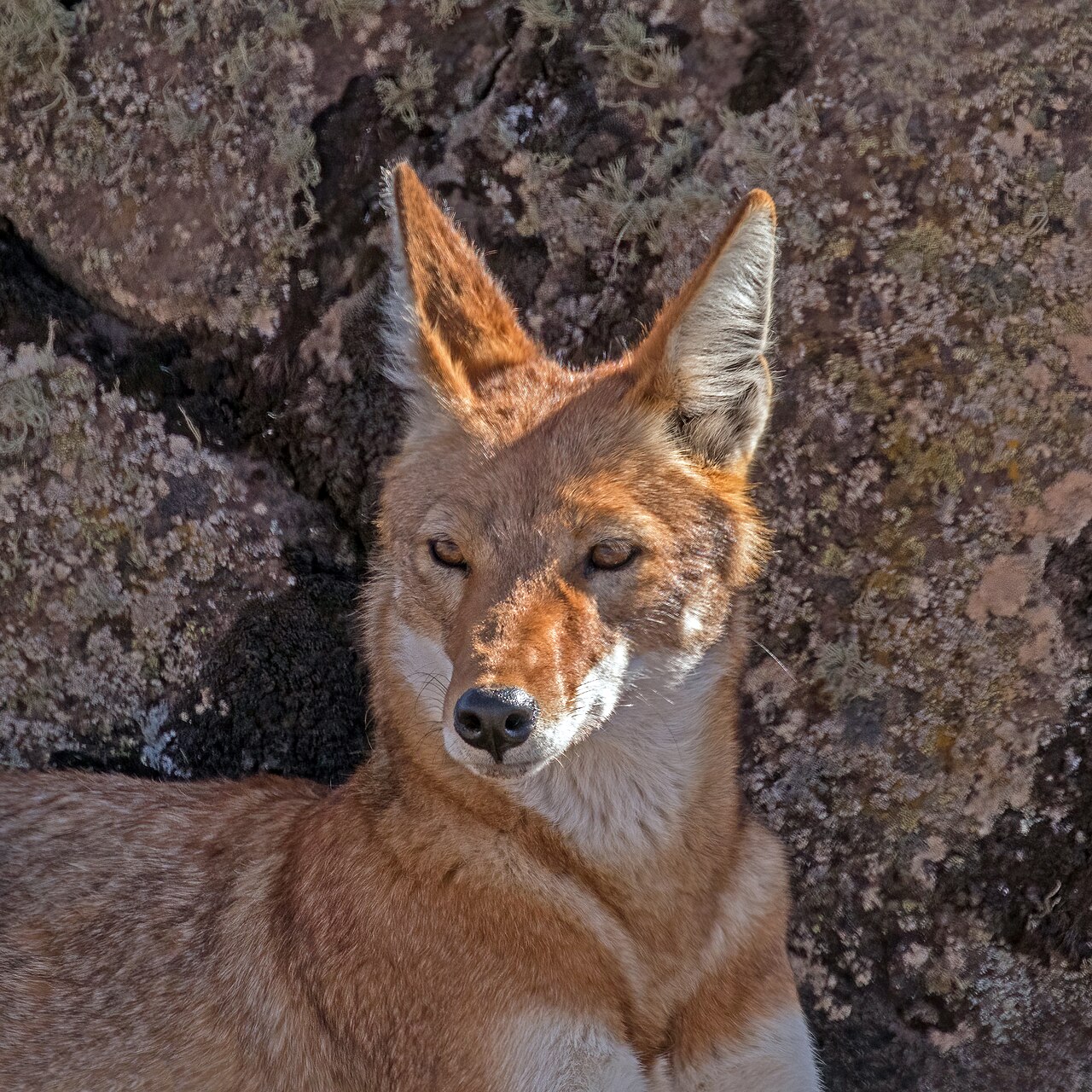
The programme identifies habitat loss and dog-related disease as major threats.
Rabies and canine distemper can spread from domestic dogs. Habitat protection, monitoring, and disease-control work therefore form parts of the same conservation effort.
The wolf's future is connected with both mountain grasslands and nearby human communities.
A red animal in an open highland scene may seem easy to understand. The Ethiopian wolf reveals a more delicate story: small prey, shared pup care, and a rare life tied to a very particular place.
Photo credits
Featured image: Ethiopian wolf (Canis simensis citernii).jpg — Charles J. Sharp; CC BY-SA 4.0.

Body image 1: Ethiopian Wolf (16310380015).jpg — Laika ac from UK; CC BY-SA 2.0.

Body image 2: Ethiopian wolf (Canis simensis citernii) head.jpg — Charles J. Sharp; CC BY-SA 4.0.

Photographs resized for web display where available.