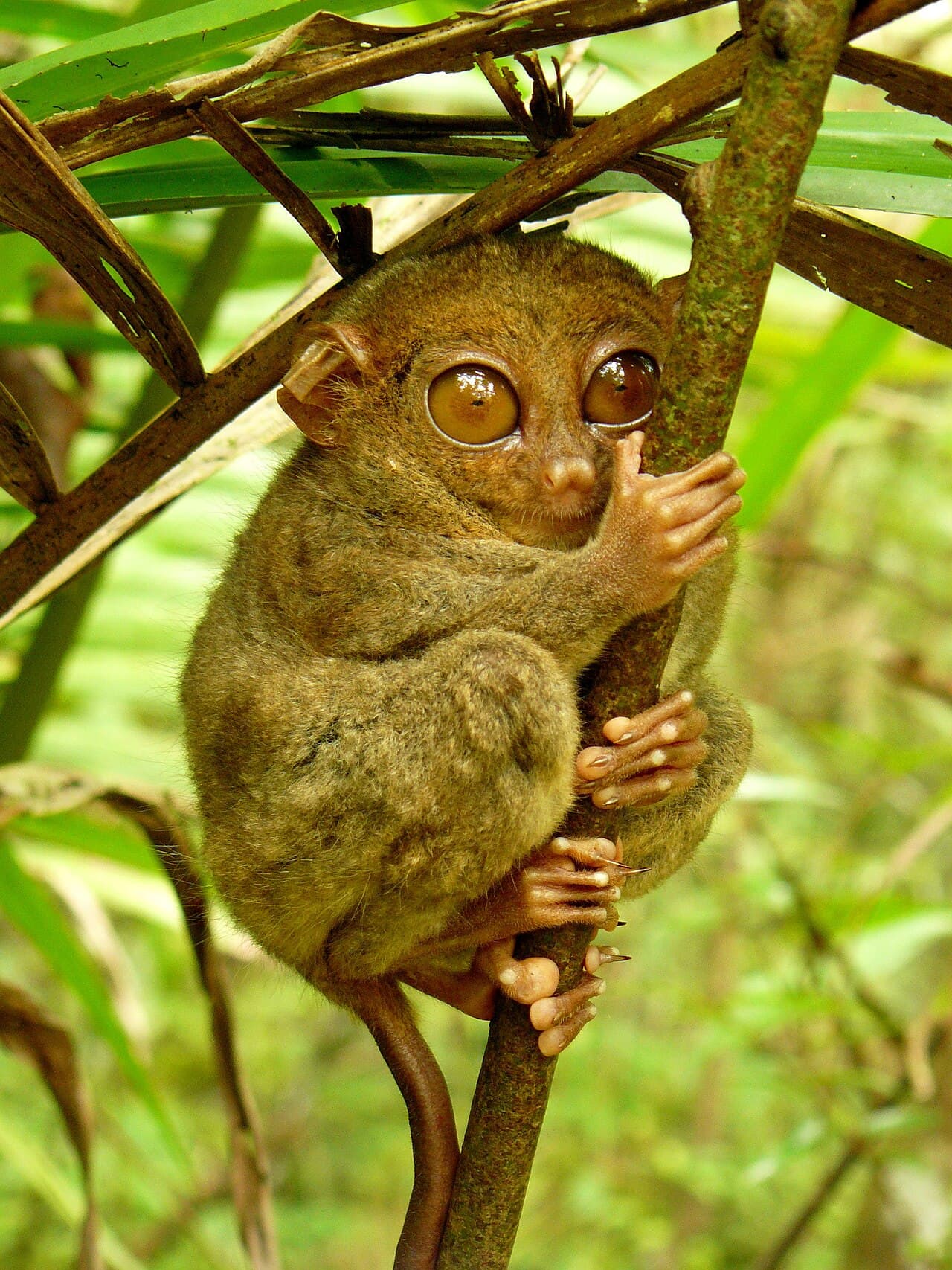
A tarsier’s enormous eyes help it watch the night, but those eyes do not swivel around as ours do. To change its view, the animal turns its head.
This small detail makes its familiar wide-eyed expression much more interesting. The face belongs to a specialized hunter, not a living toy.
Big eyes for a small primate
Tarsiers are primates native to parts of Southeast Asia. Several species exist, and the photographs here show the Philippine tarsier, Carlito syrichta.
The American Society of Mammalogists’ Mammal Diversity Database identifies that species from Philippine islands including Bohol, Mindanao, Samar, and Leyte.
The Natural History Museum describes tarsiers’ exceptionally large eyes and the need to move the head when scanning their surroundings.
Huge eyes are useful in low light, but anatomy always involves trade-offs. Space devoted to large eyes affects how the animal can move them.
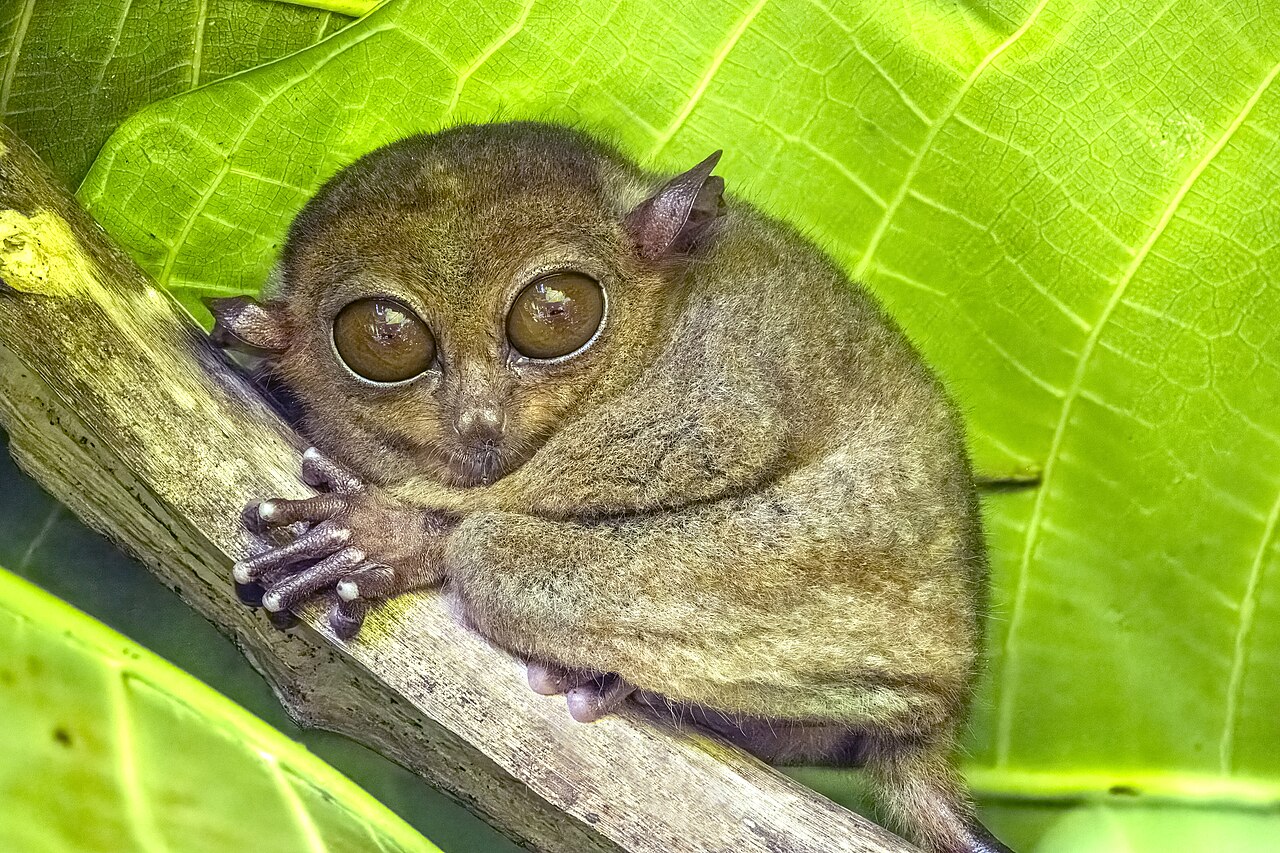
A body ready to leap
Tarsiers move through vegetation by clinging and leaping. Long hind limbs provide the push needed to travel between supports.
They hunt animal prey, including insects, rather than living on fruit alone. Animal Diversity Web’s Philippine tarsier account describes their nocturnal activity, habitat, and feeding behavior.
A quiet animal on a branch may therefore be pausing between bursts of movement. Its small body combines a strong leap with intense attention to what is happening around it.
Why the species matters
“Tarsier” is a group name. A photograph from the Philippines does not document every tarsier population across Southeast Asia.
Keeping the identity clear helps readers understand where the animal lives and which conservation questions apply. Habitat change and human disturbance also need to be considered locally, rather than reduced to one story about all tarsiers.
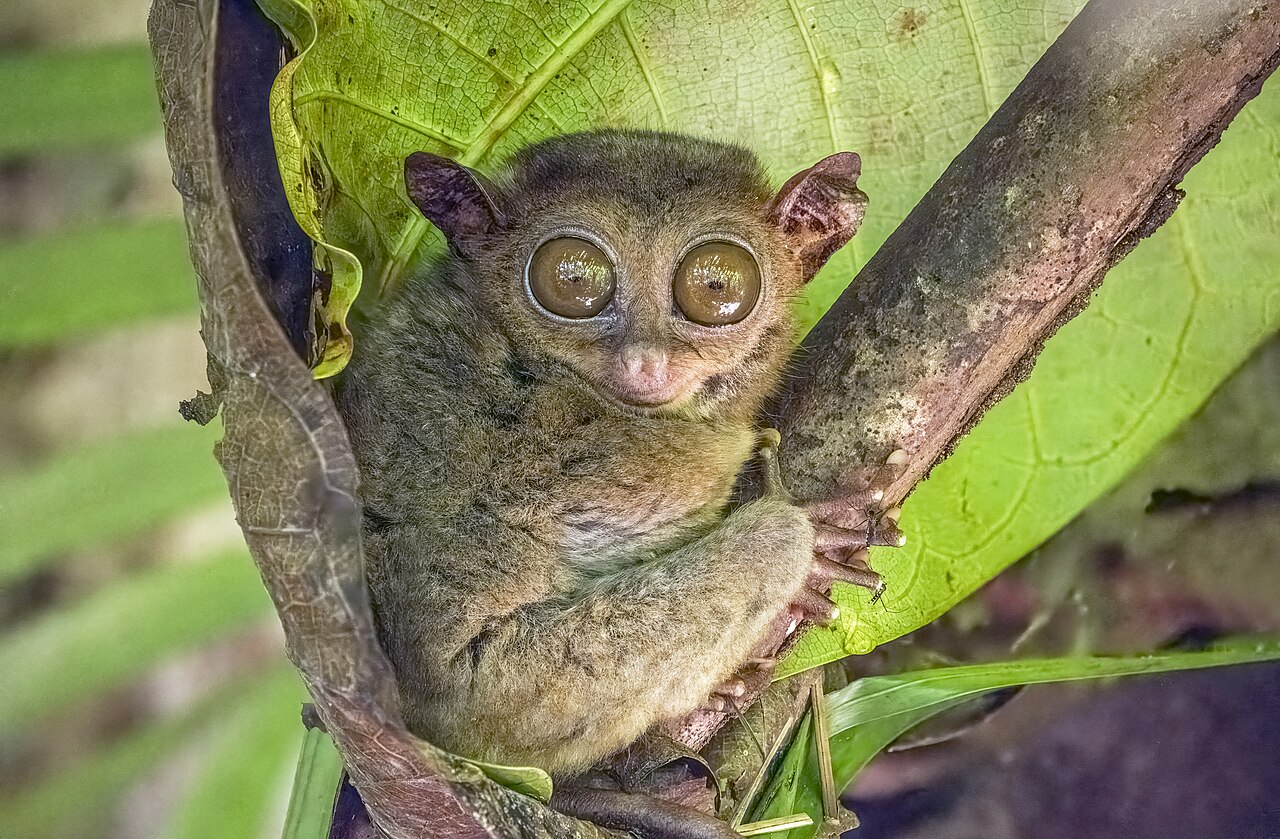
Watch without interrupting
The most rewarding encounter leaves the animal free to rest, move, and hunt. Giving a small nocturnal primate space is more useful than trying to make it face a camera.
The tarsier’s huge eyes are an invitation to curiosity. Once we understand the head turns, leaps, and hunting behind that face, its appearance becomes a window into a very different way of living.
Photo credits
Featured image: Kok Leng Yeo — CC BY 2.0.

Body image 1: Charles J. Sharp — CC BY-SA 4.0.

Body image 2: Charles J. Sharp — CC BY-SA 4.0.

Photographs are illustrative. Captive animals and collected specimens are identified in the captions; these images do not document a new sighting. Image adaptations retain their respective source licenses.