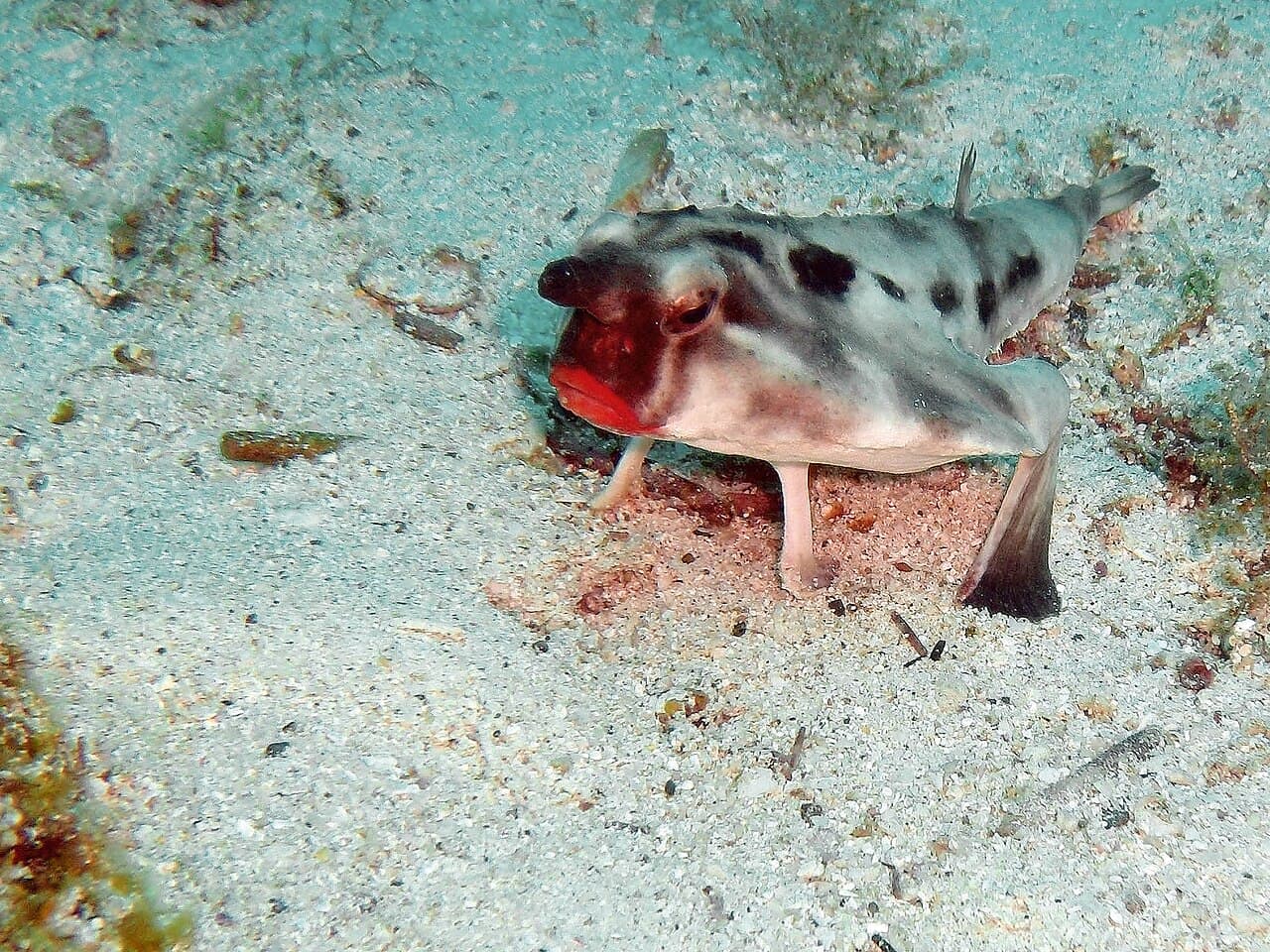
A fish with vivid red lips can move across the seabed on fins that work a little like legs.
The red-lipped batfish, Ogcocephalus darwini, combines a flattened body, an unusual face, and a way of moving that makes it instantly memorable.
A fish that stays close to the bottom
The Galapagos Conservation Trust describes this animal as a bottom dweller associated with sandy seafloor and reef areas around the Galápagos.
It can swim, but some of its fins are adapted to support it as it moves or perches on the bottom. Calling this “walking” helps describe the motion; the structures are still fish fins.
Its broad front and tapering rear give it a very different shape from the streamlined swimmers many people picture when they hear the word fish.
A lure near that remarkable face
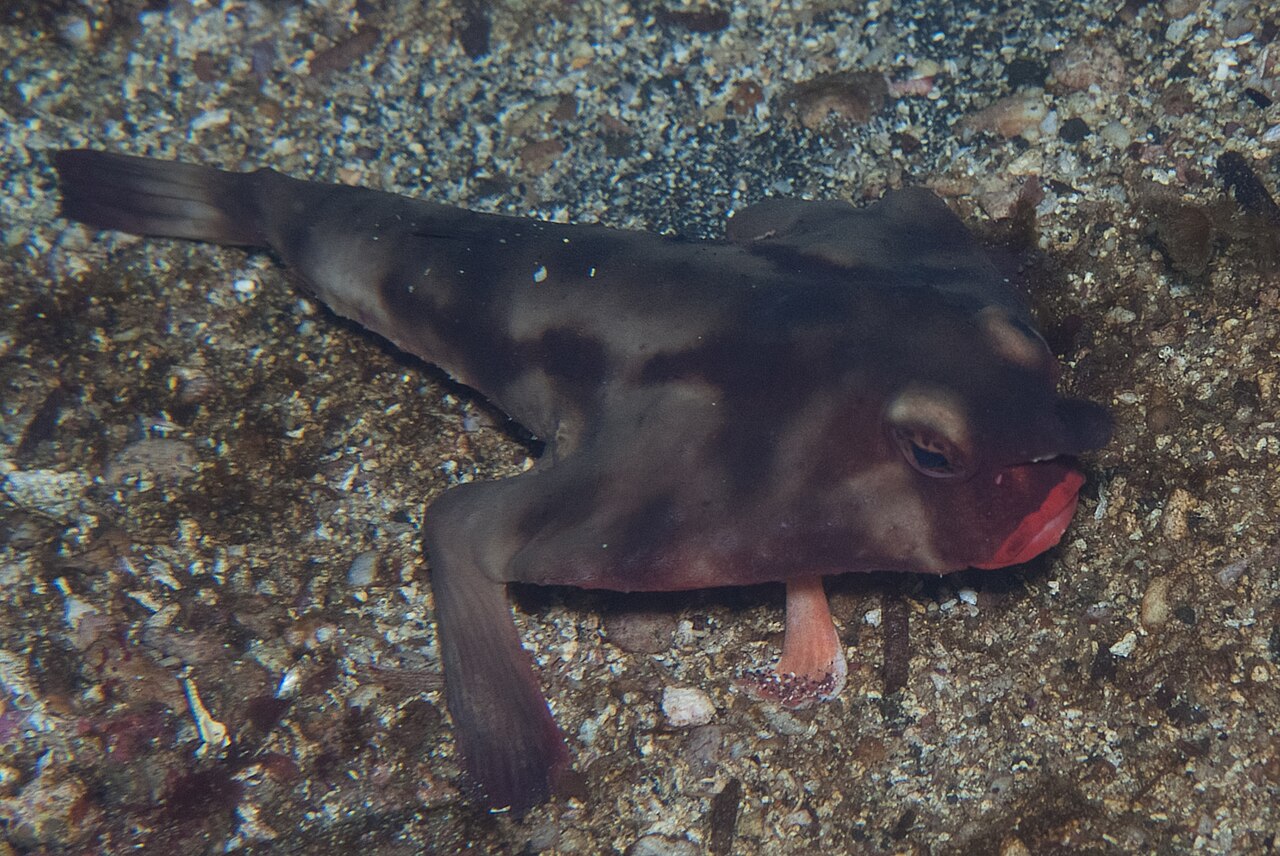
The University of Texas Marine Science Institute explains that the batfish has a structure used to attract prey.
Meals include small fishes and crustaceans. Remaining near the bottom allows the batfish to search within a habitat where many small animals live.
The bright mouth is only one part of a feeding system that includes its body position, fins, and lure.
Why are the lips red?
That question has a less certain answer than the animal’s name might suggest.
The Marine Science Institute notes that the purpose of the vivid lip color is not firmly established. A role in mating has been suggested, but a suggestion should not be presented as a demonstrated fact.
The uncertainty adds interest without needing an invented explanation. Researchers can know a species’ identity and movement while still having questions about a highly visible feature.
A remarkable resident worth leaving undisturbed
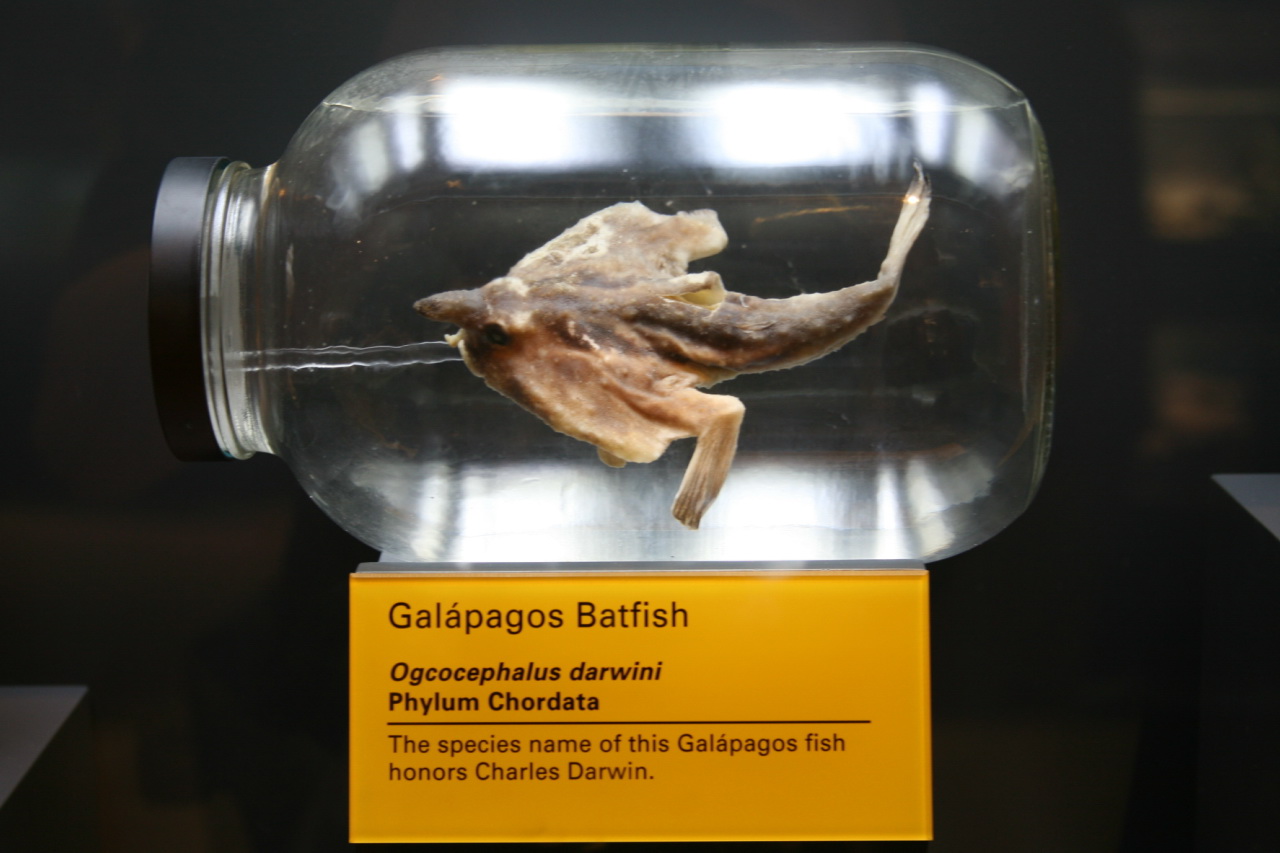
The Galapagos Conservation Trust lists the red-lipped batfish as Least Concern. That category is not a reason to ignore the condition of its marine habitat.
For observers, the best encounter is one that lets the fish continue its normal behavior.
Its unusual lips may draw us in, but its fins offer the deeper surprise: there are many ways to move through an underwater world, and not all of them involve swimming above the bottom.
Photo credits
Featured image: Rein Ketelaars — CC BY-SA 2.0.

Body image 1: Georgina Jones — CC BY-SA 4.0.

Body image 2: cliff1066 on Flickr — CC BY 2.0.

Photographs are illustrative. Captive animals and collected specimens are identified in the captions; these images do not document a new sighting. Image adaptations retain their respective source licenses.