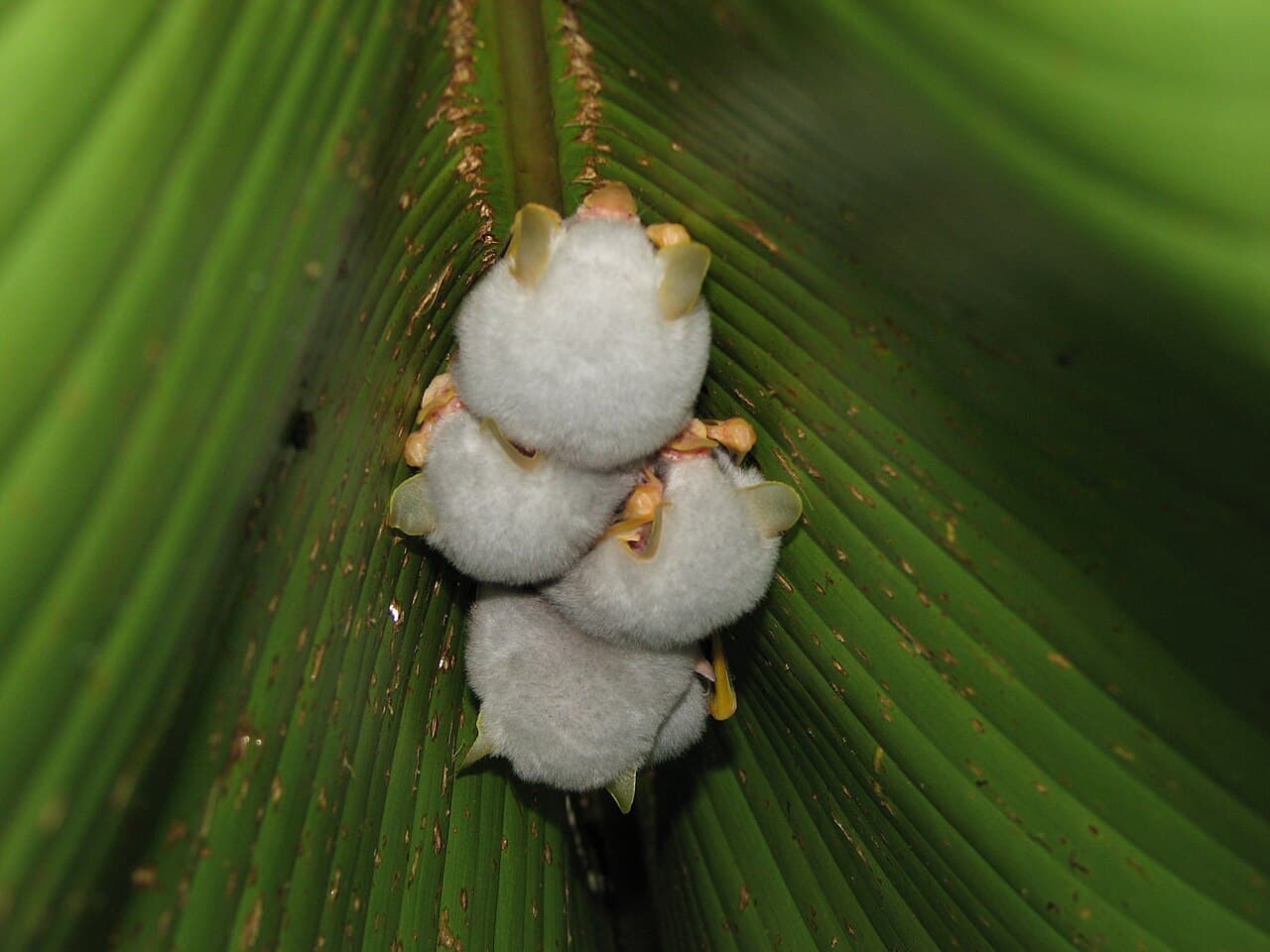
A folded leaf can hide an entire group of tiny white bats. Honduran white bats modify leaves into shelters, creating a daytime home above the forest floor.
Their pale fur and yellow ears make the scene especially striking. These are adult bats, not little birds or pieces of cotton attached to a plant.
A roof made from a living leaf
The Honduran white bat, Ectophylla alba, lives in parts of Central America. The American Museum of Natural History describes the leaf “tents” used by this species.
By cutting parts of a leaf’s supporting veins, the bats cause its sides to fold down. The hanging leaf provides cover while the bats rest beneath it.
This is an example of an animal changing a plant’s structure to make a shelter. The leaf remains part of its surroundings rather than becoming a detached nest.
White fur and a yellow face
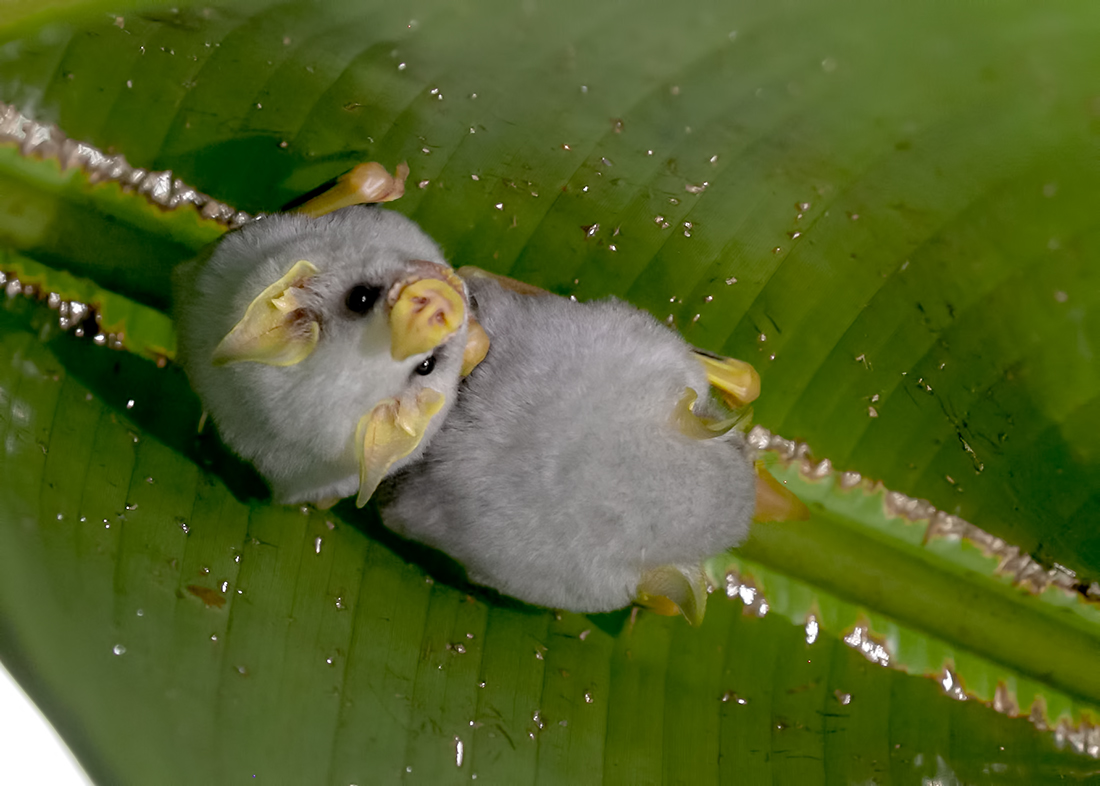
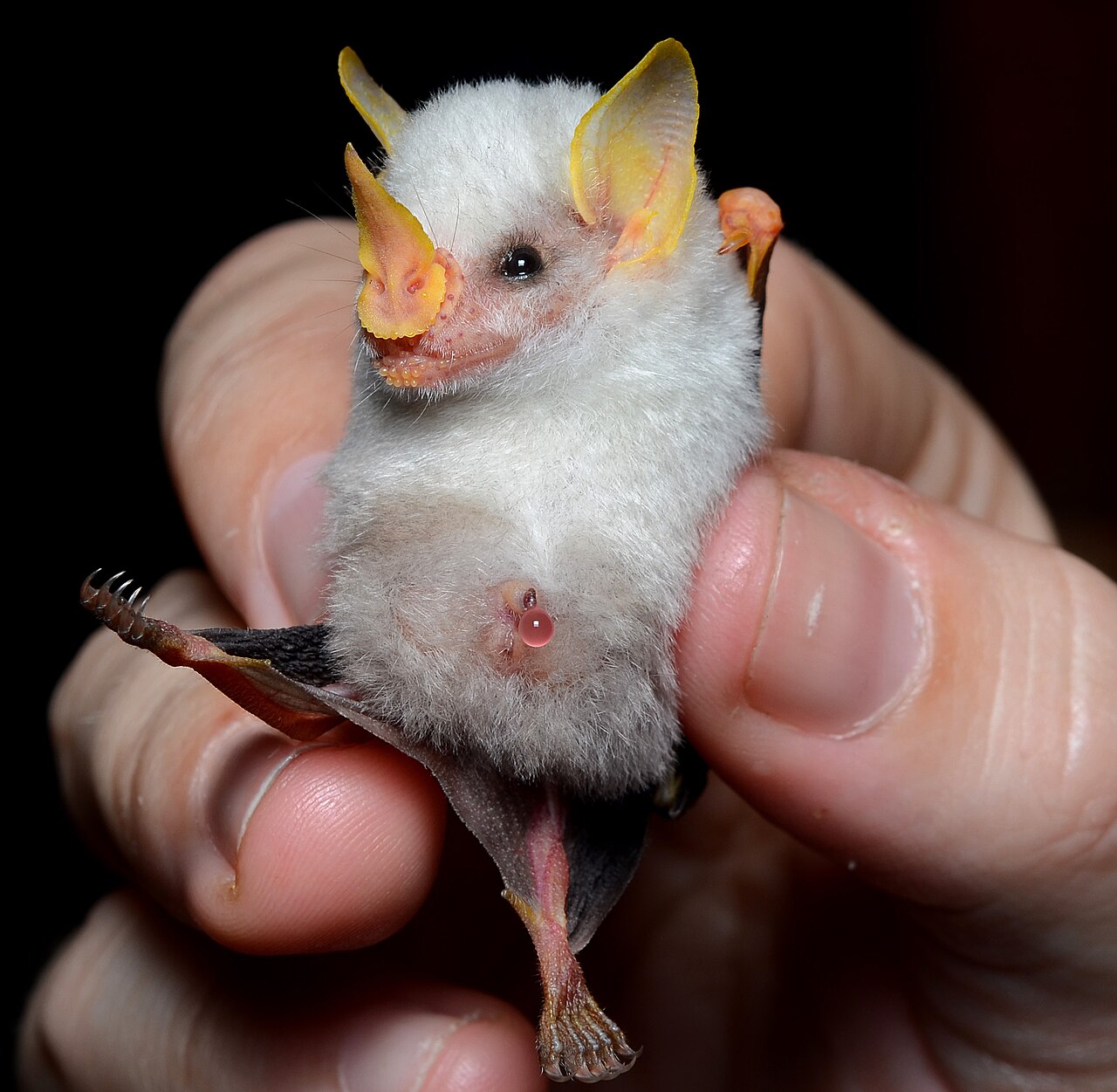
Animal Diversity Web describes white to grayish fur, yellowish ears, and a yellow nose leaf. The bats are only a few centimeters long.
Their small size does not mean they are helpless. They fly out to feed, returning to suitable shelter rather than spending their entire lives under one photographed leaf.
Fruit contributes to the color story
Bat Conservation International identifies the species as a fruit eater. Figs are important in its diet.
Its yellow skin contains lutein, a carotenoid pigment associated with plants. BCI notes that the pigment is probably obtained through the bats’ fig-based diet.
That creates a lovely connection between appearance and ecology: the same forest that supplies a roof also supplies food linked to the animal’s color.
A small shelter needs a larger forest
BCI lists the Honduran white bat as Near Threatened. Its life depends on more than the single leaf where a group happens to be resting.
Suitable plants, food trees, and connected forest all matter. Looking for bats should not involve opening their tents or handling the animals.
These leaf shelters reveal how much life can fit into a small space. A quiet forest understory may hold an entire household just beneath a leaf—and respecting that hiding place is part of appreciating the wonder.
Photo credits
Featured image: Leyo — CC BY-SA 2.5 ch.

Body image 1: Charlie Jackson — CC BY 2.0.

Body image 2: Geoff Gallice from Gainesville, FL, USA — CC BY 2.0.

Photographs are illustrative. Captive animals and research specimens are identified in captions. Image adaptations retain their source licenses.