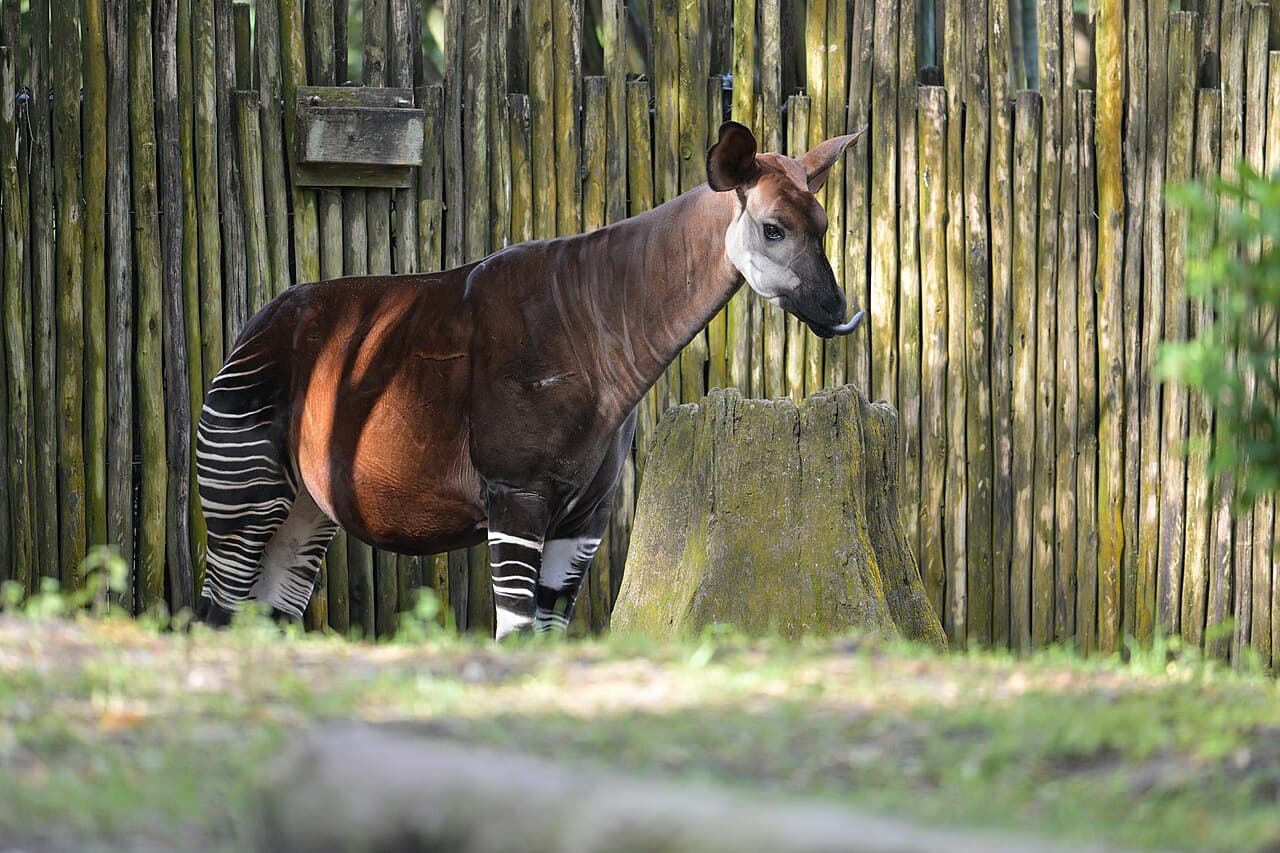
Striped legs do not make an okapi a zebra relative. This remarkable forest mammal belongs to the giraffe family.
Its body tells a different story from the long-necked animal most of us picture. In the rainforests of the Democratic Republic of the Congo, a shorter neck and legs help it move through a crowded world.
A forest relative of the giraffe
The okapi, Okapia johnstoni, has large ears, a dark coat, and bold white markings on its legs and hindquarters.
San Diego Zoo Wildlife Alliance explains its relationship to giraffes. Males also have small horn-like structures called ossicones.
The resemblance becomes clearer when we look beyond the stripes. Its long, flexible tongue helps strip leaves and buds from vegetation, while sensitive hearing helps it detect movement in dense cover.
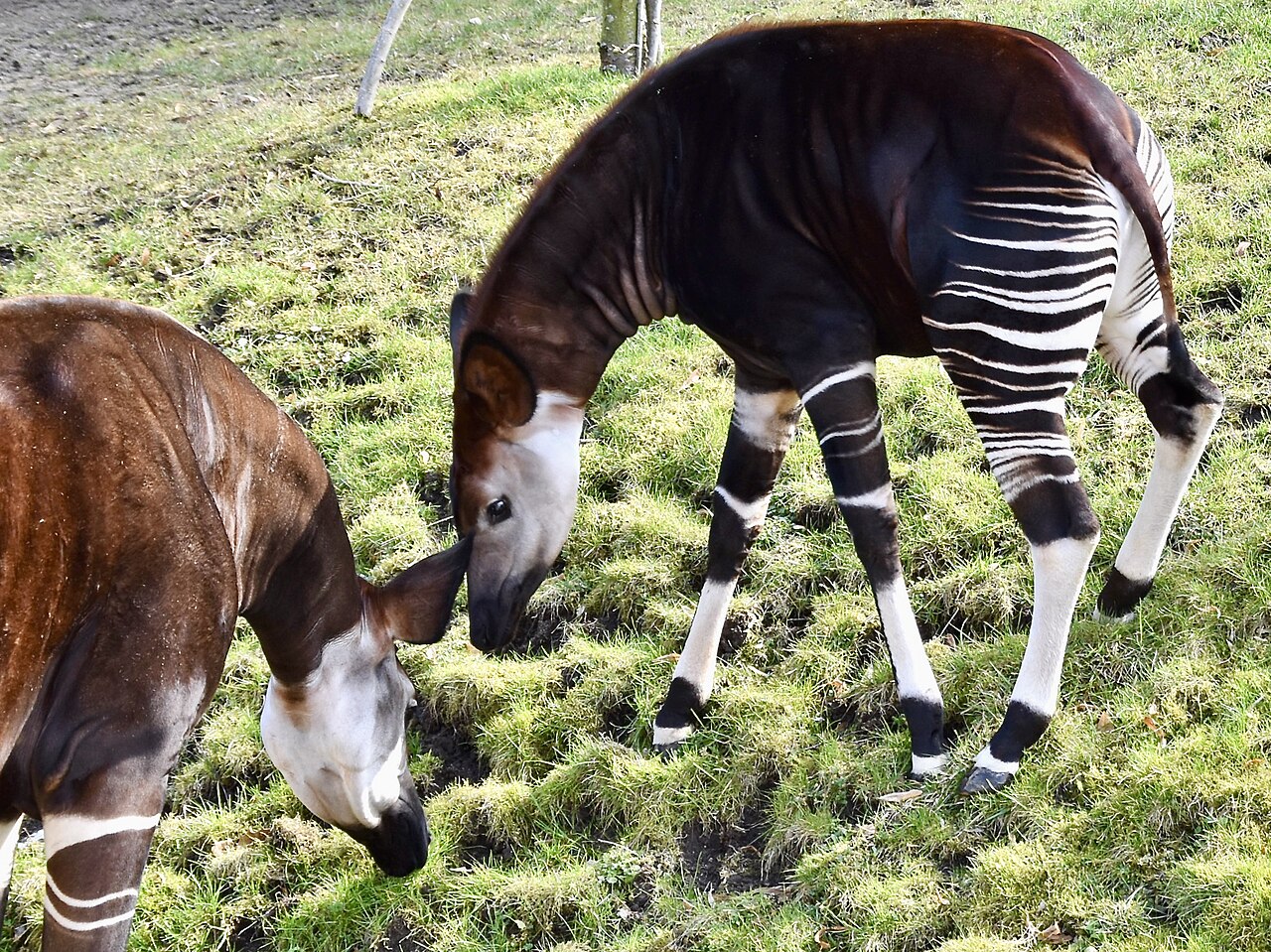
Stripes in broken forest light
The pattern that looks so obvious in a zoo photograph can blend into a forest of light patches and shadows.
The zoo describes camouflage as one benefit of the markings. The stripes may also help a calf follow its mother, though that possible role should not be treated as the only established explanation.
An animal’s appearance makes the most sense in the setting where it lives. A pattern that stands out against an open lawn may be much less conspicuous among tree trunks and foliage.
Known locally long before formal description
People living in the Ituri Forest knew the okapi long before it entered Western scientific literature.
The zoo dates scientific recognition to the beginning of the twentieth century. Calling the okapi “newly discovered” without that context would erase the knowledge of the communities sharing its habitat.
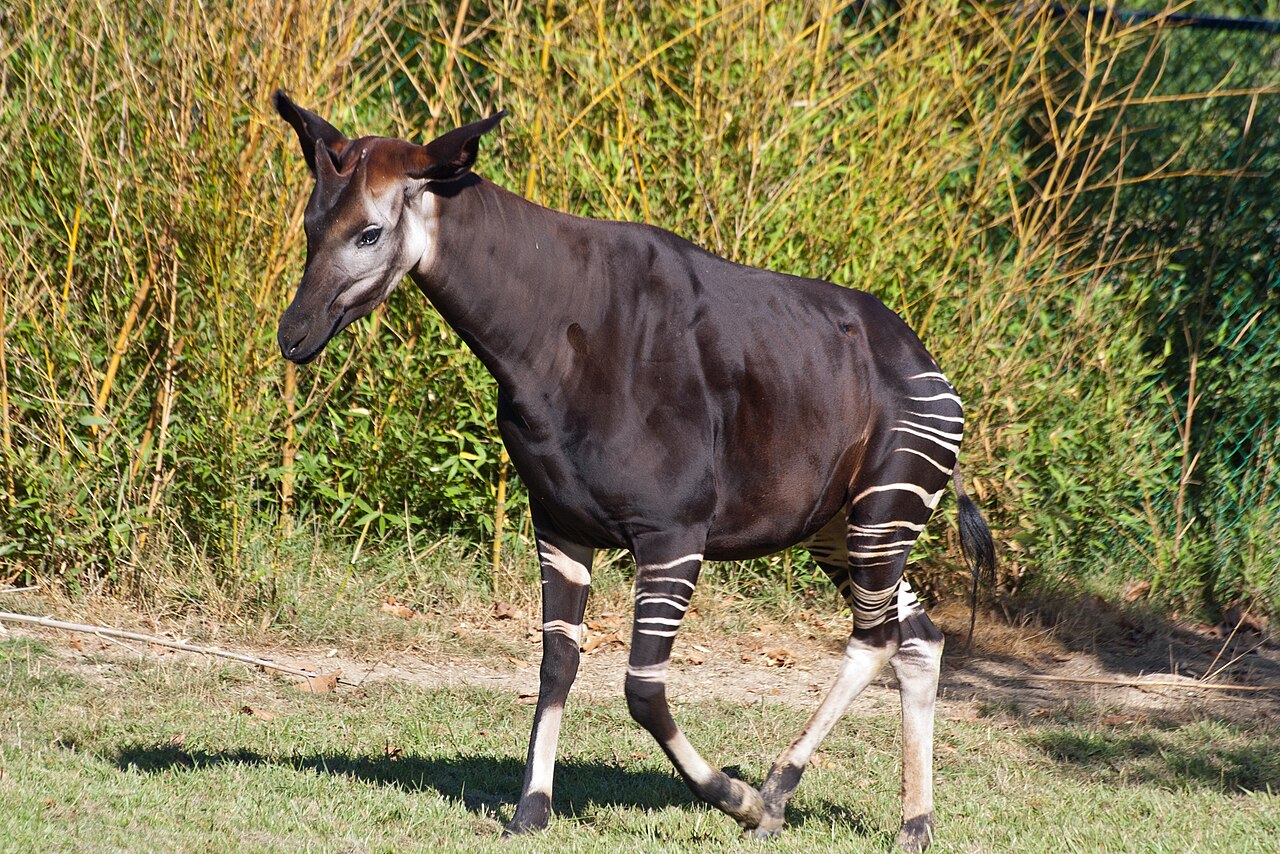
A future tied to the Congo’s forests
The Okapi Conservation Project identifies poaching, illegal mining, and conflict among the threats facing okapis and their forest habitat.
Protecting the species requires work with local communities as well as support for the wider reserve landscape. A forest animal cannot be protected independently of the forest.
The okapi’s stripes may introduce the story, but its ears, tongue, history, and habitat make it richer. It is a reminder to look past an animal’s most familiar feature before deciding what it is.
Photo credits
Featured image: k7hpn — CC BY 2.0.

Body image 1: NasserHalaweh — CC BY-SA 4.0.

Body image 2: Daniel Jolivet — CC BY 2.0.

Photographs are illustrative. Captive animals and research specimens are identified in captions. Image adaptations retain their source licenses.