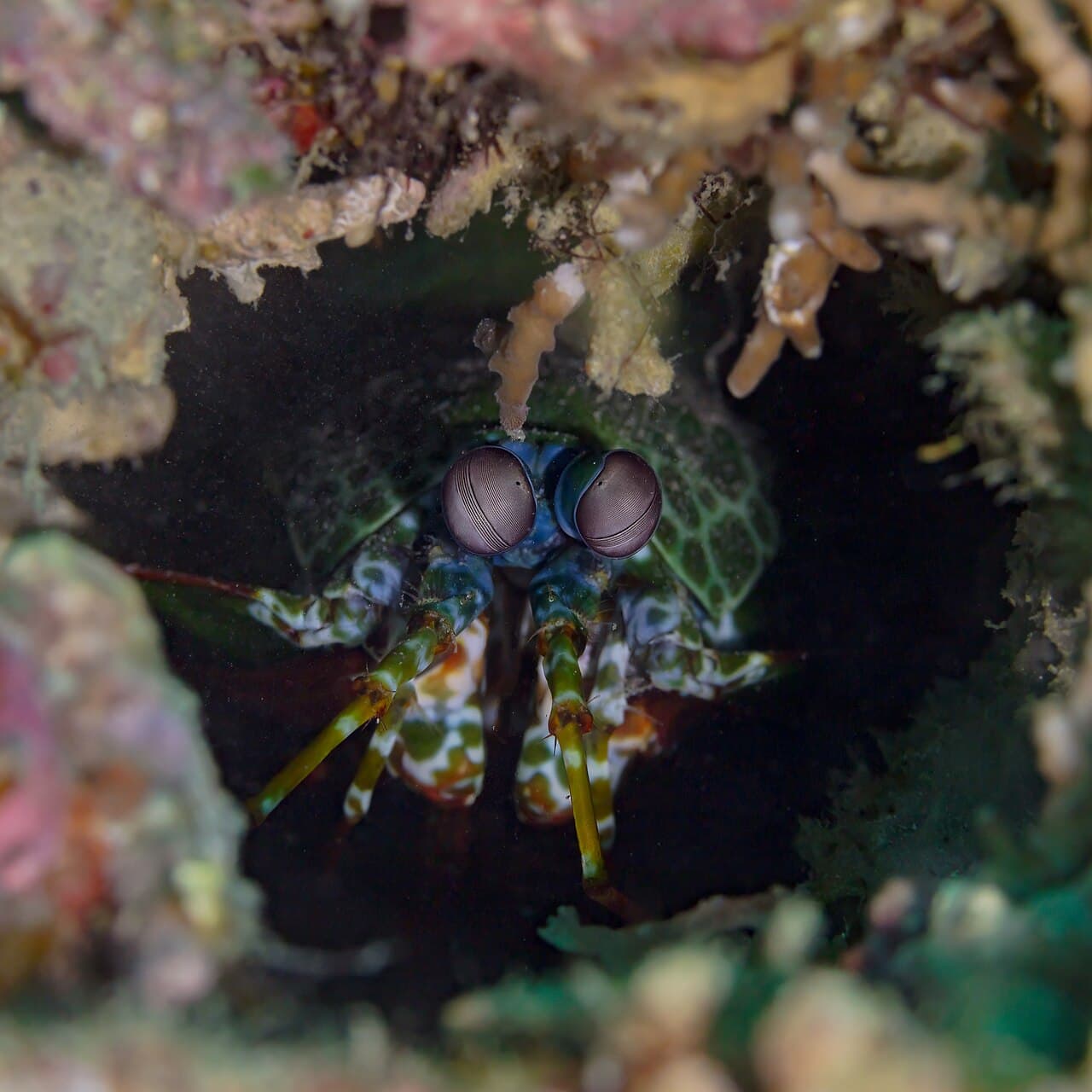
A peacock mantis shrimp can strike a shell and create collapsing vapor bubbles in the surrounding water. Its attack is remarkable for the physics as well as the force.
The colorful animal is a crustacean, and its club-like front appendages are specialized feeding tools. What looks like a dramatic punch is part of finding a meal.
A small hunter with a powerful club
Mantis shrimps belong to a varied group. Some spear soft-bodied prey, while “smashers,” including the peacock mantis shrimp, use blunt striking structures.
The Natural History Museum explains this distinction. It matters because not every mantis shrimp has the same equipment or hunts in exactly the same way.
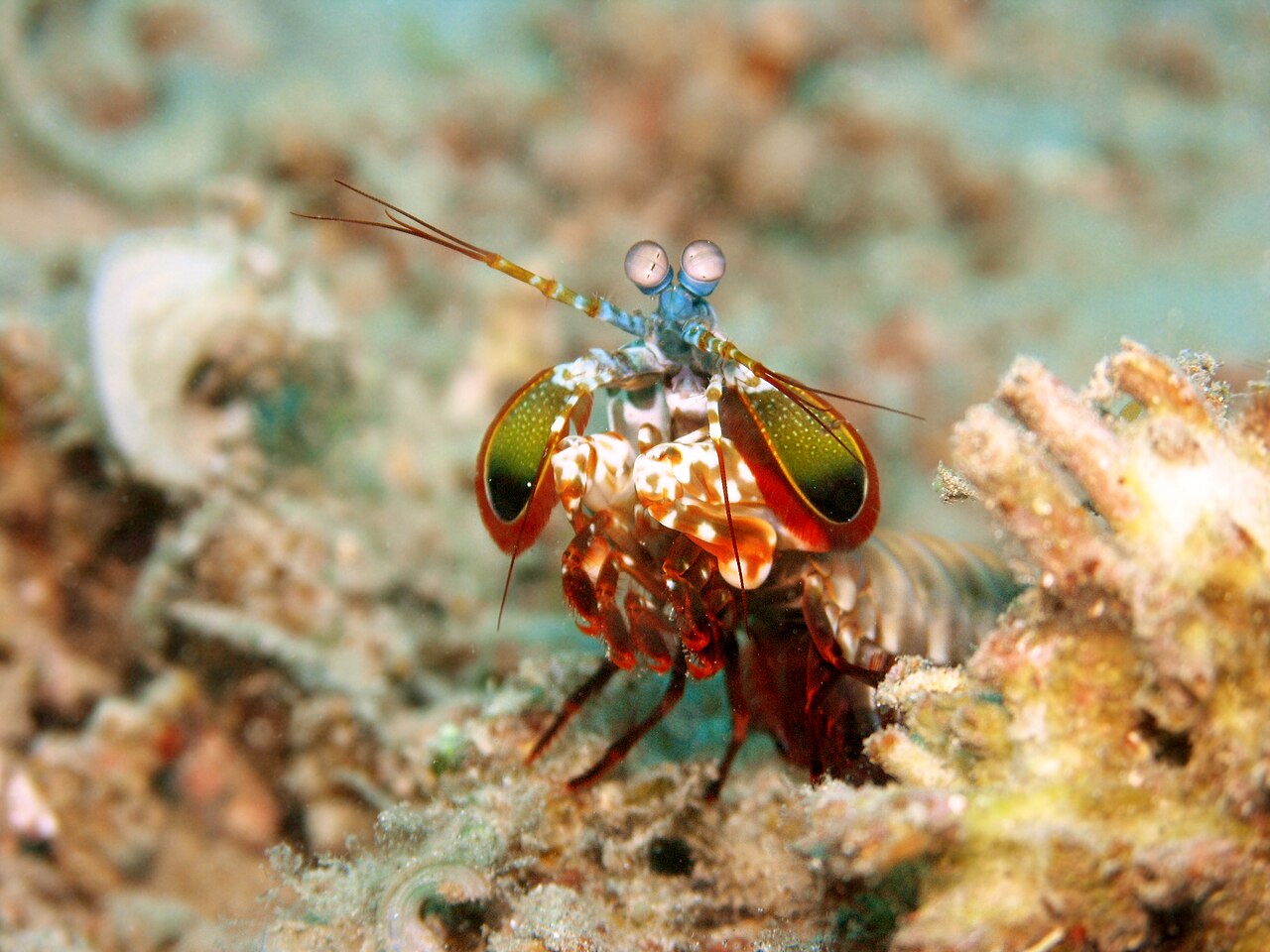
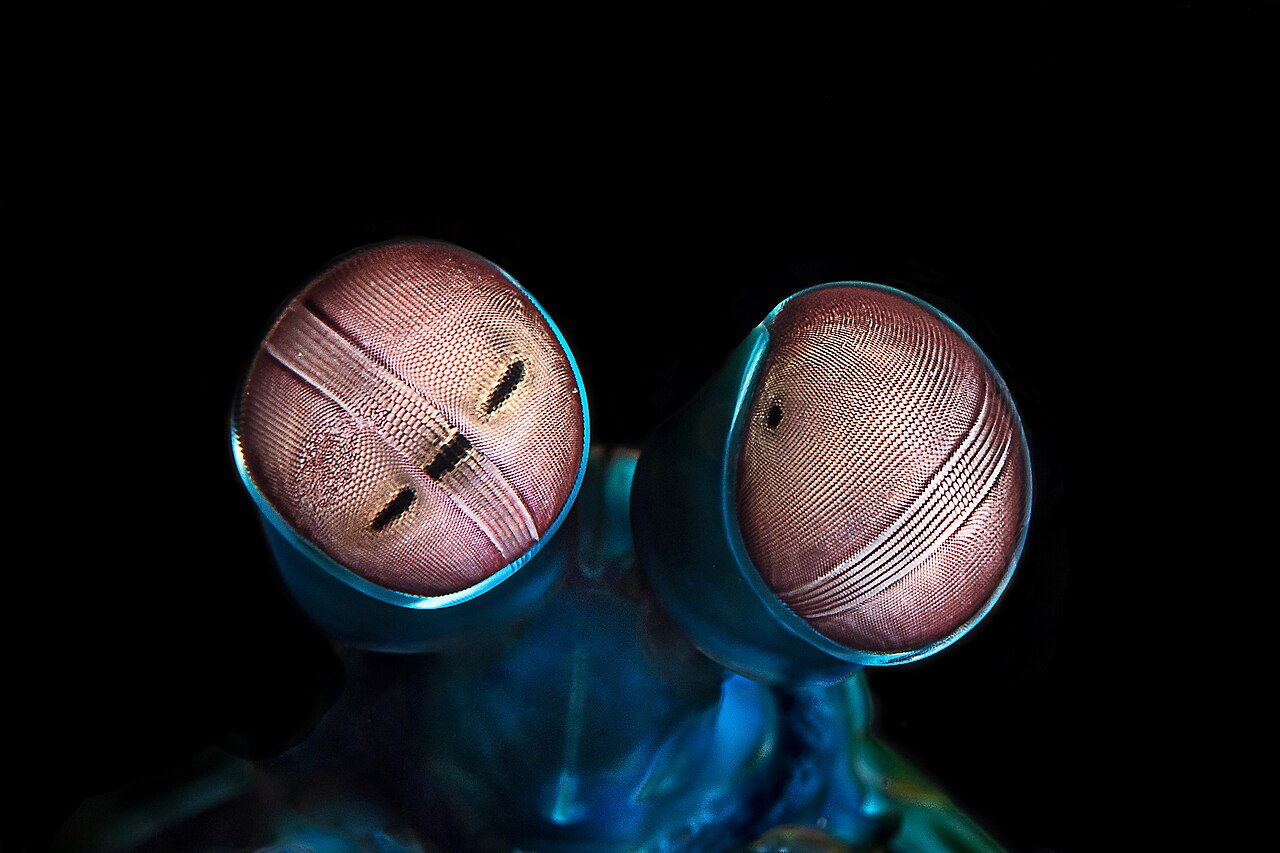
The photographs here show Odontodactylus scyllarus, the peacock mantis shrimp. Its bright body can attract attention long before an observer notices its folded striking limbs.
How water becomes part of the attack
A rapid strike produces a sharp pressure change in nearby water. Vapor cavities can form and then collapse: a process called cavitation.
The Smithsonian Institution describes these bubbles as part of the animal’s extraordinary attack.
This is not the same as heating an entire pool of water to boiling. The bubbles arise locally from the pressure conditions around the moving appendage.
That distinction keeps a surprising fact accurate. The animal does not need an exaggerated comparison to be impressive.
Why the strike interests researchers
The club must deliver repeated impacts while resisting damage itself. That makes mantis shrimps interesting to scientists studying biological structures and fast movement.
The museum explains that the striking apparatus stores energy before release. A tiny body can therefore produce a motion that is difficult to follow with the naked eye.
More than a viral “punch”
An animal’s most dramatic action can overwhelm everything else about it. Mantis shrimps also live in burrows, interact with other animals, and occupy marine habitats that deserve attention beyond one slow-motion clip.
The peacock mantis shrimp shows how biology and physics meet in everyday survival. A colorful creature on the seafloor has evolved a way to open hard food—and, in doing so, reveals a surprising property of water.
Photo credits
Featured image: Diego Delso — CC BY-SA 4.0.

Body image 1: Jens Petersen — CC BY 2.5.

Body image 2: Cédric Peneau — CC BY-SA 4.0.

Photographs are illustrative. Captive animals and research specimens are identified in captions. Image adaptations retain their source licenses.