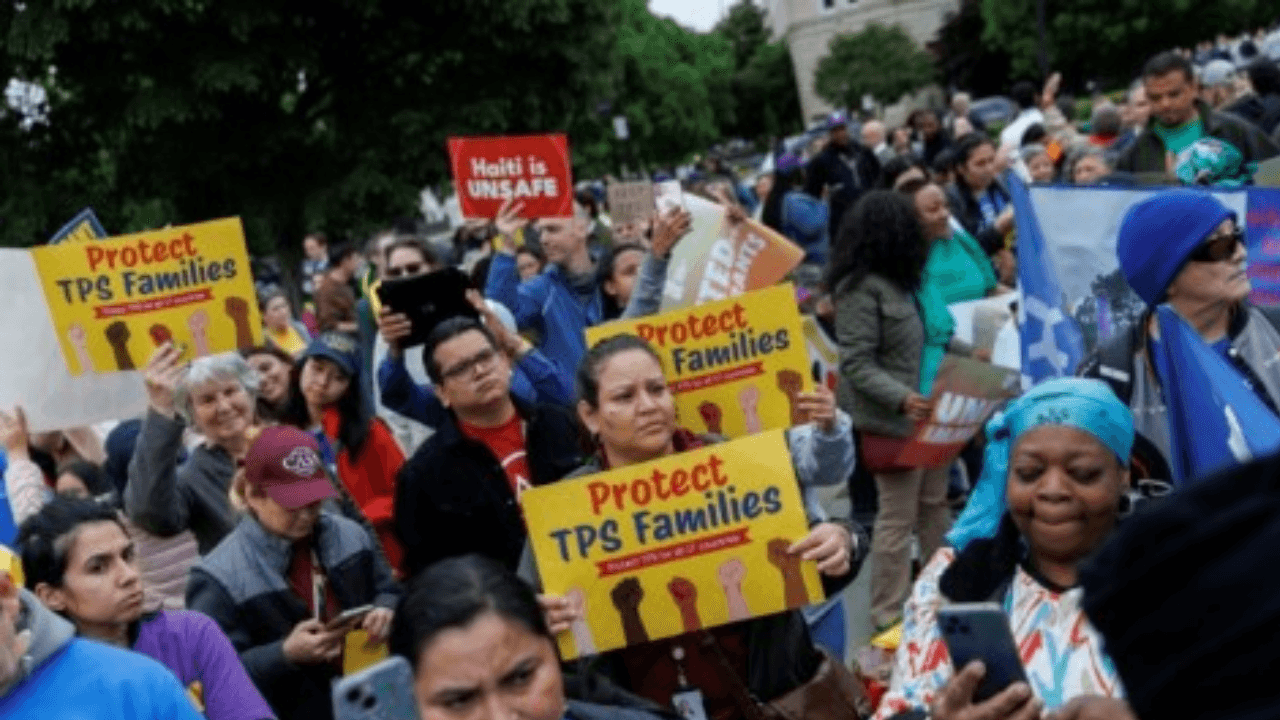
The Supreme Court ruled Thursday, June 25, 2026, that the Trump administration can move forward with ending Temporary Protected Status for Haitians and Syrians in the United States.
The 6 to 3 decision came in Mullin v. Doe, a major immigration case about how much power courts have to pause TPS terminations while lawsuits continue.
The ruling affects more than 350,000 Haitians and about 6,000 Syrians.
Temporary Protected Status allows eligible people from certain countries to live and work in the United States when returning home is unsafe because of war, disaster or other extraordinary conditions.
The U.S. Citizenship and Immigration Services says TPS can protect people from removal and allow them to apply for work authorization while their country remains designated.
TPS does not automatically create a path to permanent residency or citizenship. But for many families, it has allowed them to build lives in the U.S. for years.
Justice Samuel Alito wrote for the Court’s majority. He said the TPS law blocks courts from reviewing many decisions tied to ending a country’s TPS designation.
The majority also rejected claims that the administration’s decision to end protections for Haitians was likely driven by racial bias.
That means lower courts cannot keep the TPS terminations on hold based on the non-constitutional claims raised in the case.
Justice Elena Kagan dissented, joined by Justices Sonia Sotomayor and Ketanji Brown Jackson.
Kagan argued that the challengers raised serious claims about whether the administration followed required procedures and whether racial bias played a role in the Haiti decision.
The dissent also pointed to dangerous conditions in Haiti and Syria. The U.S. State Department currently tells Americans not to travel to Haiti because of crime, kidnapping, unrest and limited health care.
The State Department also warns Americans not to travel to Syria because of terrorism, civil unrest, kidnapping and armed conflict.
The ruling does not mean every Haitian or Syrian TPS holder will be deported immediately. But it removes a major legal shield that had delayed the end of protections.
People affected may still have individual immigration cases, asylum claims or other applications pending. Those cases will depend on each person’s legal status and history.
For the Trump administration, the decision is a major win in its effort to narrow humanitarian immigration protections. For TPS families, it creates a new wave of uncertainty over jobs, homes and the risk of removal.