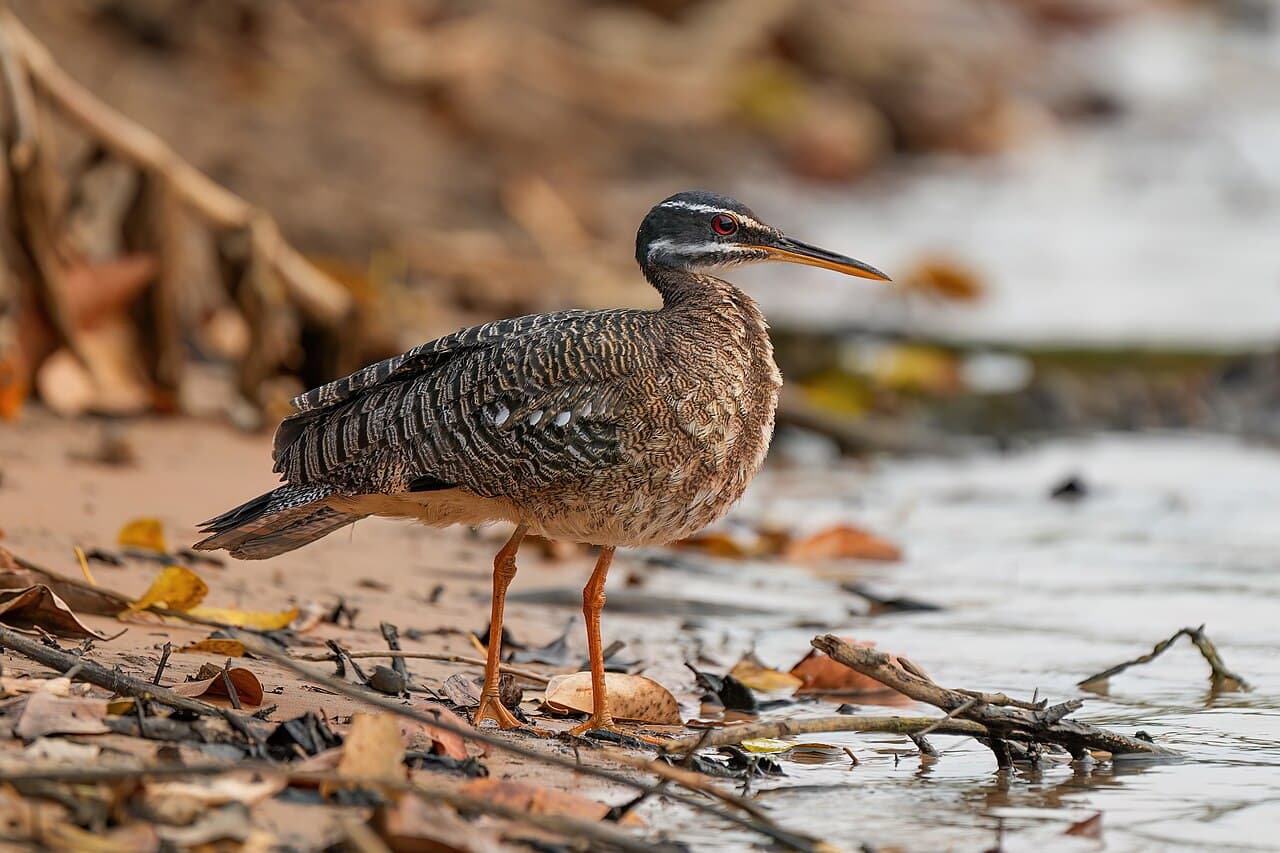
A sunbittern can transform its appearance by opening its wings. The finely patterned brown bird suddenly reveals broad patches of chestnut, orange, and dark color that resemble enormous eyes.
Eurypyga helias lives in tropical America. Its quiet folded-wing portrait conceals one of the bird world's most dramatic changes in appearance.
A pattern hidden until needed
The Smithsonian National Zoo guide describes wing-and-tail spreading as a threat or defensive display.
The conspicuous pattern can surprise an approaching animal. At rest, the wings fold away and the softer browns regain their concealing effect.
The photographs here show the bird in quieter poses, illustrating how much the display changes its normal outline.
A patient hunter beside streams
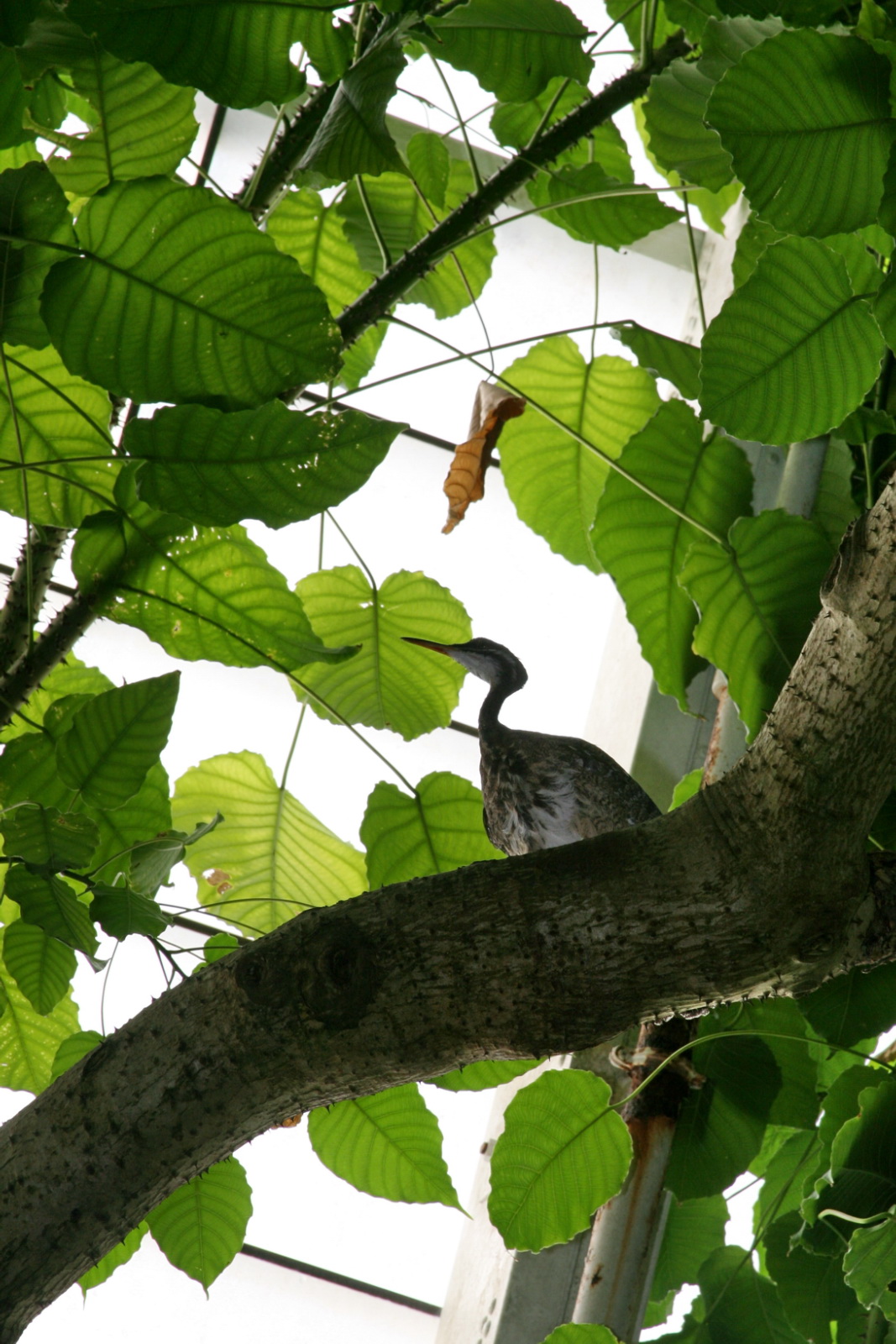
Sunbitterns use wooded banks, shallow water, and nearby cover.
They catch small animals such as fish, amphibians, crustaceans, and insects with a quick strike of the bill.
A calm walk can therefore be part of a hunting sequence rather than simple wandering.
Two parents share the work
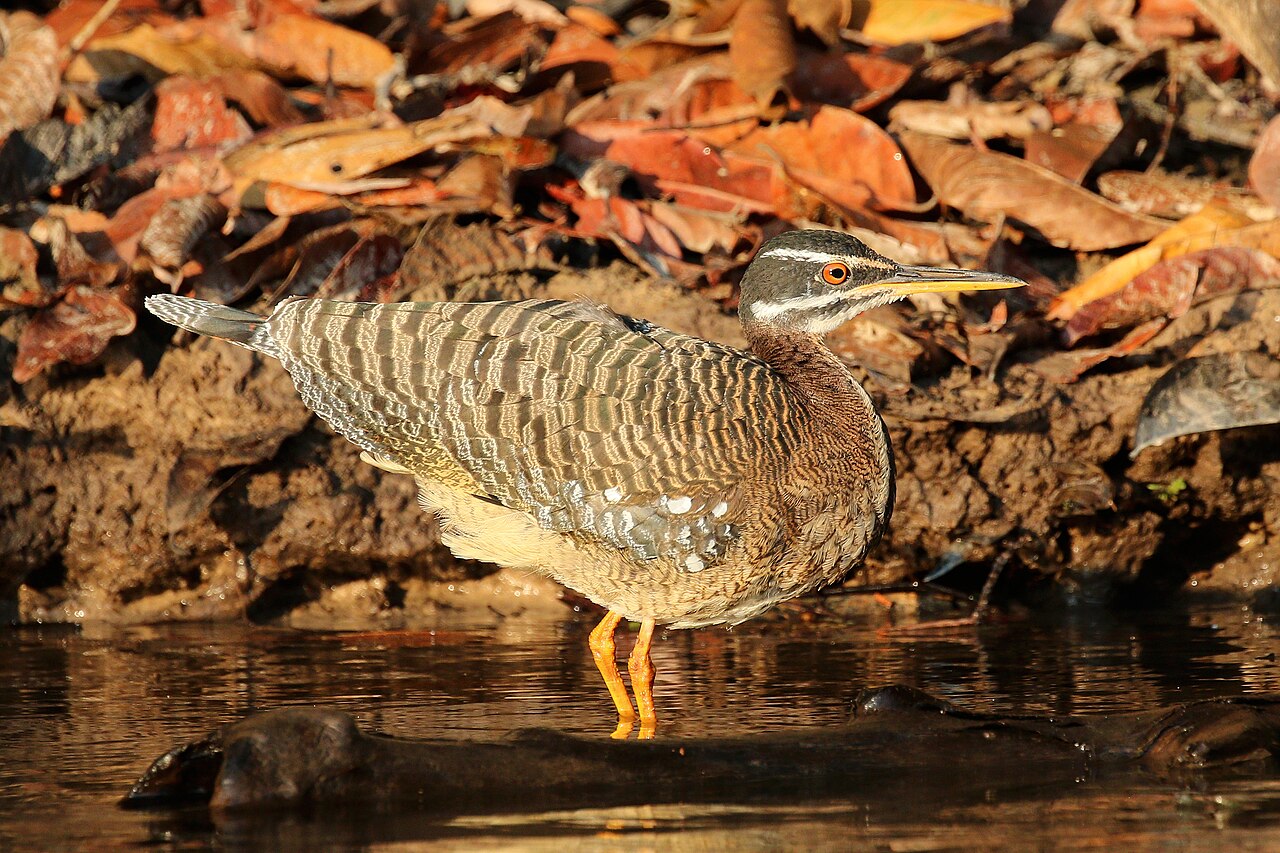
Both parents help incubate and care for young. A nesting area must provide shelter as well as access to food.
The Smithsonian notes habitat loss as a concern, even though the species is not among the most threatened birds.
Protecting streamside vegetation preserves a setting where feeding and family life fit together.
The sunbittern rewards patience: a subtle bird beside the water can hold a startling pattern just out of sight.
Photo credits
Featured image: 075 Sunbittern in Encontro das Águas State Park Photo by Giles Laurent.jpg — Giles Laurent; CC BY-SA 4.0.

Body image 1: Sunbittern (Eurypyga helias) (3419492081).jpg — Cliff from Arlington, Virginia, USA; CC BY 2.0.

Body image 2: Sunbittern (Eurypyga helias).JPG — Charles J. Sharp; CC BY-SA 4.0.

Photographs resized for web display where available.