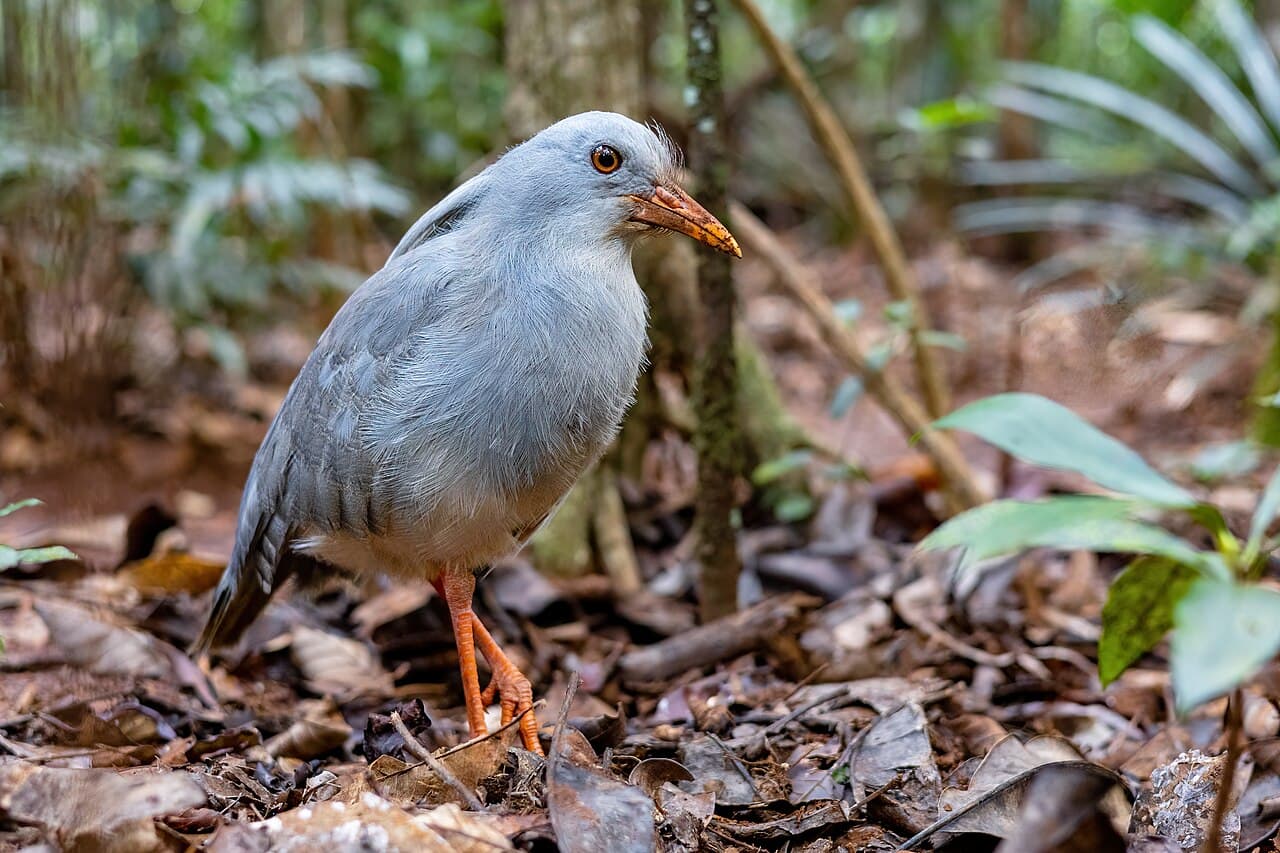
A kagu carries broad wings but spends its life mainly on the ground. Its pale grey feathers, orange bill and legs, and liftable crest create an unmistakable forest-floor portrait.
Rhynochetos jubatus is native to New Caledonia's main island. It is a distinct bird, not a small pale heron.
Wings still have work to do
The San Diego Zoo kagu account describes wings used in display, balance, and responses to danger.
A bird that rarely flies does not have useless wings. Spreading them can reveal bold markings and change its outline.
The crest offers another shift, turning a smooth-headed bird into a much more dramatic figure.
Find a meal beneath the leaves
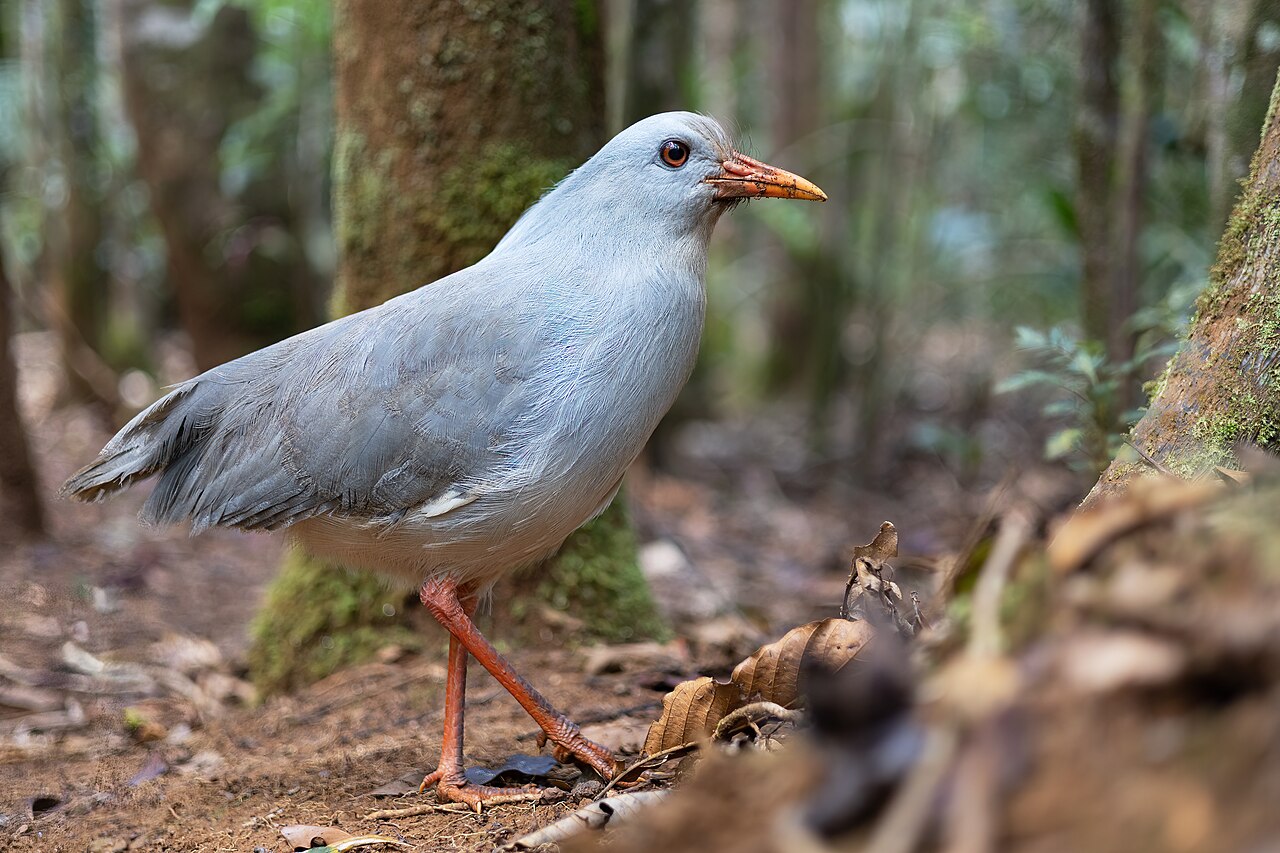
Kagus search the forest floor for small animals, including invertebrates.
A patient pause can precede a quick strike. The bill investigates a world hidden by leaf litter and low vegetation.
Pairs also communicate with distinctive calls, adding a strong voice to an otherwise pale and quiet-looking bird.
Ground life brings particular risks
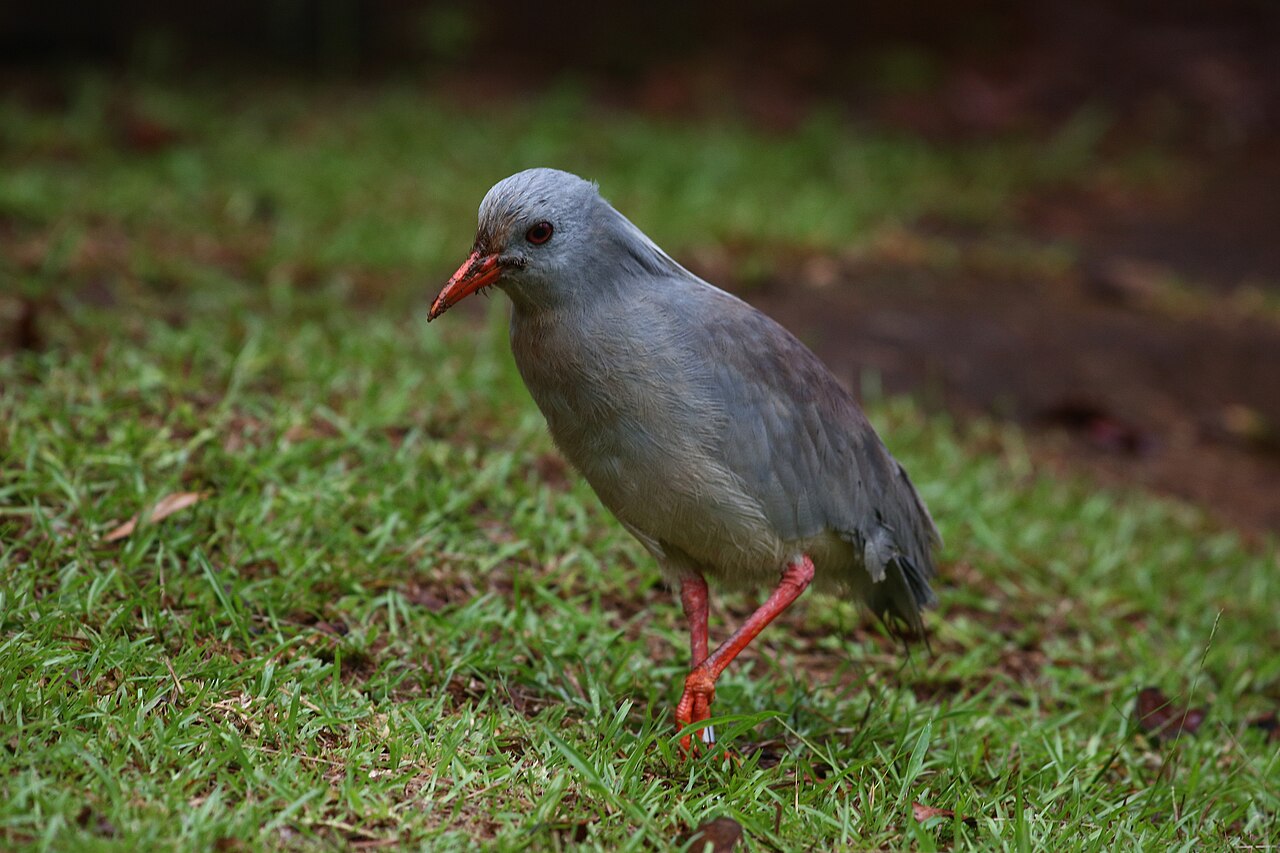
BirdLife's species assessment identifies introduced predators, including dogs, as serious threats.
Protecting habitat and controlling those pressures belong together.
The kagu's beauty is tied to a specific island landscape. Keeping its forest safe preserves not only an elegant crest, but a whole way of living close to the ground.
Photo credits
Featured image: Kagu 0A2A3521.jpg — JJ Harrison; CC BY-SA 3.0.

Body image 1: Kagu 0A2A3921.jpg — JJ Harrison; CC BY-SA 3.0.

Body image 2: Rhynochetos jubatus 33484568.jpg — Lennart Hudel; CC BY 4.0.

Photographs resized for web display where available.