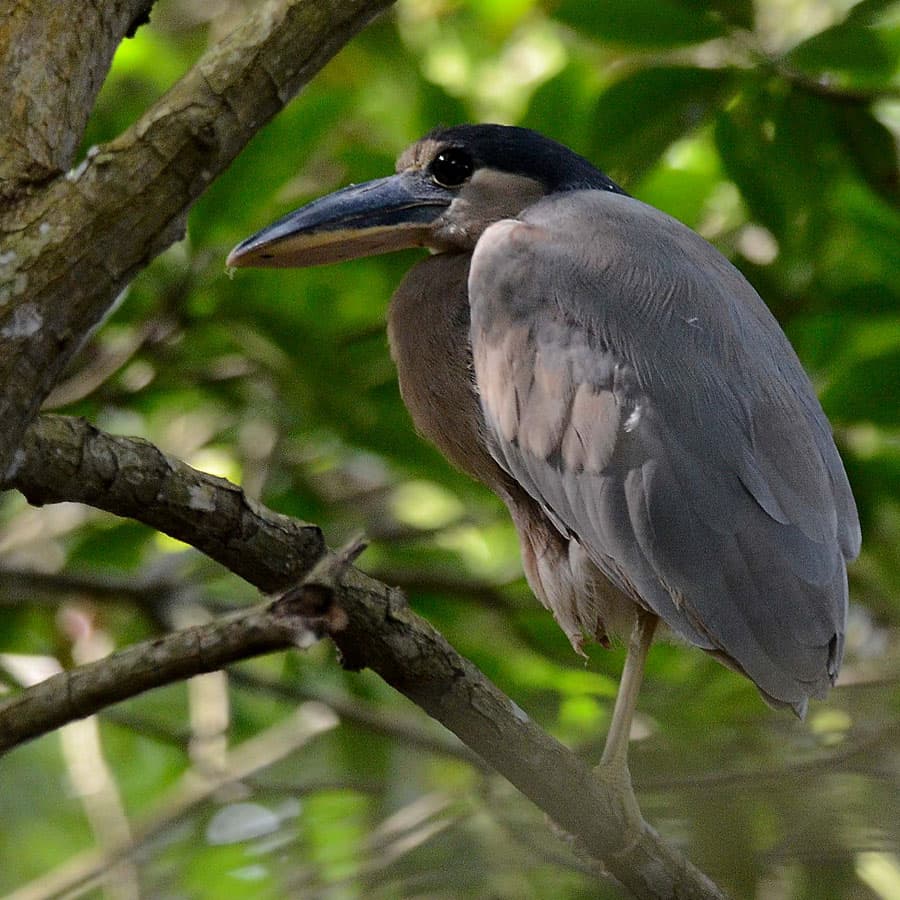
A boat-billed heron's bill can look too broad for the rest of its head. The flattened, rounded shape gives the bird its name and helps make it unlike a typical narrow-billed heron.
Cochlearius cochlearius lives in tropical American wetlands and nearby forest.
A face suited to a night shift
The Houston Zoo's account describes a mainly nocturnal hunter with large dark eyes.
Fish, shrimp, and insects are among its food. A shaded perch by day can belong to a bird whose feeding activity becomes more obvious after sunset.
The bill's side view and front view can create very different portraits.
Wetland cover is part of the home
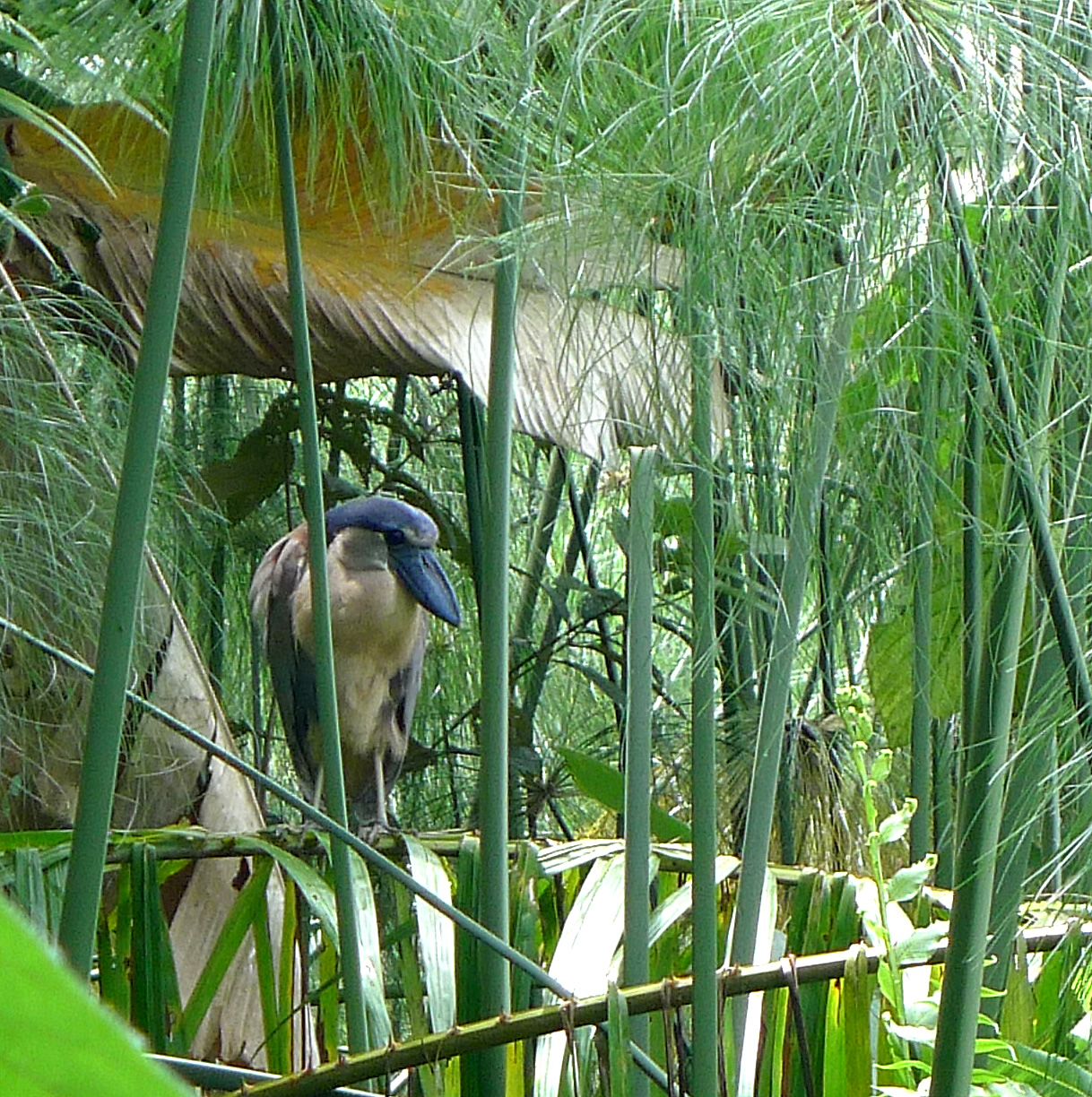
Zoo New England associates the species with mangroves, marshes, and tropical forest.
Those places offer both feeding water and vegetation for shelter. A bird cannot live on the name of a habitat alone; it needs the right arrangement of resources within it.
A quiet observation reveals more
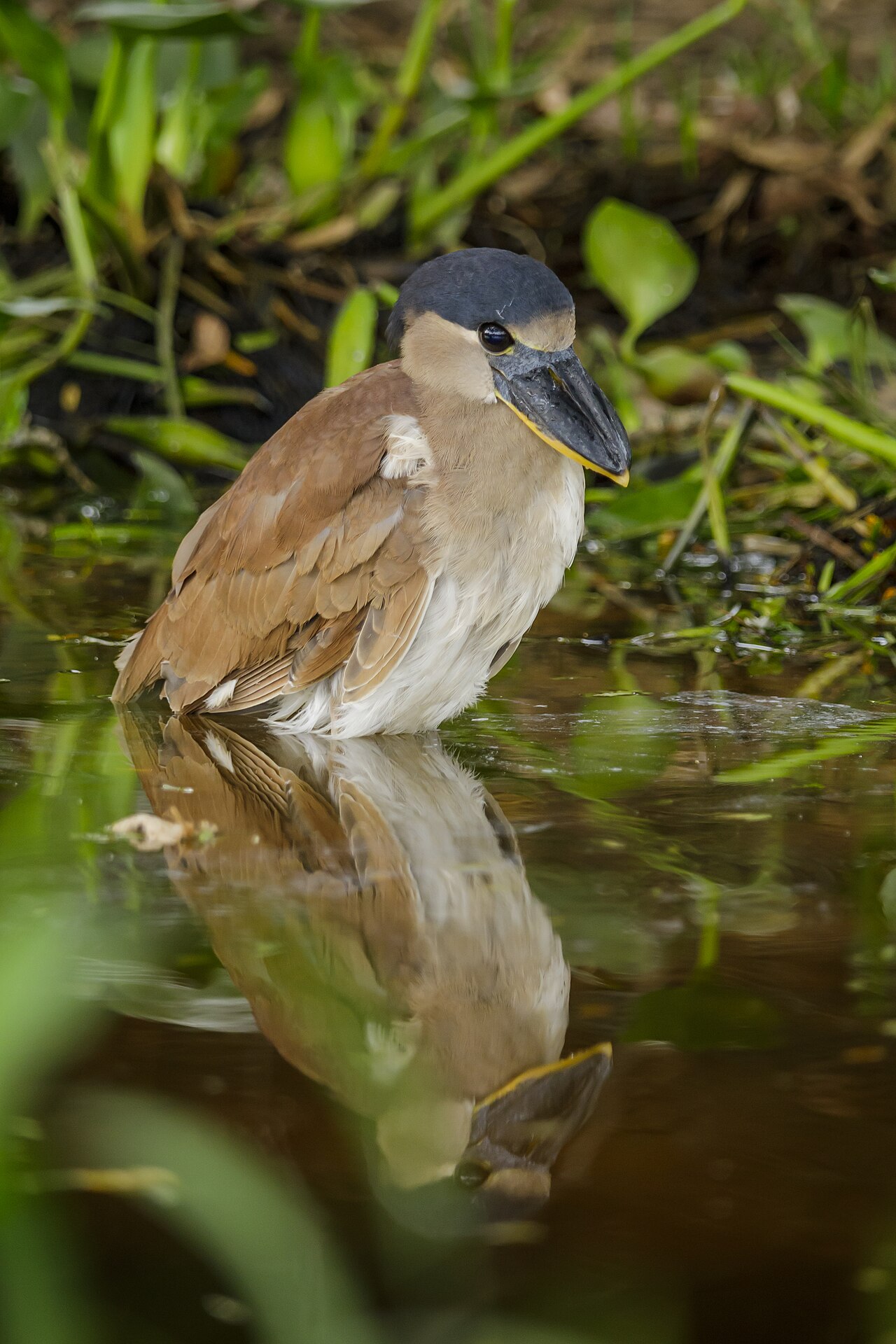
A resting heron does not need to be stirred into movement for a worthwhile encounter. The broad bill, dark eye, and layered feathers already tell a distinctive story.
Conserving wetlands includes preserving their quieter, shaded edges.
The boat-billed heron gives an unexpected shape to a familiar bird group. As daylight fades, that unusual face belongs to a hunter beginning its work.
Photo credits
Featured image: Boat-billed heron (Cochleatius cochlearius), Campeche, Mex. (2015).jpg — Amado Demesa; CC BY-SA 4.0.

Body image 1: Boat-billed Heron. Cochlearius cochlearius. - Flickr - gailhampshire.jpg — gailhampshire from Cradley, Malvern, U.K; CC BY 2.0.

Body image 2: Boat-billed Heron (Cochlearius cochlearius), Parque Estadual Encontro das Águas Thomas-Fuhrmann.jpg — Thomas Fuhrmann; CC BY-SA 4.0.

Photographs resized for web display where available.