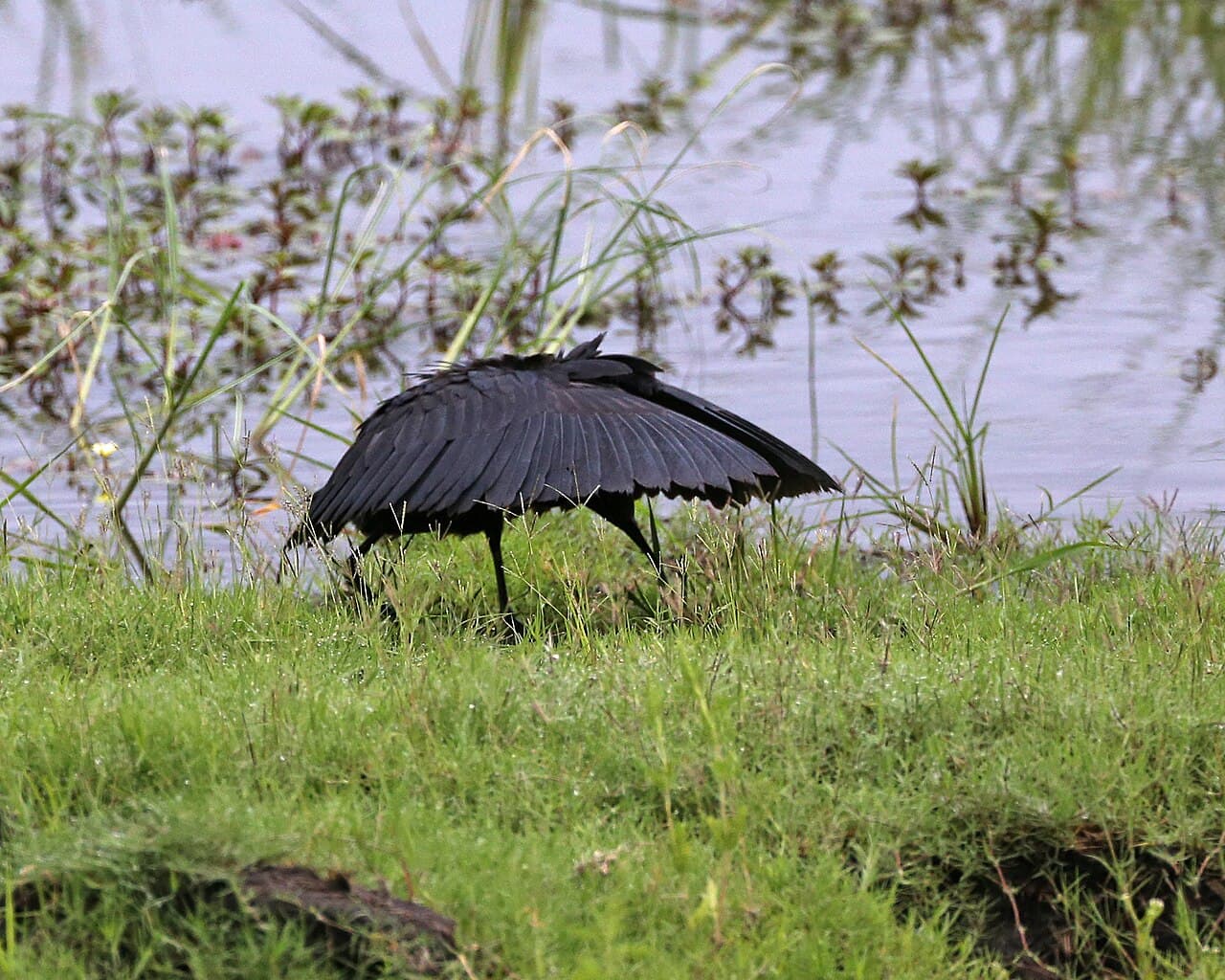
A black heron can curve its wings over its head until the bird resembles a small umbrella. Beneath that feathered canopy, it searches the water for prey.
Egretta ardesiaca is an African heron with dark plumage and conspicuously yellow feet.
Shade becomes part of the hunt
The Biodiversity Explorer black-heron account documents canopy feeding.
The wings create a shaded patch over shallow water. The bird then strikes at fish and other small aquatic animals.
Reducing glare and changing the local light conditions can help explain the technique. The familiar umbrella shape makes an unusual feeding posture easy to remember.
One bird, two very different outlines
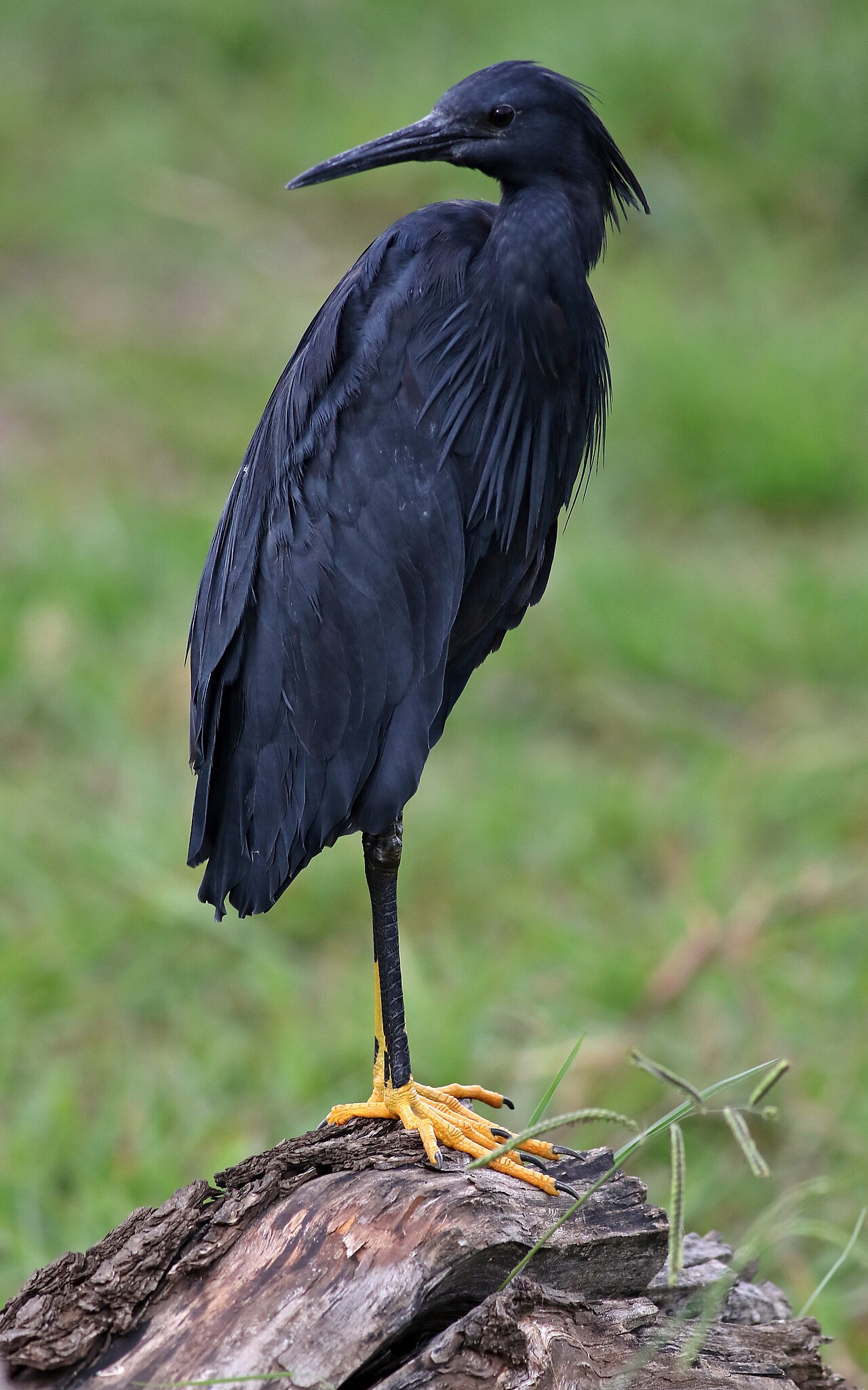
Standing upright, the heron has the long-legged form expected of a wader. With its wings rounded forward, much of that shape disappears.
A photograph can therefore seem to show a different animal until the feeding action is understood.
The feet beneath the canopy are a useful clue to the bird inside.
Water conditions shape opportunities
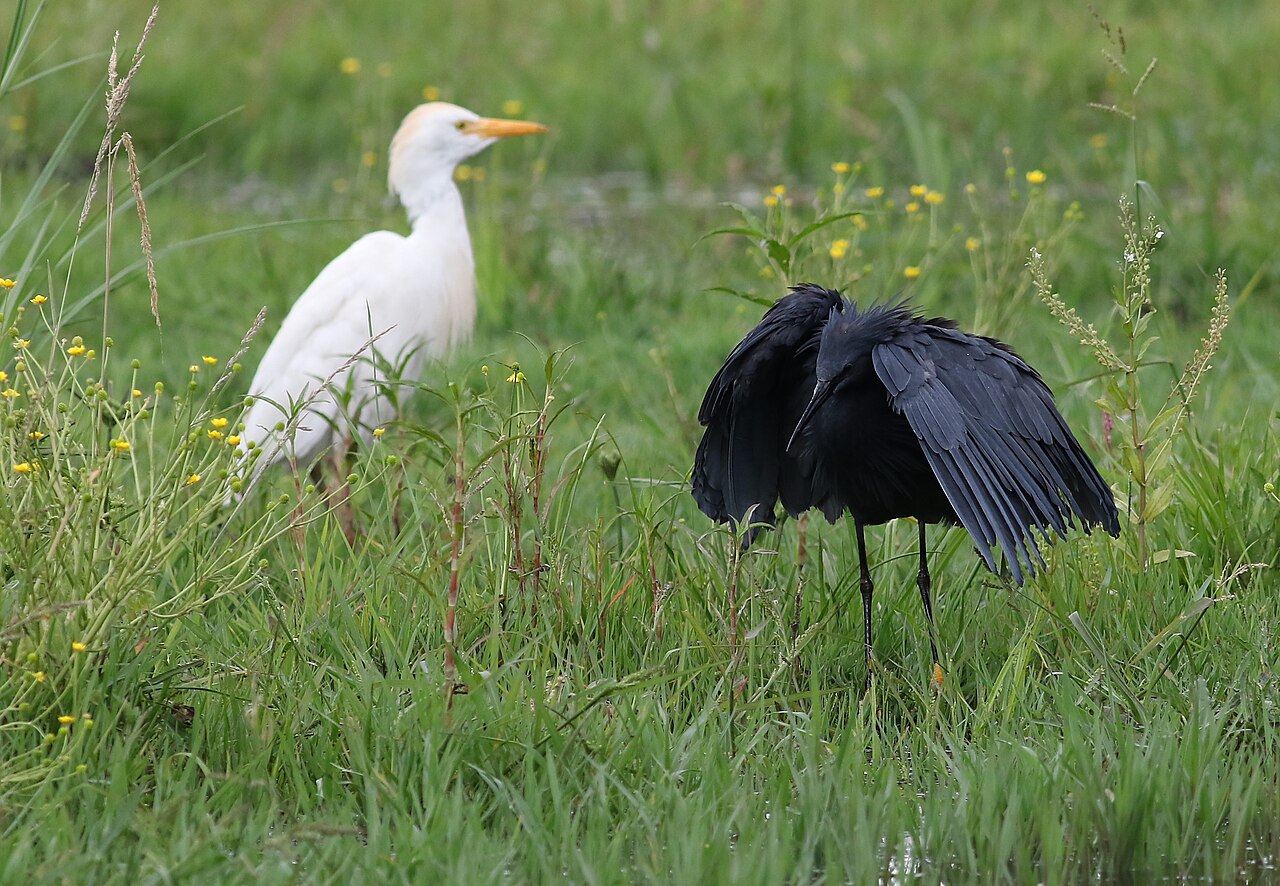
Suitable shallows provide places to stand and prey to catch. Habitat quality matters beyond the simple presence of open water.
Watching without approaching too closely lets the heron continue its deliberate routine.
The black heron's trick is more than a charming resemblance. It shows an animal changing the conditions around itself, using its own wings to create a small hunting space.
Photo credits
Featured image: Black Heron (Egretta ardesiaca) 1.jpg — Lip Kee; CC BY-SA 2.0.

Body image 1: Black heron, Egretta ardesiaca, at Marievale Nature Reserve, Gauteng, South Africa (29946902700).jpg — Derek Keats from Johannesburg, South Africa; CC BY 2.0.

Body image 2: Black heron, Egretta ardesiaca, at Marievale Nature Reserve, Gauteng, South Africa (30128524312).jpg — Derek Keats from Johannesburg, South Africa; CC BY 2.0.

Photographs resized for web display where available.