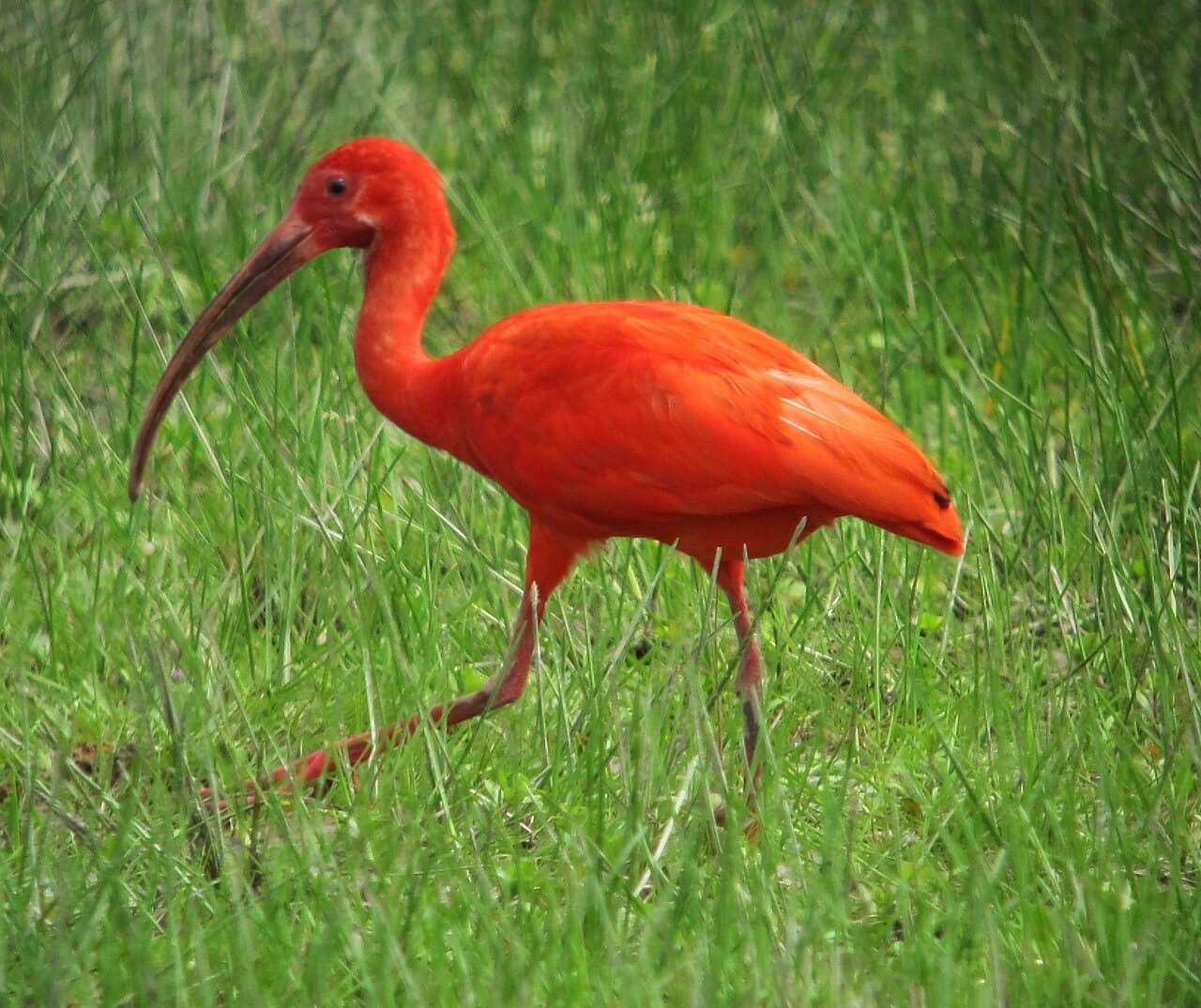
A scarlet ibis does not begin life wearing the blazing red of an adult. Its color develops as it grows, helped by pigments obtained through food.
Eudocimus ruber is a tropical American wading bird. A long curved bill and long legs serve a life feeding in shallow water and mud.
The food behind the feathers
The Smithsonian National Zoo species account connects the red coloration with dietary pigments.
The ibis probes for aquatic prey, including insects, crustaceans, and small fish.
A bright portrait can therefore reveal a link between the bird and the smaller animals in its habitat.
A flock changes the whole tree
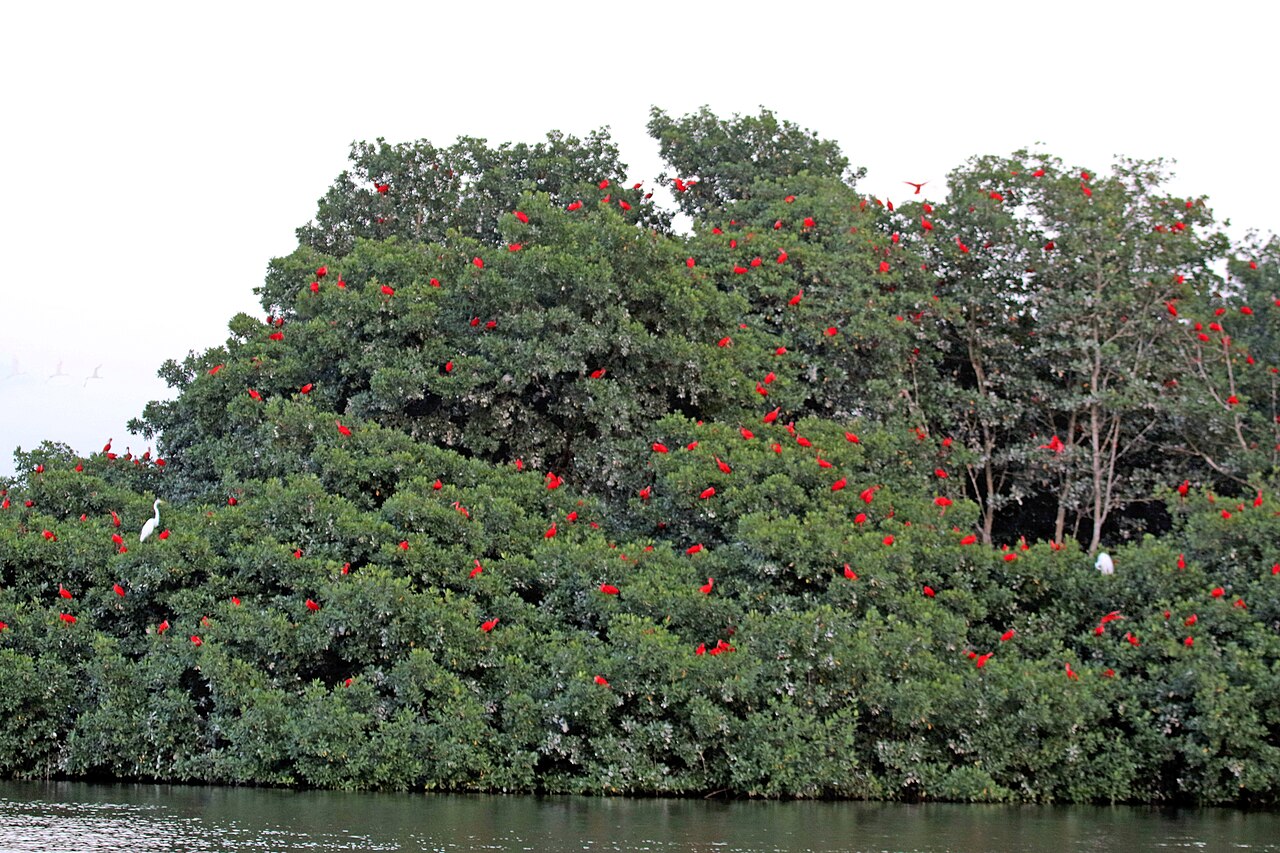
Scarlet ibises are social. Feeding and roosting groups can turn a wetland edge into a scene full of red points.
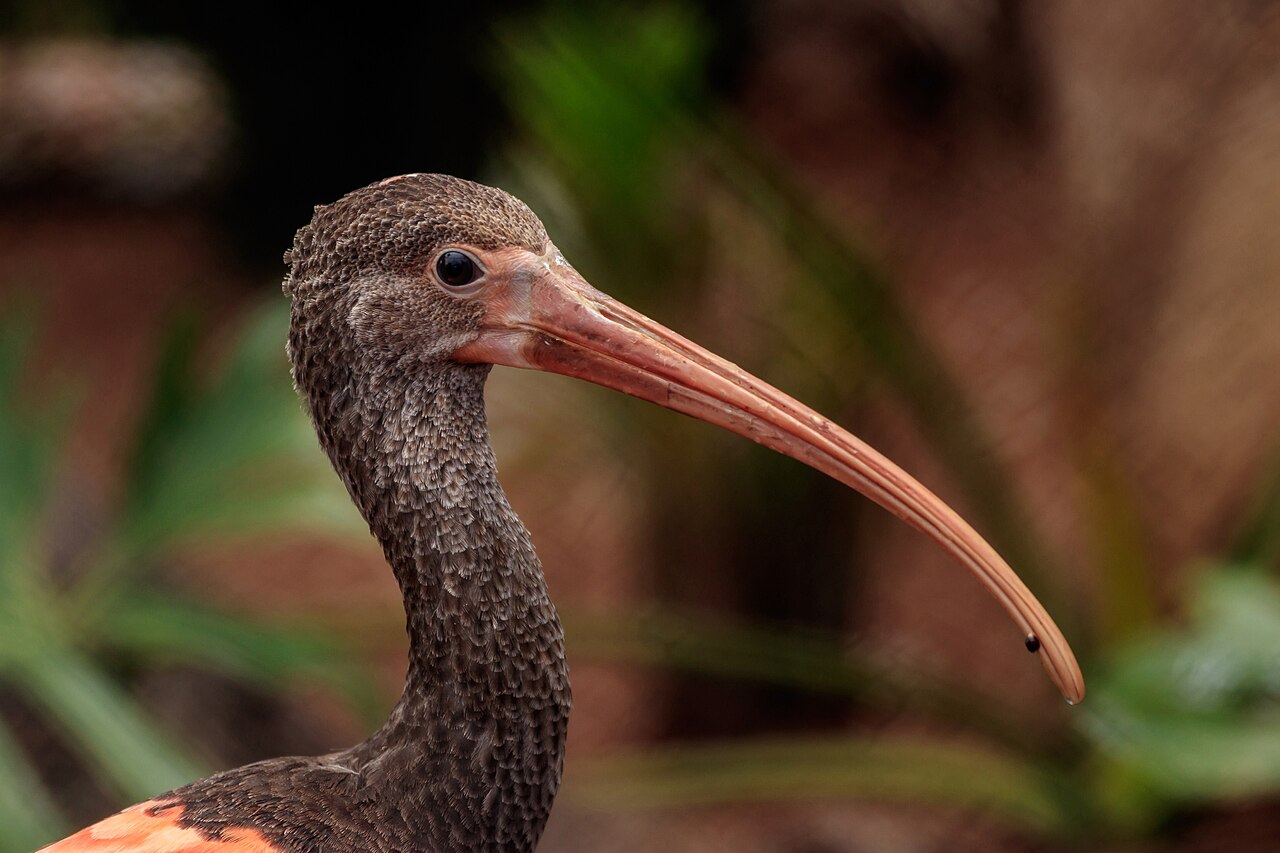
Young birds look much duller than adults. Seeing them together shows a life cycle rather than a collection of identical ornaments.
The curved bill remains a useful clue when the red feathers are absent.
Color needs a healthy setting
The Smithsonian identifies habitat loss, capture, and hunting as concerns for local populations.
Shallow feeding areas and safe roosting sites form different parts of the same home.
A distant flock may look like scattered blossoms in a tree. Look again and each red shape becomes a living bird, carrying the colors of its food through the wetland landscape.
Photo credits
Featured image: Eudocimus ruber Corocora Scarlet Ibis (6264848783).jpg — Félix Uribe from Rionegro, Antioquia, Colombia; CC BY-SA 2.0.

Body image 1: Eudocimus ruber - Loro Parque 01.jpg — H. Zell; CC BY-SA 3.0.

Body image 2: Scarlet ibis (Eudocimus ruber) roosting.jpg — Charles J. Sharp; CC BY-SA 4.0.

Photographs resized for web display where available.