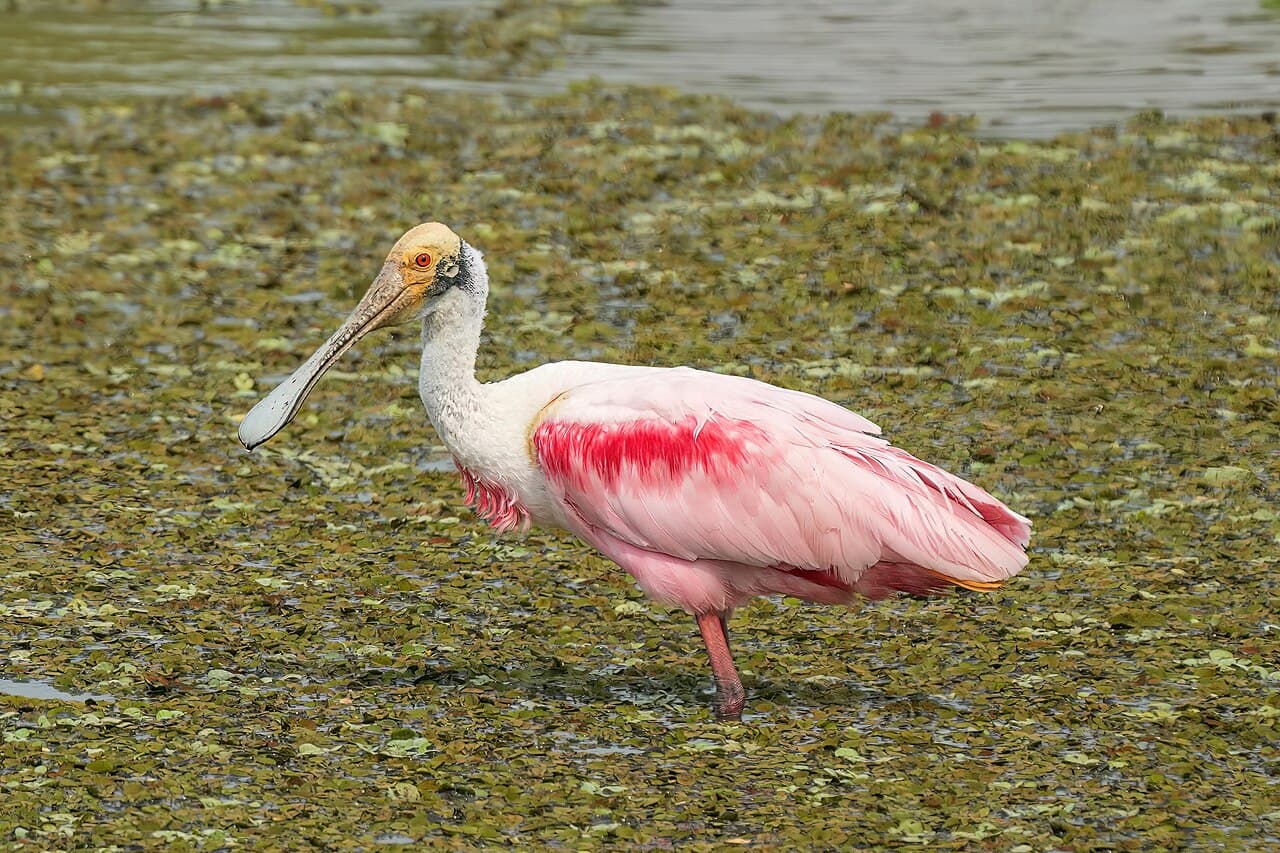
A roseate spoonbill feeds by sweeping its bill from side to side through shallow water. The wide, rounded tip is a working tool, not simply the feature that inspired its name.
Platalea ajaja is the Americas' pink spoonbill. Its long legs and broad wings add to an already striking outline.
A different way to search the shallows
The Cornell Lab's species guide describes groups feeding in fresh and salt water.
Small aquatic animals, including crustaceans and fish, become food. The sweeping movement lets the bird search through water where individual prey may be difficult to see.
Watch the head rather than the color and the feeding rhythm becomes clear.
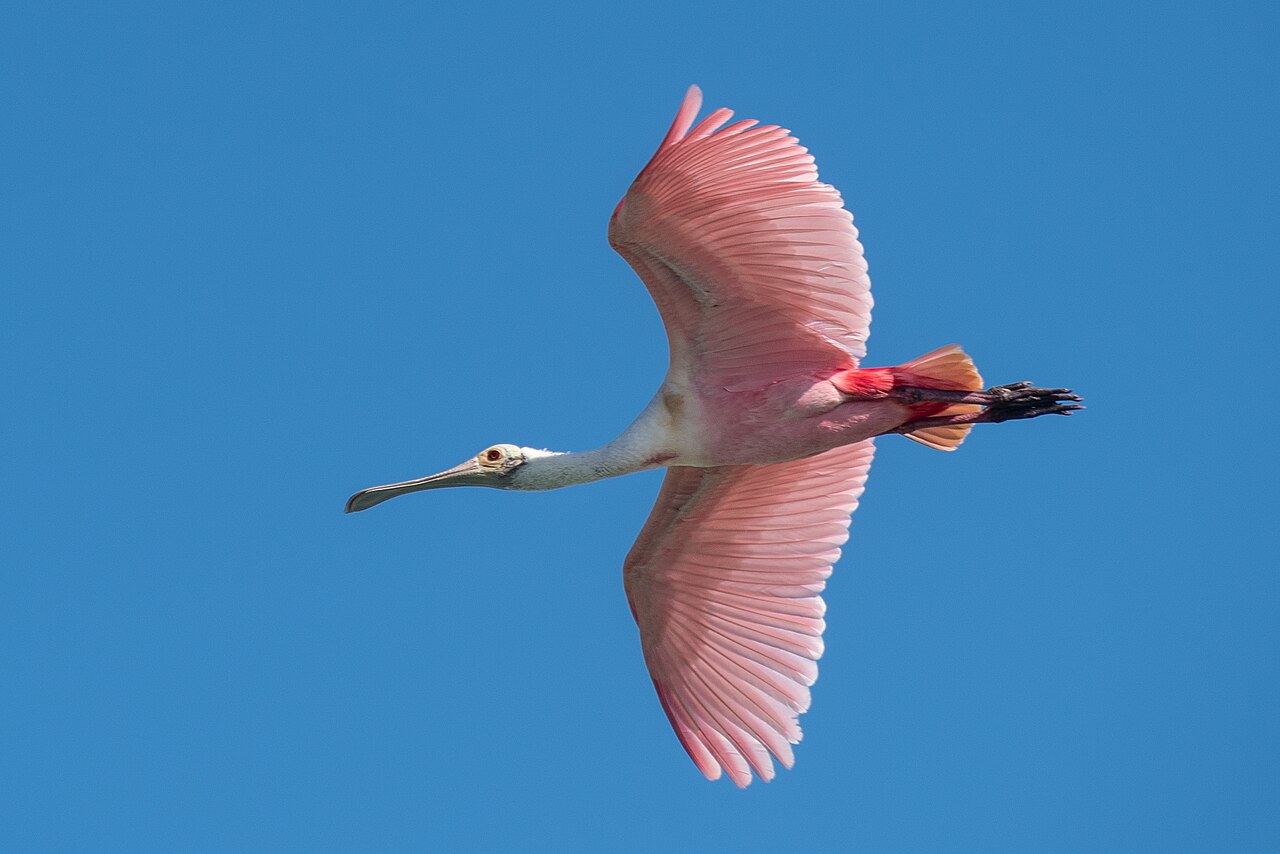
Pink does not make it a flamingo
Spoonbills belong to the ibis-and-spoonbill family. Their bill shape and feeding action distinguish them from flamingos.
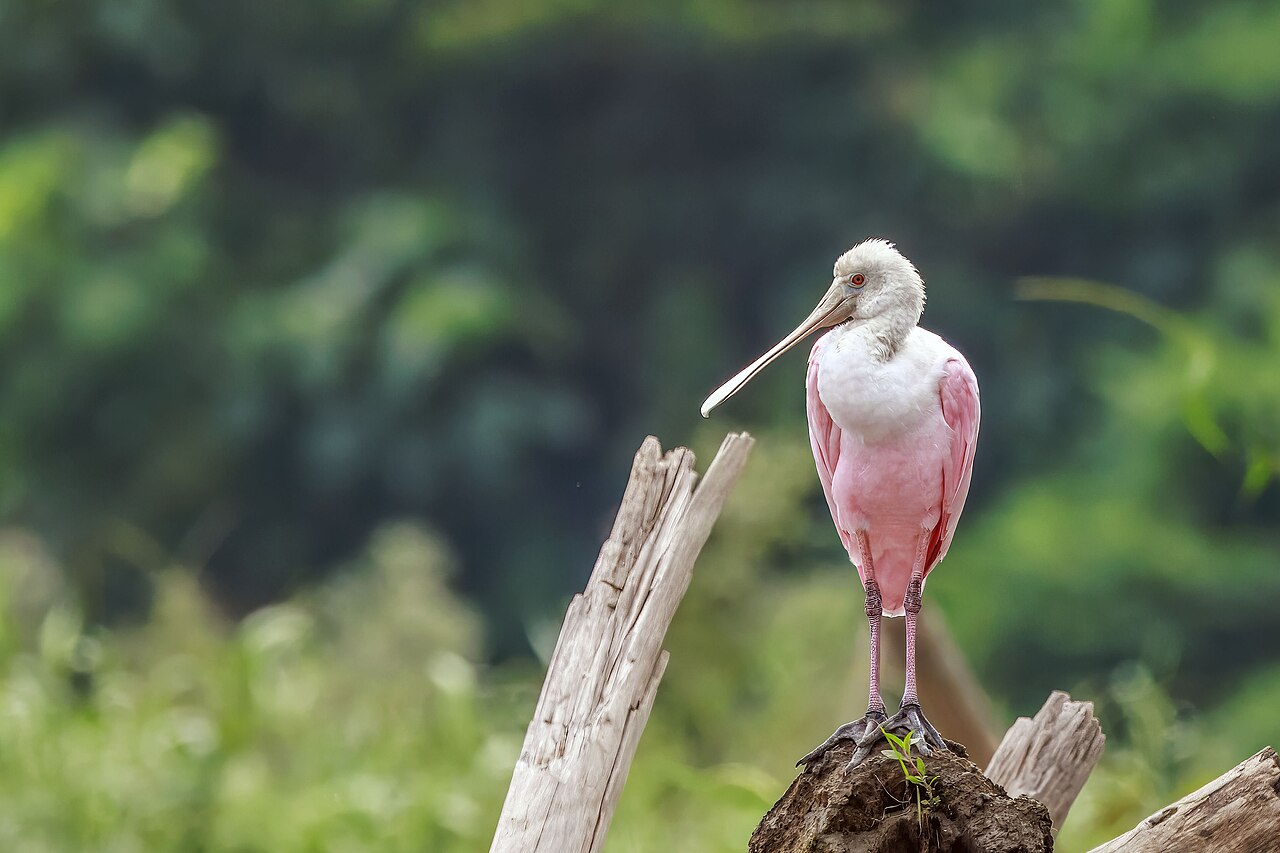
Young birds are paler, and chicks do not hatch with a fully formed adult-style spoon at the bill tip.
The recognizable portrait develops as the bird grows.
A wetland has several jobs
Feeding shallows, roosting places, and nesting trees or shrubs all matter.
Changes in water conditions can alter the food supply even while a wetland still looks scenic from shore.
Protecting these places keeps an entire routine possible.
The roseate spoonbill gives us a beautiful reason to look closer. Behind a flash of pink is a precise movement repeated through the water, turning an unusual bill into a successful way of life.
Photo credits
Featured image: 042 Roseate spoonbill in Encontro das Águas State Park Photo by Giles Laurent.jpg — Giles Laurent; CC BY-SA 4.0.

Body image 1: 2019-02-15 074 Roseate spoonbill (Platalea ajaja) at Sian Ka'an Biosphere Reserve, Mexico.jpg — Gordon Leggett; CC BY-SA 4.0.

Body image 2: Roseate spoonbill (Platalea ajaja) young adult Rio Napo.jpg — Charles J. Sharp; CC BY-SA 4.0.

Photographs resized for web display where available.