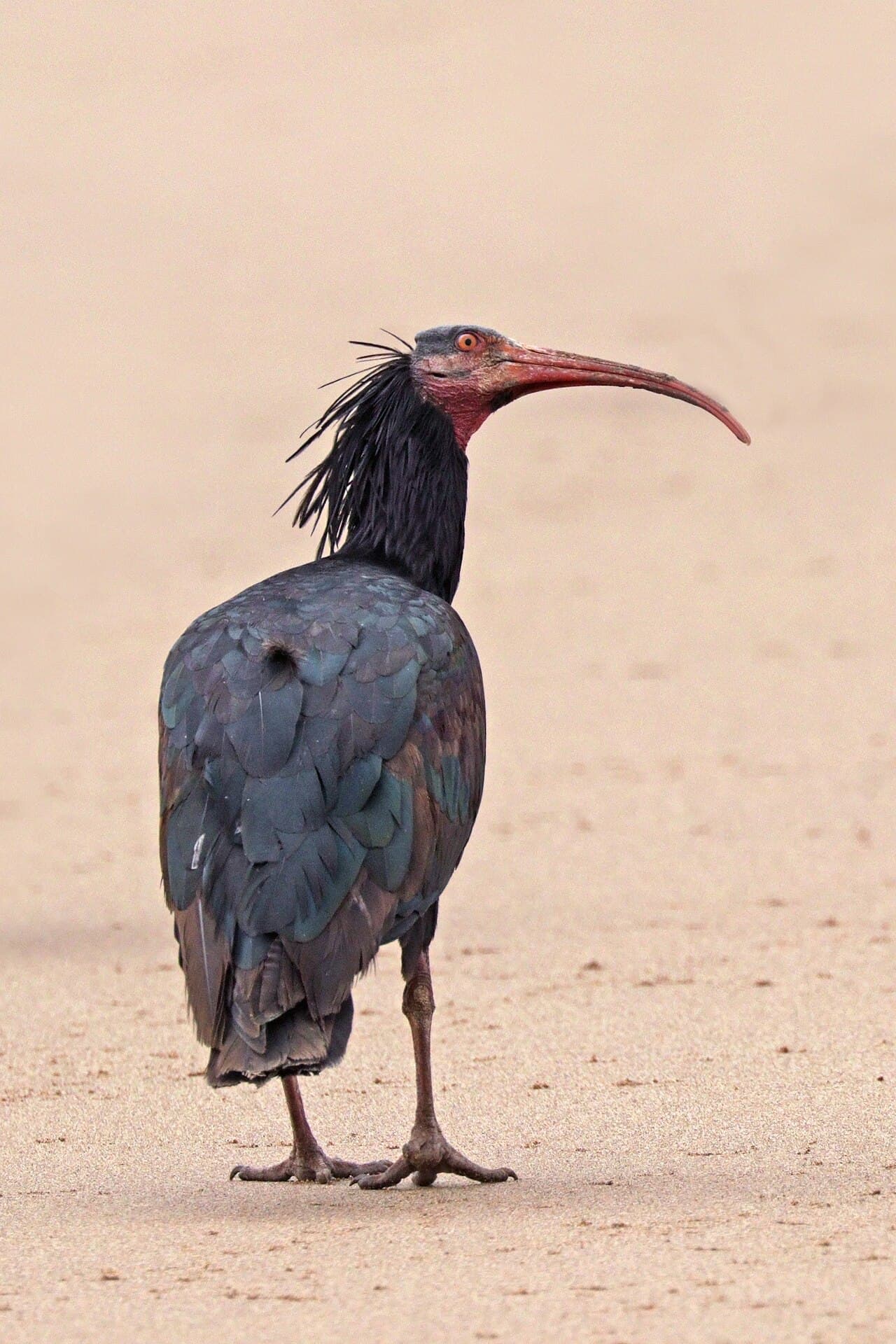
Young northern bald ibises in a European recovery project have followed human guides into the sky to learn a migration route. For this unusual bird, saving a species can include restoring knowledge.
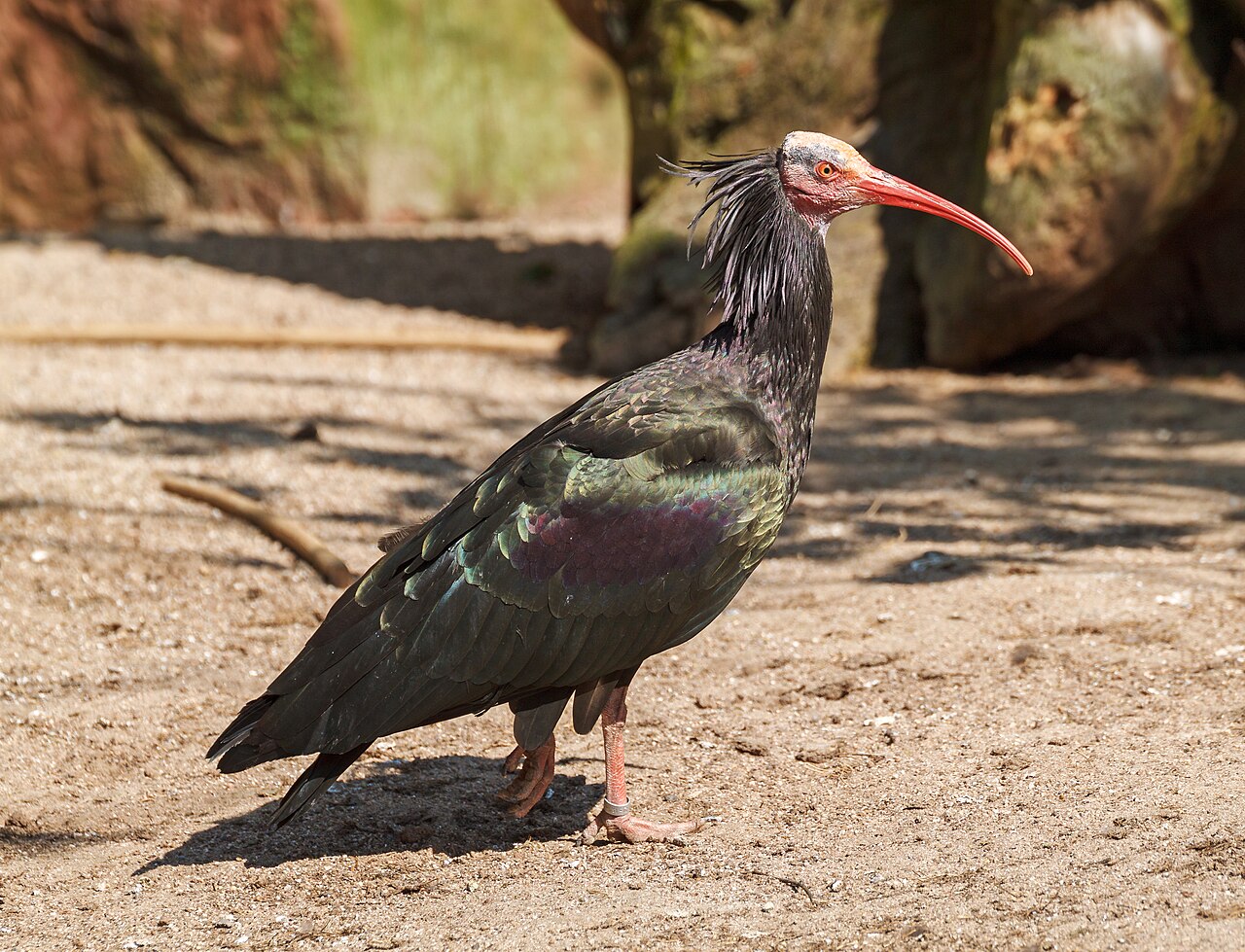
Geronticus eremita has a bare reddish head, a long curved bill, and dark feathers that can shine with green and purple tones.
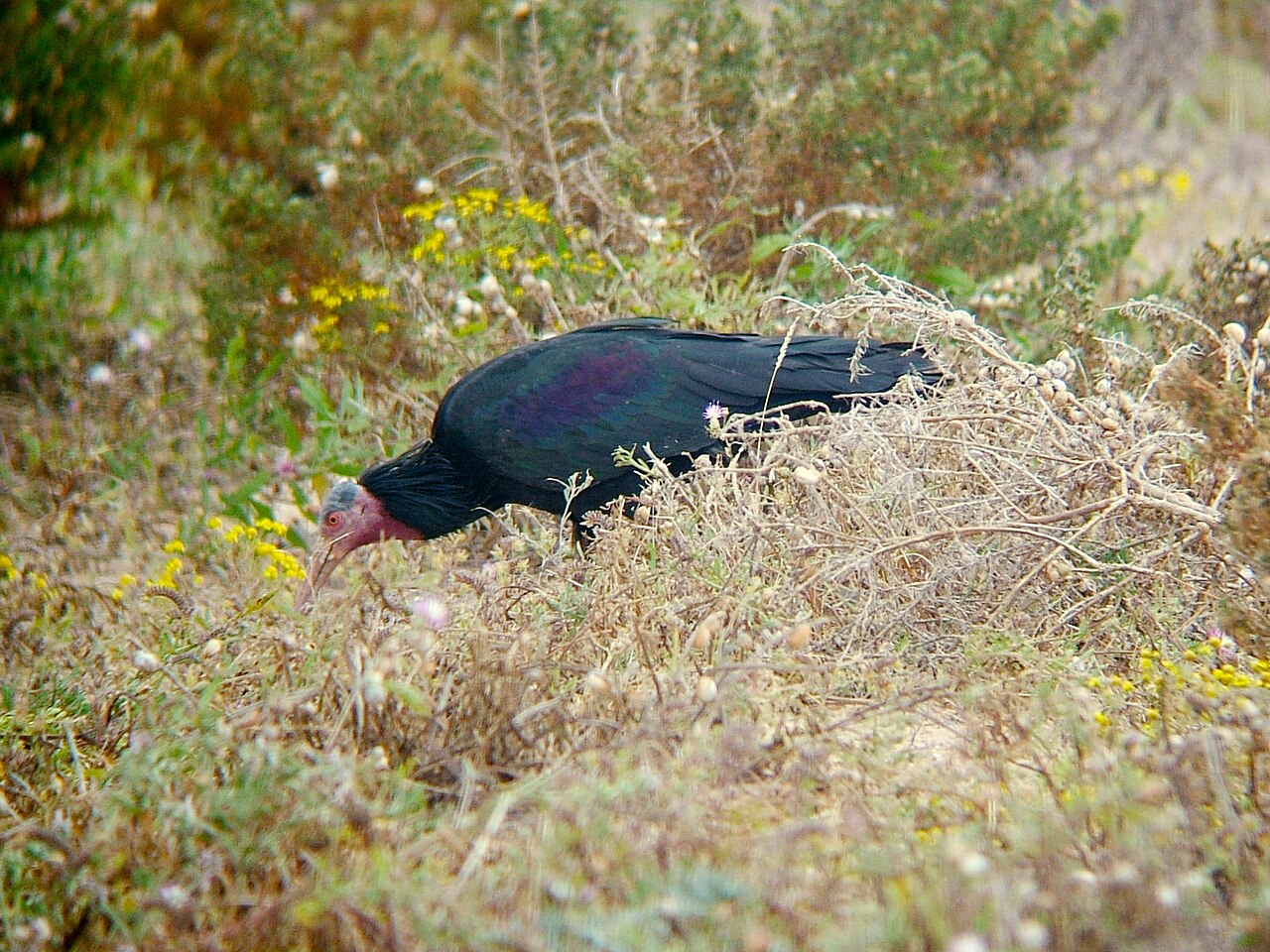
A striking face above a ground-level meal
The ibis searches for food on the ground, using its bill to investigate feeding areas.
BirdLife International's conservation account describes how habitat protection helped the remaining wild population in Morocco.
The feeding landscape matters alongside the cliffs or other places used for breeding.
A route can be part of recovery
The LIFE Northern Bald Ibis project works to establish a migratory population in Europe.
Human-led flights are a carefully managed conservation method, not evidence that every ibis follows people. Experienced birds and learned routes become important after release.
Recovery involves behavior as well as numbers.
Progress still needs protection
The species suffered major losses from habitat change, hunting, and other pressures. Conservation success does not remove the need for continued safe feeding and breeding areas.
A bare head and curved bill make the northern bald ibis easy to remember.
Its deeper story is about persistence: people protecting a remnant population and helping another population recover the journeys that connect one season with the next.
Photo credits
Featured image: Northern bald ibis (Geronticus eremita).jpg — Charles J. Sharp; CC BY-SA 4.0.

Body image 1: Geronticus eremita.jpg — MPF; CC BY 2.5.

Body image 2: Geronticus eremita - Heidelberg.jpg — H. Zell; CC BY-SA 3.0.

Photographs resized for web display where available.