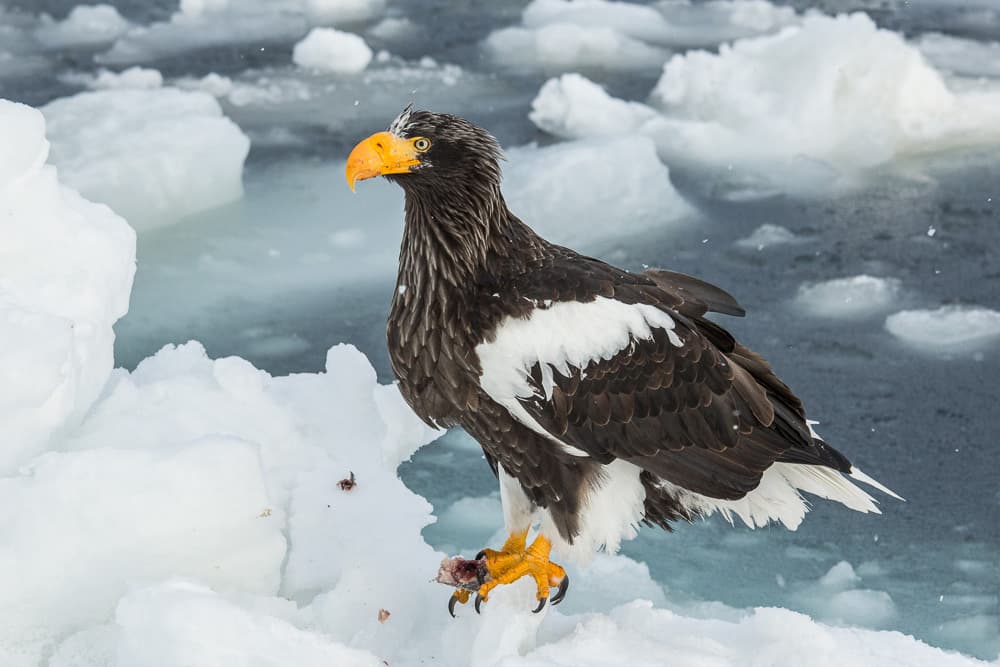
A Steller's sea eagle's yellow bill can seem oversized even on a very large bird. Against dark feathers and broad white patches, it creates one of the most striking faces among eagles.
Haliaeetus pelagicus belongs to the sea eagles. Its natural range centers on northeastern Asia.
A life around coasts and rivers
The Animal Diversity Web account describes breeding areas in eastern Russia and winter movements that bring many birds to Japan.
Large rivers, estuaries, and coastal waters provide feeding opportunities. Nesting also depends on suitable large trees or rocky sites.
A sea eagle's home includes the land beside the water, not just the water itself.
Fish matter, but the menu is not fixed
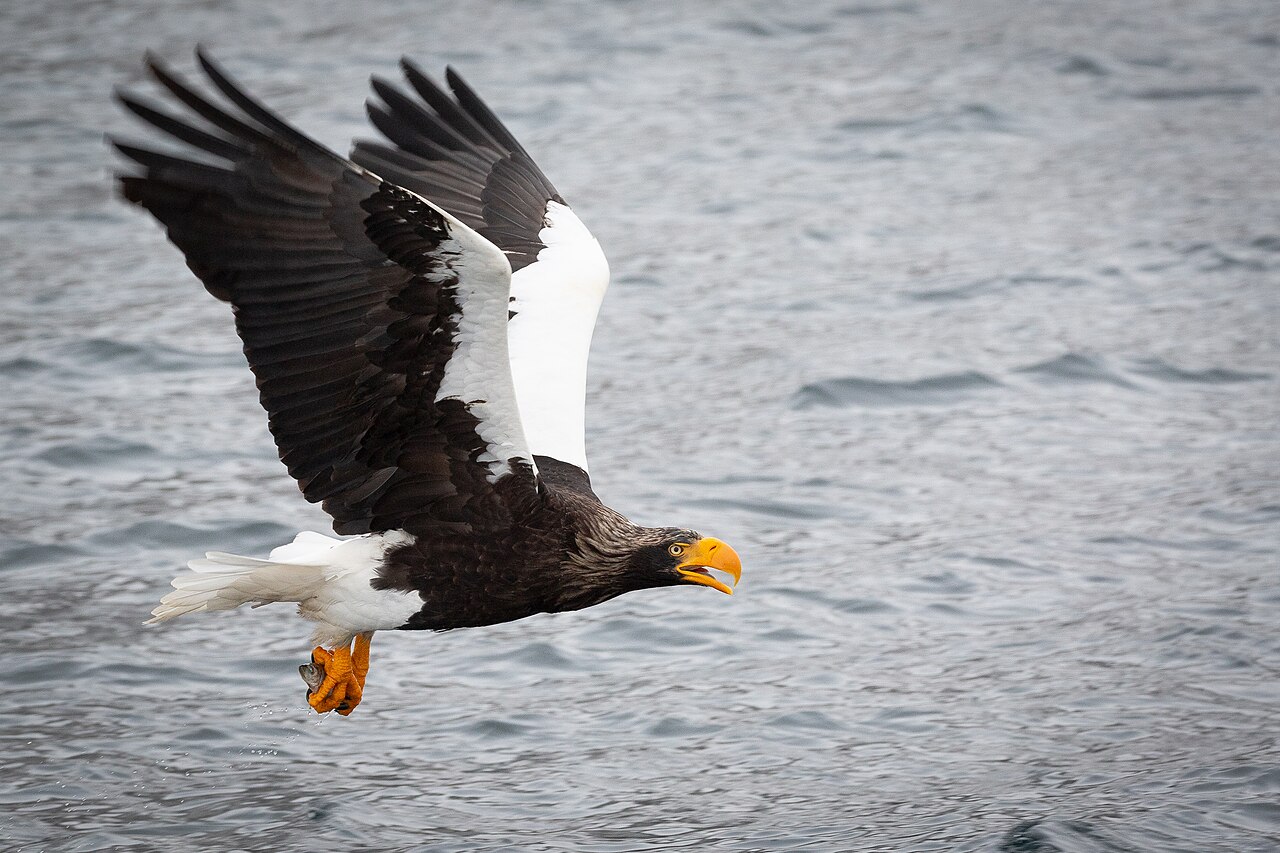
Salmon are important prey in parts of the range. The eagles take fish alive or dead and use other foods when available.
A bird may hunt from a perch, search in flight, or feed in shallow water.
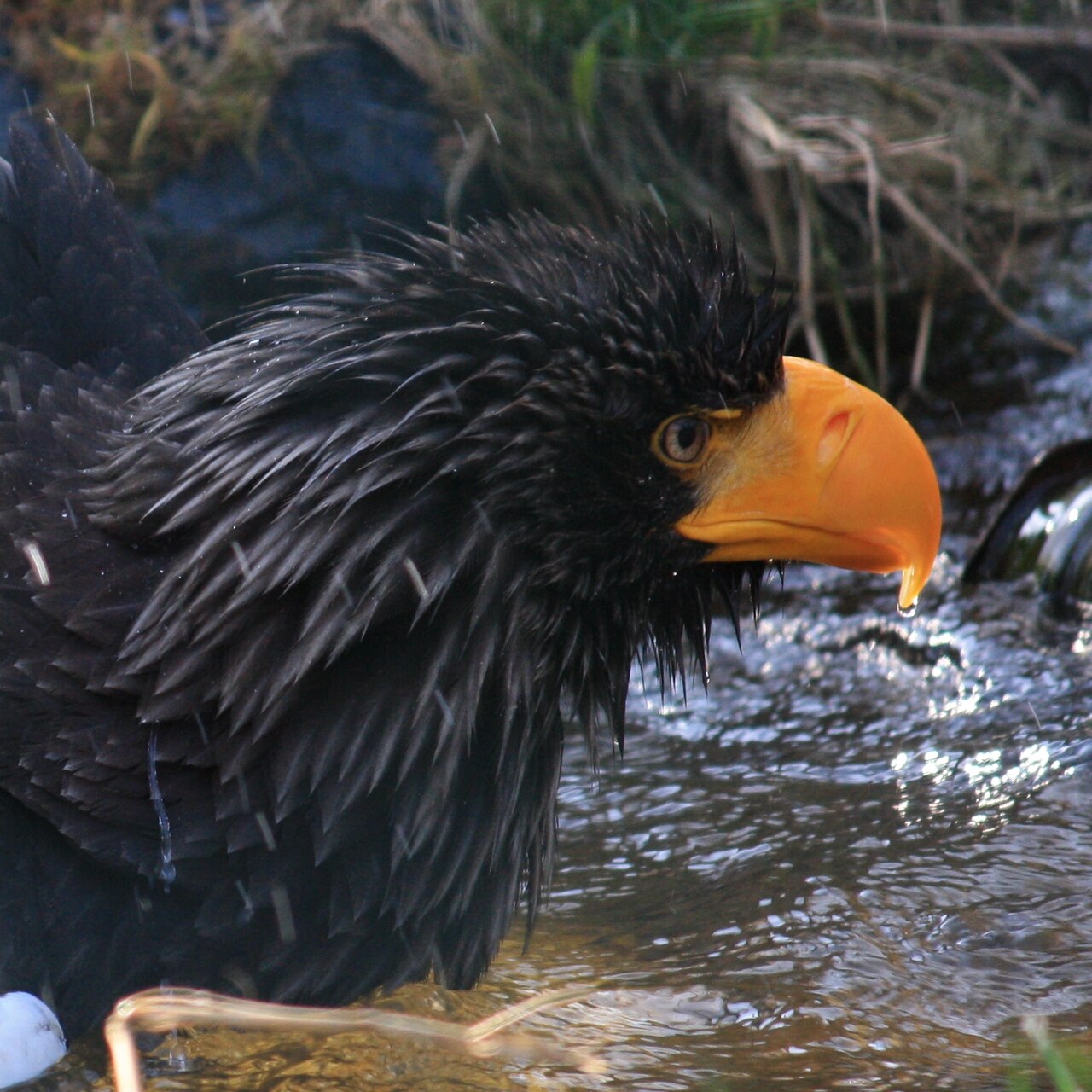
The huge bill helps process food; the feet do the gripping.
An adult portrait is only one stage
Young birds do not begin with the same clean adult pattern. Age adds another reason to identify photographs carefully.
Protecting feeding waters and nesting places keeps different parts of the life cycle connected.
The Steller's sea eagle joins the drama of a powerful raptor with the rhythms of rivers, coasts, fish, and northern seasons.
Photo credits
Featured image: Haliaeetus pelagicus (Rausu, Japan).jpg — Michael Pinczolits; CC BY 2.0.

Body image 1: Haliaeetus pelagicus, ZOO Praha 918.jpg — Matěj Baťha; CC BY-SA 3.0.

Body image 2: Haliaeetus pelagicus with fish.jpg — Saschathegerman; CC BY-SA 2.0.

Photographs resized for web display where available.