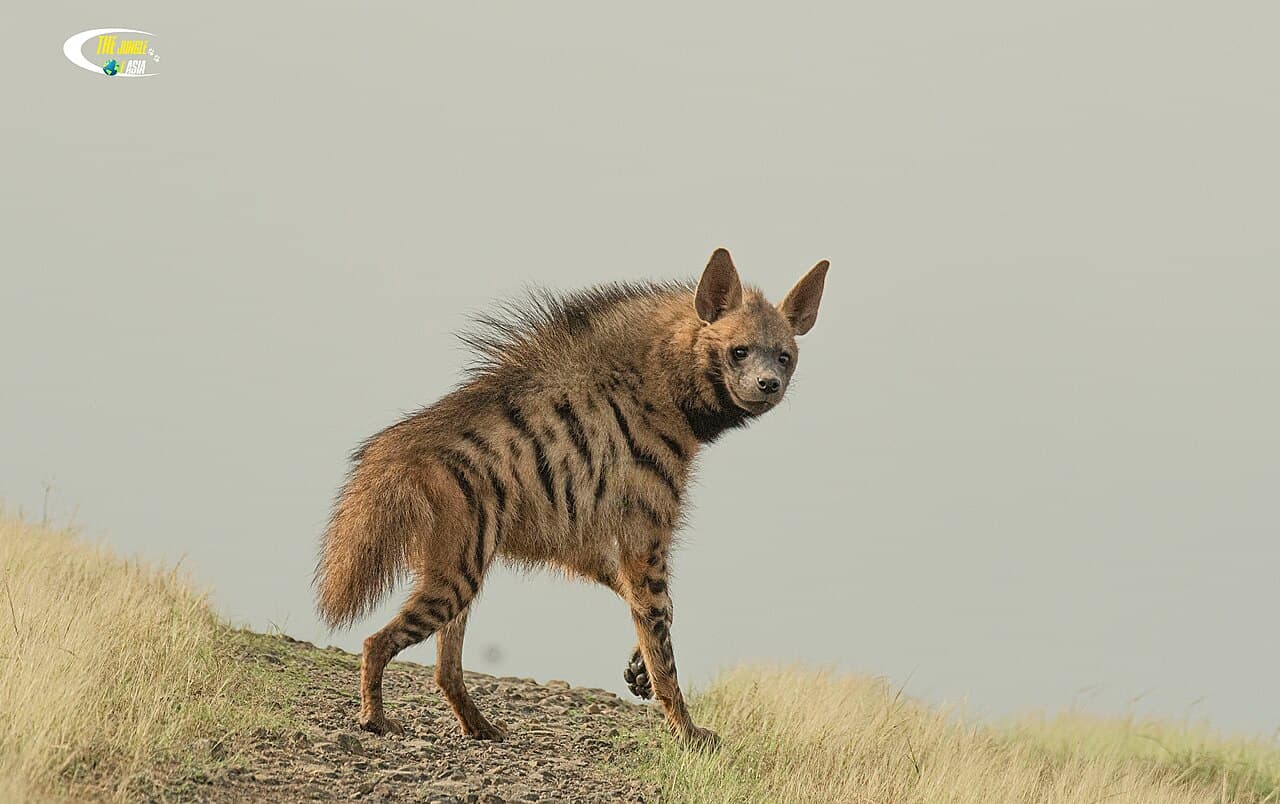
A striped hyena can suddenly look much larger by raising the long hair along its back. The dramatic mane is a display, not an instant change in body size.
Hyaena hyaena belongs to the hyena family. It is neither a dog nor a cat, despite familiar features in its face and posture.
A different kind of hyena
The San Diego Zoo species guide describes a generally quiet animal active mainly at night or around twilight.
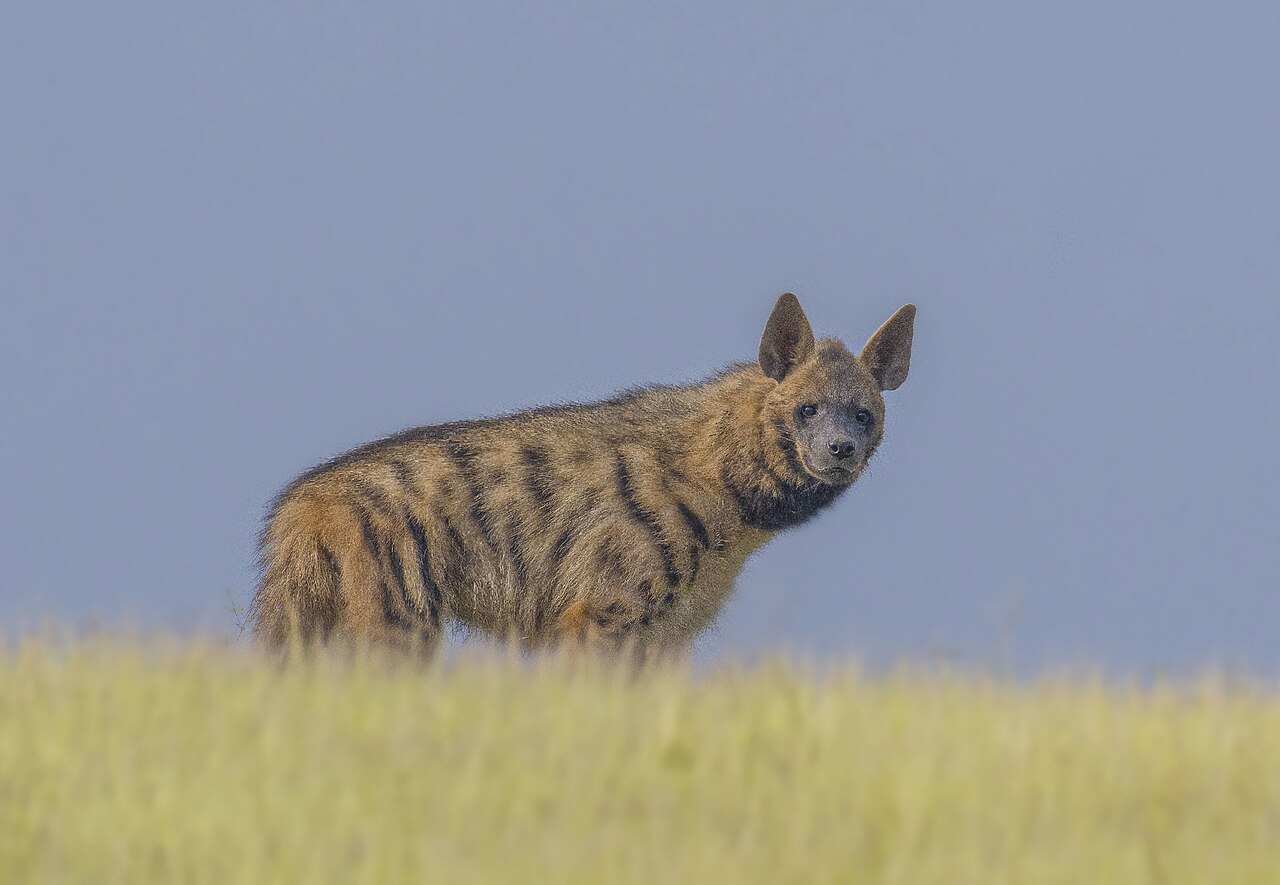
Dark stripes cross a pale coat. Large ears, strong jaws, and a sloping back complete its distinctive outline.
The raised mane can make a threatened animal look more imposing. Body position communicates even when an animal makes little sound.
Meals others leave behind
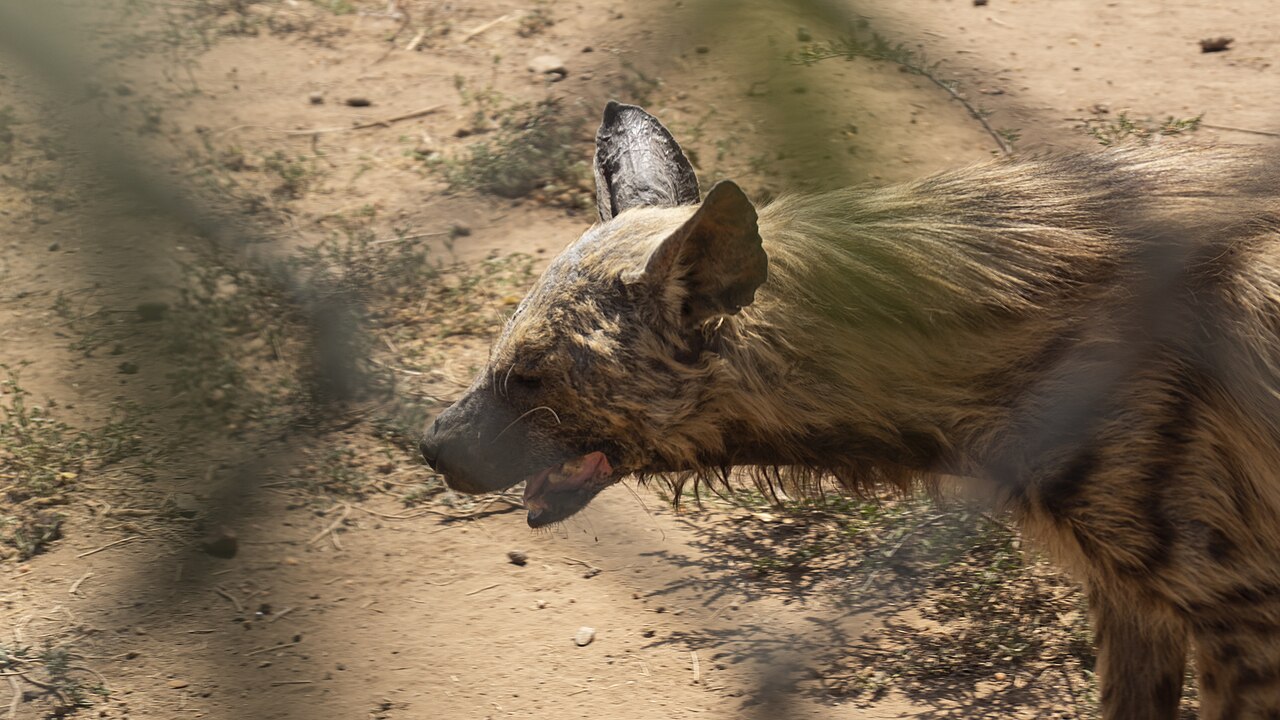
Striped hyenas eat carrion and can process tough remains with powerful jaws. They also take other foods, including small animals and fruit.
Scavenging is useful work. A carcass is not the end of a food web; it becomes food for another set of animals.
Space for a misunderstood neighbor
The species occurs across parts of Africa and Asia. Road deaths, persecution, and habitat pressures threaten populations.
A cautious scavenger does not deserve a reputation built only from frightening stories. Understanding what it eats and how it lives gives a more complete picture.
The striped hyena's mane may catch our attention first. Its quieter role in the landscape gives us a reason to keep looking—and to leave room for an animal that helps finish nature's meals.
Photo credits
Featured image: Striped hyena (Hyaena hyaena).jpg — Rushikesh Deshmukh DOP; CC BY-SA 4.0.

Body image 1: Striped hyena (Hyaena hyaena) rushikesh dop.jpg — Rushikesh Deshmukh DOP; CC BY-SA 4.0.

Body image 2: ضبع مخطط "Hyaena hyaena" 01.jpg — Obada992; CC BY-SA 4.0.

Photographs resized for web display where available.