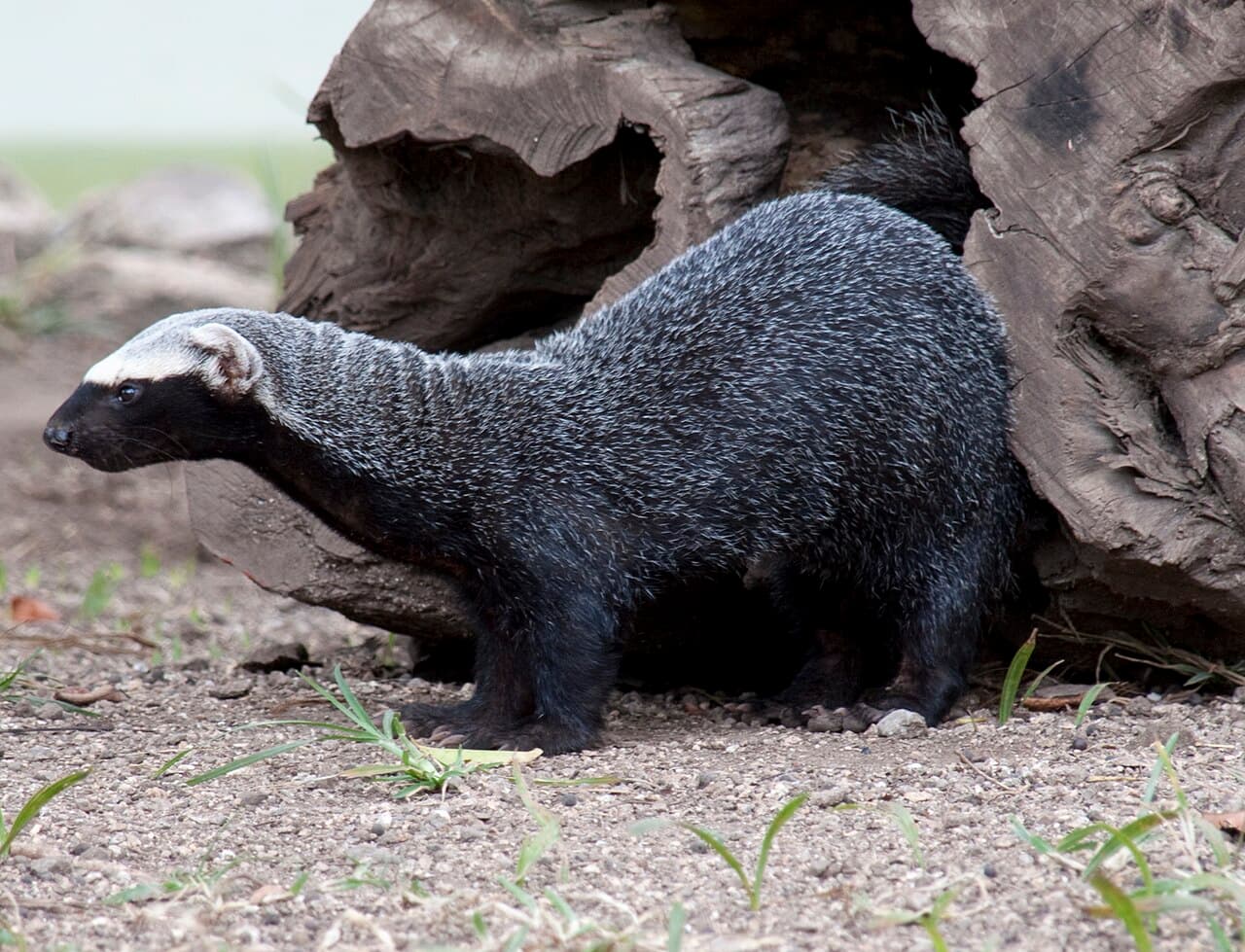
A greater grison looks as though it is wearing two coats at once: a grey back above a dark face, belly, and legs. A pale stripe separates the colors around its head and shoulders.
Galictis vittata belongs to the mustelids, the family that includes weasels and otters. Its long body and short legs give it a low, purposeful outline.
A hunter across tropical America
The Animal Diversity Web account records greater grisons from Mexico into South America. They use several habitats, including forests and areas near streams and wetlands.
Their appearance resembles the lesser grison, but the two are separate species. A familiar-looking photograph deserves a careful identification.
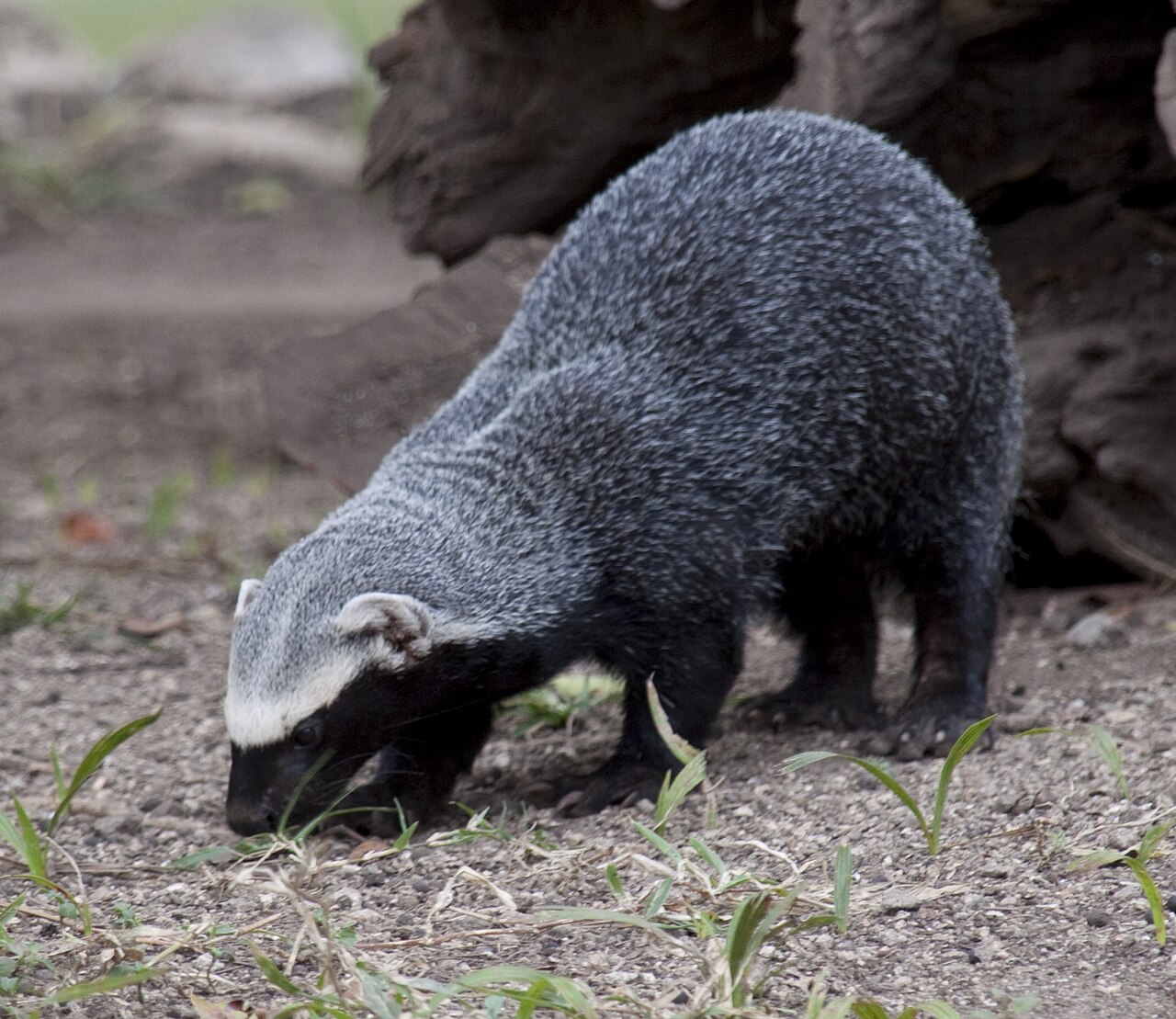
Follow the nose
Grisons use scent in communication and exploration. A world of odors can reveal information that a still photograph cannot capture.
Animal Diversity Web describes them as predators of small animals. Their body shape allows close investigation of cover rather than a high view over it.
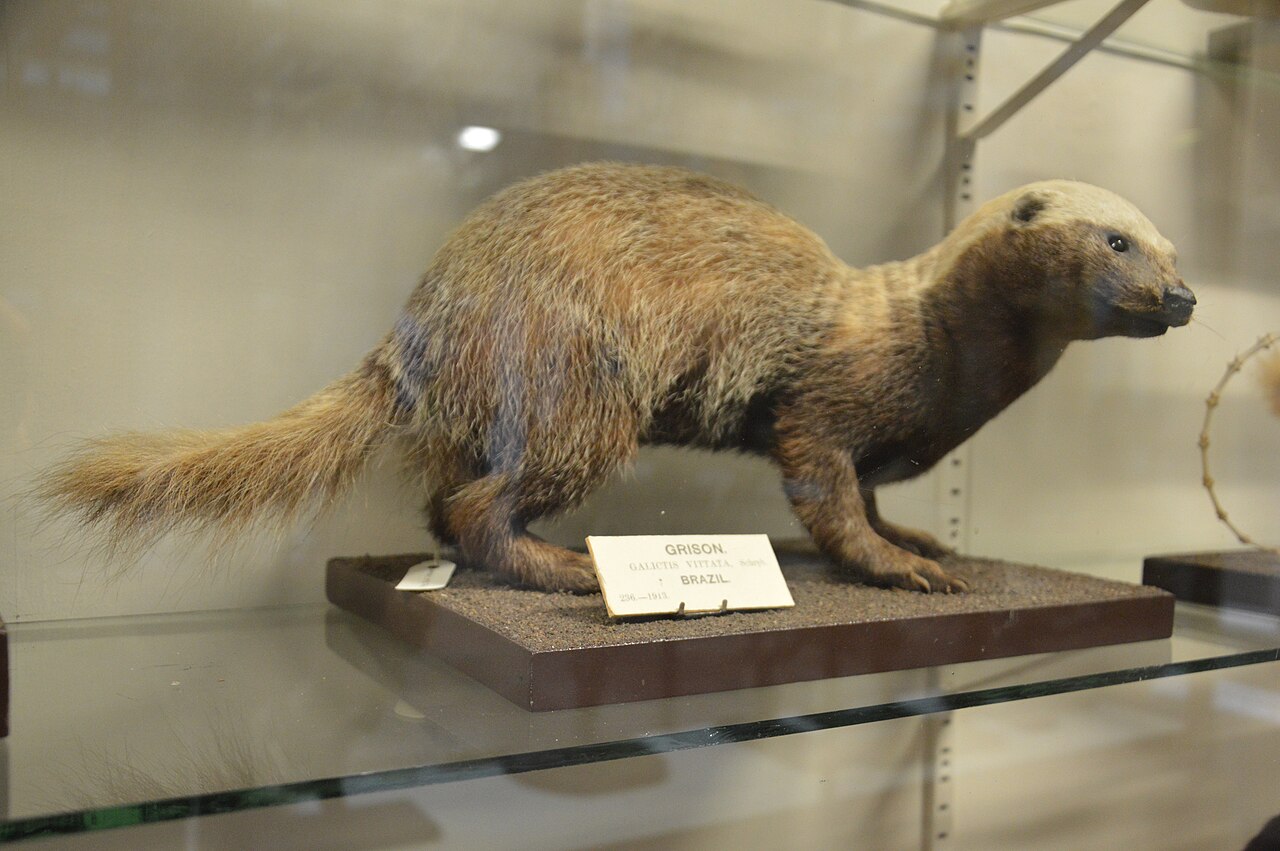
Beyond the striking coat
A museum specimen can reveal proportions and markings; a living animal reveals movement. Both views help introduce a mammal many people have never heard of.
Keeping natural cover and waterways intact preserves the setting in which these hunters find food and shelter.
The greater grison makes a good case for noticing smaller carnivores. There is a whole life behind that silver back, moving close to the ground while larger animals take the spotlight.
Photo credits
Featured image: Galictis vittata.jpg — Tony Hisgett; CC BY 2.0.

Body image 1: Greater Grison 2.jpg — Tony Hisgett; CC BY 2.0.

Body image 2: Grison - Galictis vittata - NHMI.jpg — Illustratedjc; CC BY-SA 4.0.

Photographs resized for web display where available.