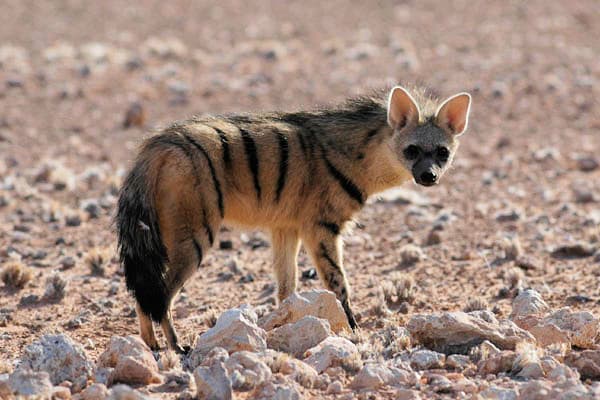
The aardwolf belongs to the hyena family, yet its main meal is termites. Instead of tackling a large carcass, it gathers tiny insects from the ground.
Its name may suggest a wolf, but this is a very different mammal. The Mammal Diversity Database calls the southern species Proteles cristatus; older accounts use Proteles cristata. It is also distinct from the bat-eared fox.
A specialist in small meals
The Animal Diversity Web aardwolf account describes a highly specialized termite eater with reduced grinding teeth.
A tongue collects exposed termites. The animal's survival depends on finding enough of these small meals rather than a single large one.
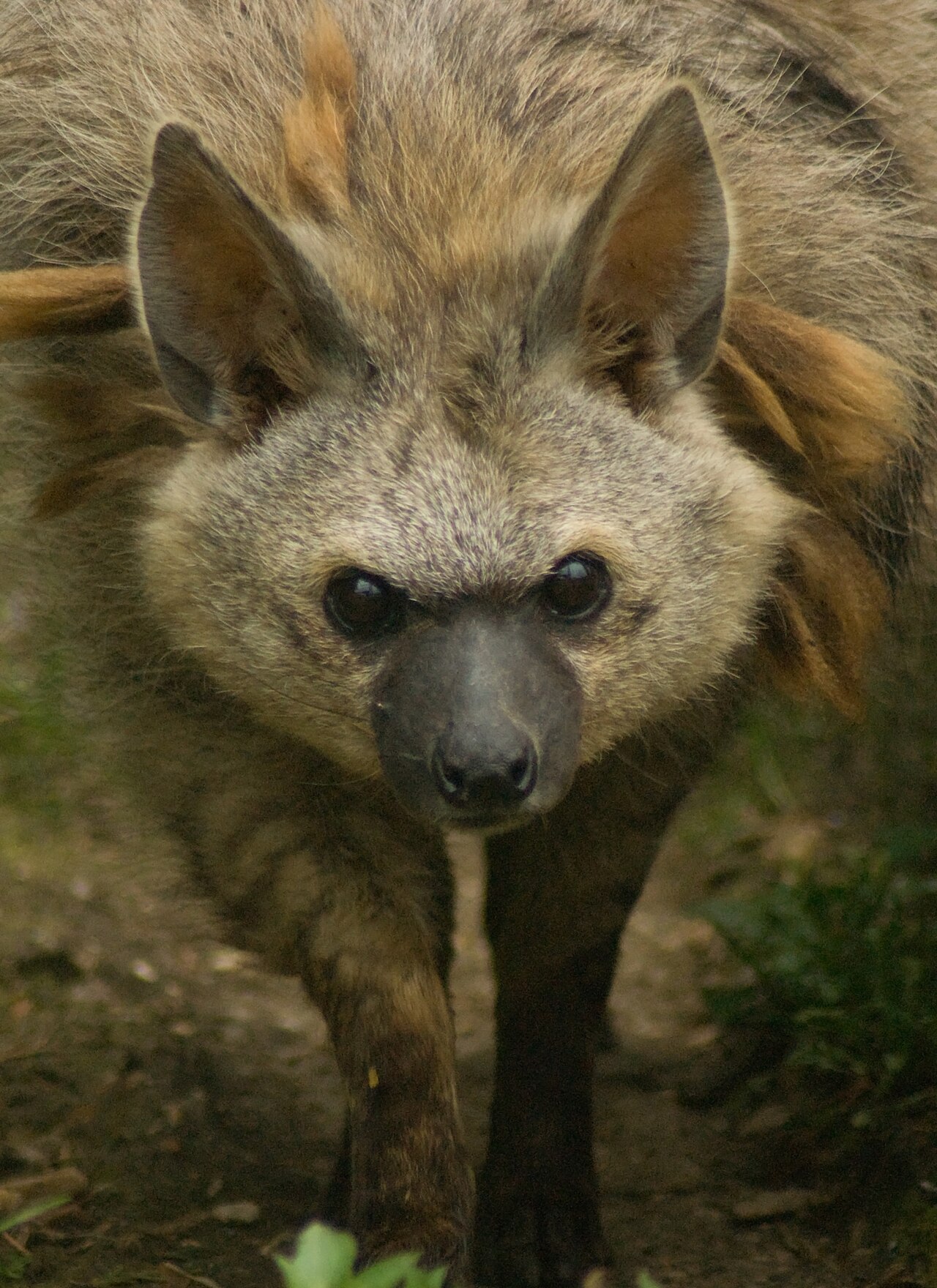
Its narrow muzzle and large ears look at home above a coat of dark stripes. A mane runs along the back.
A night shift on open ground
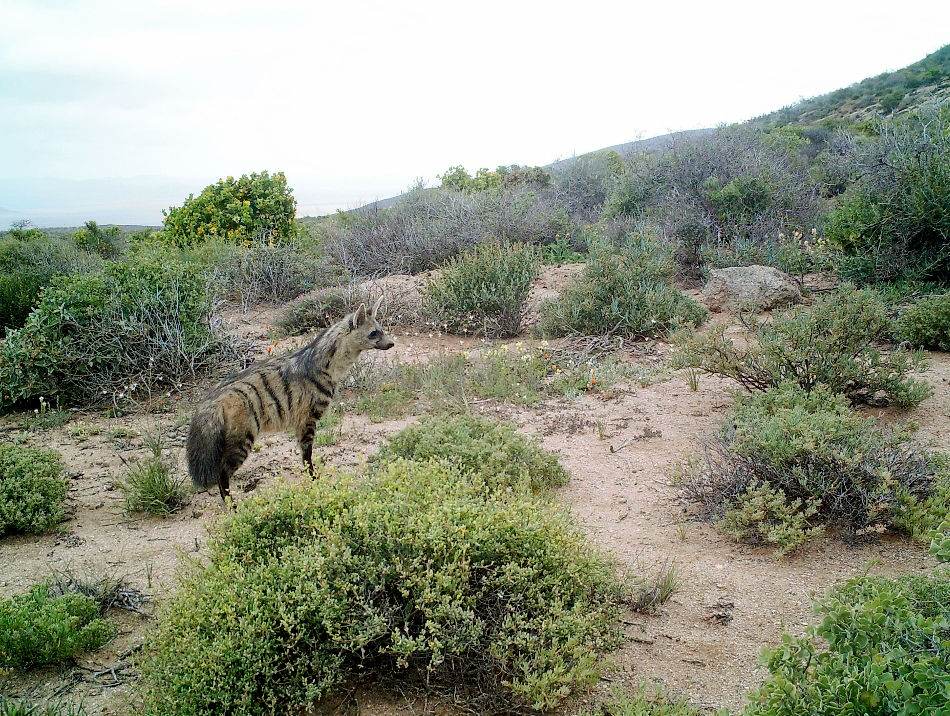
Aardwolves inhabit dry grasslands and savannas in Africa; the animals pictured include the southern form. They often forage alone and shelter in underground dens.
Burrows made by other animals can become useful refuges. One species' digging can therefore create opportunities for another.
Appearance is only an introduction
An aardwolf can resemble a small striped hyena, but a similar coat does not imply an identical diet.
Watching how an animal feeds often tells us more than comparing its outline with a familiar predator.
Protecting open habitat means preserving termites, shelter, and the network of small lives around them.
The aardwolf changes the picture of what a hyena can be. A striped coat can belong to a quiet insect specialist, following tiny meals through the night.
Photo credits
Featured image: Proteles cristatus1.jpg — by Dkaeuferle = Dominik Käuferle; CC BY-SA 3.0.

Body image 1: Aardwolf, Namaqua National Park, South Africa 1.jpg — kevinatbrakputs; CC BY 4.0.

Body image 2: Aardwolf (Proteles Cristatus), Hamerton Zoo.jpg — Spencer Wright; CC BY 2.0.

Photographs resized for web display where available.