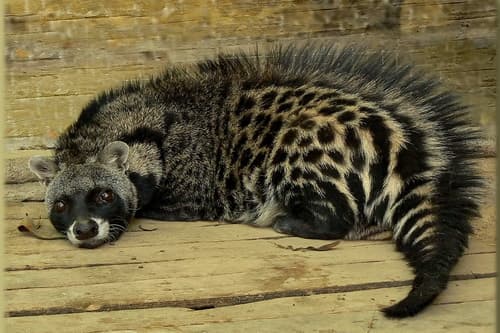
An African civet combines a dark face mask with spots, bars, and a short mane. The result is a mammal whose coat rewards a much closer look than a passing night sighting allows.
Civettictis civetta is a civet, not a small wild cat. Its pattern is only the beginning of its identity.
A coat with several patterns
The Animal Diversity Web profile describes pale fur with dark markings and a mane that can rise when the animal is alarmed.
The mask frames the face, while bands and spots continue across the body. Look from head to tail and the arrangement keeps changing.
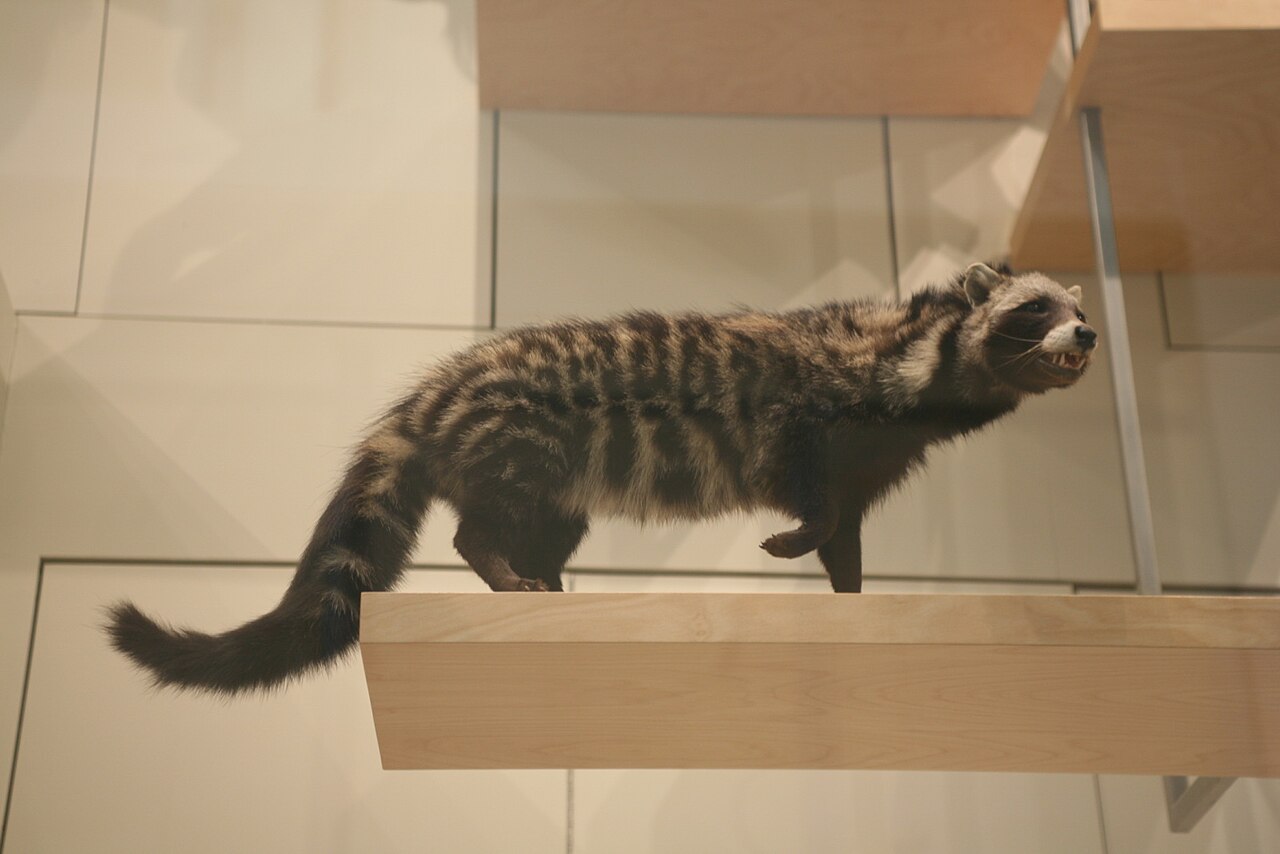
Shelter by day, movement at night
African civets use forests and more open habitats, provided there is suitable cover. Dense vegetation offers a place to rest out of view.
They are mainly nocturnal and use scent to communicate. An object beside a path may carry information that another civet can read long after its owner has moved on.
Their varied diet includes animal and plant material. A member of the order Carnivora need not eat meat alone.
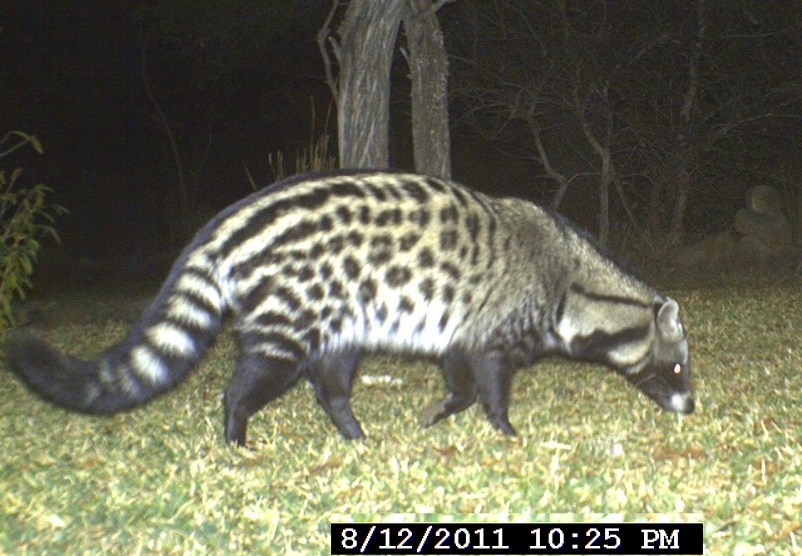
Keep the cover in the picture
A portrait isolates the civet's face. In nature, shelter, feeding places, and safe routes matter just as much as its markings.
Maintaining patches of natural vegetation helps preserve that larger setting.
The African civet is a reminder that nighttime wildlife has its own patterns and routines. Its bold coat may be visible for a moment, but its place in the landscape lasts well beyond the photograph.
Photo credits
Featured image: Civettictis civetta 11.jpg — Николай Усик / http://paradoxusik.livejournal.com/; CC BY-SA 3.0.

Body image 1: African Civet (Civettictis civetta).jpg — Cliff; CC BY 2.0.

Body image 2: Civettictis civetta 15218629.jpg — Wynand Uys; CC BY 4.0.

Photographs resized for web display where available.