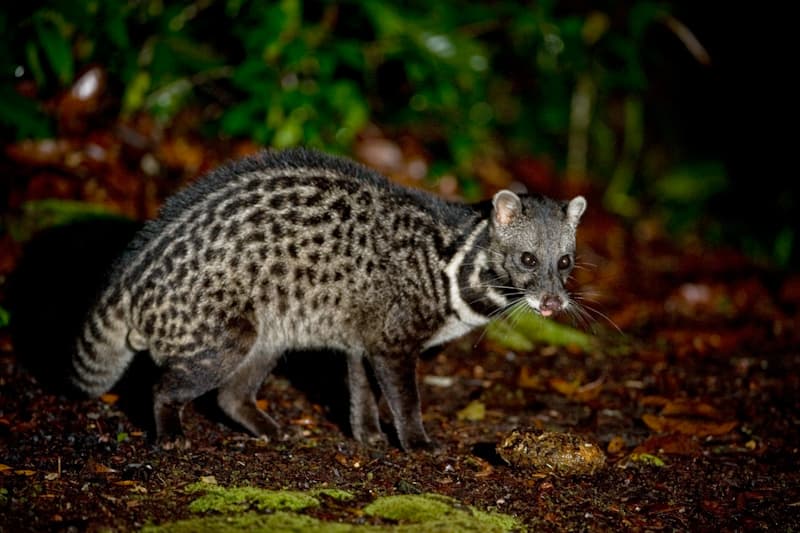
A Malayan civet wears several patterns at once: spots along its body, stripes around its neck, and dark rings on its tail. At night, those details belong to a busy forager rather than a forest ornament.
Viverra tangalunga is also called the Malay civet. It is a different species from the palm civets that share parts of its region.
A ground-level view of Southeast Asia
The Animal Diversity Web species account records it in the Malay Peninsula and islands including Sumatra and Borneo.
It uses a variety of habitats and rests in dense cover during the day. After dark, it moves out to search for food.
A ringed tail is useful for recognition, but should be considered alongside the rest of the animal's markings.
An adaptable menu
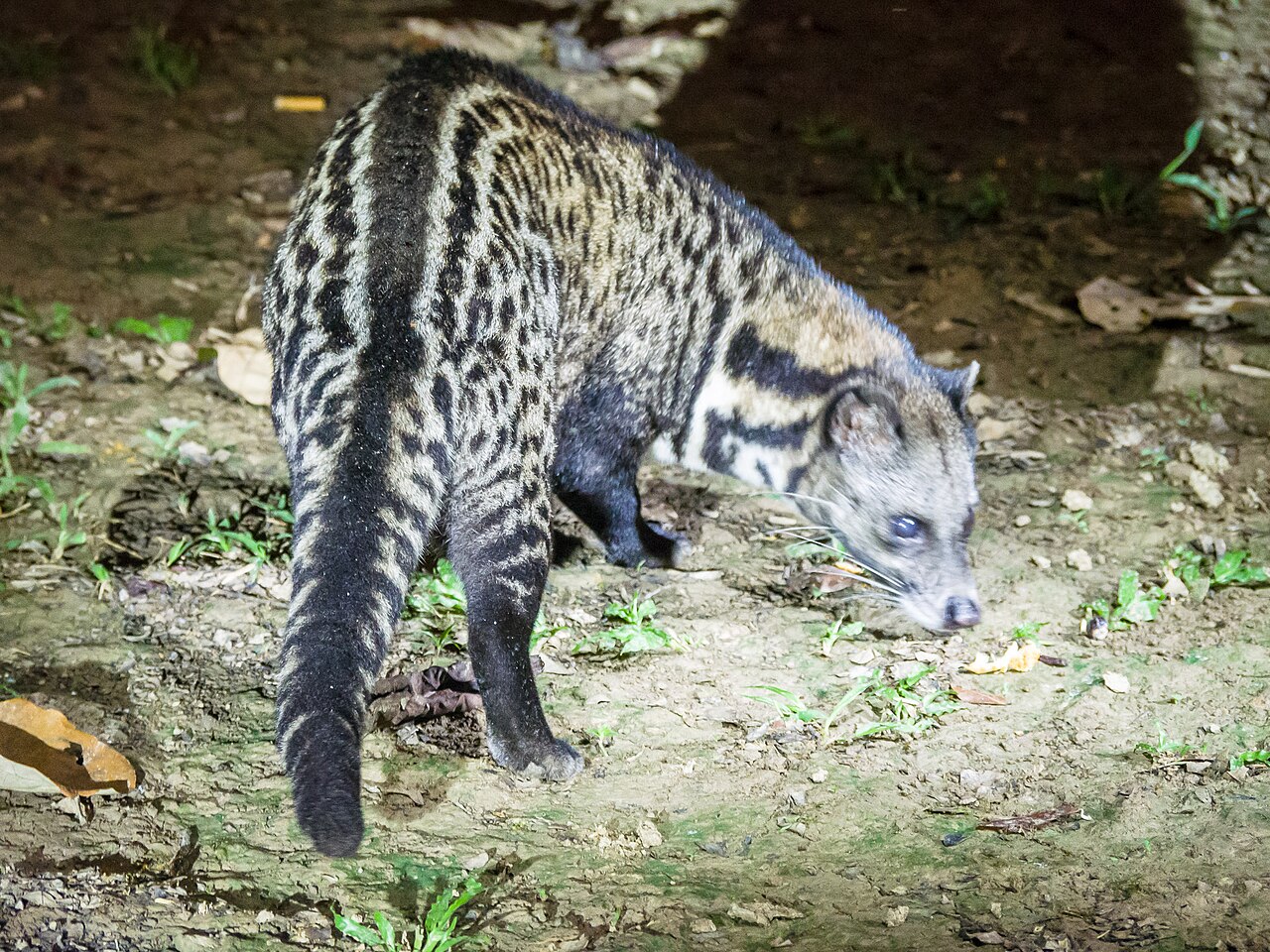
Small mammals, birds, reptiles, insects, eggs, and fruit can enter the diet.
The civet can stalk or pounce on prey. Its food choices connect it with several parts of the surrounding community.
Scent also plays a role in its life. Secretions left on objects can communicate with other civets without a direct meeting.
A wild animal beyond the roadside glimpse
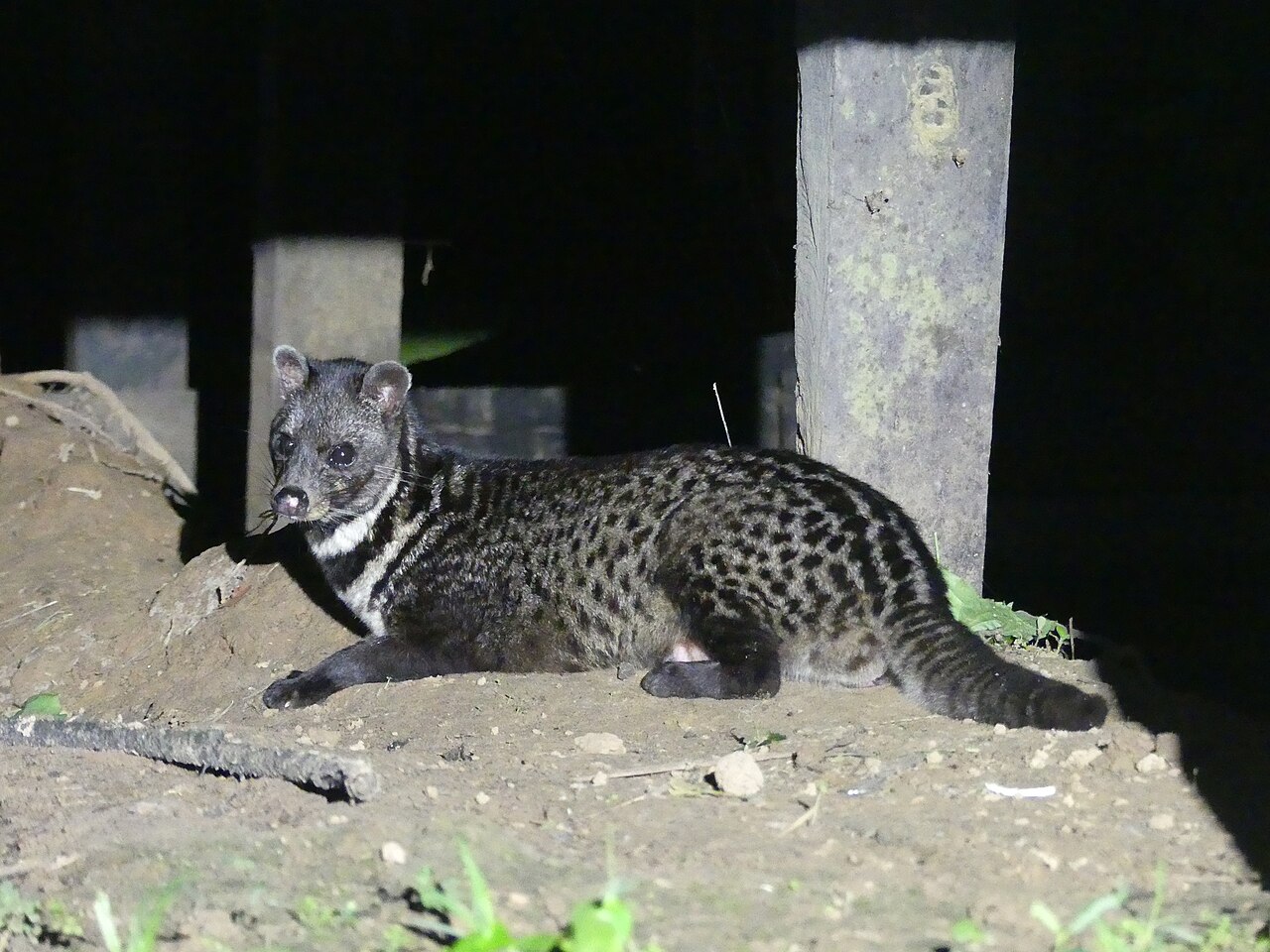
Living near altered habitats does not remove the need for cover and safe movement.
A good photograph lets us admire the animal without baiting it or forcing it into the open.
The Malayan civet's combination of patterns makes an appealing portrait. Learning about its night work turns that portrait into a glimpse of a much larger, mostly hidden world.
Photo credits
Featured image: Malay civet.jpg — Kalyan Varma; CC BY-SA 4.0.

Body image 1: Malayan Civet (14154535152).jpg — Mike Prince from Bangalore, India; CC BY 2.0.

Body image 2: Viverra tangalunga 349257233.jpg — Daniel Z; CC BY 4.0.

Photographs resized for web display where available.