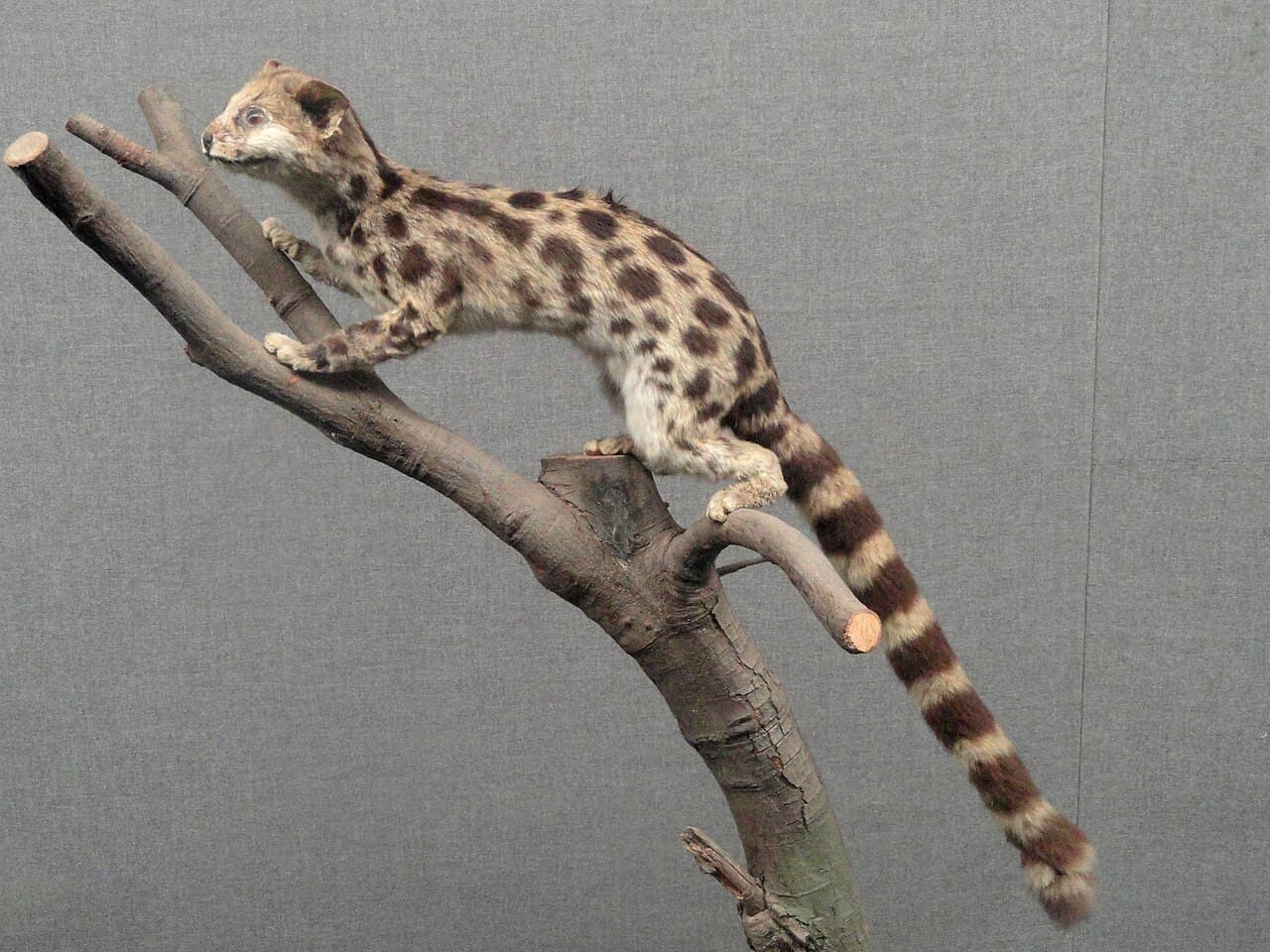
The spotted linsang has the pattern of a much larger cat packed into a long, slender body. Its short legs and long tail create an outline unlike a miniature leopard's.
Prionodon pardicolor is an Asian linsang. It is distinct from the banded linsang, even though the two share a close relationship.
A body suited to branches
The Animal Diversity Web account describes a nocturnal predator that moves through trees and also hunts on the ground.
Sharp claws and a narrow body help it travel along branches. Daytime shelter can include hollows among trees or roots.
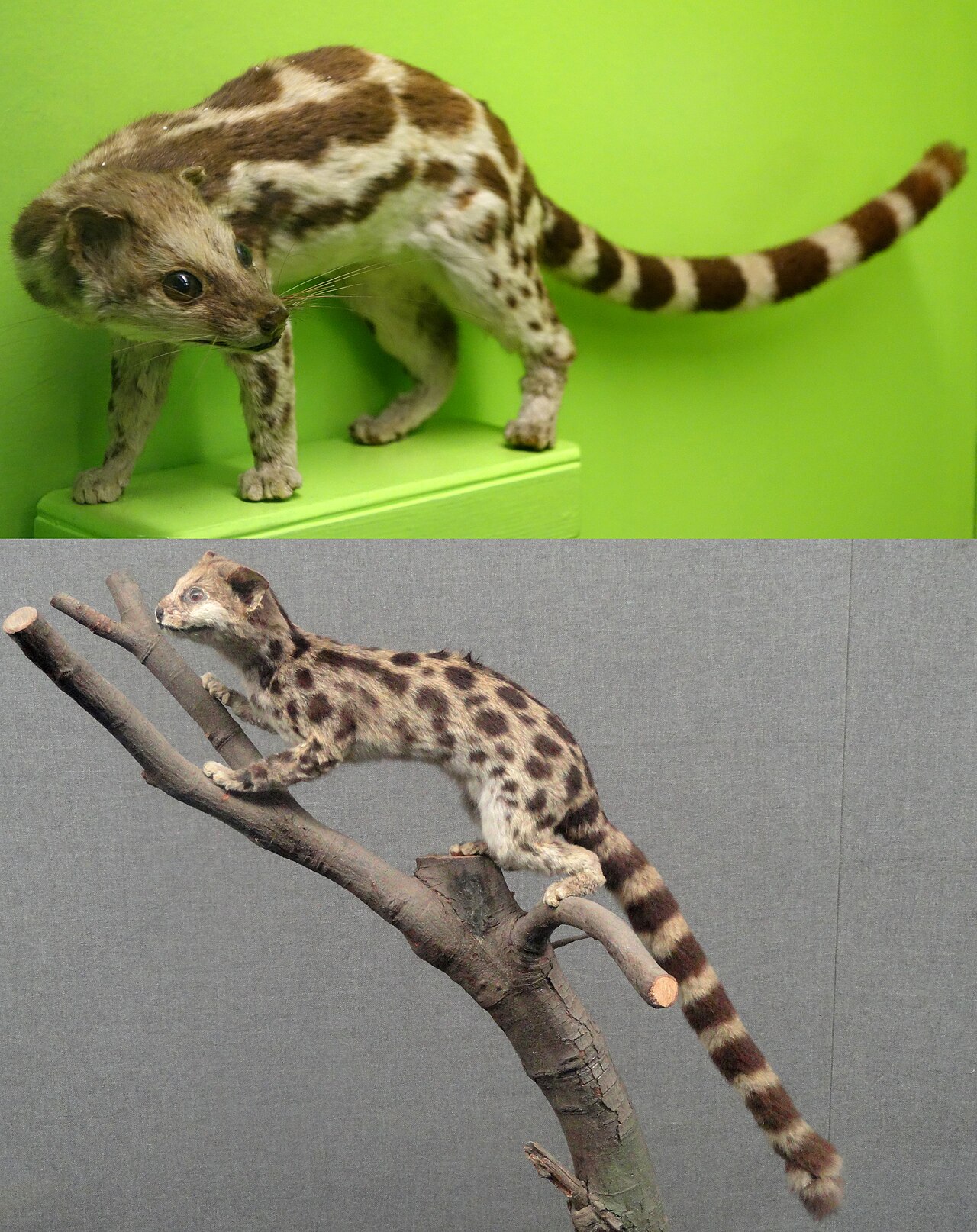
Its coat has dark spots and its tail bears rings. Those features make a museum specimen useful for studying details rarely seen during a brief wild encounter.
A small predator with a hidden life
Small vertebrates and insects form part of its food. Yet many details of its behavior remain poorly known.
A secretive animal is not an empty space for invented stories. The unanswered questions are part of what makes it worth studying.

Look closely, and keep the forest whole
A linsang's needs include more than a tree to climb. Cover, shelter, prey, and connections between wooded areas all form its living environment.
The photographs are labeled to distinguish museum specimens and related species where shown.
A spotted coat may draw us toward a familiar comparison with cats. The linsang becomes more interesting when we let it be itself: a slender forest hunter with a life still largely out of view.
Photo credits
Featured image: Prionodon pardicolor - Kunming Natural History Museum of Zoology - DSC02486.JPG — Daderot; Public domain.

Body image 1: Prionodontidae.jpg — Daderot Daderot; CC BY-SA 4.0.

Body image 2: Forest and sky at sun (Chitwan).jpg — श्रेष्ठ भूपेन्द्र; CC BY-SA 4.0.

Photographs resized for web display where available.